Benefits of custom packing solutions for movers and businesses
TL;DR:
- Custom packing solutions improve product protection, reduce damages, and lower shipping costs by fitting products precisely. They also increase operational efficiency, cut labor time, and support sustainability through material and waste reduction. Employing tailored packaging enhances brand image and customer experience while delivering measurable cost savings.
Custom packing solutions are defined as made-to-measure packaging designed to match the exact dimensions, weight, and fragility of a specific product. The benefits of custom packing solutions extend well beyond aesthetics. They reduce transit damage, cut labour time, lower shipping costs, and protect brand reputation. Whether you are moving house, running a warehouse, or shipping fragile goods across the UK, tailored packing solutions deliver measurable advantages that standard off-the-shelf boxes simply cannot match. Storageremovalboxes supplies a range of right-sized, durable packaging built precisely for these needs.
What are the core benefits of custom packing solutions?
Custom packing solutions, also referred to in the industry as bespoke packaging, protect products by eliminating excess space inside the box. When a product fits its packaging precisely, it cannot shift during transit. That immobility is the single most effective defence against breakage, scuffing, and crushing.
The customised packaging advantages go further than protection alone. They touch every stage of the supply chain, from the packing bench to the customer’s doorstep. Three areas stand out: damage reduction, operational efficiency, and cost control. Each one compounds the others, meaning the return on investment grows the longer you use a well-designed packing system.
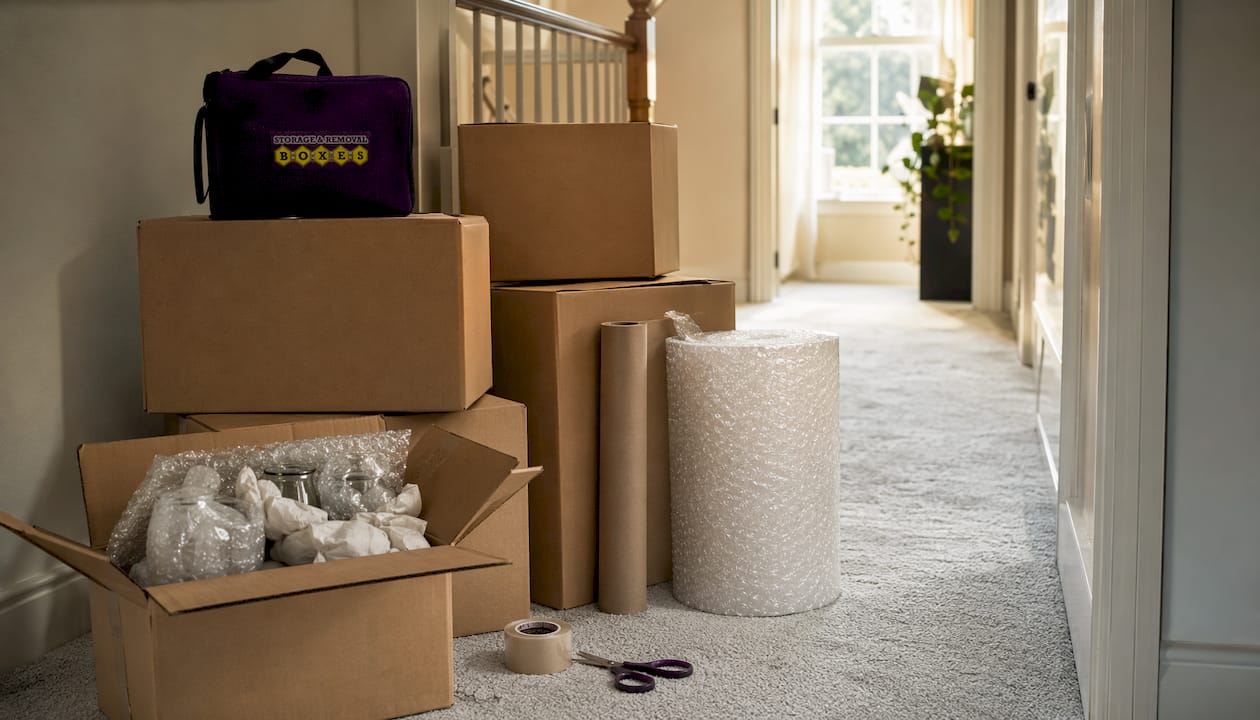
Storageremovalboxes recognises this across its product range, offering double-walled boxes, foam protectors, and bubble wrap rolls sized and graded for different load types. Choosing the right box from the start is not a minor detail. It is the foundation of a reliable packing operation.
How do custom packing solutions reduce product damage and returns?
Damage in transit is one of the most expensive problems in logistics, and most of it is preventable. Custom packaging minimises movement and vibration during transit, outperforming void fillers placed inside oversized standard boxes. That difference matters because void fillers compress, shift, and fail under repeated handling.
The hidden costs of damage go far beyond the replacement product. Return shipping fees, administrative processing, customer service time, and reputational damage all add up. Custom packaging acts as insurance by drastically lowering these hidden costs, delivering a positive return on investment despite the higher upfront unit price.
“Bespoke protective packaging solutions combine size tailoring with high-grade materials and custom internal fitments to optimise both protection and packing efficiency. The result is fewer damaged goods, fewer returns, and lower total logistics costs.”
The practical benefits of this approach include:
- Precise fit: The product sits snugly without movement, reducing impact damage from drops and vibration.
- Correct board grade: Heavier or fragile items need a higher flute quality. Custom packaging matches the board grade to the load, not the other way around.
- Internal fitments: Foam inserts, cardboard dividers, and moulded trays hold individual components in place, which is critical for glassware, electronics, and ceramics.
- Reduced tape and void fill: Flute quality and board grade in bespoke packaging reduce the need for excessive tape and void fill, cutting consumable costs.
For anyone packing fragile items, the Storageremovalboxes guide on protecting fragile shipments covers material choices in detail.
Does custom packaging improve packing speed and workflow?
The operational case for bespoke packaging is often underestimated. Moving to custom-sized packaging can improve packing efficiency by up to 30%, and crash-lock box designs reduce labour time by over 60%. Those are not marginal gains. For a business packing hundreds of units per day, they translate directly into lower wage costs and faster dispatch times.
Crash-lock bases are a specific design feature worth understanding. A standard box requires the packer to fold and tape the base before use. A crash-lock base pops open and locks into position in a single motion. That one change, multiplied across every unit packed, produces the labour saving cited above.
Packaging consistency reduces time spent deciding which box to use, standardises handling time across a team, and simplifies inventory management. When every packer uses the same defined set of box sizes, training becomes faster and throughput becomes predictable.
The numbered steps below show how a business typically moves from chaotic to consistent packing:
- Audit your product range. Measure the dimensions and weights of your most common items. Group them by size band.
- Define a box range. Select two to four custom box sizes that cover your product groups. Fewer sizes mean fewer decisions at the packing bench.
- Introduce crash-lock or auto-bottom designs. These reduce assembly time and remove the need for base taping.
- Standardise protective inserts. Pre-cut foam or cardboard dividers, sized to your boxes, eliminate improvised void fill.
- Train once, then monitor. A defined packing system requires one training session. After that, throughput consistency is measurable.
Pro Tip: If you are managing a house move rather than a warehouse, the same logic applies. Choosing right-sized removal boxes for books, kitchenware, and clothing separately prevents overpacking, reduces the risk of box failure, and makes unpacking far faster.
Standard boxes increase labour costs and packing variability, while a defined selection of custom box sizes enables a disciplined and efficient packing workflow. That principle holds whether you are running a fulfilment centre or packing a three-bedroom house.
What are the cost and sustainability advantages of right-sized packaging?
The financial case for custom packaging is built on three pillars: material savings, courier cost reduction, and waste reduction. Each one is quantifiable.
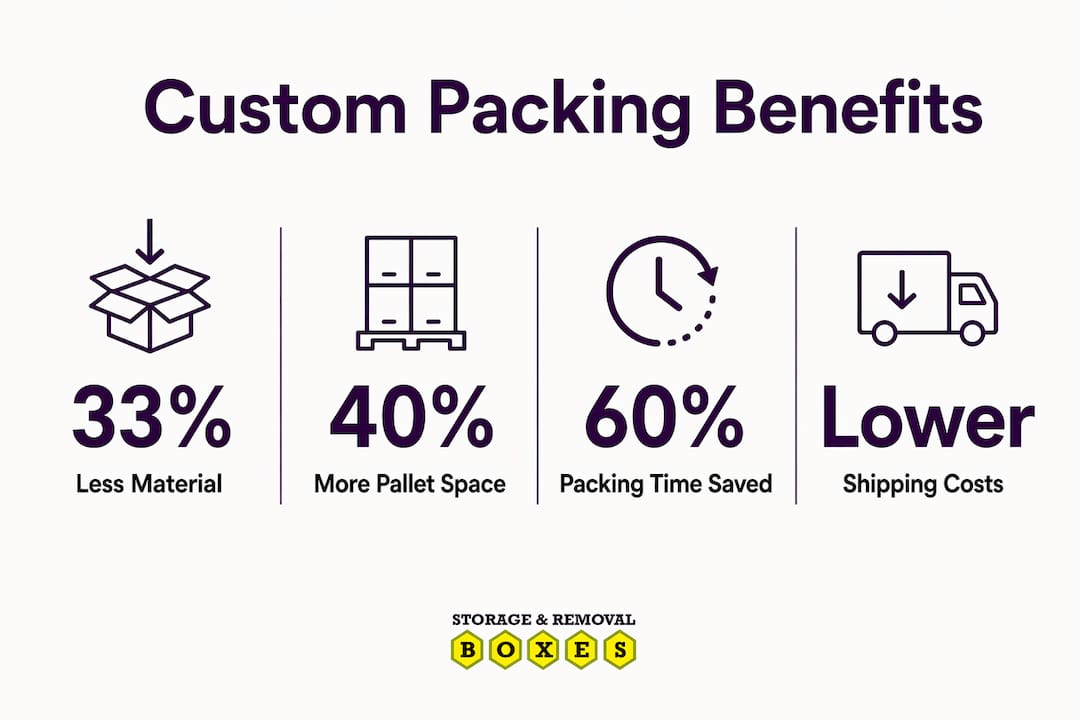
Packaging re-engineering can reduce packaging material by 33%, paper usage by 35%, and increase pallet efficiency by 40%. Higher pallet efficiency means more units per pallet, which directly reduces the number of deliveries required and the fuel cost per unit shipped.
Right-sized packaging helps avoid higher courier volumetric weight pricing tiers, reducing shipping costs per parcel. Volumetric weight pricing charges based on the space a parcel occupies, not just its actual weight. An oversized box inflates the billable weight even when the product inside is light. Custom packaging eliminates that penalty.
| Benefit area | What changes | Financial impact |
|---|---|---|
| Material usage | 33% less packaging material per unit | Lower material spend per order |
| Paper consumption | 35% reduction in paper-based fill | Reduced consumable costs |
| Pallet efficiency | 40% more units per pallet | Fewer deliveries, lower fuel cost |
| Courier pricing | Avoids volumetric weight surcharges | Direct saving per shipment |
| Annual logistics | Redesigned cartons cut total costs | Savings exceeding £130,000 annually |
The sustainability angle reinforces the financial one. Less material means less waste going to landfill. Eco-friendly packaging materials with recycled content align with modern consumer preferences and reduce environmental impact. Storageremovalboxes uses recyclable materials across its product range, which supports both cost goals and environmental commitments.
Pro Tip: When calculating the true cost of your current packaging, include tape, void fill, and labour time alongside the box unit price. The total cost of a poorly sized box is almost always higher than it appears on the invoice.
How does custom packaging improve brand image and customer experience?
Packaging is the first physical interaction a customer has with your product. That moment shapes their perception of quality before they have even opened the box. Custom packaging designed with your brand in mind, using printed finishes, consistent colours, and structural design, signals professionalism and care.
Custom packaging can boost customer satisfaction by enhancing the unboxing experience with branded, well-fitted designs. A product that arrives in a box that fits it perfectly, with no rattling or excessive void fill, communicates quality. That impression drives positive reviews, repeat purchases, and word-of-mouth recommendations.
“Packaging is not just a container. It is the last thing your business touches before the customer does. A well-designed box tells the customer that the product inside was worth protecting.”
The brand benefits are particularly strong for:
- Fragile and premium products: Glassware, ceramics, and electronics benefit from custom inserts that hold items securely and present them well on opening.
- Gift products: Presentation matters. A gift that arrives in a tight-fitting, well-finished box feels considered. One that rattles inside an oversized brown box does not.
- Subscription boxes: Consistent, branded packaging builds recognition and loyalty across repeat deliveries.
- Long-distance moves: For individuals, well-labelled, right-sized boxes make unpacking at the destination faster and less stressful.
Professional packing supplies carry weight beyond their physical function. For expert guidance on packing fragile items for long-distance moves, the principles of custom fit and correct material grade apply equally to household moves as they do to commercial shipments.
What should you consider when choosing custom packing solutions?
Selecting the right custom packaging starts with an honest assessment of your product. Fragility, dimensions, weight, and the conditions it will face in transit all determine the specification you need.
The key factors to evaluate are:
- Product fragility: Glassware and electronics need foam inserts or moulded fitments. Books and clothing need correct sizing but less internal protection.
- Transit conditions: A parcel passing through a courier network faces more handling than one loaded directly onto a removal van. Higher transit risk demands higher board grade.
- Weight: Heavy items need double-wall corrugated board. Single-wall boxes fail under sustained load, especially in stacked storage.
- Size accuracy: Measure your products precisely. A box that is even 5cm too large in one dimension creates movement and requires void fill to compensate.
- Volume: Higher volumes justify the investment in custom tooling. Lower volumes may be better served by selecting from a well-curated range of standard sizes.
A common pitfall is over-engineering. A business packing lightweight clothing does not need the same board grade as one shipping ceramics. Matching the specification to the actual risk avoids unnecessary cost. The opposite pitfall, undersizing, is more dangerous. A box that fails in transit costs far more than the upgrade in board grade would have.
A holistic packaging strategy should balance protection, cost, operational impact, and brand experience rather than focus solely on initial unit price. That balance is the mark of a mature packing operation.
Pro Tip: Integrate your packaging decisions with your warehouse layout. If your packing bench is small, crash-lock boxes that assemble instantly save space and time. If you store flat-packed boxes in bulk, choose designs that stack efficiently to reduce storage footprint.
For further guidance on packing fragile items safely, Storageremovalboxes provides practical advice matched to its product range.
Key takeaways
Custom packing solutions reduce damage, cut labour time, lower shipping costs, and improve customer experience by matching packaging precisely to the product it carries.
| Point | Details |
|---|---|
| Damage prevention | Tailored fit eliminates product movement in transit, reducing breakage and costly returns. |
| Labour efficiency | Crash-lock box designs cut packing time by over 60%, lowering operational costs per unit. |
| Cost and material savings | Right-sized packaging reduces material use by up to 33% and avoids volumetric weight surcharges. |
| Sustainability | Recyclable, right-sized materials reduce waste and align with consumer environmental expectations. |
| Brand and customer experience | Well-fitted, branded packaging improves unboxing perception and drives repeat purchases. |
Why packaging deserves more strategic attention than it gets
Most businesses treat packaging as a procurement line item. They buy the cheapest box that roughly fits, add some bubble wrap, and move on. I have seen this approach cost companies far more than they saved on the box price, through returns, repackaging labour, and damaged customer relationships.
The ROI calculation for bespoke packaging is almost always better than it looks at first glance. Labour savings alone, particularly from crash-lock designs, often cover the cost premium within weeks at any meaningful volume. Add the reduction in returns and the courier savings from right-sizing, and the numbers become compelling.
What I find most overlooked is the brand dimension. Businesses invest heavily in product quality and marketing, then ship in a box that undermines both. A product that arrives damaged, or even just rattling in an oversized box, erodes the trust that all that investment built. Packaging is not separate from the customer experience. It is part of it.
The trend towards eco-conscious materials is accelerating this conversation. Customers notice recyclable packaging. They notice when a box is the right size rather than stuffed with plastic void fill. These details build loyalty in ways that are hard to measure but very real. Viewing packaging as a functional and reputational asset, rather than a cost to minimise, is the shift that separates businesses that grow from those that stagnate.
— Adrian
Storageremovalboxes: right-sized packing for every move
Storageremovalboxes supplies a full range of packing boxes sized and graded for house removals, self-storage, and fragile item transport across the UK. The range includes double-walled boxes in multiple sizes, bubble wrap rolls, foam protectors, and pre-packed removal kits for different household sizes. Every product is made from recyclable materials and built to handle the demands of real moves and real logistics operations. Bulk purchasing discounts make the range practical for removal companies and storage facilities as well as individual customers. Browse the full selection or contact the team for advice on choosing the right box for your specific needs.
FAQ
What are the main benefits of custom packing solutions?
Custom packing solutions reduce transit damage, cut packing labour time, lower shipping costs through right-sizing, and improve the customer unboxing experience. They outperform standard boxes by eliminating product movement and matching board grade to the actual load.
How much can custom packaging reduce packing time?
Crash-lock box designs can reduce packing labour time by over 60% compared to standard boxes that require manual base assembly and taping. That saving compounds significantly at any meaningful daily packing volume.
Does custom packaging actually save money overall?
Yes. Right-sized packaging reduces material use by up to 33%, avoids volumetric weight surcharges from couriers, and cuts the hidden costs of damaged goods and returns. Redesigned carton programmes have delivered projected annual logistics savings exceeding £130,000.
Is custom packaging suitable for house moves as well as businesses?
Custom packaging principles apply equally to house moves. Choosing boxes sized correctly for books, kitchenware, and clothing separately prevents box failure, reduces void fill, and makes unpacking faster and more organised.
What materials should I look for in bespoke packaging?
Double-wall corrugated board suits heavy or fragile items. Single-wall board works for lighter loads. Internal fitments such as foam inserts or cardboard dividers are worth adding for glassware, ceramics, or electronics. Recyclable materials reduce environmental impact without compromising protection.