Box movers: the complete guide for families
TL;DR:
- Understanding the distinction between box movers and full-service removals can save you money and prevent stress during your move.
- Request detailed, itemized quotes and consider partial packing services, sourcing your own boxes, and scheduling move timing carefully for cost savings.
Most people assume that hiring box movers means everything is taken care of, boxes included. That assumption costs them money. Box movers and full-service removals are not the same thing, and understanding the difference before you book is what separates a smooth move from an expensive, stressful one. This guide walks you through exactly what box movers do, how to choose the right packing materials, where technology is making moves easier, and how to cut costs without cutting corners. Read this before you pack a single box.
Table of Contents
- Key takeaways
- What box movers actually do
- Choosing the right boxes and packing materials
- How technology is changing box moving
- Cost-saving strategies that actually work
- Sustainable packing practices worth adopting
- My honest take on hiring box movers
- Get everything you need from Storageremovalboxes
- FAQ
Key takeaways
| Point | Details |
|---|---|
| Know what box movers include | Most box movers charge separately for packing materials, so always request a detailed cost breakdown. |
| Right-size your boxes | Heavy items go in small boxes; large boxes are only for light, bulky items like bedding and pillows. |
| Time your move well | Off-season, midweek moves are consistently cheaper than peak-season weekend bookings. |
| Tech improves estimates | AI-powered virtual surveys can price your move in under 25 minutes with no home visit required. |
| Sustainable options save money | Renting reusable plastic crates cuts cardboard waste and often costs less when moving locally. |
What box movers actually do
The term “box movers” covers a wider range of services than most people realise. At one end, you have professional box movers who pack, load, transport, and unpack everything. At the other, you have labour-only services where a crew turns up to move the boxes you have already packed. Neither is better in every situation. The right choice depends on your budget, timeline, and how much physical work you want to handle yourself.
What often trips people up is the pricing structure. Professional packing services in 2026 cost between £60 and £80 per hour per packer, with total home packing costs varying depending on property size and job complexity. That rate typically covers labour. Packing materials, boxes, bubble wrap, and tape are frequently charged on top unless you specifically choose a full packing package.
Here is what a standard box moving quote may or may not include:
- Labour for loading and unloading
- Packing of fragile or specialist items
- Cardboard boxes in various sizes
- Wardrobe boxes for hanging clothes
- Bubble wrap, foam padding, and tape
- Dismantling and reassembling furniture
Professional movers often charge for boxes and materials separately unless a full packing package is selected, so always ask for a line-by-line quote rather than a single headline figure. That one habit prevents most of the nasty surprises people encounter on moving day.
You also have the option of a partial packing service, where the crew handles only fragile or high-value items while you pack the rest. This is a genuinely useful middle ground that many families overlook. It reduces costs while keeping your most breakable belongings in experienced hands.
Pro Tip: Ask every box moving company to send you a written quote that lists labour and materials as separate line items. If they resist, that tells you something useful about how they operate.
Timing matters more than most movers expect. Peak seasons and weekends consistently cost more, while midweek moves in autumn or winter can be noticeably cheaper. If your completion date is flexible, even by a few days, you may find meaningful savings just by shifting your booking.
Choosing the right boxes and packing materials
Getting your boxes right is not just about having enough of them. It is about choosing the right size and strength for each category of item you are moving. The single most common packing mistake is putting heavy items into large boxes, which makes them dangerous to lift and increases the risk of the base giving way mid-carry.
The logic to follow is simple. Small boxes suit heavy items such as books, tools, and tinned food. Medium boxes work well for clothes, kitchen equipment, and toys. Large boxes are reserved for light but bulky items like bedding, cushions, and lampshades. Wardrobe boxes are worth every penny if you have a lot of hanging clothes, as they eliminate the need to fold, unpack, and re-hang garments at the other end.
A practical breakdown of common moving box sizes looks like this:
| Box size | Best used for | Weight limit guidance |
|---|---|---|
| Small | Books, tools, kitchen tins | Up to 20 kg |
| Medium | Clothes, pots, small appliances | Up to 15 kg |
| Large | Bedding, pillows, lampshades | Up to 10 kg |
| Wardrobe | Hanging clothes | Varies by height |
| Heavy-duty double wall | Fragile items, artwork, ceramics | Up to 25 kg |
When it comes to sourcing boxes, you have three realistic options. You can buy new boxes, which guarantees strength and cleanliness. You can source second-hand boxes from supermarkets, online forums, or local community groups, which saves money but requires caution. Or you can rent reusable plastic crates from specialist suppliers, which is increasingly popular for short-distance moves.
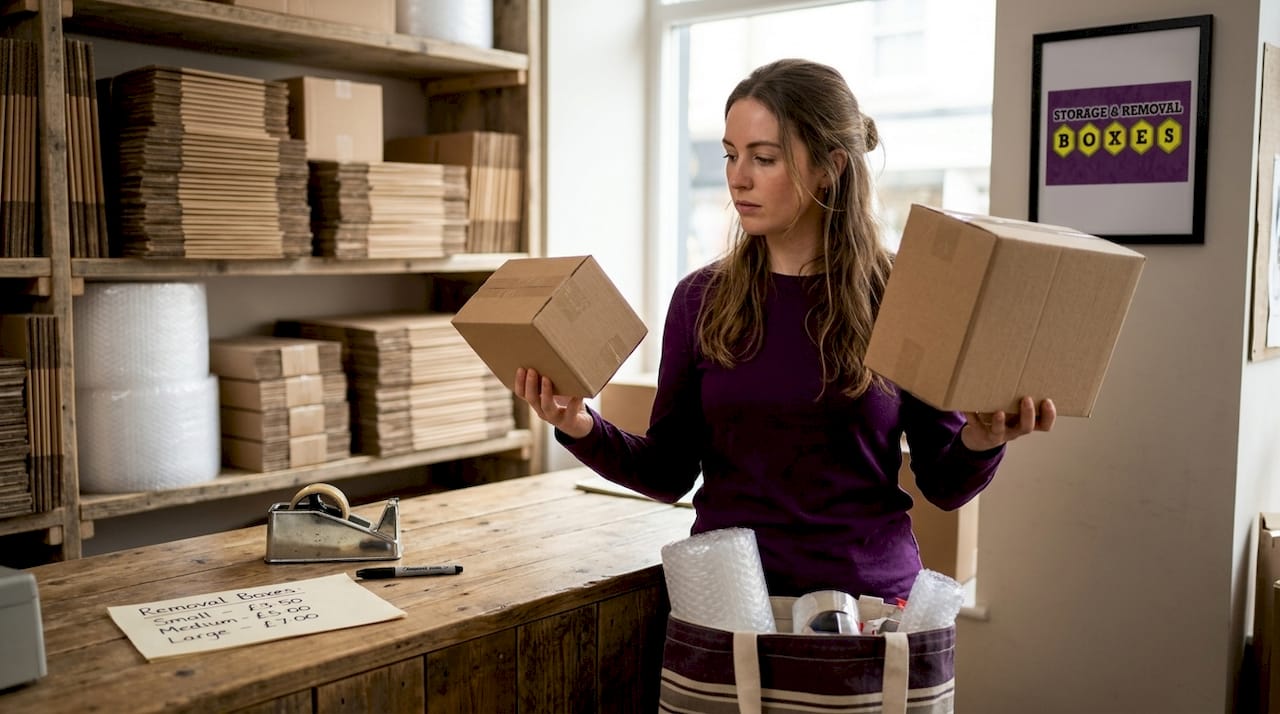
Cardboard boxes can harbour pests or mould if stored improperly before use, so inspect any second-hand boxes carefully before packing your belongings into them. A damp base or musty smell is reason enough to reject the box entirely.
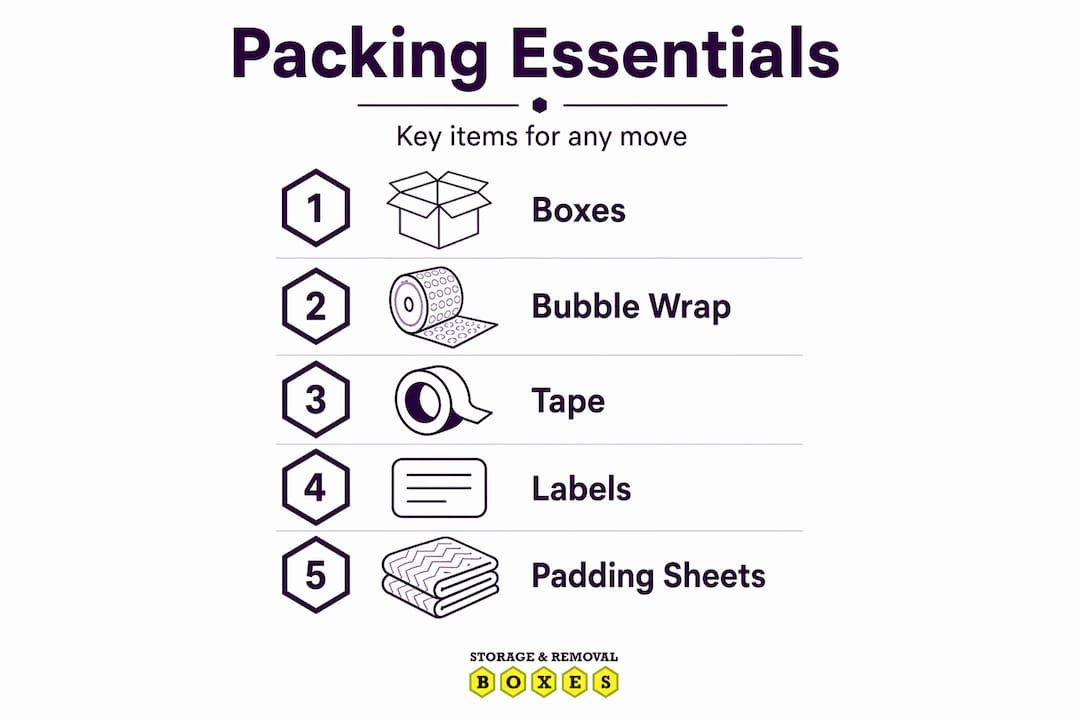
For packing materials, the essentials are bubble wrap for fragile items, foam padding sheets for crockery and glass, and moving blankets for furniture. Do not underestimate the value of good-quality tape. Cheap tape fails under the weight of a full box, and the consequences of a box giving way on the stairs are not worth the saving.
Pro Tip: Double-wall cardboard boxes, available from Storageremovalboxes, offer significantly more protection for heavy or fragile items than standard single-wall boxes and are worth the small extra cost.
Browse the full range of moving boxes at Storageremovalboxes to find the right size and strength for every room in your home.
How technology is changing box moving
Moving companies have not been immune to the technology changes reshaping every service industry, and the improvements for customers are genuinely useful.
The most significant development in recent years is AI-powered virtual surveys. Rather than waiting for a surveyor to visit your home, you video-call or upload photos and measurements, and the system generates a quote. AI-powered virtual surveys reduce moving estimate time to an average of 23 minutes, covering everything from studio flats to full family homes. That speed and accuracy reduces the chance of an underquoted move where the crew arrives and realises the job is larger than expected.
GPS tracking has also become standard with better box moving companies. You can monitor exactly where your belongings are during a long-distance move, which removes a significant source of anxiety for families with high-value or irreplaceable items.
“Technology in moving is no longer a luxury feature. For families managing complex moves with fragile items or tight timelines, GPS tracking and digital inventory tools are fast becoming an expectation rather than a bonus.”
Specialist box truck services with small professional crews fill a smart gap in the market. They suit moves that are too large for a single car but do not justify the cost of a full removal lorry and six-person team. This kind of flexible, scaled service is increasingly available through app-based platforms, where you can book and track the entire job from your phone.
Digital packing tools are also worth exploring. Some companies and apps let you create a virtual inventory of every box, assign rooms, and generate a loading plan that maximises space in the lorry. For families moving a four-bedroom house, this can reduce the number of trips and, by extension, the total cost.
Cost-saving strategies that actually work
Saving money on a move is rarely about finding the cheapest company. It is about understanding where costs come from and making deliberate choices to reduce them.
- Request itemised quotes from every company. A single price that bundles labour, materials, and transport makes it impossible to compare quotes accurately or negotiate on specific elements.
- Consider a partial packing service. Pack the straightforward rooms yourself and let the professionals handle the kitchen, bathroom, and fragile items. You get professional protection where it matters most at a fraction of the full-service cost.
- Source your own boxes. Buying boxes directly from a supplier like Storageremovalboxes before the movers arrive can cost significantly less than purchasing them through the moving company on the day.
- Consolidate before you move. Consolidating boxes can reduce shipping and transport costs by 30 to 50 per cent, particularly for long-distance moves. Fewer, heavier boxes are more economical than many small ones.
- Avoid peak periods. Book a midweek date in autumn or winter rather than a Friday in June or July. The difference in price from the same company can be substantial.
- Use reusable crates for local moves. If you are moving within the same town or city, hiring plastic crates removes the cost of buying boxes you will use once and then have to dispose of.
- Plan your packing to avoid last-minute specialty boxes. Wardrobe boxes and specialist art boxes are expensive. With enough lead time, you can re-pack hanging clothes and wrap artwork yourself with blankets and foam.
Pro Tip: Book your box movers at least four to six weeks in advance during spring and summer. Last-minute bookings in peak season attract premium rates and limit your choice of reputable companies.
Explore moving box kits from Storageremovalboxes if you want a cost-effective bundle that covers most standard rooms without needing to price every item individually.
Sustainable packing practices worth adopting
Reducing the environmental impact of your move is more achievable than most people think, and several sustainable choices also save money.
Reusable plastic crates are increasingly preferred over cardboard for durability and environmental benefits. They require no assembly, stack securely, and collapse flat for storage after the move, producing no cardboard waste at all. For local moves especially, hiring crates is a practical and increasingly affordable option.
If you do use cardboard boxes, look for FSC-certified options made from recycled or sustainably sourced materials. After your move, break the boxes down promptly and recycle them or pass them on through local community groups before they have a chance to become damp or damaged.
Other sustainable steps worth taking include:
- Using clothing, towels, and tea towels as padding instead of buying fresh bubble wrap
- Choosing biodegradable packing peanuts over polystyrene
- Packing efficiently to reduce the number of lorry trips, which directly lowers fuel use and emissions
- Asking your moving company whether they use vehicles with low emission ratings or run efficient loading practices
Choosing a moving company that operates with environmental awareness is increasingly straightforward. Many now highlight their sustainability credentials openly, and it is a fair question to ask when getting quotes.
My honest take on hiring box movers
I have seen enough moves go wrong to have strong views on this. The number one regret I hear from people after a move is that they did not ask enough questions upfront. They took the cheapest quote, assumed it covered everything, and then faced unexpected charges for boxes, fuel surcharges, or specialist handling on the day when there was no time to push back.
My view is that the most important skill in managing box movers is knowing exactly what you are buying before you commit. That means reading every quote in detail, not just the headline figure. It means asking specifically whether boxes and materials are included. It means confirming what happens if the job takes longer than estimated.
On the sustainability side, I was initially sceptical about plastic crates. They felt like more hassle. After using them for a short-distance move, I found them genuinely better: no taping, no base failures, and no recycling to sort out at the end. For local moves, I would choose them every time.
Technology has made the estimation side of moving far more reliable than it used to be, and I think that is a genuine improvement. An accurate quote from the start removes the single biggest source of stress and conflict in any move.
My honest advice: blend self-packing with professional help. Do the straightforward rooms yourself. Hand the kitchen, the fragile items, and the specialist pieces to experienced professionals. You get the best outcome for both your budget and your belongings.
— Adrian
Get everything you need from Storageremovalboxes

When you are preparing for a move, having the right boxes and materials from the start saves time, reduces stress, and protects your belongings. Storageremovalboxes supplies a full range of double-wall moving boxes built for the demands of UK house removals, from compact boxes for books and kitchenware to tall, heavy-duty boxes for bulky items. Alongside the boxes, you will find rolls of bubble wrap, foam padding, and even a box marker pen to keep your labelling clear and your unpacking organised. Storageremovalboxes offers nationwide delivery, bulk discounts, and pre-packed kits sized for different homes, so whether you are moving a one-bedroom flat or a five-bedroom house, the right supplies are ready to order. Browse the complete range at Storageremovalboxes and arrive at your new home prepared.
FAQ
What do box movers include in their service?
Most box movers cover labour for loading and unloading, but packing materials such as boxes, bubble wrap, and tape are often charged separately. Always request an itemised quote before booking.
How much do professional box movers cost in 2026?
Professional packers typically charge between £60 and £80 per hour per packer, with total costs varying by property size and whether materials are included in the package.
What is the best box size for heavy items?
Small, double-wall boxes are best for heavy items like books and tools, as they reduce the risk of box failure and make safe lifting far more manageable during transit.
When is the cheapest time to hire local box movers?
Midweek bookings in autumn or winter are consistently cheaper than peak-season, weekend moves. Planning around quieter periods can produce meaningful savings with the same quality of service.
Are reusable plastic crates better than cardboard boxes?
For local moves, reusable plastic crates offer strong practical and environmental advantages. They require no assembly, produce no waste, and are often available to hire rather than buy outright.