Boxes and bubble wrap: your move sorted
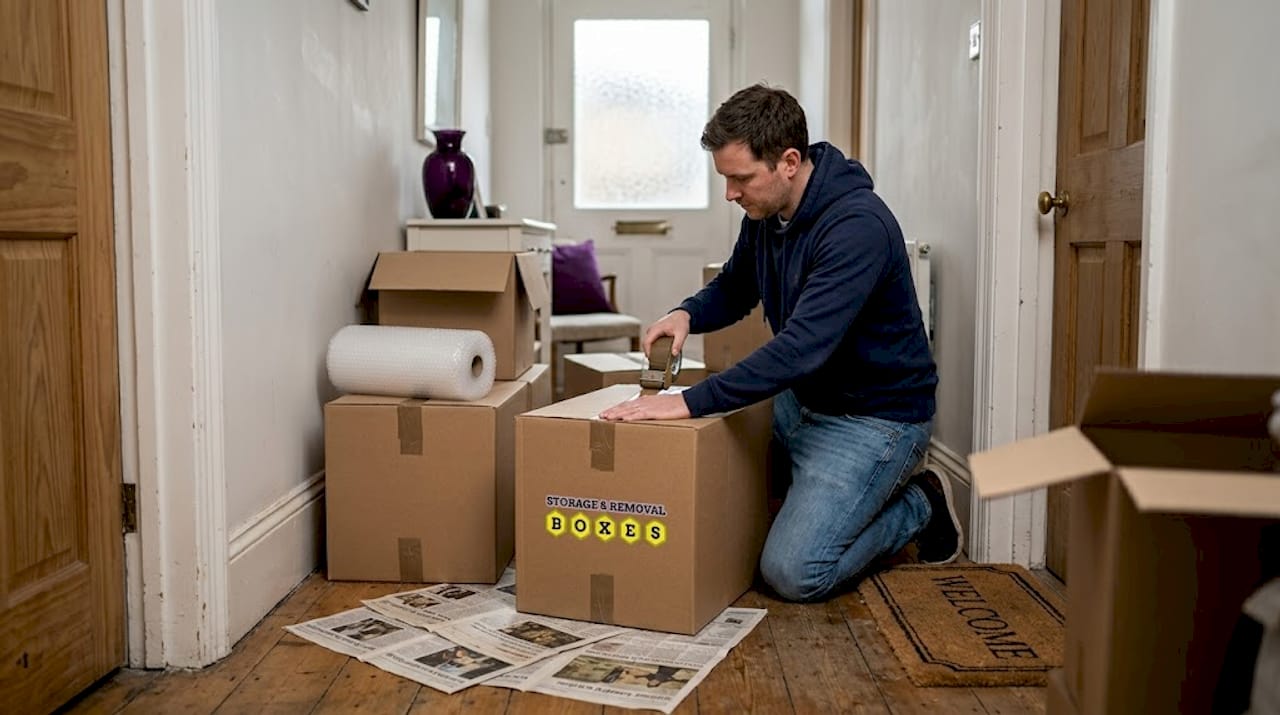
Using sturdy double-walled boxes and selecting the appropriate bubble wrap size are essential for protecting fragile and heavy items during a Fulham house move. Planning quantities carefully, packing systematically, and sourcing quality materials locally or online will ensure a smooth, damage-free relocation. Proper preparation, including early ordering and effective packing techniques, minimizes stress and guarantees your belongings arrive safely.
Getting your boxes and bubble sorted before moving day sounds straightforward. Most people assume a few cardboard boxes and a roll of bubble wrap will do the job, they are wrong. The truth is that the wrong box collapses under weight, and the wrong bubble wrap leaves your grandmother’s china unprotected. This guide walks you through exactly what to buy, how to use it, and where to find quality packing materials in Fulham so that nothing gets broken and nothing gets left behind.
Key takeaways
| Point | Details |
|---|---|
| Box type matters enormously | Double-walled boxes resist collapse and protect heavy or fragile items far better than single-wall alternatives. |
| Bubble size affects protection | Small 10mm bubbles suit crockery and glassware; large 20mm bubbles are right for furniture and mirrors. |
| Quantity planning prevents panic | A typical 3-bedroom house needs roughly 40 to 60 boxes plus a 50-metre bubble wrap roll for fragile items. |
| Packing technique is half the battle | Fill every void, pack plates on edge, and seal boxes with strong filament tape to prevent collapse in transit. |
| Order early, order locally | Fulham has both local suppliers and reliable online options with fast delivery so there is no excuse for last-minute shortages. |
Choosing the right boxes for a Fulham house move
Walk into any supermarket in Fulham and you will find free boxes near the tills. They seem like a bargain. They are not. Supermarket boxes are single-walled, designed to hold cereal or tins for a few days. They are not built to be stacked three high in a removal van or to carry your book collection safely across town.
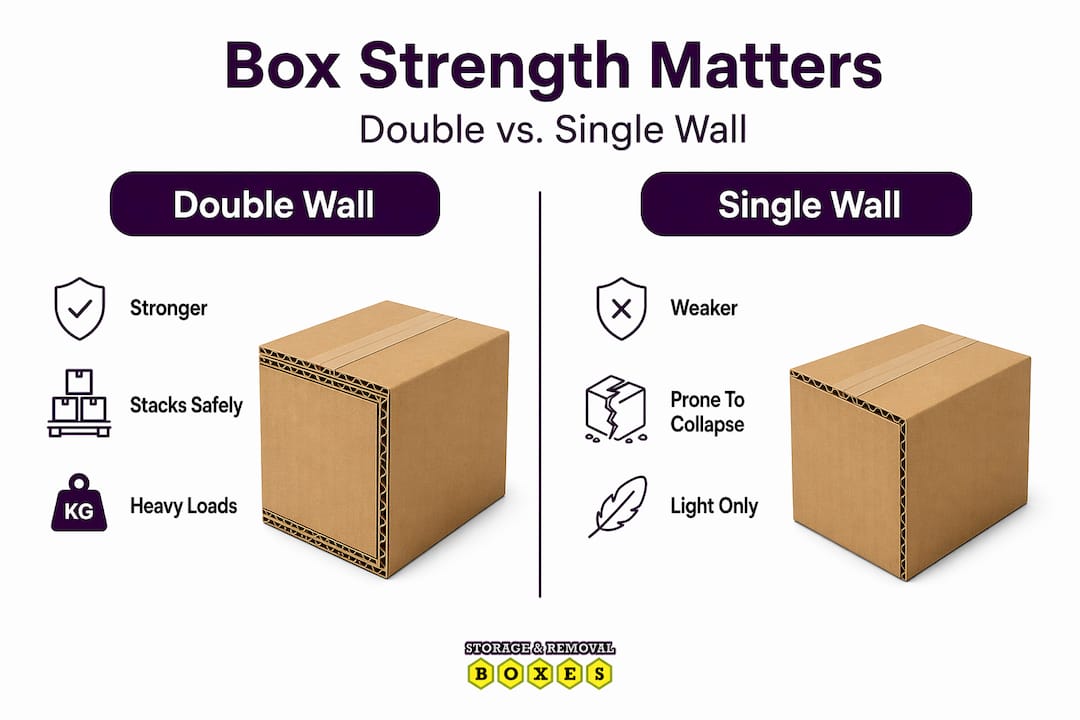
Double-walled boxes provide significantly better strength and stacking stability than single-wall boxes, which are prone to collapse and risky for heavy items. That extra layer of corrugated cardboard makes a real difference when a removal operative stacks boxes in a van and the load shifts on a speed bump.
Getting the size right
Box size is not just about fitting things in. It is about weight distribution and protecting contents. Here is how to think about it:
- Small boxes (roughly 38 x 30 x 30cm): Use these for books, tins, tools, and anything else that is dense and heavy. A small box keeps the weight manageable so it does not split at the base.
- Medium boxes (roughly 45 x 45 x 45cm): The workhorse of any move. Use them for kitchen equipment, toys, clothing, and general household goods.
- Large boxes (roughly 60 x 45 x 45cm): Reserve these for light but bulky items like duvets, cushions, and lampshades. Never fill a large box with heavy items.
- Wardrobe boxes: These tall, rail-fitted boxes let you transfer clothes directly from your wardrobe without folding. They are particularly useful for suits, dresses, and anything that creases easily.
- Dish pack boxes: These come with internal cell dividers and are worth every penny for protecting plates, glasses, and mugs.
A typical 3-bedroom house requires roughly 40 to 60 boxes, including small, medium, and large sizes plus wardrobe boxes. Order your boxes in advance rather than buying them piecemeal. Running out on moving day is a genuinely stressful experience.
Pro Tip: When you choose moving box sizes, always buy a few extra small boxes. You will always have more books and heavy items than you expect.
Using bubble wrap properly for fragile items
Bubble wrap is not one product. It comes in different bubble sizes, materials, and roll lengths, and choosing the wrong type for the job is a common mistake that leads to broken belongings.
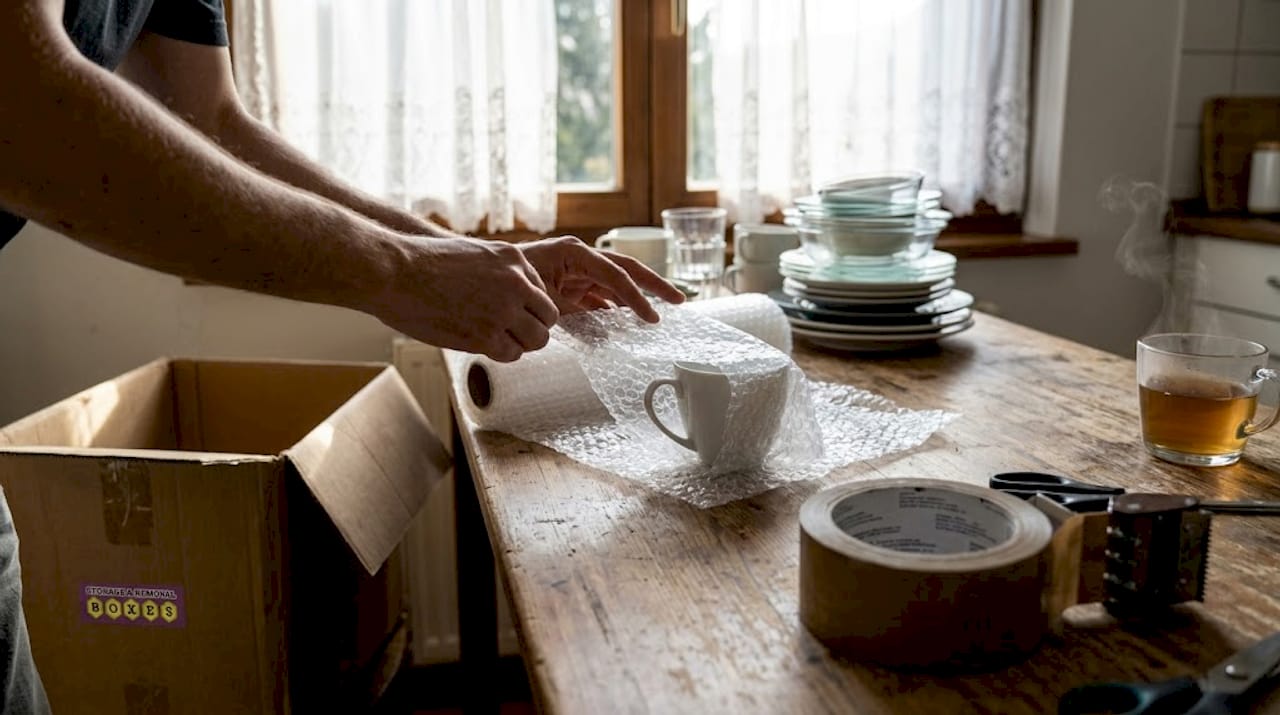
Small bubble wrap with 10mm bubbles is better for delicate items like crockery, while large bubble wrap with 20mm bubbles is better for furniture and mirrors. The logic is simple. Smaller bubbles create a tighter, more consistent cushion around delicate surfaces. Larger bubbles absorb the bigger impacts that furniture and framed pictures experience during loading and unloading.
There is a third type worth knowing about. Anti-static bubble wrap should be used for sensitive electronics because standard bubble wrap can generate static electricity that damages circuit boards and components. If you are moving a desktop computer, a games console, or any device with exposed circuits, pink anti-static wrap is not optional.
How much do you actually need?
One 50-metre roll of bubble wrap is generally sufficient to cover fragile items in a typical 3-bedroom house move. That said, if you have a lot of glassware, artwork, or ornaments, order two rolls. Running out mid-pack and substituting with newspaper leaves items vulnerable.
When it comes to eco-friendly choices, the options have improved considerably. Corrugated bubble wrap, honeycomb paper wrap, and biodegradable kraft paper cushioning perform comparably to plastic bubble wrap while reducing environmental impact. These are worth considering if you want to reduce plastic waste without compromising protection.
Pro Tip: Always wrap fragile items bubble-side inward so the bubbles press directly against the surface. Secure with packing tape rather than elastic bands, which can leave marks on delicate finishes.
You can browse rolls of bubble wrap in multiple sizes to match exactly what your move requires.
Packing strategies that actually protect your belongings
Having the right materials is only part of the job. How you pack determines whether your belongings arrive intact. Here is a practical sequence that works for most household moves.
- Start with the heaviest items at the bottom of each box. Place books, tins, and dense objects low down. Lighter items go on top. This keeps the centre of gravity stable and prevents fragile items from being crushed.
- Wrap every fragile item individually. Do not wrap two glasses together and assume they will be fine. Each piece needs its own layer of bubble wrap, secured with tape.
- Pack plates on their edge, not flat. Plates stacked flat break far more easily than plates standing upright. Think of how they sit in a dish rack. That vertical position distributes pressure across the rim rather than concentrating it on the face.
- Fill every void inside the box. Filling empty spaces with scrunched packing paper or void fillers prevents items from shifting and breaking during transit. A box that rattles when you shake it is a box that will arrive with damage.
- Use the double-box method for your most fragile pieces. Wrap the item in bubble wrap and packing paper, place it in a snug inner box, then place that box inside a larger one filled with cushioning material. This layering and double-boxing method creates an air buffer that significantly reduces impact.
- Seal boxes properly. Strong packing tape, including filament tape, is key to reinforcing boxes, especially for heavy or stacked loads. Run tape along the bottom seam in an H pattern, not just a single strip across the middle.
- Label every box clearly. Write the destination room and contents on at least two sides. Mark fragile boxes with a marker pen in large, clear letters. Add “This side up” where relevant.
Pro Tip: Packing paper is often more practical than bubble wrap for everyday household goods because it shapes itself into small spaces without adding bulk. Use bubble wrap for genuinely fragile items and packing paper for everything else.
One thing many people overlook is weight per box. A large box packed with heavy items is not just difficult to carry. It puts enormous stress on the base seam and risks splitting open mid-move. Stick to the rule: heavy items in small boxes, light items in large boxes.
Where to buy packing materials in Fulham
Knowing where to buy packing boxes in Fulham and source quality bubble wrap makes a real difference to how smoothly your move goes. You have two main routes: local physical suppliers and online delivery.
Local shopfronts in and around Fulham give you the advantage of seeing what you are buying, picking up materials at short notice, and avoiding delivery wait times. Some family-run packaging shops in the area carry a decent range of removal boxes, tape, and bubble wrap. The downside is that stock can be limited, prices are sometimes higher for specialist items, and you may not find double-walled boxes or specialist items like wardrobe boxes without ordering ahead.
Here is a quick comparison to help you decide:
| Option | Pros | Cons |
|---|---|---|
| Local Fulham shop | Immediate availability, no delivery wait | Limited range, higher unit cost, may not stock double-wall |
| Online specialist supplier | Wide range, bulk pricing, double-wall options | Delivery lead time, minimum order quantities |
| Supermarket freebies | Zero cost | Single-wall only, inconsistent sizes, unreliable quality |
For residents who want to buy packing materials without compromising on quality, ordering from a dedicated online supplier with next-day delivery to SW6 postcodes is often the most practical choice. You get access to double-walled boxes in every size, specialist boxes, bubble wrap rolls, and moving kits in one order.
When planning quantities, think room by room rather than guessing a total. Count your bookshelves, kitchen cupboards, wardrobes, and storage areas separately. This approach almost always reveals that you need more small boxes than you initially thought and fewer large ones.
- Order at least 10% more boxes than your estimate to account for oddly shaped items
- Buy bubble wrap in full rolls rather than small packs. The cost per metre drops significantly
- Consider a pre-packed moving kit if you want everything in one order without the mental arithmetic
My honest take on packing for a Fulham move
I have seen more moves go wrong over packing materials than over any other single factor. People spend weeks researching removal companies and then buy whatever boxes are cheapest on the day. That is backwards.
In my experience, the single biggest mistake is underestimating how many small boxes you need. Everyone assumes they will use mostly medium and large boxes. Then they start packing the kitchen and the study and suddenly realise they have run out of small ones. Ordering a proper mix from the start saves a last-minute trip across Fulham.
My other strong opinion is about combining bubble wrap with packing paper rather than relying on one or the other. Bubble wrap is excellent for shock absorption but it is bulky and expensive if you use it for everything. Packing paper is the true workhorse for everyday household packing because of its versatility. Use bubble wrap where it counts most: glassware, ceramics, electronics, and anything irreplaceable.
On sustainability, I think the eco-friendly alternatives are now good enough to use without hesitation. Honeycomb paper wrap in particular is genuinely impressive for protecting fragile items. If you care about reducing plastic waste, you do not have to sacrifice protection to do it.
Plan early. Order your boxes and bubble wrap at least a week before you start packing. And invest a little more in quality materials because the cost of replacing a broken item always exceeds the cost of the box that would have protected it.
Get your packing supplies sorted today
Whether you are moving a studio flat or a five-bedroom house in Fulham, having the right materials delivered to your door removes one major source of moving-day stress.
Storageremovalboxes stocks everything you need in one place. Their tall double-wall removal boxes are built for the heavy lifting, literally, with the strength to handle stacked loads without buckling. Alongside those, you will find bubble wrap rolls in small and large bubble sizes, eco-friendly wrapping alternatives, and pre-packed moving kits sized for different households. Delivery covers Fulham postcodes, so you can order the right quantities, get them delivered promptly, and start packing with confidence. Browse the full range at Storageremovalboxes and take the guesswork out of your move.
FAQ
What boxes are best for a house move in Fulham?
Double-walled boxes are the best choice for house moves because they resist collapse under weight and stack safely in a removal van. Use small boxes for heavy items and large boxes only for light, bulky belongings.
How much bubble wrap do I need for a 3-bedroom move?
One 50-metre roll covers the fragile items in a typical 3-bedroom house. If you have a large amount of glassware or artwork, order two rolls to be safe.
Where can I find boxes and bubble wrap in Fulham?
You can buy packing materials from local packaging shops in Fulham or order online from a specialist supplier like Storageremovalboxes, which delivers to SW6 postcodes and stocks double-walled boxes, bubble wrap rolls, and moving kits.
Can I use supermarket boxes for moving house?
Supermarket boxes are single-walled and not designed for stacking or carrying heavy loads. They are a false economy because they are far more likely to split or collapse during a move, putting your belongings at risk.
What is the difference between small and large bubble wrap?
Small bubble wrap with 10mm bubbles is designed for delicate items like crockery and glassware. Large bubble wrap with 20mm bubbles absorbs bigger impacts and is better suited to furniture, mirrors, and framed pictures.