Bulk packing process: a practical guide for home moves
TL;DR:
- Bulk packing involves organizing household items safely and systematically to reduce damage and streamline moving. Using high-quality materials like double-walled boxes, professional tape, and proper cushioning is essential for a smooth process. Starting early and following a room-by-room, no-shift packing method helps ensure everything arrives intact and ready for unpacking.
The bulk packing process is the methodical approach of organising and securing large quantities of household items for safe, efficient relocation. Done well, it reduces damage, cuts moving costs, and takes the chaos out of moving day. Done poorly, it leads to broken belongings, collapsed boxes, and last-minute panic. This guide follows the standards used by professional UK removal companies and gives you a clear, step-by-step framework to pack your home with confidence, whether you are moving a studio flat or a five-bedroom house.
What packing materials do you actually need for bulk packing?
The right materials are the foundation of any efficient packing process. Choosing poorly here costs you more in breakages than you save on cheap supplies.
Boxes: size and wall strength matter
Double-walled boxes are the non-negotiable starting point. They carry significantly higher crush-test ratings than single-walled alternatives, which matters when boxes are stacked four or five high in a removal van. The rule on sizing is simple: small boxes for heavy items, large boxes for light, bulky goods. Books, tools, and tins go in small boxes. Duvets, cushions, and lampshades go in large ones.
Tape: do not cut corners here
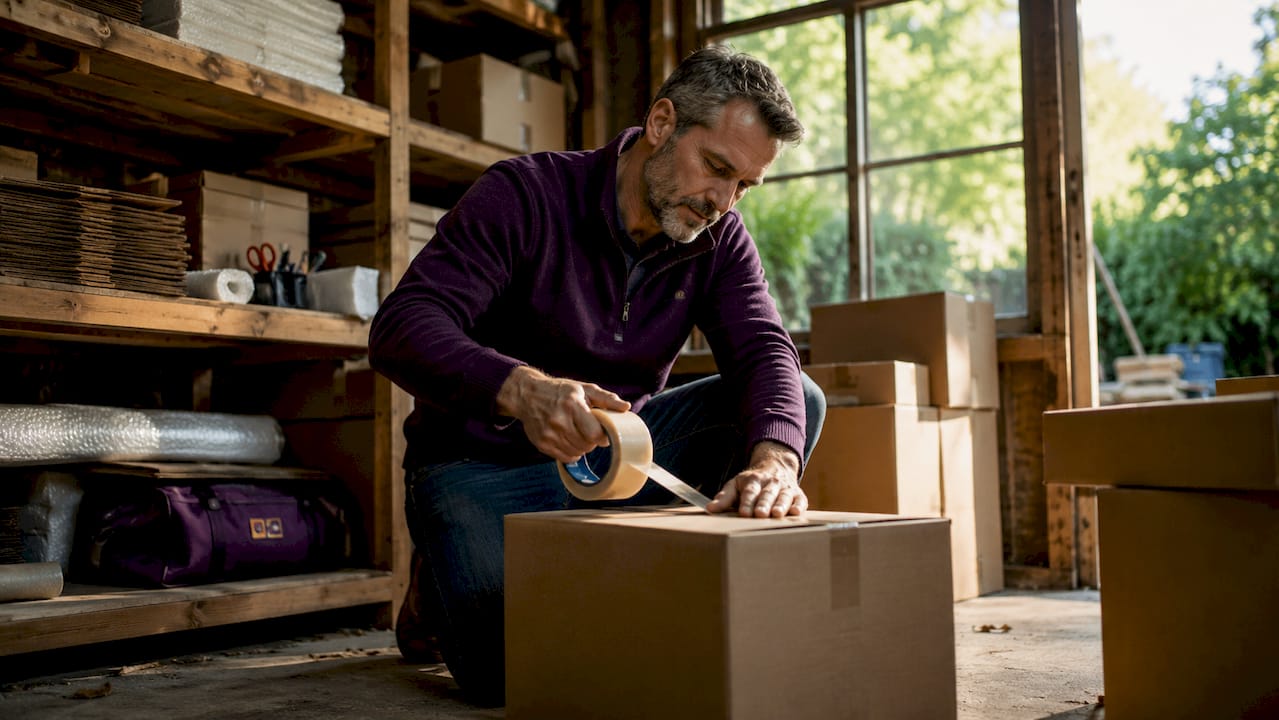
Professional-grade 50mm wide packing tape is the only tape worth using. Thinner supermarket tape fails under temperature changes and the vibration of transit. A box sealed with cheap tape can burst open mid-journey, and no amount of careful packing saves you then.
Cushioning materials
- Packing paper: Use plain, acid-free paper to wrap crockery, glassware, and ornaments. Newspaper ink transfers onto surfaces and is notoriously difficult to clean off china.
- Bubble wrap: Best reserved for genuinely fragile items such as mirrors, framed pictures, and electronics. Bubble wrap rolls from a dedicated supplier give you consistent coverage without running short mid-pack.
- Household textiles: Towels, tea towels, and clothing make cost-effective and environmentally friendly padding around fragile items. Professional packers recommend this approach regularly.
- Foam protectors: Foam corner guards and foam padding sheets protect furniture edges and awkward shapes that bubble wrap cannot cover neatly.
Pro Tip: Label your tape gun before you start. When you are three hours into packing and the tape gun vanishes under a pile of newspaper, you will thank yourself.
How do you plan a bulk packing workflow for a smooth move?
A structured bulk packing workflow is what separates a calm moving day from a frantic one. The timeline is everything.
Start earlier than you think you need to
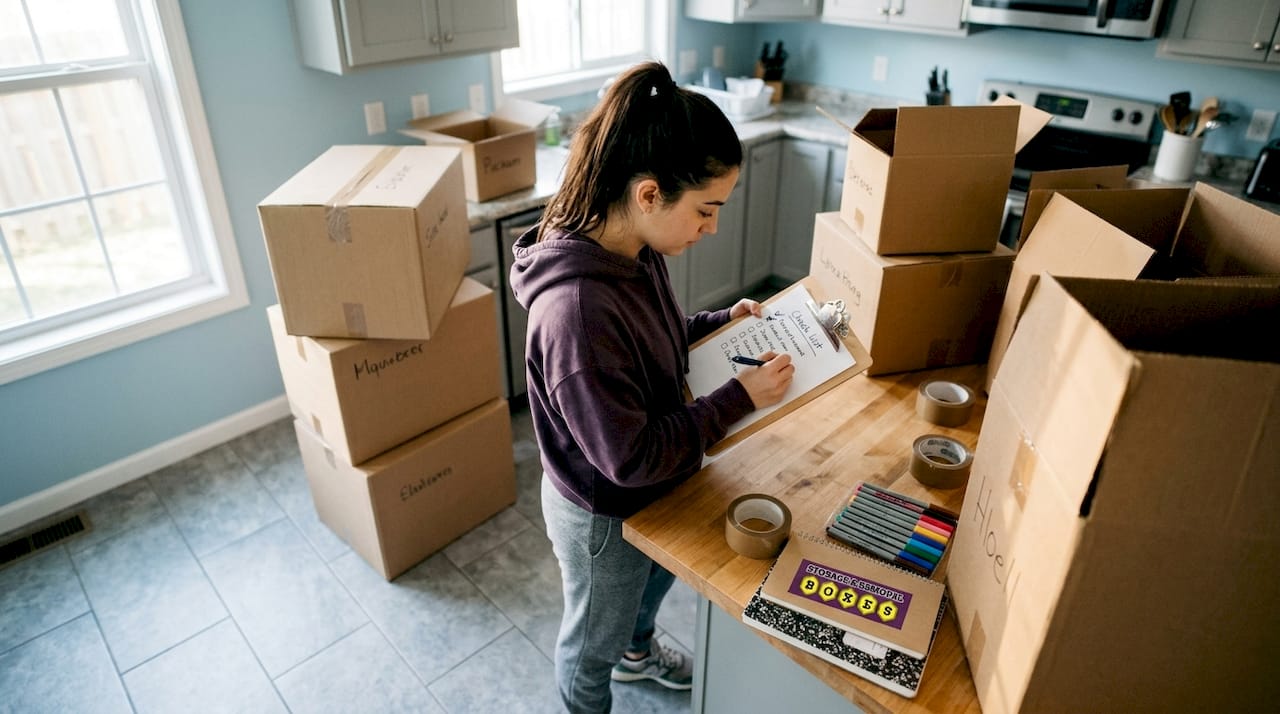
Begin packing 6–8 weeks before moving day, starting with low-usage rooms and non-essential items. A three-bedroom home typically needs 4–6 weeks at a manageable pace. Larger or long-occupied homes need the full eight weeks. Starting early means you pack one or two boxes a day rather than thirty the night before.
Follow a room-by-room order
- Loft, garage, and outbuildings — These hold the most non-essential items and are easiest to pack without disrupting daily life.
- Spare bedrooms and guest rooms — Low traffic means you can pack these completely and close the door.
- Living room and dining room — Books, ornaments, and non-daily-use items go first; furniture last.
- Bedrooms — Pack off-season clothing and extra bedding weeks ahead. Leave only what you need daily.
- Kitchen — Pack this last. You need it right up until moving day.
- Essentials box — Pack a separate box or bag with kettle, mugs, phone charger, toilet paper, and a change of clothes. Load it last and unload it first.
Declutter before you pack
Decluttering before packing reduces volume by roughly 10–20%, which cuts both packing time and moving costs. Use the four-pile method: keep, donate, sell, and discard. Do this at least two weeks before you start packing in earnest.
Pro Tip: Set up one dedicated packing zone in your home, ideally a spare room or hallway corner. Keep all your boxes, tape, and paper there. Packing in a single organised space stops supplies from scattering across the house.
How do you pack fragile items safely within the bulk packing process?
Fragile items need a different level of attention within any bulk packaging workflow. The techniques below are what professional packers use on every job.
- Wrap each item individually. Use acid-free tissue or plain packing paper for the first layer, then bubble wrap for a second layer on anything genuinely breakable.
- Pack plates vertically on their edges. Packing plates vertically with cardboard dividers between each one uses the plate’s natural structural strength. Plates packed flat crack far more easily under pressure.
- Fill every gap. The no-shift rule is the single most important principle professional packers follow. Fill box bases with 3 inches of crumpled paper to create a shock-absorbing layer, then fill all side gaps so nothing moves inside the box.
- Double-box genuinely fragile items. Place the wrapped item in a smaller box, pad it fully, seal it, then place that box inside a larger one with padding around it. This is the standard approach for antiques and electronics.
- Label clearly on multiple sides. Write “FRAGILE” on at least two sides and the top of every box containing breakables. Removal teams handle hundreds of boxes; clear labelling changes how they handle yours.
- Stack fragile boxes correctly in the van. Fragile boxes go on top of heavier boxes, never underneath. Place them against a stable wall surface rather than in a free-standing stack.
Pro Tip: For framed artwork and mirrors, wrap in moving blankets first, then apply tape in an X pattern across the glass. The X distributes pressure and holds any cracks in place if the glass does break.
Knowing when to call in help is also part of a sound approach. Professional packers for fragile items are worth considering for antiques, large mirrors, or anything irreplaceable.
Step-by-step guide to executing an efficient bulk packing process
This sequence works for any room and any volume of items. Follow it consistently and every box you pack will be safe, labelled, and ready to unload efficiently.
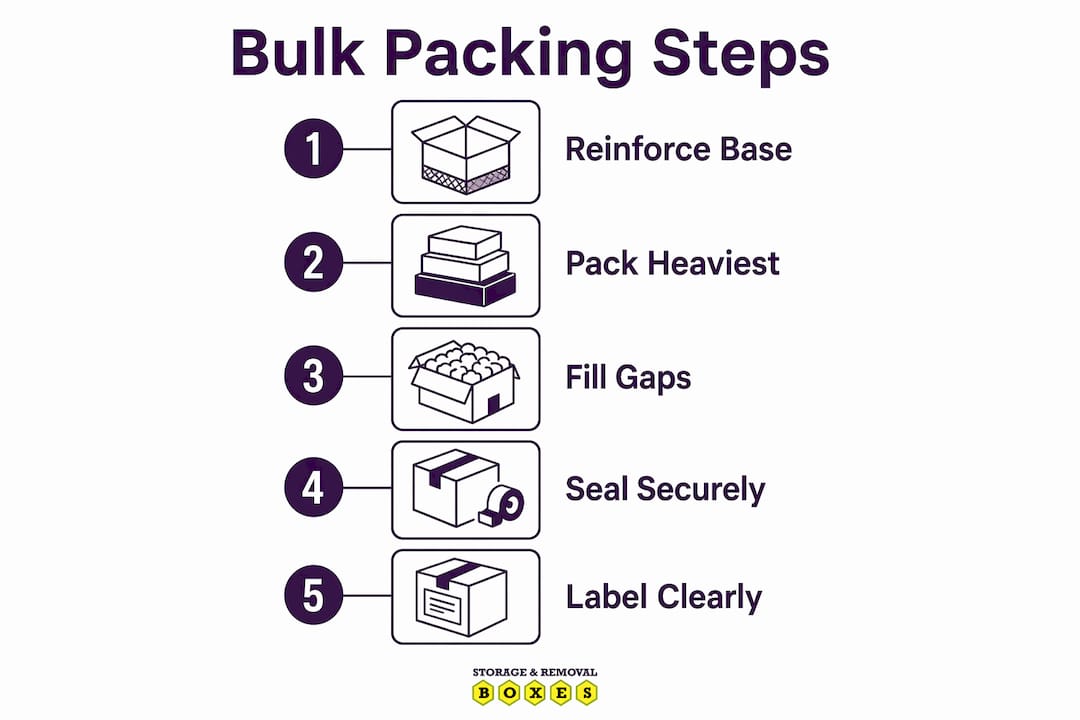
- Reinforce box bases. Apply the H-tape method: one strip of tape along the centre seam, then one strip along each edge flap. The H-tape method is critical for boxes that will be stacked in a van.
- Add a cushioning base layer. Place 3 inches of crumpled packing paper or a folded towel at the bottom of every box before adding any items.
- Pack by weight. Heavy items go in first, at the bottom. Lighter items layer on top. Never mix heavy and fragile items in the same box.
- Fill the box tightly. A box that rattles when you shake it will have damaged contents by the time it arrives. Fill gaps with scrunched paper, bubble wrap offcuts, or soft textiles.
- Seal with professional tape using the H-tape method. Apply tape along the centre seam and both edge flaps on the top, mirroring what you did on the base.
- Label every box clearly. Write the destination room and a brief contents summary on at least two sides. Use a permanent marker pen that will not smudge or fade.
- Number your boxes and keep an inventory. A simple numbered list on your phone or a notebook tells you exactly how many boxes should arrive and what is in each one.
| Step | Action | Key rule |
|---|---|---|
| 1 | Reinforce base with H-tape | Both centre seam and edge flaps |
| 2 | Add cushioning base layer | 3 inches of paper or soft textile |
| 3 | Pack by weight | Heavy first, fragile on top |
| 4 | Fill gaps completely | No movement when shaken |
| 5 | Seal top with H-tape | Mirror the base sealing method |
| 6 | Label clearly | Room name and contents on two sides |
| 7 | Number and log | Maintain a running inventory |
Books should be packed flat or spine-down in small boxes only. Large boxes of books routinely fail at the base due to excess weight, which is one of the most common and avoidable packing mistakes.
What are the most common bulk packing mistakes and how do you avoid them?
Even experienced movers make these errors. Knowing them in advance saves you money and stress.
- Overloading boxes. Professional movers enforce a 15–25 kg weight limit per box to prevent base failure. If you cannot lift a box comfortably with both hands, it is too heavy.
- Using the wrong box type. Single-walled boxes are not suitable for stacking or for heavy items. They compress under load and fail without warning.
- Mixing heavy and fragile items. A tin of paint next to a wine glass is a breakage waiting to happen. Keep categories separate and pack fragile-only boxes with nothing else.
- Leaving gaps unfilled. Internal movement is the primary cause of transit damage. Every gap in every box needs filling before you seal it.
- Rushing the final day. Completing packing the day before moving day is the professional standard. Rushing on the day leads to poor-quality packing, missing labels, and breakages.
- Skipping professional help for complex items. Fragile-only packing for a three-bedroom home takes 4–6 hours on average. If you have antiques, large mirrors, or a piano, a professional fragile packing service is worth the cost.
“The single biggest mistake DIY movers make is not the packing itself — it is the timeline. Starting too late forces rushed decisions on materials, box sizes, and labelling. Every hour you invest in early preparation pays back double on moving day.”
Key takeaways
A successful bulk packing process depends on starting early, choosing the right materials, following the no-shift rule, and labelling every box clearly before moving day.
| Point | Details |
|---|---|
| Start 6–8 weeks early | Begin with lofts and spare rooms; leave the kitchen until last. |
| Use double-walled boxes and 50mm tape | These materials withstand stacking and transit stresses that standard supplies cannot. |
| Follow the no-shift rule | Fill every gap with crumpled paper or soft textiles so nothing moves inside the box. |
| Pack by weight, not by room | Small boxes for heavy items, large boxes for light bulky goods, always. |
| Label and number every box | A simple inventory prevents lost items and speeds up unpacking at the other end. |
What I have learned from watching people pack badly
Most moving disasters are not accidents. They are the predictable result of two decisions: buying cheap tape and starting too late. I have seen families pack a three-bedroom house in two days and arrive at their new home with a box of broken crockery and a sofa that would not fit through the door because nobody measured it. The packing was the least of their problems, but it made everything worse.
The families who move well share one habit: they treat packing as a project with a start date, not a task they will get to eventually. They buy quality packing supplies before they need them, they declutter before they pack, and they keep fragile items in dedicated boxes that never get mixed with anything heavy.
The no-shift rule is the one technique most DIY movers skip. It feels like overkill until you open a box and find your grandmother’s china in pieces. Filling gaps takes an extra two minutes per box. That two minutes is the difference between arriving with everything intact and arriving with regrets.
My honest advice: spend more on boxes and tape than you think you need to. The cost difference between professional-grade materials and supermarket alternatives is small. The cost of replacing broken items is not.
— Adrian
Packing supplies from Storageremovalboxes for your home move
Storageremovalboxes supplies everything you need for a well-organised home move, from double-walled boxes in multiple sizes to professional-grade tape, bubble wrap, and foam protectors.
For bulky household items, the 30-inch tall double-wall removal boxes give you the height and strength to pack lamps, mirrors, and awkward shapes without compromise. If you prefer a ready-assembled solution, the home moving kits bundle boxes, tape, and cushioning materials together so you have everything in one order. All products are made from recyclable materials and delivered nationwide across the UK. Storageremovalboxes also offers bulk purchasing discounts, which makes a real difference when you are packing a larger home.
FAQ
What is the bulk packing process for a home move?
The bulk packing process is the systematic method of organising, wrapping, and boxing large quantities of household items for safe transport. It covers material selection, packing order, box sealing, and labelling.
How early should I start packing for a house move?
Start 6–8 weeks before moving day for a three-bedroom home. Larger or long-occupied homes need the full eight weeks to pack at a manageable pace without rushing.
What weight limit should I follow per moving box?
Professional movers use a 15–25 kg limit per box to prevent base failure. Use small boxes for heavy items such as books, and large boxes for light, bulky goods such as bedding.
How do I stop fragile items from breaking in transit?
Follow the no-shift rule: fill the base with 3 inches of crumpled paper, wrap each item individually, fill all side gaps, and label the box “FRAGILE” on at least two sides and the top.
Is professional packing worth it for fragile items?
Fragile-only packing for a three-bedroom home takes 4–6 hours on average. For antiques, large mirrors, or irreplaceable items, a professional service removes the risk and is worth the investment.