Essential items for packing kits: your 2026 UK guide
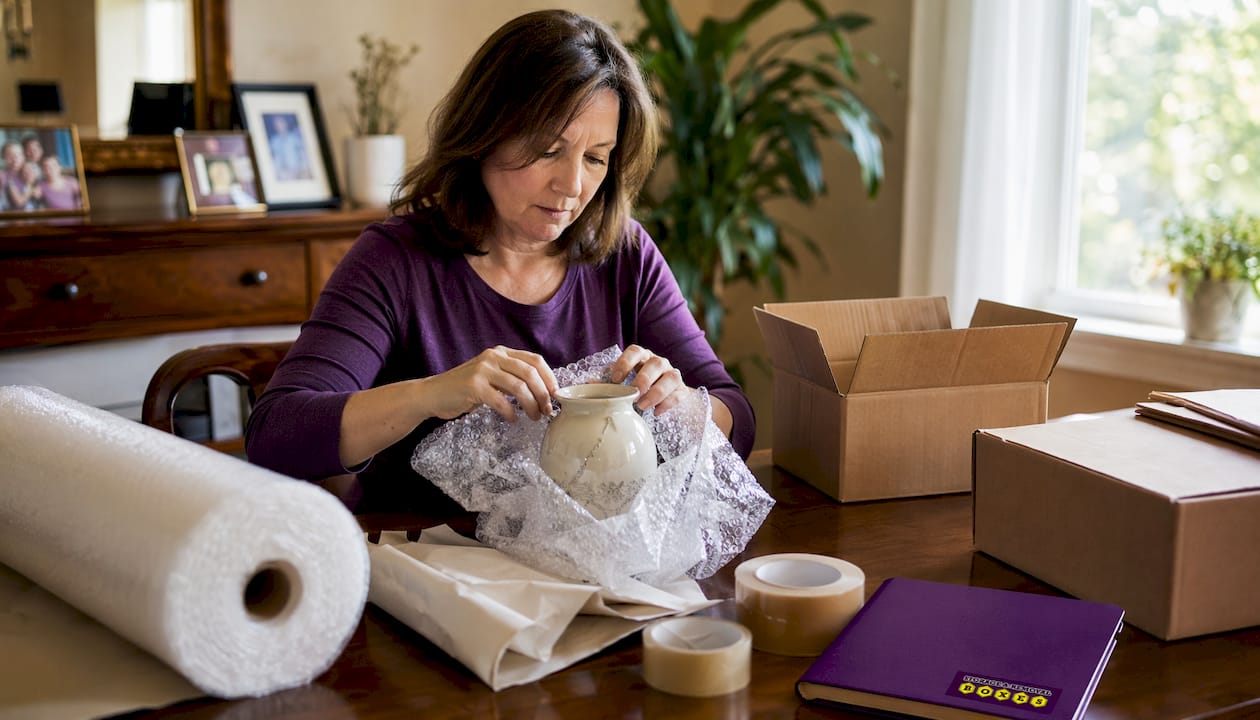
The must-have packing kit essentials for any UK house move are double-walled cardboard boxes in small, medium, and large sizes, plain packing paper, bubble wrap, brown PVC tape, and permanent markers. Add fragile tape, mattress covers, and furniture blankets, and you have everything needed to move a typical home without breakages or chaos.
Here is the full list of core materials to gather before you start:
- Double-walled boxes in small, medium, and large sizes (small for books and tins, large for bedding and lampshades)
- Packing paper (a quantity covering most homes; more versatile than bubble wrap for the majority of items)
- Bubble wrap (one large roll minimum, reserved for genuinely fragile pieces)
- Brown PVC tape with a tape dispenser (several rolls; cheap clear tape splits under weight)
- Permanent markers for labelling every box clearly
- Fragile tape or stickers to flag delicate boxes
- Wardrobe boxes with built-in rails for hanging clothes; each holds around 15–20 items
- Mattress and sofa covers to keep upholstery clean during transit
- Furniture blankets for wrapping large pieces against scratches
How to protect fragile items when packing
Plain packing paper is the first line of defence for fragile items, not bubble wrap. Paper wraps tighter, packs denser, and costs less. Bubble wrap is best saved for the highest-risk pieces: mirrors, electronics, and anything with a glazed or painted surface.
A few specific techniques make a real difference:
- Never use newspaper. Ink stains china, glassware, and fabric and is extremely difficult to remove.
- Double-wrap method: wrap the item in packing paper first, then bubble wrap. The paper creates a smooth barrier; the bubble wrap absorbs impact. Putting bubble wrap directly against a delicate surface can leave marks.
- Pack plates vertically, never flat. Flat stacking concentrates weight on the bottom plate, which is the one that cracks. Wrap each plate individually, then bundle four or five together with paper between each one.
- Fill every gap. Crumpled packing paper between items stops movement during transit. If the box rattles when you shake it, add more paper.
- Glasses: wrap each one individually, twist the paper at the top, and tuck it inside the glass for internal padding. Stand glasses upright, never on their sides.
Pro Tip: For extremely fragile items, use the box-within-a-box method. Pack the wrapped item in a small box, then place that inside a larger box with at least two inches of crumpled paper padding on all sides. The outer box takes the impact; the inner box protects the item.
Labelling and organising your boxes properly
Descriptive labels are far more useful than generic ones. “Kitchen, mugs, glasses, not heavy” tells a removal team exactly what to do with a box; “Kitchen” tells them almost nothing. Write on at least two sides and the top so the label is visible however the box is stacked.
Practical steps that pay off on moving day:
- Use a permanent marker pen so labels stay legible through handling and damp conditions.
- Mark fragile boxes on all four sides and the top, not just one face. Two minutes of labelling changes how those boxes get handled.
- Keep fragile labels or fragile tape to hand throughout packing, not just at the end.
- Pack a dedicated essentials box last. Fill it with toiletries, chargers, medication, a kettle, mugs, and a change of clothes. This box should stay accessible until unpacking is complete and travel with you rather than in the van.
- Colour-coded labels per room speed up unloading considerably when you have a team helping.
The essentials box is one of the most consistently recommended practices among professional movers. It removes the frantic rummaging through sealed boxes on the first night.
Where to source packing kits and materials in the UK

UK suppliers typically sell packing materials in three configurations: starter kits for smaller households, room-specific bundles, and premium kits covering a full three or four-bedroom home. Buying a pre-assembled kit usually works out cheaper than sourcing each item separately, and it removes the risk of forgetting something.
Storageremovalboxes stocks double-walled moving boxes in multiple sizes alongside bubble wrap rolls, packing paper by the ream, brown PVC tape, moving blankets, and foam corner protectors. The range covers both individual movers and commercial clients such as removal firms. Eco-friendly and recyclable packaging materials are increasingly available, including boxes made from recycled fibres, which reduce environmental impact without compromising protection.
For quantity, a rough guide by house size:
- Studio or one-bedroom: a starter kit with a moderate number of boxes, an appropriate amount of paper, and bubble wrap
- Two to three bedrooms: a larger quantity of boxes and packing materials suitable for a typical household
- Four bedrooms or more: a full set including additional wardrobe boxes and ample tape and paper
Wardrobe boxes are worth adding for any household with suits, dresses, or coats. They remove the need to fold and iron an entire wardrobe after moving.
Tips for packing efficiently and avoiding common mistakes
The most frequent packing errors are predictable and avoidable. Heavy items in large boxes is the classic one: a large box of books becomes impossible to lift and the bottom gives out. Pack heavy items only in small, double-walled boxes; large boxes are for light, bulky items like duvets and cushions.
A few more practices that protect both your belongings and your back:
- Reinforce every box bottom with strong brown PVC tape, two or three strips crossing the centre and two along the seams.
- Disassemble furniture where possible. Keep all fixings in a labelled bag taped directly to the item or in a dedicated hardware box so nothing gets lost.
- Use soft items such as bedding, towels, and jumpers as padding around fragile items when bubble wrap runs low. They do the job well and take up space that would otherwise need filling.
- Do not drag furniture. Dragging damages floors and the furniture itself. Lift it, or use a sack truck.
- Keep important documents, passports, and valuables in a separate box that travels with you, not in the removal van.
Pro Tip: Before unplugging any electronics, photograph the cable setup. Reconnecting a TV, soundbar, and games console from memory is far harder than it looks, and a ten-second photo saves hours at the other end.
Storageremovalboxes supplies everything on this list, from large double-walled removal boxes to complete home moving kits, with nationwide delivery across the UK. Whether you are packing a one-bedroom flat or a four-bedroom house, the range covers every stage of the process.
Key takeaways
A well-stocked packing kit built around double-walled boxes, plain packing paper, bubble wrap, and strong tape prevents the majority of damage and delays that make moving day stressful.
| Point | Details |
|---|---|
| Box size determines safety | Heavy items go in small boxes only; large boxes are for light, bulky items like bedding. |
| Paper before bubble wrap | Wrap fragile items in packing paper first, then bubble wrap to avoid surface marks. |
| Descriptive labels save time | Write room and contents on every box, for example “Kitchen, mugs, glasses, not heavy.” |
| Pack an essentials box | Keep toiletries, chargers, medication, and kitchen basics accessible for the first 24 hours. |
| Secure fixings immediately | Tape labelled bags of screws and brackets directly to the furniture they belong to. |