Essential packing materials guide for safe UK moves
TL;DR:
- Using purpose-built packing materials reduces damage and stress during moving or storage.
- Choosing the correct box type and size based on weight and fragility ensures safe transit.
- Eco-friendly, recycled, and biodegradable packing options perform as well as conventional materials.
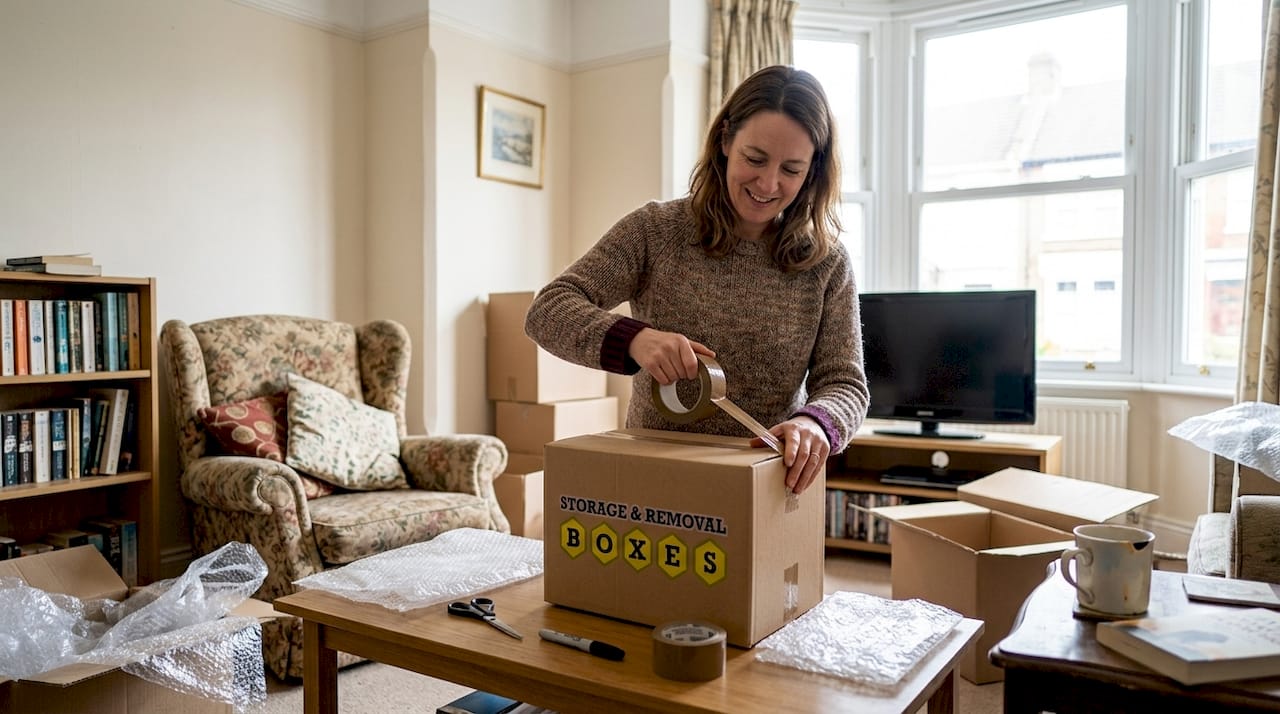
Broken crockery, cracked mirrors, and squashed lampshades are not just upsetting. They cost you money, waste time, and add enormous stress to an already demanding day. The wrong packing materials are behind most moving disasters, yet many people still improvise with whatever boxes they can find at the supermarket. This guide gives you everything you need to choose and use packing materials properly, whether you are moving house, placing items into self-storage, or simply trying to reduce waste while you do it. Follow this from start to finish and you will arrive at your new home with every item exactly as you left it.
Table of Contents
- What you’ll need: essential packing materials overview
- How to choose the right boxes for your items
- Eco-friendly and sustainable packing options
- Packing techniques to prevent breakage and maximise space
- What most guides miss about packing for UK moves
- Where to get trusted packing materials for your move
- Frequently asked questions
Key Takeaways
| Point | Details |
|---|---|
| Choose the right box | Select single-wall for small, light items and double-wall for heavy or fragile goods for safe packing. |
| Go green where possible | Sustainable packing options are now widely available and offer robust protection for your belongings. |
| Pack for safety and space | Proper techniques reduce breakage and optimise space—fill gaps, label well, and never overload. |
| Invest in quality materials | High-quality packing materials help prevent costly damage and make moving or storage less stressful. |
What you’ll need: essential packing materials overview
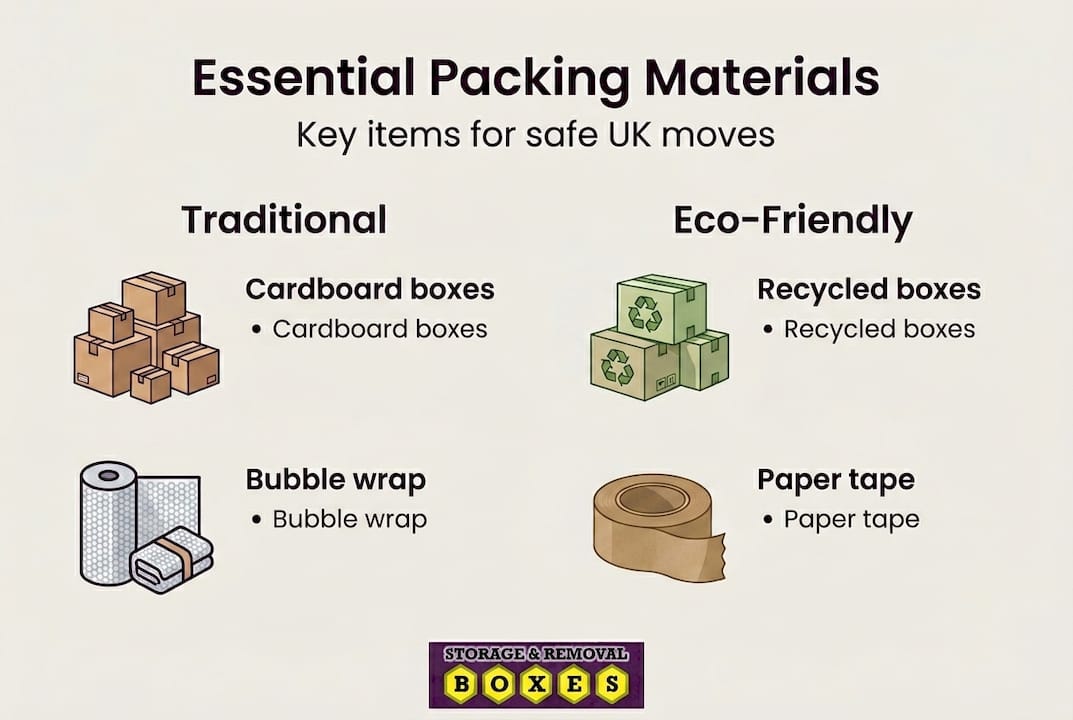
Before you tape up a single box, you need to know what you are working with. A well-stocked packing kit covers far more than just cardboard. Here is a full checklist of what every UK home move or storage project requires:
- Cardboard boxes in a range of sizes (small, medium, large)
- Bubble wrap for cushioning fragile items
- Packing paper or tissue paper for wrapping smaller objects
- Foam sheet protectors for electronics, artwork, and glassware
- Strong packing tape (at least 48mm wide)
- Permanent markers for labelling boxes clearly
- Moving blankets for protecting furniture and large appliances
- Void fill such as biodegradable packing peanuts or crumpled paper
Once you have that list in hand, the next decision is quality. Household materials like bin bags and flimsy grocery boxes may seem convenient but they collapse under pressure, offer no stacking strength, and frequently cause damage. Purpose-built removal boxes are manufactured to specific load ratings and tested for stacking performance.
A key distinction worth understanding early is the difference between single wall boxes and double wall boxes. According to research on best cardboard boxes by strength, single-wall boxes suit light items under 5kg, while double-wall versions handle up to 15kg and provide significantly better stacking and compression resistance. That difference matters when boxes are loaded into a van and stacked four or five high.
| Material | Best use | Eco-friendly alternative |
|---|---|---|
| Cardboard boxes | General household items | Recycled or FSC-certified cardboard |
| Bubble wrap | Fragile items, glassware | Biodegradable bubble wrap, foam sheets |
| Moving blankets | Furniture, appliances | Wool blankets, duvets |
| Foam protectors | Electronics, artwork | Recycled foam, layered packing paper |
| Packing tape | Sealing boxes | Paper tape with water-activated adhesive |
| Void fill | Filling gaps in boxes | Crumpled newspaper, shredded cardboard |
Pro Tip: When sourcing boxes, avoid those that have been stored in damp environments. Moisture weakens the corrugated fluting inside cardboard, reducing its load-bearing capacity by up to 75 per cent even when the box looks intact from the outside.
How to choose the right boxes for your items
Now that you have your materials list sorted, matching the right box to the right item is where many people make costly errors. Three factors should guide every choice: weight, fragility, and physical dimensions.
Here is a simple comparison to frame your decisions:
| Item type | Weight range | Recommended box |
|---|---|---|
| Books, files, tins | Up to 5kg | Single-wall small box |
| Kitchenware, clothes | 5kg to 12kg | Double-wall medium box |
| Glassware, ceramics | Fragile, varies | Double-wall with foam lining |
| Tools, heavy equipment | 10kg to 15kg | Double-wall large box |
| Linen, pillows, light toys | Very light, bulky | Single-wall large box |
For heavier loads, a purpose-built heavy-duty box makes a significant difference. The double-wall construction prevents the base from bowing outward and reduces the risk of the box giving way mid-lift.
Follow this numbered checklist when packing each item category:
- Weigh your items before selecting a box. A kitchen box stuffed with pots can exceed 20kg, which is a back injury waiting to happen.
- Choose the smallest workable box for dense, heavy items. Larger boxes invite overfilling.
- Select double-wall for anything fragile, regardless of weight. The extra layer absorbs impact during transit.
- Ensure the box lid closes flat without bowing upward. A bulging lid means the box is overpacked and will not stack safely.
- Label every box on the side (not the top) so you can read it when boxes are stacked.
Books are a classic trap. People reach for large boxes because books are flat and easy to stack inside. But a large box full of books can easily hit 25kg, which is dangerous for both your movers and your floors. Use medium removal boxes for books and fill any gaps with packing paper to prevent shifting.

Pro Tip: Place heavier boxes at the bottom of stacks in the van and lighter boxes on top. Mark boxes containing fragile items with arrows indicating which way is up. This simple habit prevents a significant proportion of transit damage.
Eco-friendly and sustainable packing options
With the basics sorted, it is worth looking at how to make your move genuinely greener without sacrificing protection. Sustainable packing has moved well beyond the token gesture of using newspaper instead of bubble wrap.
Here are the most effective sustainable swaps available to UK households right now:
- Recycled cardboard boxes: Many quality removal boxes are already made from recycled fibre. Look for the FSC certification mark, which confirms responsible sourcing. All recyclable moving boxes from reputable UK suppliers are designed to be broken flat and collected in standard kerbside recycling after your move.
- Biodegradable bubble wrap: Made from plant-based plastics or recycled film, these alternatives provide comparable cushioning to standard wrap and break down far more readily in landfill.
- Paper tape: Water-activated paper tape creates a strong bond and is fully recyclable with the box, unlike plastic tape which must be removed before recycling.
- Wool or fabric packing blankets: Reusable, naturally resilient, and effective. Old duvets, towels, and jumpers protect furniture just as well as synthetic moving blankets and cost nothing extra.
- Shredded cardboard void fill: Leftover cardboard from your unpacked deliveries can be torn and used as gap filler inside boxes instead of foam peanuts.
A common concern is whether sustainable materials match up in performance. For everyday household items, they absolutely do. The only area where conventional materials still hold a slight edge is in very long-term storage, where moisture management matters more. In those cases, a combination of cardboard boxes by strength and sealed plastic liner bags provides the best of both approaches.
Pro Tip: After your move, post unwanted boxes on local Freegle or Freecycle groups. They will be collected within hours and reused by a neighbour, keeping them out of the recycling stream entirely for another full cycle of use.
Packing techniques to prevent breakage and maximise space
Good materials only take you so far. How you pack is equally important. These steps work together to create boxes that are safe, stackable, and efficient to load.
- Cushion the base. Line the bottom of every box with at least 5cm of crumpled paper, foam, or biodegradable fill before placing any item inside. This absorbs impact from drops and road vibration.
- Wrap each item individually. Even if two plates look similar, wrap them separately. Items touching each other during transit create micro-abrasions and can crack under lateral force.
- Pack plates vertically, not flat. Plates stacked flat transmit pressure directly downward. Standing them on edge distributes force along the stronger curved surface and dramatically reduces breakage.
- Fill every gap. A half-empty box is as dangerous as an overfull one. Contents shift, items collide, and box walls buckle inward. Stuff gaps firmly with paper or fabric.
- Seal with two strips of tape. Run tape along the central seam and then across both ends in an H-pattern. This distributes the structural load across the full base rather than concentrating it at the join.
- Label with content and destination room. This saves time on arrival and prevents boxes from being placed on top of fragile ones in the wrong order.
Safety note: Research on box weight limits confirms that single-wall boxes handle items under 5kg and double-wall versions up to 15kg. Exceeding these limits does not just risk damage to contents; it risks injury to anyone carrying the box.
For storage projects rather than moves, the same rules apply with one addition. Boxes in a storage unit should be stacked with the heaviest at floor level and the most frequently accessed at eye height. Refer to our full removal boxes guide for storage-specific stacking advice.
What most guides miss about packing for UK moves
Most packing guides tell you what to buy. Very few tell you what happens when people do not. We have seen the results: splintered furniture legs wrapped in nothing but a single layer of cling film, glassware packed in bin bags, and towers of mismatched supermarket boxes that collapsed in the van before it reached the end of the street.
The uncomfortable truth is that DIY shortcuts almost always cost more than they save. A set of quality double-wall boxes and proper packing materials represents a fraction of the excess charge your removal company may quote for damaged goods, or the replacement cost of a broken television.
There is also an assumption that eco-friendly means fragile or underpowered. That simply is not true anymore. Modern recycled cardboard and biodegradable fill products regularly match the performance of their conventional counterparts. Choosing large double wall boxes made from recycled fibre is not a compromise. It is a sensible, well-supported decision.
A small amount of research before moving day, combined with the right materials, removes most of the anxiety from the process entirely.
Where to get trusted packing materials for your move
Finding the right materials should not be another source of stress on top of an already demanding move.
At StorageRemovalBoxes.co.uk, we supply a wide range of purpose-built packing materials suited to every UK home move and storage project. From large double wall boxes built to handle heavier loads with confidence, to rolls of bubble wrap for protecting your most delicate possessions, everything is in one place. Our pre-assembled moving kits take the guesswork out of quantities, with options matched to different household sizes. All products are made from recyclable materials and delivered nationwide across the UK.
Frequently asked questions
What is the difference between single-wall and double-wall boxes?
Single-wall boxes are best for light items under 5kg, while double-wall boxes hold up to 15kg and are far better suited to fragile or heavier household goods.
How can I choose sustainable packing materials for my move?
Opt for FSC-certified recycled cardboard boxes, biodegradable bubble wrap, paper tape, and reusable fabric blankets to reduce the environmental impact of your move without compromising protection.
What are the top tips for preventing breakage when packing?
Always use the correct box strength for the weight of your items, wrap everything individually, fill gaps to prevent shifting, and never exceed weight limits printed on the box.
Are eco-friendly packing materials as effective as standard ones?
Many modern eco-friendly options match or exceed the strength of standard materials when selected carefully, making them a reliable choice for most household moves and storage projects.