Explaining packing tape types for your house move
TL;DR:
- Choosing the right packing tape depends on box weight, storage conditions, and how long sealing is needed.
- Polypropylene, PVC, and water-activated tapes each serve different purposes and perform well under specific conditions.
Packing tape is defined as an adhesive tape designed specifically to seal boxes and parcels securely during moves, with the three primary types being polypropylene (BOPP), PVC/vinyl, and water-activated tape (WAT). Each type uses a different backing material and adhesive, which directly affects how well your boxes hold together under weight, temperature change, and handling. Choosing the wrong tape is one of the most common reasons boxes fail mid-move. Brands like Scotch produce polypropylene tape as a standard household option, while tools like tape dispensers from U-Haul make application faster and more consistent. Understanding which tape suits your boxes, your storage conditions, and your load weights will save you from damaged belongings and wasted effort.
What are the main types of packing tape?
Explaining packing tape types starts with understanding the three core materials: polypropylene, PVC, and water-activated tape. Each has a distinct set of strengths, and none is universally best for every situation.
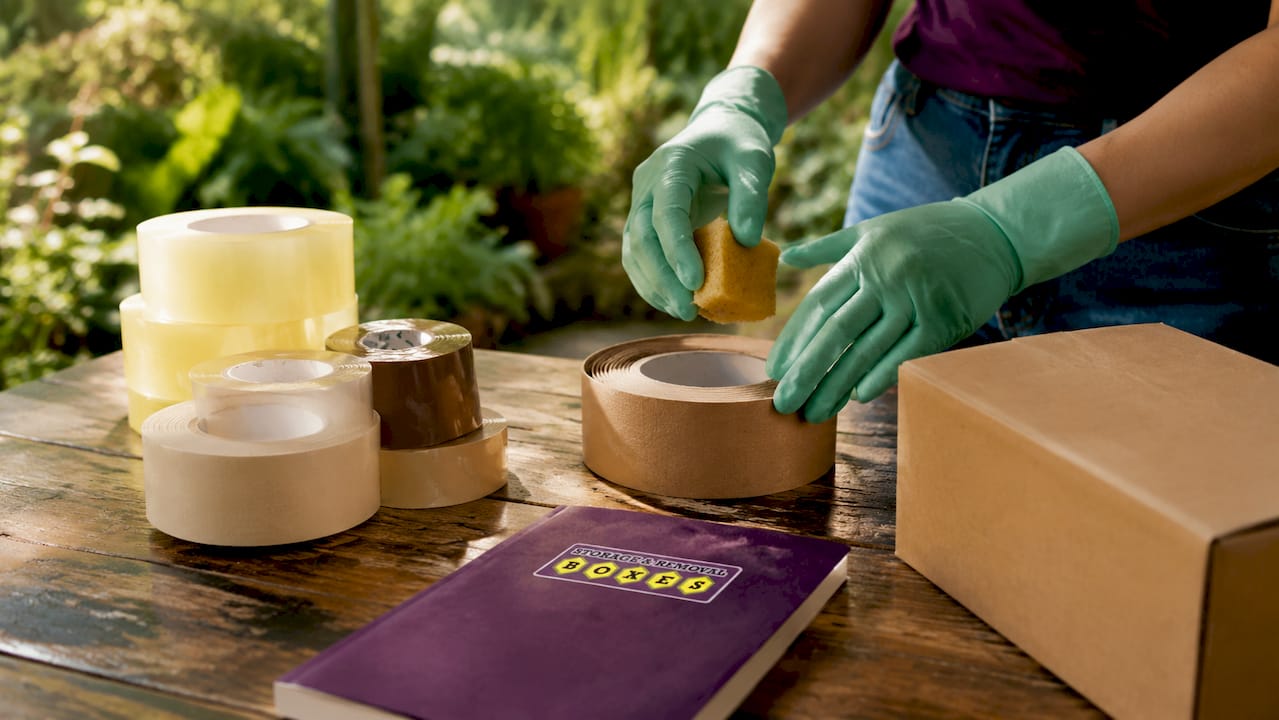
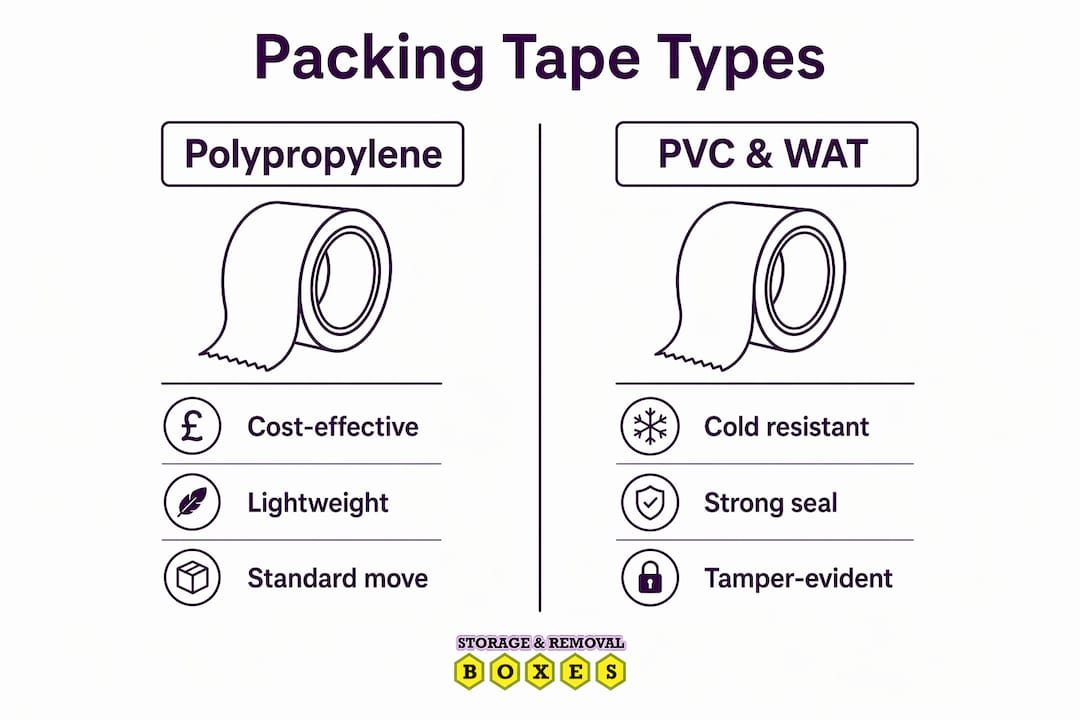
Polypropylene tape is the most common and cost-effective option for standard residential moves. It is lightweight, widely available, and works well in moderate temperatures. Most clear and brown tape rolls you see in supermarkets or DIY shops are polypropylene. Retail rolls typically run 50–66 metres, making them practical for sealing a large number of boxes in one go.
PVC tape is thicker and more flexible than polypropylene. It performs well in cold environments, which matters if you are storing boxes in a garage or unheated storage unit over winter. PVC tape outperforms polypropylene in temperatures below 4°C, where polypropylene becomes brittle and loses adhesion. PVC is also more resistant to tearing during application, which reduces waste.
Water-activated tape (WAT), sometimes called gummed tape, bonds directly with the cardboard surface when moistened. This creates a tamper-evident seal that is ideal for heavy boxes over 30 lbs (roughly 13.5 kg). WAT is harder to remove cleanly, which is exactly the point. It signals immediately if a box has been opened during transit.
| Tape type | Best use | Key strength | Limitation |
|---|---|---|---|
| Polypropylene (BOPP) | Standard residential moves | Cost-effective, widely available | Brittle in cold conditions |
| PVC/vinyl | Cold storage, garages | Flexible, tear-resistant | Slightly higher cost |
| Water-activated (WAT) | Heavy or high-value boxes | Tamper-evident, strong bond | Requires a dispenser with water |
| Filament-reinforced | Very heavy loads over 60 lbs | Over 600 lbs tensile strength | Specialist use only |
Filament-reinforced tape deserves a mention here. It contains fibreglass strands woven into the backing, giving it over 600 lbs of tensile strength. This tape is not for everyday boxes. It is used to bundle or reinforce the bottom seams of very heavy loads, such as boxes of books or tools.
How do adhesives and tape thickness affect performance?
The backing material tells you what a tape is made of. The adhesive tells you how it sticks. These two factors together determine whether your boxes stay sealed from packing day to delivery day.
Acrylic adhesive is the most stable option for long-term storage. Clear acrylic tape resists UV light and ageing, which means it will not yellow, crack, or lose grip over months in storage. If you are putting boxes into a self-storage unit for any length of time, acrylic is the right choice.
Hot-melt adhesive bonds aggressively on first contact, which makes it popular for fast packing. It grips quickly and works well with tape dispensers. The drawback is that hot-melt tapes can lose adhesion in extreme temperatures, whether in a hot attic or a freezing unheated unit. Acrylic tapes maintain their clarity and grip far longer under those conditions.
Rubber-based adhesive offers the most immediate tack and flexibility. It sticks to a wider range of surfaces, including slightly dusty or textured cardboard, and holds well on heavier or irregularly shaped boxes. It tends to cost more and is less common in standard retail ranges.
Tape thickness is measured in mils (thousandths of an inch). Here is how thickness maps to typical moving needs:
- 1.6–1.9 mil: Light boxes under 10 kg, short moves, dry conditions
- 2.0–2.4 mil: Standard household boxes, most residential moves
- 2.5 mil and above: Heavy-duty boxes over 20–25 lbs, long-distance moves, storage
Tensile strength and elongation rates also matter. Tapes with high tensile strength and elongation resist tearing under transport stress far better than thin tapes with low stretch. A tape that can flex slightly without snapping is more durable in transit than a rigid one.
Pro Tip: If you are unsure which thickness to buy, go for 2.5 mil as your default. It handles most household boxes without wasting money on specialist tape for lighter loads.
Which tape is best for different moving conditions?
Tape choice depends on three variables: box weight, storage environment, and how long the boxes will be sealed. Getting this right prevents the two most common failures: boxes splitting at the base and seals peeling in cold or damp conditions.
For a standard residential move with boxes under 20 lbs, polypropylene tape at 2.0–2.4 mil is sufficient. It is affordable, easy to apply, and performs well in normal indoor conditions. Most people moving a two or three-bedroom home will use polypropylene for the majority of their boxes.
For cold environments, such as garage storage or a removal van in winter, switch to PVC or a high-tack acrylic tape. Polypropylene becomes unreliable below 4°C. This is a detail most people miss until a box seal fails in a cold van.
For heavy or high-value boxes, professional movers pair heavy-duty 2.5–3.0 mil tape with filament-reinforced tape along the bottom seam. The filament tape acts as a structural support, while the standard tape seals the flaps. This combination handles boxes of books, kitchen equipment, or tools without the base giving way.
For long-term storage, acrylic tape is the clear winner. Hot-melt tape risks adhesion loss in hot attic storage or unheated units over time, whereas acrylic maintains its bond and clarity across seasons.
On sustainability, paper-based tapes offer kerbside recyclability and are gaining popularity for eco-conscious moves. Paper tape requires a starch adhesive and a water-activated dispenser, but it breaks down more easily and does not contaminate cardboard recycling. Plastic tapes deliver consistent performance across humidity levels but add to plastic waste. The choice often comes down to whether your priority is performance or environmental impact. You can read more about sustainable packing choices if that factor matters to your move.
Common mistakes to avoid:
- Using thin tape (under 1.9 mil) on boxes over 15 lbs
- Applying only a single strip along the centre seam without reinforcing the edges
- Using polypropylene tape in cold storage without checking the temperature rating
- Layering multiple strips of thin tape instead of one strip of thicker tape
How should you apply packing tape for the best seal?
Correct application matters as much as tape choice. A high-quality tape applied poorly will still fail under weight or handling.
- Use the H-seal method. The H-seal technique seals the centre seam of the box base plus both short edges, forming an H shape. This redistributes the box’s weight across three sealed lines rather than one, significantly reducing the chance of the base splitting.
- Choose the right tape width. Standard packing tape is 48mm wide, which suits most removal boxes. Wider tape covers more surface area per strip and reduces the number of passes needed. Using a single wide strip is more reliable than two narrow strips side by side.
- Use a tape dispenser. A dispenser keeps tension consistent, cuts cleanly, and speeds up packing considerably. Fumbling with a loose roll leads to uneven application and wasted tape. Storageremovalboxes stocks tape dispensers and strapping that work with standard 48mm rolls.
- Apply tape to clean, dry surfaces. Dust, moisture, or grease on the cardboard surface reduces adhesion immediately. If boxes have been stored in a damp space, wipe them down before sealing.
- Do not over-layer. One thick, correctly applied layer outperforms three thin strips. Multiple thin layers create uneven surfaces and do not add proportional strength.
Pro Tip: Seal the base of every box before you start filling it. Sealing an already-loaded box is harder, and you are more likely to apply uneven pressure that weakens the seal.
Key takeaways
The right packing tape for a house move is determined by box weight, storage temperature, and how long the seal needs to hold.
| Point | Details |
|---|---|
| Match tape to box weight | Use 2.5 mil or above for boxes over 20 lbs; standard 2.0–2.4 mil suits lighter loads. |
| Choose adhesive for storage length | Acrylic adhesive resists UV and ageing; use it for any box going into long-term storage. |
| Adapt to temperature | PVC or high-tack acrylic outperforms polypropylene in cold garages or unheated units. |
| Apply the H-seal method | Sealing the centre seam and both edges distributes weight and prevents base failure. |
| One thick layer beats many thin ones | A single 2.5 mil strip applied correctly is stronger and more economical than multiple thin strips. |
What I have learned from watching moves go wrong over tape
Most people treat packing tape as an afterthought. They grab whatever is cheapest at the supermarket, apply a single strip down the middle of every box, and wonder why the base gives way when a removal operative picks it up. The tape is not the problem. The thinking is.
The single most useful shift in mindset is to treat tape thickness as a load-bearing decision, not a cosmetic one. A 1.6 mil tape on a box of books is not tape. It is a suggestion. The box will fail, and the books will suffer for it.
I have also seen people waste money by buying specialist tape for every box. Filament-reinforced tape is genuinely useful for the heaviest boxes, but it is overkill for a box of cushions. The practical approach is to buy one roll of 2.5 mil polypropylene or acrylic tape for general use, one roll of filament tape for the five or six heaviest boxes, and PVC tape if any storage is going into a cold space. That covers almost every scenario in a typical British house move without overcomplicating the supply list.
The sustainability question is worth taking seriously. Paper-based tape is no longer a niche product. It performs well for standard boxes and keeps your cardboard fully recyclable at the kerbside. If you are already using double-walled cardboard boxes, pairing them with paper tape makes the whole package genuinely recyclable. That is a meaningful improvement over the standard plastic tape and cardboard combination most people default to.
Packing tape works best when your boxes are up to the job
The best tape in the world cannot compensate for a weak box. Strong removal boxes and the right tape work together to protect your belongings from packing day through to unpacking.
Storageremovalboxes supplies a full range of packing tape rolls including clear acrylic, brown sealing tape, and tamper-evident options, alongside tape dispensers for faster application. For the boxes themselves, the large double-walled removal boxes are built to handle heavy loads without buckling, which means your tape seal does the job it is meant to do. If you want everything in one order, the complete moving kits include boxes, tape, and protective materials sized for different home types, with nationwide delivery across the UK.
FAQ
What is the best packing tape for a house move?
Polypropylene tape at 2.0–2.5 mil suits most standard residential moves, while heavy boxes over 20 lbs benefit from heavy-duty tape at 2.5–3.0 mil paired with filament-reinforced tape on the base seam.
Does packing tape work in cold storage or garages?
Polypropylene tape loses adhesion below 4°C and becomes brittle. PVC tape or high-tack acrylic tape is the correct choice for cold garages, unheated storage units, or winter removals.
Is water-activated tape worth using for moving?
Water-activated tape creates a tamper-evident bond that fuses with the cardboard surface, making it the strongest option for heavy or high-value boxes. It requires a water dispenser to apply and is harder to remove than standard tape.
How many layers of tape do I need on a box?
One correctly applied layer of 2.5 mil tape using the H-seal method is more effective than multiple thin strips. Layering thin tape does not proportionally increase strength and wastes material.
Can I recycle boxes sealed with packing tape?
Paper-based tape is kerbside recyclable and does not contaminate cardboard. Plastic polypropylene and PVC tapes should be removed before recycling the box, as plastic tape affects recyclability of the cardboard.