Handle with care: packing fragile items safely
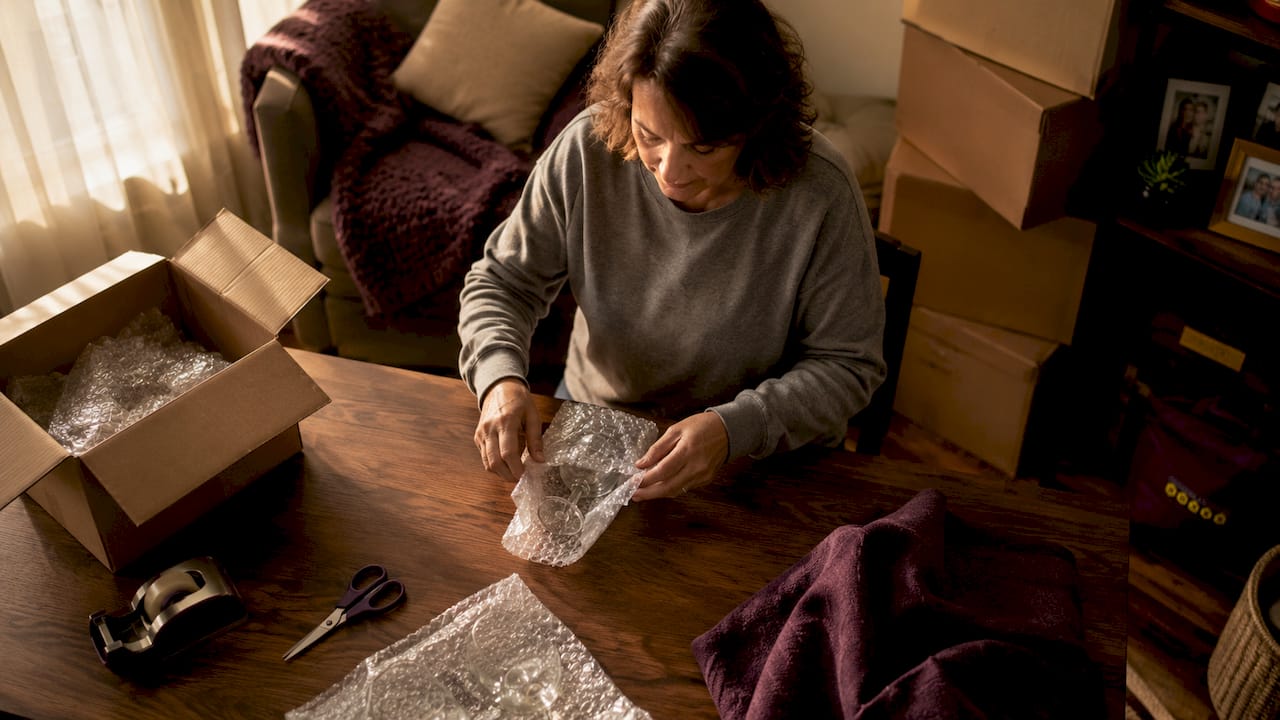
- Handling with care involves a comprehensive packing system that emphasizes strong outer packaging and internal cushioning, not just labels. Proper selection of boxes, individual item wrapping, void filling, and correct labeling are essential to prevent damage during transit. Double boxing high-value and fragile items, along with thorough padding and clear multiple-sided labels, markedly improves protection against impacts and mishandling.
“Handle with care” is the professional standard for protecting fragile items during a move or shipment, covering everything from box selection and cushioning to labelling and orientation. Most people treat it as a sticker. The reality is that it describes a complete packing system. DHL’s packing guidelines and removal industry standards both confirm that the physical protection of the box and its contents matters far more than any label alone. Getting this right means understanding cushioning, immobilisation, and the correct materials before you pack a single item.
1. What “handle with care” actually means for packing
“Handle with care” is not just a warning label. It is a set of packing principles designed to prevent damage through cushioning, immobilisation, and clear communication to handlers. The phrase signals that the contents require protection from shock, vibration, compression, and improper orientation during transit. Applying it correctly means combining strong outer packaging with internal protection that eliminates movement entirely.
The distinction matters because labels alone cannot protect fragile goods. A sticker on a poorly packed box will not stop a wine glass from shattering. The mechanical protection from proper cushioning and a strong outer box is what actually keeps items safe.
2. Choosing the right packing materials
The outer box is your first line of defence. Double or triple wall cartons are the correct choice for fragile or heavy goods, as standard single wall boxes compress under weight and offer minimal shock resistance. Avoid reused boxes entirely. A box that has already been loaded, transported, and unloaded has lost structural integrity, even if it looks intact.
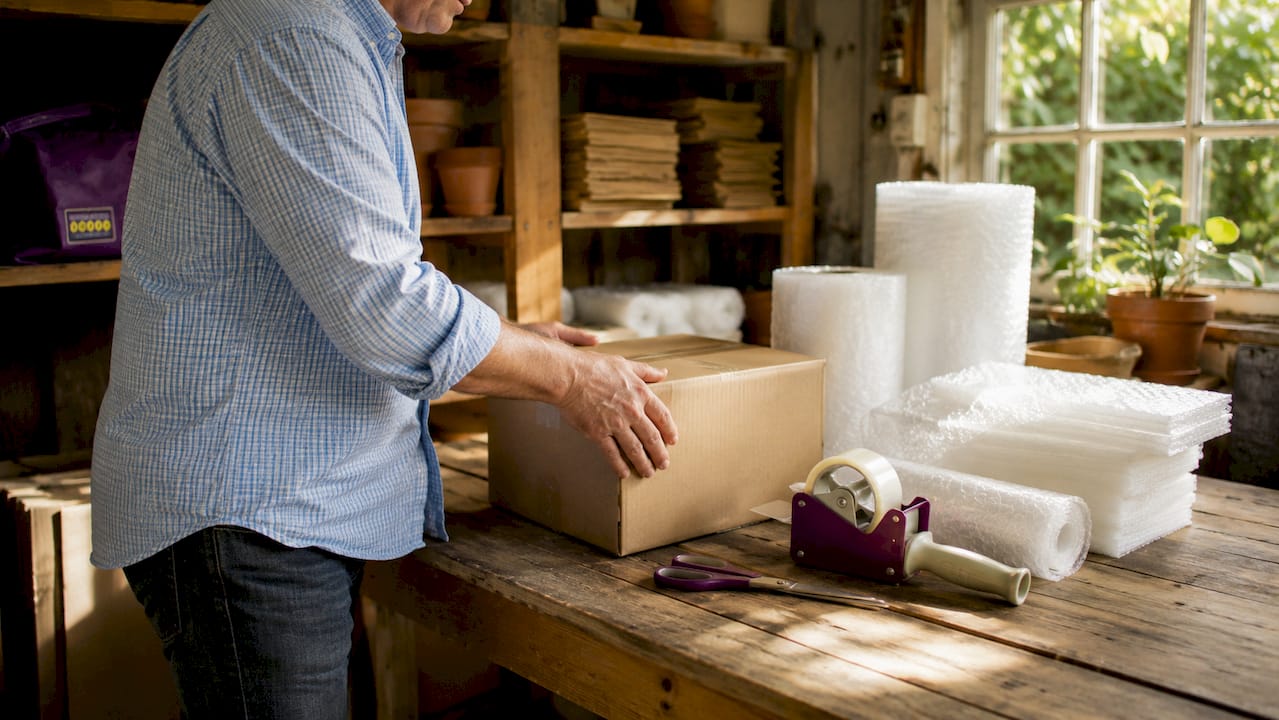
For cushioning, the three most effective materials are bubble wrap, foam padding, and packing paper. Bubble wrap excels at absorbing impact and wrapping irregular shapes. Foam corners and foam edge protectors are particularly useful for picture frames, mirrors, and furniture corners where point impact is the main risk. Packing paper fills voids and prevents items from shifting without adding significant weight.
Box size matters more than most people realise. A box that is too large allows contents to move freely, which is the primary cause of breakage in transit. A box that is too small risks crushing the item through compression. The correct size leaves roughly 5 to 6 cm of space on all sides for cushioning material.
- Double or triple wall boxes for anything fragile, heavy, or high value
- Bubble wrap for wrapping individual items before placing them in the box
- Foam corners and edge protectors for frames, mirrors, and furniture
- Packing paper or tissue paper for filling voids and wrapping delicate surfaces
- Strong packing tape (polypropylene or fibre reinforced) for sealing
Pro Tip: When choosing between bubble wrap and foam padding, use bubble wrap for items with curved or irregular surfaces and foam sheets for flat, smooth objects like plates or framed prints. Each material protects differently.
3. Ten practical steps to pack fragile items correctly
Packing fragile goods is a process, not a single action. Following these steps in order produces the most reliable results.
Select the right box size. Choose a double walled moving box that leaves 5 to 6 cm of clearance around each item for cushioning. Never pack fragile items in a box that is too large or too small.
Line the base with cushioning. Place at least 6 cm of bubble wrap or crumpled packing paper at the bottom of the box before adding any items. DHL advises a minimum 6 cm buffer between fragile contents and all box walls.
Wrap each item individually. Every fragile item needs its own layer of bubble wrap or packing paper before it goes into the box. This prevents surface contact between items, which causes scratches and chips even without a direct impact.
Pack heavier items at the bottom. Place heavier wrapped items in first, lighter and more delicate ones on top. This prevents compression damage to smaller pieces and keeps the box stable.
Pack plates vertically. Plates packed on edge rather than flat are significantly less likely to crack. Vertical orientation distributes vibration and weight transfer more evenly across the plate’s surface.
Fill every void completely. Internal movement is the primary cause of fragile item damage during transit. Pack crumpled paper or foam into every gap until nothing shifts. The box should produce no rattling sound when gently shaken.
Double box high value items. For antiques, electronics, or anything irreplaceable, place the wrapped item in a cushioned inner box, then pack that box inside a larger outer box with additional padding around it. Double boxing reduces shock transmission significantly and is the standard recommendation for delicate goods transport.
Seal with the H-taping method. Apply tape along the centre seam of the box lid, then along both edges where the flaps meet the sides, forming an H shape. H-pattern taping reinforces structural integrity and prevents the box from opening under load. Use polypropylene or fibre reinforced tape, not standard cellophane.
Label on multiple sides. Apply “Fragile” and “Handle with care” labels to the top and at least two sides of the box. Labels on multiple sides increase the chance that handlers see the warning regardless of how the box is stacked or oriented.
Add a duplicate label inside. Place a second label or a written note inside the box, directly on top of the contents. If the outer label is damaged or removed during transit, the inner label identifies the contents as fragile when the box is opened.
Pro Tip: Before sealing the box, do the shake test. Hold the box at arm’s length and gently shake it. If you hear or feel anything moving, open it and add more cushioning. A silent box is a safe box.
4. How to label packages for maximum visibility
Labelling is the communication layer of fragile items handling. Its job is to tell every person who touches the box exactly how to treat it. The three standard label types are “Fragile”, “Handle with care”, and “This way up” orientation arrows. Each serves a different purpose and all three should be used together on the same box.
Placement is where most people make mistakes. A single label on the top of the box is easily obscured when boxes are stacked, which is standard practice in removal vans and courier depots. Labels placed on multiple sides remain visible regardless of how the box is positioned or what is placed on top of it.
| Label type | Purpose | Placement |
|---|---|---|
| Fragile | Signals contents require careful handling | Top and all four sides |
| Handle with care | Reinforces careful treatment instruction | Top and at least two sides |
| This way up | Communicates correct orientation | Two opposing sides |
| Duplicate inside | Backup identification if outer labels are lost | Directly on top of contents |
Remove all old labels from reused boxes before applying new ones. Conflicting labels confuse handlers and can result in a box being treated according to the wrong instructions.
- Apply labels before the box leaves your hands, not at the collection point
- Use pre-printed warning stickers rather than handwritten notes for clarity
- Storageremovalboxes stocks handle with care warning stickers in packs of 500, which is practical for anyone moving an entire household
5. Comparing packing methods for different fragile items
Not all fragile items need the same approach. The right method depends on the item’s material, size, and value.
| Item type | Recommended method | Why it works |
|---|---|---|
| Glassware and crockery | Individual bubble wrap, vertical packing, foam dividers | Prevents surface contact and distributes vibration |
| Electronics | Double boxing, anti-static foam, original packaging where available | Reduces shock and protects sensitive components |
| Mirrors and frames | Foam corner protectors, flat packing, mirror boxes | Protects edges and prevents flex cracking |
| Antiques and ceramics | Double boxing, tissue paper wrapping, foam padding | Absorbs shock and prevents surface damage |
| Artwork | Glassine paper, foam corners, purpose built art boxes | Prevents surface abrasion and moisture contact |
Single box cushioning with bubble wrap is adequate for most everyday fragile items moving locally. Double boxing is the correct choice for high value goods, international shipments, or anything that cannot be replaced. Foam dividers and cell packs, which create individual compartments for each item, outperform loose bubble wrap for glassware because they eliminate the possibility of items touching each other even if the cushioning compresses.
For a detailed walkthrough of packing delicate items by category, removal specialists provide item specific guidance that goes beyond general packing advice.
6. Common mistakes that cause damage during moves
The most frequent cause of breakage is not rough handling. Internal shifting inside boxes accounts for the majority of fragile item damage, which means most breakages are preventable at the packing stage.
- Under padding the base. Skipping the bottom cushion layer means the first item placed in the box rests directly on cardboard, which transmits every impact from below.
- Using oversized boxes. A large box with a few items rattling inside is one of the most common packing errors. Fill the box completely or choose a smaller one.
- Relying on labels without strong packing. Labels communicate intent but provide zero mechanical protection. A well labelled, poorly packed box will still result in damage.
- Packing plates flat. Flat packed plates crack under vertical pressure and vibration. Vertical packing is the correct method.
- Ignoring box condition. Reused boxes with soft corners, moisture damage, or previous tape lines have compromised strength. The structural integrity of the outer box is the first line of defence.
- Mixing fragile and heavy items. Packing a heavy book on top of wrapped glasses in the same box is a reliable way to cause breakage. Keep fragile items in dedicated boxes.
For international shipping, the stakes are higher. Boxes pass through multiple handling points, loading systems, and temperature changes. The same packing principles apply but with greater emphasis on double boxing, moisture resistant wrapping, and removal boxes rated for the additional stress of long distance transit.
Key takeaways
Protecting fragile items during a move requires strong outer boxes, complete internal cushioning, and visible labels on multiple sides. Labelling alone never prevents damage.
| Point | Details |
|---|---|
| Choose the right box | Use double or triple wall boxes and avoid reused cartons with weakened structure. |
| Eliminate internal movement | Fill every void with bubble wrap or packing paper until the box produces no rattling sound. |
| Double box high value items | Place a cushioned inner box inside a larger padded outer box for antiques and electronics. |
| Label on multiple sides | Apply Fragile and Handle with care stickers to the top and at least two sides of every box. |
| Pack plates vertically | Vertical orientation reduces cracking from vibration and weight transfer during transit. |
What I’ve learned after years of watching fragile items arrive broken
The most common thing I hear from people after a move goes wrong is: “But I put a fragile sticker on it.” That belief, that a label is the same as protection, is the single most expensive misconception in the entire packing process. I have seen beautifully labelled boxes arrive with shattered contents because the packer used a single layer of tissue paper and a box two sizes too large.
What actually works is treating every fragile item as if no one will read the label. Pack it so that even rough handling cannot move the contents. Then add the label as a courtesy to careful handlers, not as your primary protection strategy.
The other thing worth saying plainly: double boxing feels excessive until the day it saves an irreplaceable item. A grandmother’s china, a vintage mirror, a laptop. The cost of a second box and ten minutes of extra packing time is trivial compared to what you lose without it. Removal companies and couriers like DHL recommend it for a reason. The physics are simple. Two layers of cardboard and cushioning absorb far more energy than one.
My honest recommendation is to buy better boxes than you think you need, fill every box completely, and label every side. The shake test before sealing is non negotiable. If it rattles, it is not ready.
Get the right supplies from Storageremovalboxes
Storageremovalboxes supplies everything you need to pack fragile items correctly, from the UK. The range includes tall double wall boxes built for large or awkward fragile items, bubble wrap rolls for individual item wrapping, and foam padding products for corners, edges, and void filling. Pre-printed handle with care labels are available in bulk packs, so you can label every side of every box without running short. Whether you are moving a single room or an entire house, Storageremovalboxes delivers nationwide and stocks the full range of materials needed to protect your belongings from the first box packed to the last one unloaded.
FAQ
What does “handle with care” mean on a package?
“Handle with care” is an instruction to handlers that the package contains fragile or sensitive contents requiring gentle treatment during loading, transit, and unloading. It works best when combined with strong outer packaging and complete internal cushioning.
How many sides of a box should have a fragile label?
Labels should appear on the top and at least two sides of the box. Labels placed on multiple sides remain visible regardless of how the box is stacked or oriented during transit.
Should I use double boxing for fragile items?
Double boxing is recommended for high value, delicate, or irreplaceable items. Place the wrapped item in a cushioned inner box, then pack that inside a larger outer box with additional padding. DHL recommends this method for delicate goods transport.
What is the best way to pack plates for moving?
Pack plates vertically, on their edge, rather than flat. Vertical packing distributes vibration and weight transfer more evenly, significantly reducing the risk of cracking during transit.
Can I reuse old boxes for fragile items?
Reused boxes are not recommended for fragile items. Previous use weakens the structural integrity of corrugated cardboard, reducing its ability to protect contents from compression and impact during transport.