How to define your self-storage and packaging needs
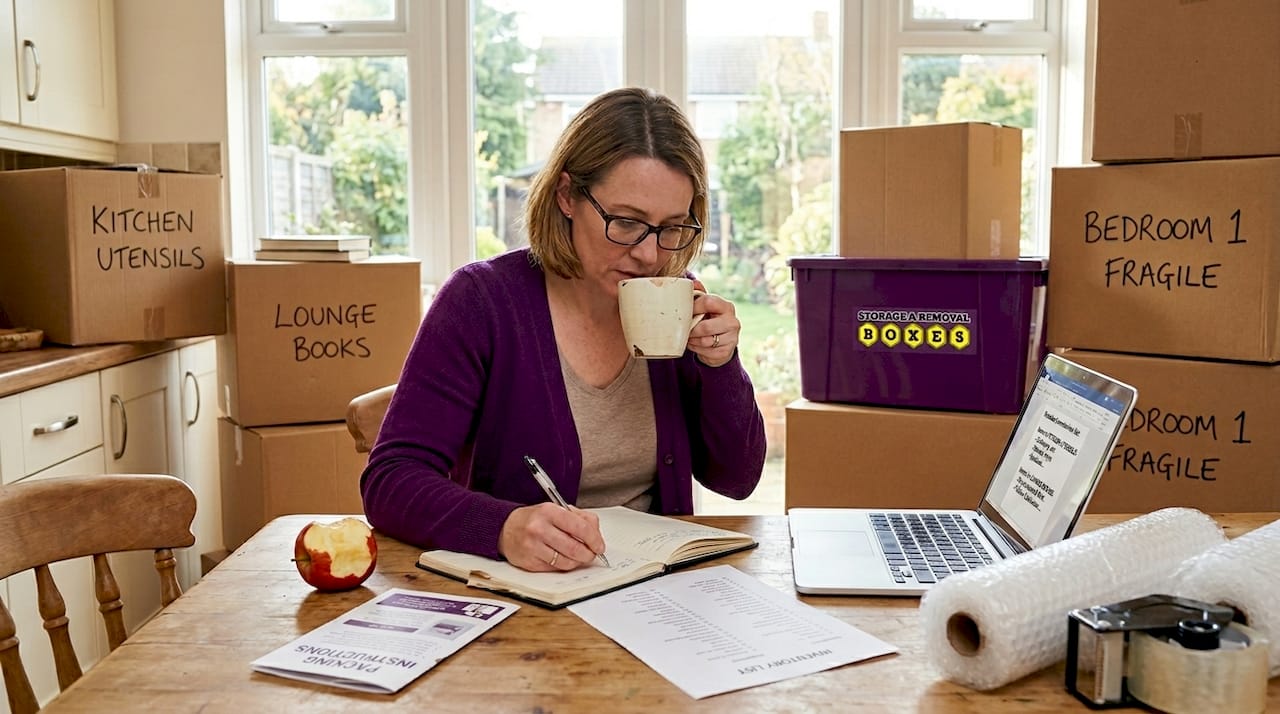
- Proper planning of storage needs saves money, protects belongings, and reduces moving stress.
- Accurate inventory, suitable packaging, and strategic loading ensure efficient and safe storage.
- Building flexibility and revisiting storage plans help manage changing circumstances during and after a move.
Moving house is stressful enough without discovering halfway through that you’ve run out of boxes, booked too small a storage unit, or wrapped your grandmother’s china in nothing but newspaper. Most people treat storage and packaging as an afterthought, assuming a quick estimate will do. It won’t. Getting these decisions right from the start saves you money, protects your belongings, and takes a significant amount of pressure off moving day. This guide walks you through every step of assessing your real requirements, from measuring cubic metres to choosing the correct box wall thickness.
Key Takeaways
| Point | Details |
|---|---|
| Assess storage factors | Accurately identify item types, space needed, and accessibility before committing. |
| Choose packaging wisely | Select the right quality and style of boxes and protection materials for each item. |
| Plan for access | Organise and label so you’re not unpacking everything each visit. |
| Allow space for change | Always choose storage solutions that can adapt to life’s surprises and future needs. |
What influences your self-storage needs?
Storage planning is rarely straightforward. Two households with similar square footage can have vastly different storage demands depending on the volume of possessions, the fragility of items, and how long the storage period will last. Self storage and logistics depend on the amount, size, and type of items, as well as the duration and frequency of access. That combination of variables means every move is genuinely unique.
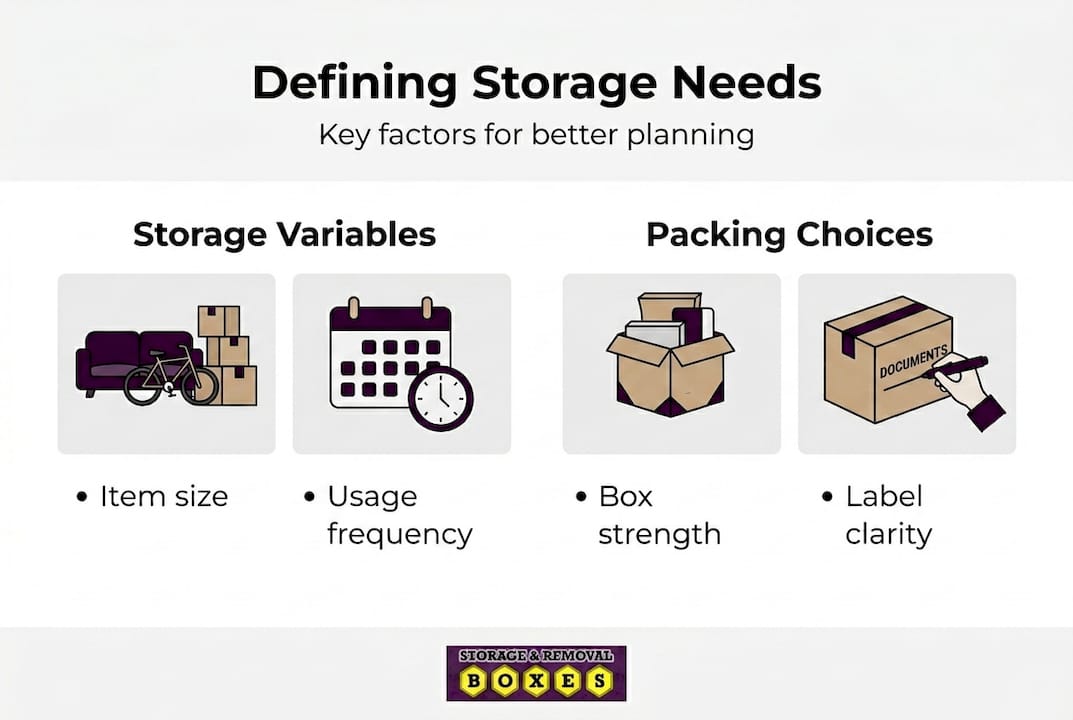
Consider the difference between someone decluttering before downsizing versus a family temporarily storing an entire three-bedroom home during a delayed completion. The declutterer might need a small unit for a fortnight and a handful of boxes. The family needs a well-organised, accessible unit for potentially months, with careful packaging to protect furniture, electronics, and seasonal items.
Common misconceptions add to the confusion. Many people overestimate how much a storage unit can hold without factoring in the space needed to safely stack and retrieve items. Others forget entirely about delicate belongings until those items are sitting unprotected on a van.
Here are the main factors you need to consider before booking anything:
- Volume of belongings: Total quantity of furniture, boxes, and loose items
- Item fragility: Glassware, antiques, and electronics require specialised packaging
- Duration of storage: Short-term moves differ significantly from long-term arrangements
- Access frequency: If you need to retrieve items regularly, you need a larger unit with clear aisles
- Seasonal items: Garden furniture, ski gear, and Christmas decorations add bulk at specific times
- Special requirements: Temperature-sensitive or high-value items may need climate-controlled units
“Treating self-storage as a quick fix without proper planning often results in damaged belongings, wasted money, and unnecessary stress. The details matter far more than most people realise until it’s too late.”
Taking time to map out these variables before you book a unit or order supplies is the single most effective thing you can do for a smoother move.
Estimating the size and type of storage required
Once you’ve identified your variables, it’s time to get specific about space and packaging. The most reliable approach is to think in categories rather than trying to visualise your entire home at once. Group your belongings into furniture, kitchenware, clothing, seasonal items, and boxes of miscellaneous goods. This immediately makes the task more manageable and gives you a clearer picture.
Box sizing standards confirm that effective storage depends on matching item size and quantity to box and unit dimensions. Randomly packing items into whatever boxes you have to hand is one of the most common and costly mistakes people make.
Follow these steps to calculate your storage needs accurately:
- List every item by category. Go room by room and record furniture dimensions, number of boxes, and any loose items. A simple spreadsheet works well for this.
- Measure large furniture pieces. Note the height, width, and depth of sofas, wardrobes, and beds. These are your biggest space consumers.
- Estimate box volume. A standard large removal box holds roughly 0.1 cubic metres. Multiply this by your estimated number of boxes to get a total volume figure.
- Add 20% buffer. Storage units are never perfectly fillable. You need room to move, access items, and avoid damaging belongings by forcing too much in.
- Match your total to a unit size. Use the table below as a starting reference point.
| Storage unit size | Approximate capacity | Suitable for |
|---|---|---|
| 16 sq ft | Small van load | Studio flat or single room |
| 35 sq ft | Transit van load | One-bedroom flat |
| 50 sq ft | Large van load | Two-bedroom flat |
| 75 sq ft | Luton van load | Two to three-bedroom house |
| 100 sq ft | Large Luton load | Three to four-bedroom house |
| 150 sq ft | Multiple van loads | Four-bedroom house or business stock |
These figures are a guide only. An accurate inventory of your belongings will always produce a more reliable result than relying on property size alone.
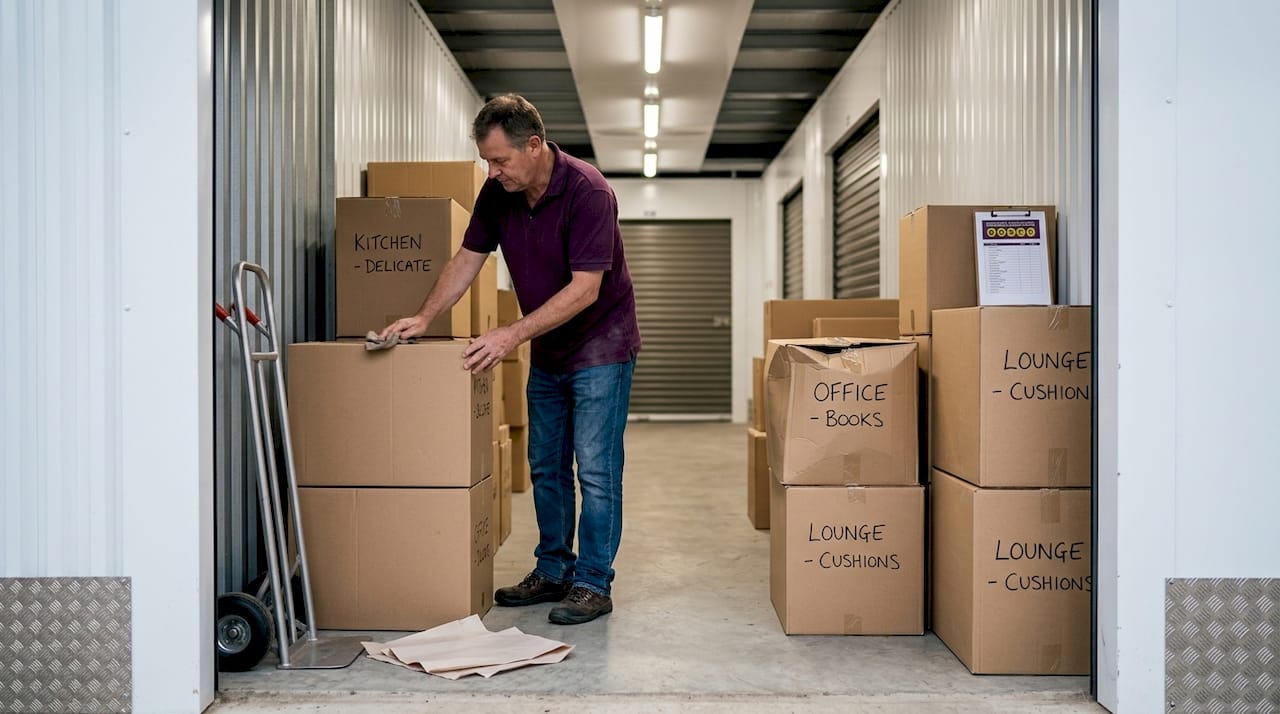
Pro Tip: When loading a self-storage unit, always leave a clear aisle of at least 60cm down the centre. This lets you access items at the back without dismantling everything at the front, which saves you significant time and effort during what can be a lengthy rental period.
Selecting the right packaging materials
Having a storage plan is only half the task — protecting your items comes next. Not all boxes are built the same, and choosing the wrong type can result in crushed contents, collapsed stacks, and real damage to belongings you care about.
The fundamental distinction is between single-wall and double-wall boxes. Single-wall boxes are fine for lightweight items such as clothing, linen, and paperback books. Double-wall boxes, made from two layers of corrugated cardboard, offer significantly greater structural integrity. They are essential for heavy items like books packed in quantity, kitchen appliances, and anything fragile. Packaging for self-storage confirms that using quality packaging is essential to ensure belongings stay protected during both storage and transit.
Use this quick-reference table to match your items to the right packaging:
| Item type | Recommended box | Additional protection |
|---|---|---|
| Glassware and crockery | Small double-wall box | Bubble wrap per item, paper padding |
| Books and files | Small double-wall box | No extras needed |
| Clothing and soft furnishings | Large single or double-wall box | None, or vacuum bags |
| Electronics | Original box if available, or medium double-wall | Bubble wrap, foam protectors |
| Artwork and mirrors | Specialist picture boxes | Corner protectors, bubble wrap |
| Kitchen appliances | Medium or large double-wall box | Foam wrap, secure tape |
| Lamps and shades | Tall or wardrobe boxes | Tissue paper, bubble wrap |
Beyond box choice, there are several packaging essentials that many people overlook:
- Heavy-duty packing tape: Cheap tape fails under load. Use proper brown parcel tape and apply it in H-patterns across box seams.
- Bubble wrap: At least one roll for fragile items. Never scrimp here — a smashed item costs more than bubble wrap ever will.
- Foam protectors and moving blankets: These are critical for furniture corners, glass surfaces, and large appliances.
- Clear labelling: Every box should state its contents and the room it belongs to. Add “FRAGILE” labels to any box with delicate items.
- Packing paper: Use unprinted paper rather than newspaper. Ink transfers onto surfaces and can permanently stain light-coloured items.
Pro Tip: One of the most common pitfalls is under-packing boxes. A half-filled box will collapse when stacked, damaging both its contents and whatever is placed on top. Fill boxes firmly and use scrunched packing paper to fill any gaps before sealing.
How to optimise your self-storage experience
With the right packaging and a plan, let’s ensure your storage works for you and not against you. Good preparation transforms a storage unit from a chaotic room full of stuff into an organised, accessible space you can rely on throughout your move.
Follow these steps when preparing and loading your unit:
- Clean everything before storing. Dirt, moisture, and food residue attract pests and cause mould. Wipe down furniture, clean appliances, and ensure all items are completely dry before they go into the unit.
- Pack systematically. Pack by room or category, not by what’s nearest to hand. This makes unpacking at the other end far more logical.
- Create a written catalogue. Record box numbers alongside their contents. When you need to find your kettle in week three, you’ll be grateful you did.
- Label every box on multiple sides. A label only on the top is useless once boxes are stacked three high.
- Group items by how soon you’ll need them. Items you’ll access first should go in last, near the door. Seasonal items and long-term storage can go to the back.
Self-storage solutions work best when you’ve thought through the loading order as carefully as the packing itself. Organisation and labelling are genuinely key to a successful storage experience, and the time you invest in this stage pays back every time you need to retrieve something.
Clever space-saving techniques make a meaningful difference, especially in smaller units:
- Stack heavy boxes on the floor and lighter boxes on top to prevent crushing
- Dismantle flat-pack furniture and slide pieces behind upright items to save floor space
- Use the inside of wardrobes, drawers, and large appliances to store smaller items
- Stack chairs seat-to-seat and use sofa cushions to fill irregular gaps
- Stand mattresses on their side using mattress bags to protect them and free up floor space
- Use vertical space fully, stacking safely to the ceiling where the unit structure allows
Finally, give serious thought to insurance. Many self-storage facilities offer contents insurance, but check whether your home insurance policy already covers goods in storage. If your belongings aren’t adequately covered and something goes wrong, the financial loss can be significant. It’s a detail that’s easy to overlook when you’re focused on logistics.
Why planning self-storage is more than just measuring space
Here’s something that most storage guides won’t tell you: the biggest mistake people make isn’t choosing the wrong unit size. It’s treating self-storage as a fixed, one-time decision.
Life doesn’t hold still during a move. Completion dates shift. New purchases arrive. A relative offers you furniture you hadn’t planned for. The storage arrangement you set up on day one may not serve you in week six. Most people never revisit their storage plan once it’s in place, and then they’re caught out when circumstances change.
The strategic approach is to build flexibility into your plan from the start. Choose a storage facility that lets you upsize or downsize your unit without heavy penalties. Keep your catalogue up to date as items move in and out. Revisit your packaging every time you add new items, because the long-term packaging tips that protect belongings for two weeks look quite different from those needed for a six-month arrangement.
“Short-term thinking in storage planning costs more in the long run. Spending an extra hour on strategy at the start is worth more than a dozen frantic retrieval trips mid-move.”
There’s also the question of what happens after the move. Many people leave items in storage long after the immediate need has passed, paying monthly fees for boxes they’ve forgotten about. A genuine storage strategy includes an exit plan: a clear timeline for when items will leave the unit, what will be kept, and what will be donated or sold.
The real goal isn’t just to get everything into a unit safely. It’s to create a storage arrangement that stays manageable, accessible, and cost-effective for however long you need it. That requires thinking ahead, not just reacting to the immediate chaos of moving day.
Find the right packaging and storage solutions
Knowing what you need is only valuable if you can get your hands on the right supplies quickly and reliably. Whether you’re protecting delicate glassware or stacking flat-pack furniture in a unit, the quality of your packaging materials makes a genuine difference to the outcome.
At Storage Removal Boxes , we supply everything you need for a well-planned move. Our large removal boxes are double-walled and built for stacking, making them ideal for maximising space in a storage unit without risking collapsed stacks. Browse our full range of house removal and moving boxes to find the right sizes for every category of item, from small double-wall boxes for your kitchen china to oversized options for bedding and soft furnishings. If you’d rather get everything in one go, our home moving kits are pre-assembled for different property sizes and include tape, bubble wrap, and boxes sized for your home. Nationwide delivery means your supplies arrive when you need them, not after the stress has already set in.
Frequently asked questions
How much self-storage space do I need for a two-bedroom house?
Most two-bedroom homes require 75 to 100 sq ft of self-storage, but storage requirements vary significantly by property and an accurate item inventory will always give you a more reliable figure than square footage alone.
What’s the difference between double wall and single wall boxes?
Double wall boxes are stronger and far safer for heavy or fragile items, while single wall boxes suit lighter or bulk items. Box strength matters significantly when stacking is involved, since weak boxes collapse under load and damage the contents beneath them.
How do I keep my belongings safe during storage?
Use high-quality packaging materials, label every box clearly, and avoid leaving boxes under-filled or over-packed. Careful packaging and labelling are the two most effective ways to ensure your belongings come out of storage in the same condition they went in.
Can I access individual items without unpacking everything?
Yes, by planning your loading order carefully and leaving a clear aisle, you can retrieve specific items without disturbing the rest of the unit. Efficient organisation from the start is what makes this possible, and a written catalogue of box contents makes the search even faster.