How to organise packing for moving: step-by-step guide
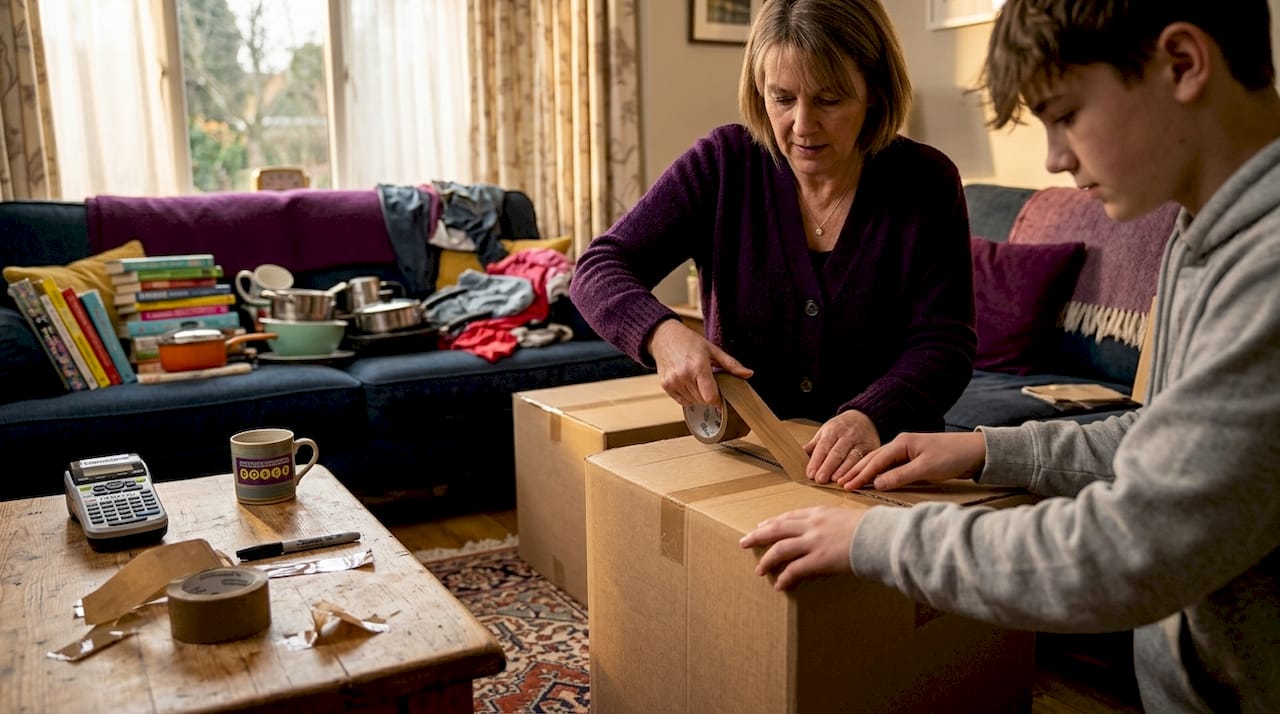
- Effective house moving requires thorough planning, high-quality packing supplies, and a detailed room-by-room strategy. Proper labelling, securing items carefully, and prioritizing essentials ensure a smoother transition and reduce last-minute chaos. Investing time in organized packing prevents damage, saves effort, and makes unpacking at the new home much easier.
Moving house can unravel even the most composed person. You start the week feeling in control, then suddenly it’s the night before, boxes are half-filled, your favourite mug is nowhere to be found, and the removal van arrives in eight hours. That pattern of last-minute chaos is far more common than it should be, and almost always stems from the same root cause: no clear packing plan and the wrong materials. This guide gives you a practical, sequential approach to packing your home so that nothing gets broken, nothing goes missing, and moving day feels manageable rather than maddening.
Key Takeaways
| Point | Details |
|---|---|
| Right tools make packing smoother | Invest in strong boxes, tape, labels, and cushioning to prevent stress and protect your belongings. |
| Room-by-room planning works | Packing by room with a clear timeline cuts moving day chaos and makes unpacking easier. |
| Secure and label every box | Proper labelling, padding, and not overloading boxes prevents losses and damage during transport. |
| Essentials box is a lifesaver | Keep essential items handy for the first 24–48 hours so you’re comfortable in your new home from the start. |
| Quality saves time and money | Choosing appropriate packing materials prevents breakages, saves time, and leads to a smoother move overall. |
What you need before you start: packing checklist and tools
Having introduced the value of good planning, let’s see exactly what you need to get started for a stress-free packing process.
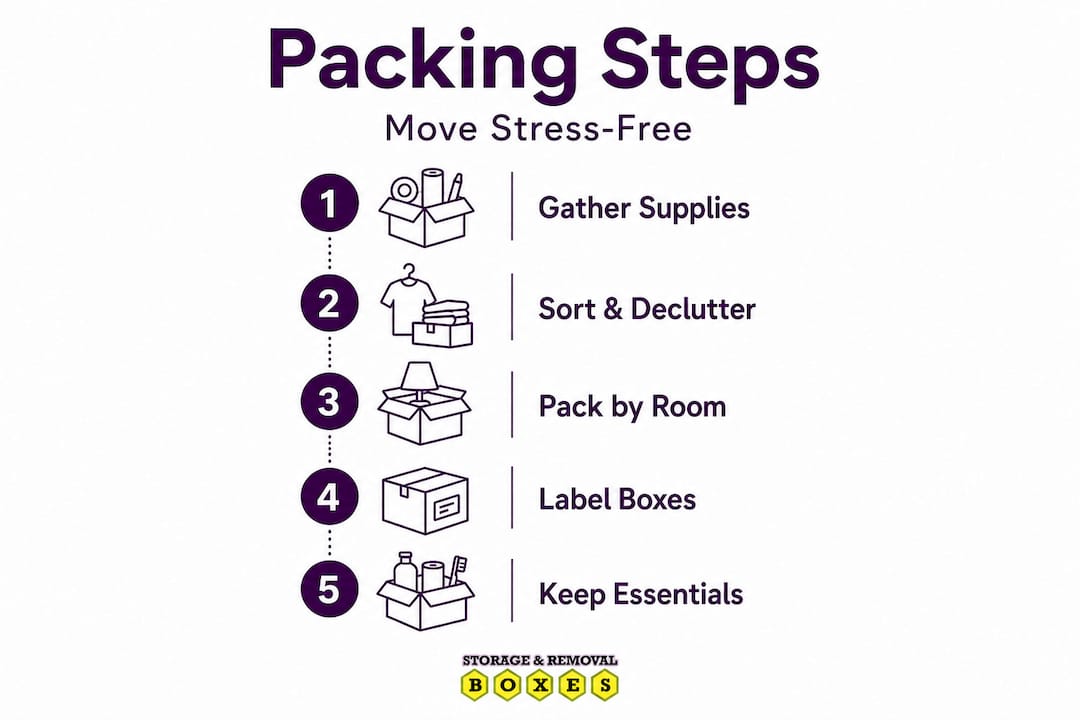
Before a single item goes into a box, you need the right supplies within reach. Hunting for tape or running out of bubble wrap halfway through packing your kitchen is a guaranteed way to lose momentum and patience. Gathering everything in advance takes an hour but saves you half a day of disruption.
Here are the core supplies you need before packing begins:
- Moving boxes in small, medium, and large sizes (double-walled for heavier items)
- Packing tape and a tape gun dispenser for speed and a neat seal
- Permanent markers in at least two colours for labelling
- Colour-coded stickers or labels by room
- Bubble wrap rolls for fragile items
- Packing paper or newsprint for wrapping and void fill
- Scissors and a box cutter
- Small zip-lock bags for hardware, screws, and fittings
- Stretch wrap or plastic film for protecting furniture and bundling items
- Foam padding sheets for artwork, mirrors, and electronics
Box choice is one of the most important decisions you will make. Use smaller, stronger boxes for dense or heavy items like books, tins, and tools, and larger boxes for lightweight bulk items such as duvets, pillows, and lampshades. Double-walled boxes for heavy or fragile goods resist the compression that causes stacked boxes to collapse during transit.
Recommended quantities for a typical 2-bedroom home:
| Item | Recommended quantity |
|---|---|
| Small boxes (33 x 33 x 33 cm) | 15–20 |
| Medium boxes (45 x 45 x 45 cm) | 20–25 |
| Large boxes (45 x 45 x 60 cm) | 10–15 |
| Bubble wrap rolls | 3–5 rolls |
| Packing paper (sheets) | 100–150 |
| Packing tape rolls | 6–8 |
| Colour-coded labels | 1 pack (100+) |
These figures assume a fairly full home. If you have a particularly book-heavy household or a large kitchen, add five to ten small and medium boxes. You can always return unused boxes, but running short mid-pack is far more disruptive.
Pro Tip: Order all your essential packing materials at least two weeks before moving day. Buying in bulk not only costs less per box but ensures everything arrives together, so you can start packing immediately without interruption.
Planning your packing: timeline and room-by-room strategy
Now that you know what you’ll need, let’s look at how to set up your packing so it’s organised and fits your moving timetable.

Packing without a timeline is how you end up trying to wrap a dinner service at midnight. Breaking the process into stages gives you a manageable workload each day and means nothing critical gets overlooked.
A practical four-stage packing timeline:
- Four to six weeks before: Declutter. Go room by room and separate items to keep, donate, sell, or discard. Fewer items mean fewer boxes and less to unpack.
- Three to four weeks before: Pack non-essential items early and keep everyday essentials accessible until the final days. This includes seasonal clothing, books, decorative objects, and spare linen.
- One to two weeks before: Tackle each room systematically using the room-by-room method. Start with guest rooms and storage areas, then bedrooms, living rooms, and finally the kitchen and bathrooms.
- Final one to two days: Pack daily essentials last. These include your kettle, toiletries, phone chargers, and anything you use each morning.
The most reliable system for most households is the room-by-room packing approach. Each box belongs to a single room and is labelled accordingly. This makes unloading dramatically faster because your removal team or helpers know exactly where each box belongs without asking.
Room-by-room vs. item-by-item: which method works better?
| Method | Advantages | Disadvantages |
|---|---|---|
| Room-by-room | Easy to label, logical unpacking, fewer misplaced items | Requires discipline to stay in one zone |
| Item-by-item | Can feel efficient for certain categories (e.g., books) | Boxes end up with mixed origins, harder to unpack |
Within larger rooms, especially kitchens, use zone packing. Pack everyday crockery separately from rarely used bakeware, and keep worktop appliances grouped together. This approach mirrors the layout tips found in helpful apartment moving hacks and makes reassembly of your new kitchen quicker and less frustrating.
The moving house checklist approach also works well alongside your timeline. Scheduling each packing segment, treating it like an appointment, keeps accountability high and avoids the avalanche effect of leaving too much to the final few days.
Pro Tip: Set a daily packing goal rather than a time goal. “Pack the spare bedroom” is more satisfying and measurable than “pack for two hours.” Completing a room feels like progress and keeps momentum going throughout the weeks before your move.
Packing step-by-step: best practices for every item
With your strategy mapped out, here are the key actions and packing sequences to follow room by room and item by item.
The order in which you pack and protect items matters enormously. A haphazardly packed box, even with good materials, can still result in breakages during transit. Here is a proven sequence that reduces risk for every item type.
Step-by-step packing sequence:
- Prepare the box by reinforcing the base with two strips of tape in opposite directions. Never rely on a single strip for anything heavier than clothing.
- Add a base layer of crumpled packing paper or foam padding before placing any items inside.
- Wrap fragile items individually in bubble wrap or packing paper. Wrap each piece individually and fill gaps so contents cannot shift, and stand plates and glassware upright rather than flat.
- Pack heavier items at the bottom, lighter items on top. Books go in small boxes. Clothing and soft furnishings go in large boxes.
- Fill every void with scrunched packing paper. A box that rattles is a box heading for a breakage.
- Seal the top firmly with two strips of tape and label immediately before moving on.
What never to do when packing:
- Never overfill a box. If you cannot close the lid flat without pressing down, it is too full.
- Never mix heavy and light items in the same box without separating layers.
- Never leave empty space in a box containing fragile items.
- Never use thin, single-walled boxes for glassware, ceramics, or anything with sentimental value.
- Never skip wrapping individual glasses or mugs, even if they seem sturdy.
For choosing the correct container for each category, see our guidance on choosing box sizes to match your specific items.
To reduce damage and injury risk during transport, avoid overloading boxes and distribute weight logically across your load.
Important: No box should exceed 20–25 kg. If you cannot comfortably lift a box from the floor with both hands, it is too heavy. Heavy boxes are not only a back injury risk but are also far more likely to split at the base when carried.
Pro Tip: When packing electronics, photograph the cable setup behind your television or computer before dismantling anything. Storing the photo on your phone means reassembly at the new home takes minutes rather than a frustrating hour of guesswork.
Keeping essentials and special items accessible
No matter how well you pack, missing essentials can add real stress. Here is how to make sure you are not left scrambling on your first night.
An essentials box (sometimes called a “first night box”) is the single most practical thing you can prepare for any move. It is the last item loaded onto the van and the first one off. Better still, carry it in your own vehicle so you have it regardless of delays.
What to include in your essentials box:
- Kettle, two mugs, teabags, coffee, and a small amount of milk (in a cool bag)
- Phone and laptop chargers
- Toiletries: toothbrush, toothpaste, soap, deodorant, toilet roll
- A change of clothes and pyjamas for each person
- Snacks and easy food for the first evening
- Important documents: tenancy agreement, mortgage paperwork, ID, NHS cards
- Prescription medication
- Children’s comfort items, a small selection of toys, and any nappies needed
- A basic tool kit: screwdriver, Allen keys, a hammer, and a torch
The essentials box for the first 24 to 48 hours should never go into the main removal van load if you can avoid it. Vans get packed tightly, and retrieving a specific box from the middle of a full load is impractical.
For renters moving into their first independent home, the list of first apartment essentials goes further and covers items you may not think to bring from a shared household.
Pro Tip: Use a brightly coloured bag or box for your essentials rather than a standard brown cardboard box. It stands out instantly in a sea of identical boxes, so you and your helpers always know exactly where it is.
Labelling, securing, and loading: avoiding lost or damaged boxes
Once your essentials are covered, here is how to make the rest of your unpacking and setup straightforward and stress-free.
Labelling is where many otherwise well-organised moves fall apart. A box marked “kitchen” could contain 40 different types of items. The more specific your labels, the faster and less frustrating your unpacking will be.
Step-by-step labelling system:
- Write the destination room clearly on the top and at least two sides of every box.
- Add a brief contents summary beneath the room name (e.g., “Kitchen: mugs, glasses, small plates”).
- Mark any box requiring special handling with a bold “FRAGILE” label on all sides and the top.
- Assign a number to each box and keep a simple master list on your phone noting what is in each numbered box.
- Use colour-coded stickers by room: one colour per room, applied consistently to all sides.
Practical tips for securing contents and hardware:
- Bag all screws, fixings, and fittings when dismantling furniture. Label each bag with a piece of masking tape noting which item of furniture the contents belong to.
- Tape bags of hardware directly to the furniture they belong to, so they travel together and are easy to reunite.
- Use clear, consistent labels on boxes that include both the room destination and brief contents, with special handling notes where needed.
- Do not leave drawers in furniture when moving. Either empty them or tape them shut with stretch wrap rather than adhesive tape, which can damage surfaces.
- Keep a permanent marker in your pocket while packing so you can label every box immediately after sealing it. Unlabelled sealed boxes are a guaranteed source of confusion.
Pro Tip: Label all four sides of every box, not just the top. When boxes are stacked in a van or in a hallway, the top is often the last face you can see. Labelling the sides means you can read the contents from any angle, saving minutes each time you search for something specific.
Why most moving day chaos is avoidable: hard-won lessons
Here is the real-world truth that few guides will tell you about why systematic packing makes all the difference.
There is a temptation to save money on packing materials by reusing old supermarket boxes, single-walled wine cartons, or whatever you can collect from the recycling aisle. It is understandable. Moving is expensive. But that decision consistently costs more than it saves. A book collection packed in a flimsy supermarket box that splits halfway to the van means scattered, potentially damaged books and a wasted 20 minutes. Multiply that across a few failures and you have lost the cost of a proper box bundle several times over, in both time and replacement value.
Quality packing materials are not a luxury item for careful movers. They are the baseline for a functional move. Strong, double-walled boxes, good tape, and adequate bubble wrap protect your belongings and speed up loading because removers can stack reliable boxes confidently. Weak boxes have to be handled individually and loaded with far more care, which adds real time to your day.
The same principle applies to labelling. An investment of 20 minutes creating a clear, colour-coded labelling system saves hours of confusion at the other end. We have seen households where unlabelled boxes sat unopened in a spare room for months simply because nobody could face the uncertainty of what might be inside each one.
The essentials box and the hardware labelling approach are the two disciplines that most consistently separate smooth moves from chaotic ones. Neither requires significant time or money. Both require a small amount of foresight that pays back immediately. If you want to explore materials that are both robust and environmentally responsible, our eco-friendly box choices cover exactly what to look for. Moving does not have to be a nightmare. Most of the disasters are entirely preventable with the right house removal tips and the discipline to follow through on them.
Next steps: make packing effortless with the right supplies
To put the tips above into practice without the guesswork, here is how to source everything you need in one stop.
The difference between a stressful move and a smooth one often comes down to having the right materials ready before you need them. When boxes are strong, tape is within reach, and every fragile item is properly wrapped, the whole process becomes faster and far less anxious.
At Storage Removal Boxes, you will find a full range of moving box options in every size, from small robust boxes for heavy items through to large double-walled boxes for bulky loads. For a simpler approach, our complete moving kits are pre-assembled for different household sizes, so you get everything in a single order with no second-guessing about quantities. Browse the full range today and arrive at your new home ready to settle in rather than sort through the mess.
Frequently asked questions
What should I pack first when organising for moving?
Start with non-essential items early such as seasonal decorations, spare rooms, and out-of-season clothing, then move to daily essentials only in the final one to two days before moving.
How do I stop boxes from collapsing or breaking during a move?
Always use strong, appropriately sized boxes for heavy or fragile items and avoid overfilling, which weakens the base and sides under load.
What items should go in my essentials box for moving day?
Include vital items like a kettle, mugs, chargers, toiletries, snacks, important documents, medication, and valuables, keeping the essentials box accessible for the first 24 to 48 hours rather than loading it into the main van.
How do I pack fragile kitchenware safely for moving?
Wrap each piece individually in bubble wrap or packing paper, stand plates and glasses upright, fill all gaps with scrunched paper, and use strong boxes clearly marked as fragile on all sides.
Why does labelling all boxes matter so much?
Clear, consistent labelling by room and contents makes both unloading and unpacking far faster and significantly reduces the chance of losing or accidentally damaging items during the move.