How to pack and move safely: expert tips for UK homes
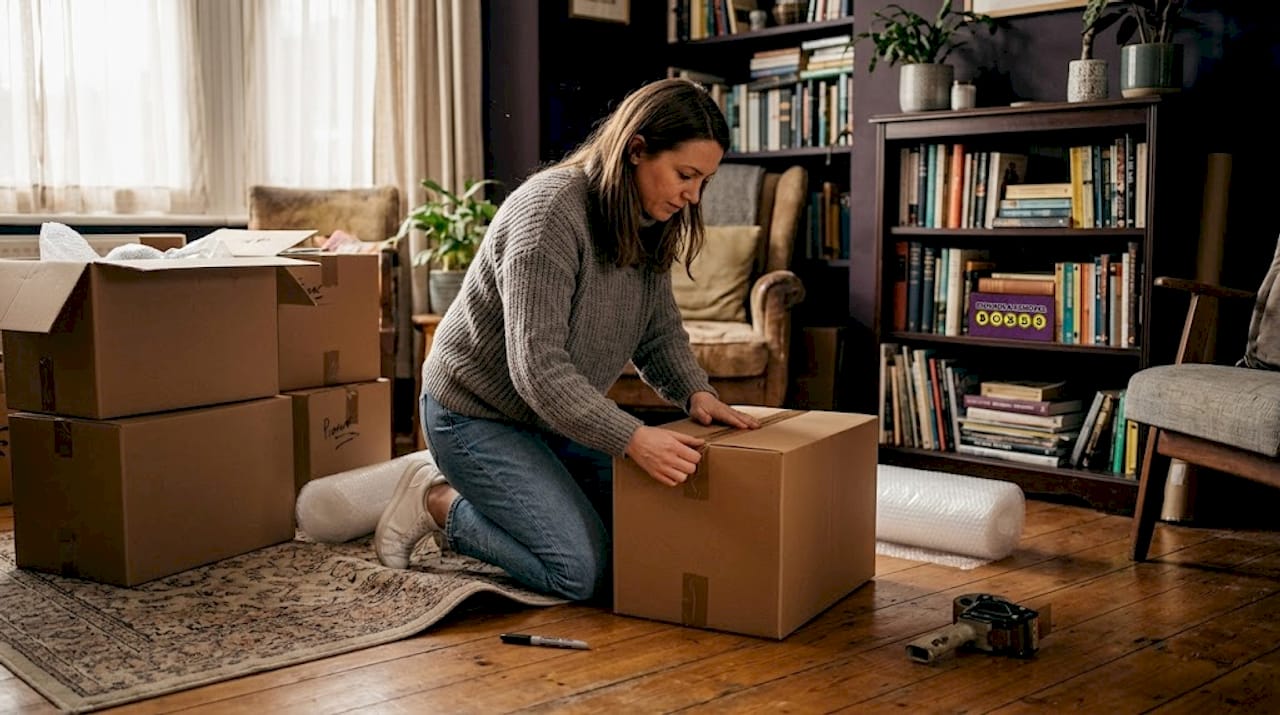
- Proper packing with the right materials and techniques is essential to prevent transit damage during moving. Using double-walled boxes, filling voids completely, and reinforcing box bases significantly improve the safety of your belongings. Conducting final checks ensures boxes are secure, well-labeled, and ready for a smooth, damage-free move.
Moving house is one of the most stressful experiences you can face, and few things make it worse than opening boxes at the other end to find shattered crockery, cracked picture frames, or a crushed laptop. The good news is that the vast majority of transit damage is entirely preventable. With the right boxes, the correct packing technique, and a little forward planning, you can protect everything from your most fragile glassware to your heaviest books. This guide walks you through exactly what to buy, how to pack it, and what to check before the removal van pulls away.
Key Takeaways
| Point | Details |
|---|---|
| Choose sturdy boxes | Double-walled and smaller boxes protect fragile and dense items during transit. |
| Fill all voids | Always use fillers like bubble wrap to prevent movement and breakage. |
| Avoid overloading | Keep the weight of each box safe and manageable to reduce risk. |
| Label clearly | Mark boxes with rooms and contents so nothing gets lost or mishandled. |
What you need to pack and move safely
Having set the scene for the risks of moving, let’s start by assembling the right materials before packing begins. Turning up on moving day with a handful of supermarket carrier bags and a roll of tape is a recipe for disaster. The right kit makes packing faster, safer, and far less stressful.
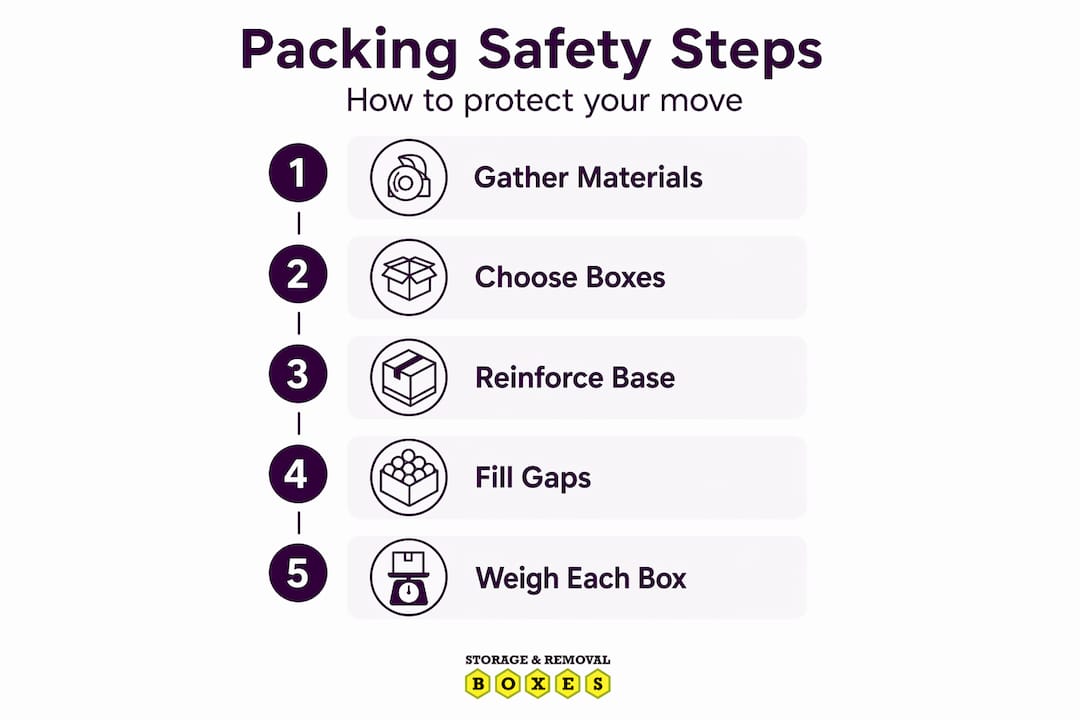
Essential materials checklist
Before you pack a single item, gather everything listed below:
- Double-walled cardboard boxes in small, medium, and large sizes
- Strong packing tape (at least 48mm wide, not regular office tape)
- Bubble wrap rolls for wrapping fragile and valuable items
- Packing paper or newsprint for cushioning and void filling
- Foam sheets or foam rolls for electronics and glassware
- Permanent markers for labelling every box clearly
- Tape dispenser to speed up sealing
- Mattress bags and furniture covers for large items
- Fragile stickers or warning labels to alert removal teams
- Scissors or a box cutter for trimming materials
The materials you choose will directly determine how well your belongings survive the journey. Skimping on tape or using flimsy boxes is false economy when you weigh it against the cost of replacing a broken television or a set of inherited china.
Why box size and wall thickness matter
Not all boxes are created equal. A single-walled box is constructed from one layer of corrugated cardboard, which is fine for lightweight, unbreakable items. A double-walled box has two layers of corrugation, making it significantly more rigid and crush-resistant under the weight of stacked boxes in a van.
Our packing materials guide breaks down the differences in detail, but the short version is this: always use double-walled boxes for anything heavy, fragile, or valuable.
For heavier household contents like books, kitchenware, and electronics, UK moving advice recommends using smaller boxes and double-walled cartons to reduce breakage risk from overfilling and excessive weight. The table below shows which box types suit which contents:
| Item type | Recommended box size | Wall type |
|---|---|---|
| Books and files | Small | Double-walled |
| Kitchenware and crockery | Small to medium | Double-walled |
| Clothing and bedding | Large | Single or double-walled |
| Electronics | Small to medium | Double-walled |
| Toys and soft furnishings | Large | Single-walled |
| Glasses and ornaments | Small | Double-walled |
Step-by-step guide: packing boxes for maximum safety
With your materials ready, packing properly is the next crucial step. The sequence matters as much as the materials. Packing in the wrong order is one of the most common causes of breakage, even when you have all the right supplies.
How to pack each box correctly
Follow these steps for every box you fill:
- Reinforce the base. Run two strips of packing tape along the bottom seam and two strips across the width. Never rely on the factory fold alone.
- Add a base layer of padding. Crumple two or three sheets of packing paper and place them flat on the bottom before any items go in.
- Place heavy items first. Books, tins, and kitchen equipment go in at the bottom of the box, wrapped individually in packing paper.
- Layer medium items on top. Add items of moderate weight, wrapping anything breakable in bubble wrap before placing it.
- Fill all voids. Push crumpled paper or foam into every gap. If the contents can move when you shake the box, you have not filled it enough.
- Finish with a top layer of padding. Add more crumpled paper across the surface before sealing.
- Seal firmly. Run tape along every seam, including the top flap joins. Three strips across the top is not excessive.
- Label immediately. Write the destination room and a brief contents description on at least two sides. Mark fragile boxes on all four sides.
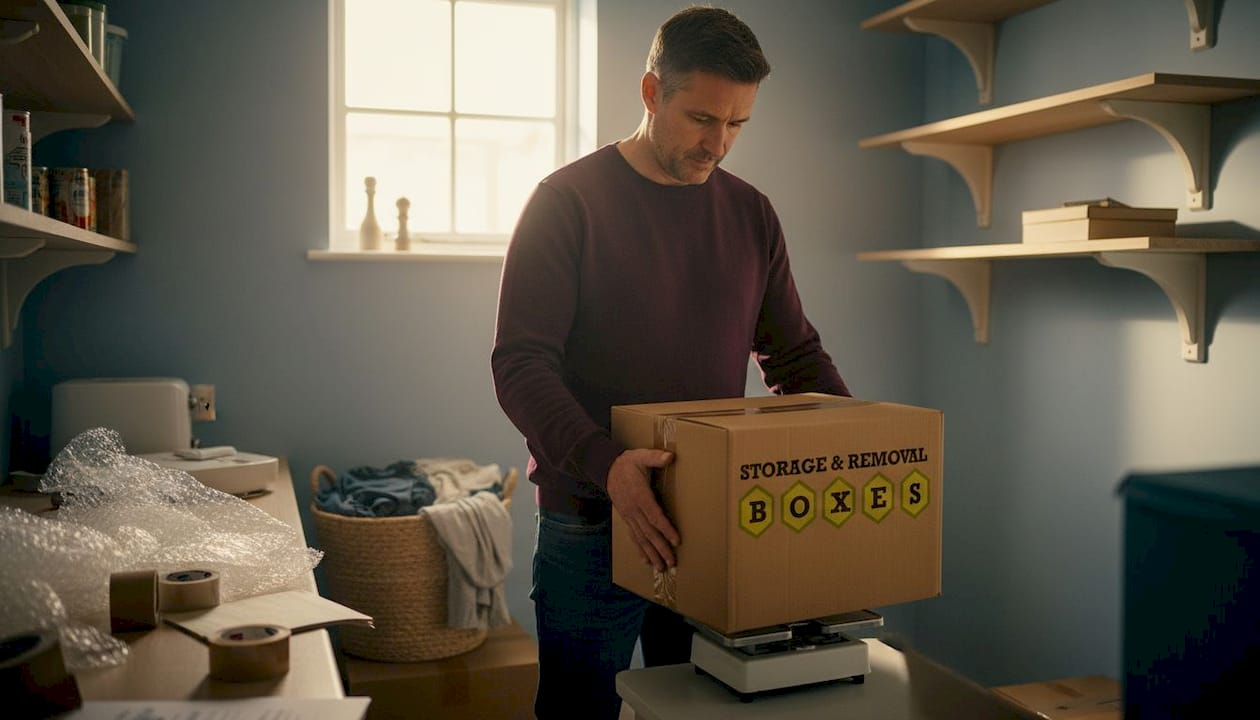
Pro Tip: Weigh each box before sealing it. As a general rule, no moving box should weigh more than 20kg. If it feels heavy before you have even filled it halfway, switch to a smaller box and split the load.
The three most common causes of moving damage are overfilling and overloading boxes, letting items shift inside boxes due to insufficient void fill, and relying on thin single-wall cartons that can fail during stacking or transit. Knowing this in advance puts you firmly ahead of most movers.
Comparison: correct vs incorrect packing habits
| Packing habit | Correct approach | Common mistake |
|---|---|---|
| Box base | Reinforced with two taped strips | Single factory fold, no tape |
| Heavy items | In small, double-walled boxes | Stacked in large boxes |
| Void filling | All gaps packed with paper or foam | Half-empty box sent as is |
| Fragile items | Individually wrapped in bubble wrap | Grouped loosely together |
| Weight per box | Maximum 20kg | Overfilled until bursting |
| Labelling | All four sides labelled clearly | Single label on top only |
Choosing the best box types for moving before you start will make following this process far easier. Having your moving house checklist to hand alongside these steps means nothing falls through the cracks.
Mistakes to avoid and troubleshooting solutions
Even with careful packing, mistakes happen. Here is how to avoid and correct the most common ones before they cost you a broken item or a strained back.
The most common packing mistakes
- Overloading large boxes. Large boxes are tempting because they hold a lot, but filling them with dense items makes them back-breaking to lift and far more likely to split at the base. Keep large boxes for lightweight items like pillows, duvets, and soft toys only.
- Using old or second-hand boxes. Boxes that have already been used, especially those that have been wet at any point, lose a significant amount of their structural strength. A box that looks fine can collapse without warning when stacked under two or three others.
- Skipping void fill. This is the single biggest cause of in-transit breakage. An item wrapped beautifully in bubble wrap can still shatter if the box has room to flex and the item can knock against the walls.
- Mixing heavy and light items. Placing a heavy casserole dish on top of wine glasses, even with padding between them, creates enormous pressure on the fragile items below.
- Forgetting to reinforce the base. The bottom of a box experiences the greatest force during a move. If it is not taped correctly, it will give way at the worst possible moment, usually as someone carries it down a flight of stairs.
“Room-by-room packing advice warns to avoid overfilling and keep heavy items in smaller boxes. Books, being particularly dense, should always be packed in small boxes to avoid excessive weight and potential damage.”
Quick fixes for packing errors
If you realise mid-pack that a box is already too heavy, do not try to push on. Empty it out and redistribute the contents across two smaller boxes. If you are short on void-fill material, crumpled newspaper works well in a pinch. For extra reinforcement, a strong double-walled box can take considerably more punishment than a standard carton and gives you a meaningful safety margin.
Pro Tip: Pick up every packed box before sealing it. If you struggle to carry it comfortably with both hands, it is too heavy. Reduce the weight now rather than asking a removal team to strain themselves on the day.
Verifying your packed boxes for transit
After packing and fixing mistakes, your boxes now need a final check before moving day. A few minutes of verification per box can save hours of upset and expense at the other end.
The five-point pre-transit check
Complete these five checks on every box before it goes near the removal van:
- Squeeze test. Press firmly on the sides of the box. It should feel rigid and not flex easily. Significant give suggests the box is under-filled or the wall is too thin for the contents.
- Shake test. Gently shake the box from side to side. You should hear no movement or rattling from inside. If you do, open the box and add more void fill before resealing.
- Base check. Lift the box and press your fingers gently against the base from underneath. It should feel completely firm. Any sagging means the base tape needs reinforcing.
- Seal check. Run your fingers along every sealed edge. Tape should be flat, fully adhered, and free from bubbles or lifted corners. Re-tape any suspect areas.
- Label check. Confirm that the destination room and a brief contents description are written on at least two sides. Fragile boxes should have warning labels on all four sides.
UK moving guidance consistently emphasises smaller boxes and double-walled cartons as the most reliable way to reduce breakage risk from overfilling and excessive weight. After running your five-point check, your boxes should easily meet that standard.
Stocking up in advance through a good selection of moving box packs means you can choose exactly the right combination of sizes and quantities for your specific move, rather than improvising on the day.
Our essential lesson: why most moves break down at the packing stage
With your move ready to go, it is worth stepping back to reflect on what genuinely makes the difference between a smooth move and a stressful one.
After working with UK movers of every description, from studio flat relocations to full five-bedroom house clearances, one truth stands out: the vast majority of breakages are not bad luck. They are the direct result of predictable, avoidable choices made during packing.
Conventional moving advice tends to focus on logistics: booking the right van, notifying utility companies, updating your address. This advice is important, but it glosses over the physical reality of what happens to your belongings inside a van travelling at speed over uneven roads for two hours. Every sharp corner, every sudden brake, every pothole transfers force directly into your boxes.
The uncomfortable truth is that most people massively underestimate how much punishment boxes take during a move, and they overestimate the strength of the boxes they are using. A single-walled carton picked up from a local shop is not engineered for the stacking weight of a fully loaded removal van. It is engineered to hold its contents on a shelf in a warehouse.
The advice about using small boxes for books and dense items is vastly undervalued. People consistently reach for the large box because it feels efficient. In practice, a large box filled with books is a disaster waiting to happen. It overstresses the base, it is too heavy to carry safely, and it concentrates damage risk in one place. Six small boxes of books are safer, easier to handle, and far less likely to cause an injury.
Investing in quality materials at the start pays for itself many times over through fewer breakages. Our packing materials guide is a useful reference for building out your full supply list before packing day arrives.
Find the right packaging supplies for your move
Putting this knowledge into practice is straightforward when you have the right materials to hand.

At Storage Removal Boxes, we supply robust double-walled moving boxes in every size you need, alongside packing kits, bubble wrap rolls, foam protectors, warning labels, and moving blankets, all delivered nationwide across the UK. Whether you are moving a one-bedroom flat or a large family home, our pre-packed removal kits take the guesswork out of ordering. Browse our full range, take advantage of bulk purchase discounts, and get everything delivered before packing day. Every product is made from recyclable materials, so you can move with confidence knowing your belongings and the environment are both well protected.
Frequently asked questions
What size box should I use for heavy items?
Heavy items like books are best packed in small, double-walled boxes to keep the weight manageable and reduce the risk of the base splitting under load.
How can I prevent items from moving inside the box?
Fill every gap with bubble wrap, packing paper, or foam so that nothing can shift. Items that jiggle inside boxes during transit are among the most common causes of breakage.
Should I use single-wall or double-wall boxes for fragile contents?
Always choose double-walled boxes for fragile or valuable items, since single-wall cartons can fail under the stacking pressure and movement that occur during a typical house removal.
Can I reuse old boxes for moving?
Reused boxes are often weakened by previous handling or moisture, and may collapse without warning. New double-walled cartons offer far greater reliability and provide the structural strength needed for a safe move.