How to prepare for removals: your 2026 UK guide

The most effective way to prepare for removals is to start 6–8 weeks out, pack in stages, and keep your essentials box in your car rather than the van. Get a fixed-price quote after a proper survey, confirm parking at both ends, and know in advance what your removal team will not touch. Do those things and moving day becomes manageable. Skip them and it becomes a scramble.
Here is what you need to do:
- Start packing well in advance before moving day, beginning with loft, garage, and rarely used rooms
- Book your removal company early and confirm all details in writing, including a fixed-price quote after a survey
- Create a first-night essentials box and keep it in your car, not the van
- Clear hallways, doorways, and parking access at both properties before the crew arrives
- Label every box on two sides with the destination room and a brief content note
- Know which items removal companies will not transport (petrol, paint, gas cylinders, live animals, cash, passports) and arrange alternatives
- Notify utility providers and update your address with banks, HMRC, and the DVLA at least two weeks before moving
How to start packing effectively before removals day
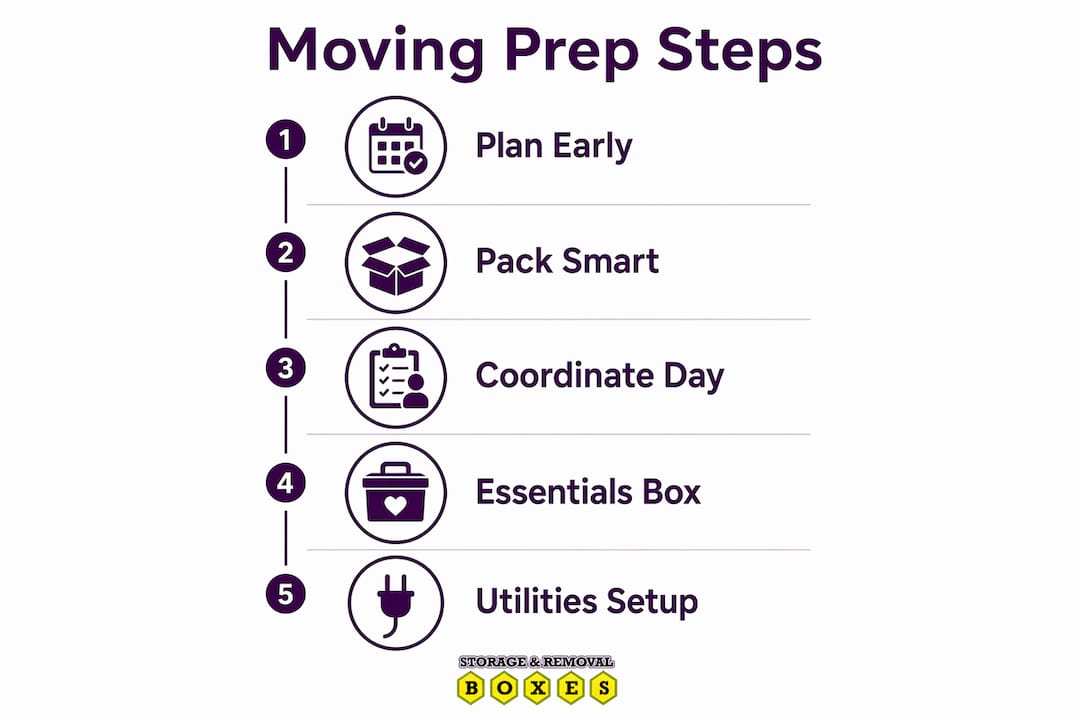
Starting packing 6–8 weeks before moving day gives you time to declutter properly, order the right materials, and avoid the frantic last-weekend rush that derails most moves. Begin with storage areas: loft, garage, shed, and spare rooms. These are full of things you rarely touch, and clearing them first gives you a realistic picture of how much you are actually moving.
Work room by room, not category by category. Mixing items from different rooms into the same box creates chaos at the other end. A useful label includes the destination room, whether contents are fragile, and whether the box is needed quickly after arrival. Label boxes on two sides so the room name is visible regardless of how boxes are stacked in the van.
- Declutter first: keep, donate, sell, or dump before a single box is packed
- Order packing materials suited to your home size, estimating quantities based on the number of bedrooms.
- Pack fragile kitchenware with bubble wrap and tissue paper between every item
- Put books in small boxes and bedding in large ones; never mix the two
- Keep an inventory as you go so nothing gets lost in transit
- Pack your essentials box last and put it straight in your car
Pro Tip: Photograph anything fragile or valuable before it goes into a box. If something is damaged in transit, that photo is your insurance evidence.
How to prepare your home and coordinate on removals day
Removals day runs smoothly when the property is ready before the crew arrives, not while they are standing in your hallway. Clear every walkway and doorway the evening before. Move furniture away from walls, roll up rugs, and check the route from each room to the front door for anything that could slow loading.
Confirm parking arrangements in advance and apply for a parking suspension permit if you are in a controlled-parking zone. Most councils need 5–7 working days to process these, so do not leave it to the week before. Parking problems are one of the most common causes of delays and extra costs.
- Defrost the freezer 24–36 hours before moving and empty the fridge into a cool box
- Disconnect and drain the washing machine and dishwasher 24 hours before; removal teams will not move a wet appliance
- Tell at least one neighbour what time the van is arriving to avoid parking disputes
- Arrange for children and pets to be elsewhere during loading (more on this below)
- Walk the crew lead through the house on arrival: point out fragile items, anything not going, and anything with sentimental value
- Keep your essentials box, valuables, and important documents in your car throughout
What items will removal companies not move?
Removal companies in the UK will not transport hazardous materials including petrol, paint, gas cylinders, bleach, and compressed gas products. These pose fire, leakage, and environmental risks during transit, and they fall outside standard insurance cover. Even an apparently empty petrol container can hold enough vapour to be refused.
Beyond hazardous goods, removal firms also exclude perishable food, live animals, cash, jewellery, passports, and other high-value personal documents. The reasons are a combination of health and safety regulations and insurance limitations. Hiding prohibited items in boxes risks delays, refusal of the move, or voiding your insurance entirely.
- Use up or safely dispose of hazardous materials before moving day; check your local council for hazardous waste drop-off points
- Donate unopened, in-date food to a food bank or pack perishables in a cool box to transport yourself
- Arrange separate transport for pets, either in your own car or via a dedicated pet transport service
- Keep passports, birth certificates, wills, medication, cash, and jewellery with you at all times
- Photograph valuables before packing for insurance purposes
- Ask your removal company for their full prohibited items list before you start packing
Movers do not pack or transport personal valuables and important documents. Transport these yourself in a locked bag or case that stays with you throughout the move.
Expert tips to avoid common preparation mistakes when moving home in the UK
Most moves go wrong not because of one big disaster but because several small details were left too late. Viewing preparation as a staged process prevents the overwhelm that hits when everything lands in the final week. The loft, the under-stairs cupboard, and the contents of fitted wardrobes are the three most commonly underestimated areas at the survey stage.
Always insist on a fixed-price quote after a video or in-person survey. A video survey usually takes about 15–20 minutes and gives the removal company an accurate picture of your volume and access. Anyone quoting over the phone without seeing your home is guessing, and that price will change on moving day.
- Confirm all bookings in writing, including arrival time, crew size, and insurance details with sufficient coverage for public liability and goods-in-transit.
- Never mix fragile and heavy items in the same box
- Pack room by room and label boxes with the destination room, not the room they came from
- Do not leave paperwork loose in a packed box; keep contracts, keys, and legal documents in one secure place that travels with you
- Arrange childcare and pet care for moving day; trying to manage both alongside loading adds unnecessary pressure
Pro Tip: Set up a “do not pack” shelf the night before. Anything on it goes in your car: essentials box, documents, medication, chargers, and valuables.
Room-by-room packing strategies that actually work
Declutter each room before a single box is packed. Anything you have not used in 18 months is unlikely to be missed at the new address, and you pay to move everything that goes on the van.
Clothes are where most people waste time. Most removal companies provide hanging wardrobe boxes free of charge, so clothes go straight from rail to box to rail at the other end. Use them. Kitchen breakables need individual wrapping: tissue paper between every plate, bubble wrap around glasses, and medium boxes so the weight stays manageable. Books go in small boxes only; a large box of books is a back injury waiting to happen.
- Label every box with the room it is going to at the new property, not the room it came from
- Mark fragile boxes clearly on the top and on two sides
- Use hanging wardrobe boxes for clothes to avoid hours of ironing at the other end
- Pack bedding in large boxes or labelled bags so beds can be made up quickly on arrival
- Do not mix categories across rooms; keep kitchen with kitchen, bathroom with bathroom
- Keep a separate clearly marked box for items needed in the first 24 hours
Choosing the right packing materials and kits for your move
The box you choose matters as much as how you pack it. Double-walled boxes handle heavy items without buckling; a single-walled box under a stack of books will give way. For a typical home, plan on increasing numbers of medium boxes based on bedroom count, adjusting quantities to suit your specific needs. Storageremovalboxes stocks strong double-walled moving boxes in a range of sizes suited to every room in the house.
Pre-packed removal kits take the guesswork out of ordering. Rather than estimating quantities individually, a kit sized to your home gives you the right mix of boxes, bubble wrap, tape, and tissue paper in one order. Storageremovalboxes offers home moving kits designed for different household sizes, with nationwide delivery.
- Use large double-walled boxes for bulky, lightweight items like bedding and pillows
- Choose specialist wardrobe boxes for clothes on hangers
- Wrap fragile items in bubble wrap and cushion with tissue paper; never rely on clothing as padding
- Buy a quality marker pen and use it consistently; faded labels cause chaos on unloading day
- Opt for recyclable, eco-friendly packaging where possible
- Mattress bags and furniture covers protect items during transit and are worth the small cost
Why starting your packing timeline early makes the difference
Eight weeks before completion is the sweet spot for a typical UK home move. That window lets you book a removal company while dates are still available, declutter without panic-tipping everything, and pack methodically rather than in a 48-hour sprint. Start packing 6–8 weeks before moving day, focusing first on rarely used rooms, then working forward to daily-use areas in the final week.
A staged timeline also protects you from the single biggest packing mistake: treating the whole move as one giant job. Break it into weekly tasks and the workload stays proportionate. By the final few days, you should be finishing off, not starting.
Managing access and logistics on removals day
Access problems cause more delays than almost anything else on moving day. Confirm parking at both addresses the week before, and if either property is in a controlled-parking zone, apply for a suspension permit well in advance. Most councils need several working days to process parking suspension permits; some London boroughs require longer notice periods.

Walk the crew lead through the property as soon as they arrive, especially when planning to send furniture quickly and safely worldwide. Point out anything fragile, anything that is not going, and any access quirks such as narrow staircases or low ceilings. At the new property, direct boxes into the right rooms as they come off the van. Boxes labelled with destination rooms save a significant amount of time at the unloading stage. Take meter readings at both properties and photograph them with the date visible.
Arranging utilities disconnection and reconnection
Contact your gas, electricity, water, and broadband suppliers at least two weeks before moving. Most providers need 14–28 days’ notice to transfer or close an account on a specific date. Take meter readings at your current property on moving day and submit them to your old supplier within 48 hours.
At the new property, set up the supply with whichever provider is currently active, then switch to a preferred tariff later. Switching before you move in often delays the new account. Set up a Royal Mail redirection well before moving; the service requires several working days to activate and has associated fees depending on the duration chosen. Update your address with your bank, HMRC, DVLA, employer, GP, dentist, and car insurer as soon as your moving date is confirmed.
Moving with children and pets: how to keep the day manageable
Children and pets are safest away from the property during loading. The activity is unpredictable, walkways need to stay clear, and the stress of managing both alongside a removal crew is considerable. Arrange for children to be with a friend or relative for the morning, then bring them to the new property for lunch once the bulk of the unloading is done.
For pets, the same principle applies. A familiar face, their usual bedding, water, and food in a separate bag makes the transition less disruptive. If you are moving a long distance, consider pet boarding for the day. Brief children on the move a few days before with a simple plan and a moving-day bag containing their favourite things.
How to handle last-minute packing and your essentials box
The essentials box is the single most important box of the entire move, and it goes in your car, not the van. Pack it the night before and put it somewhere obvious so it cannot accidentally be loaded. A first-night essentials box should contain: kettle, mugs, tea and coffee, phone chargers, toilet roll, toothbrushes, medication, a change of clothes per person, bedding for the first night, and important documents.
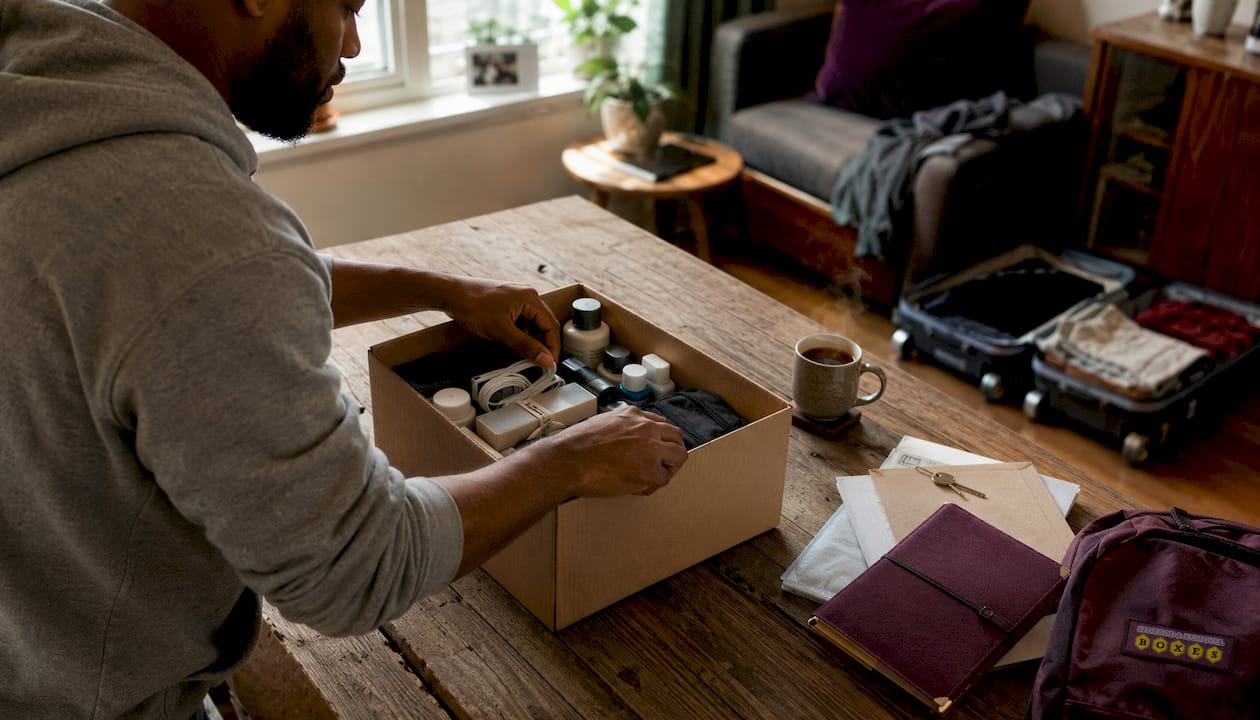
Last-minute packing should cover only the items you genuinely needed right up to moving morning: bathroom toiletries, breakfast dishes, and the kettle (which then goes straight into the essentials box). Strip the beds last and bag the bedding into clearly labelled bags. Everything else should already be packed, labelled, and ready to load.
Key takeaways
Preparing for removals comes down to starting early, packing in stages, and keeping your essentials and documents with you rather than in the van.
| Point | Details |
|---|---|
| Start 6–8 weeks out | Begin with loft, garage, and spare rooms; work forward to daily-use areas in the final week. |
| Fix the quote after a survey | A video survey takes 15–20 minutes and prevents price changes on moving day. |
| Label boxes on two sides | Mark the destination room and a brief content note so movers can place boxes correctly first time. |
| Know what removals won’t take | Petrol, paint, gas cylinders, live animals, cash, and passports must travel with you or be disposed of safely. |
| Essentials box in your car | Pack kettle, chargers, medication, documents, and first-night items separately; never load this box onto the van. |