How to use bubble wrap to protect fragile items
TL;DR:
- Bubble wrap outperforms makeshift packing materials by providing consistent shock absorption through thousands of air-filled bubbles. Proper application involves bubbles facing inward, multiple layers for fragile items, and secure taping to prevent movement during transit. It is unsuitable for heavy objects, static-sensitive electronics, or delicate painted surfaces unless combined with appropriate protective layers.
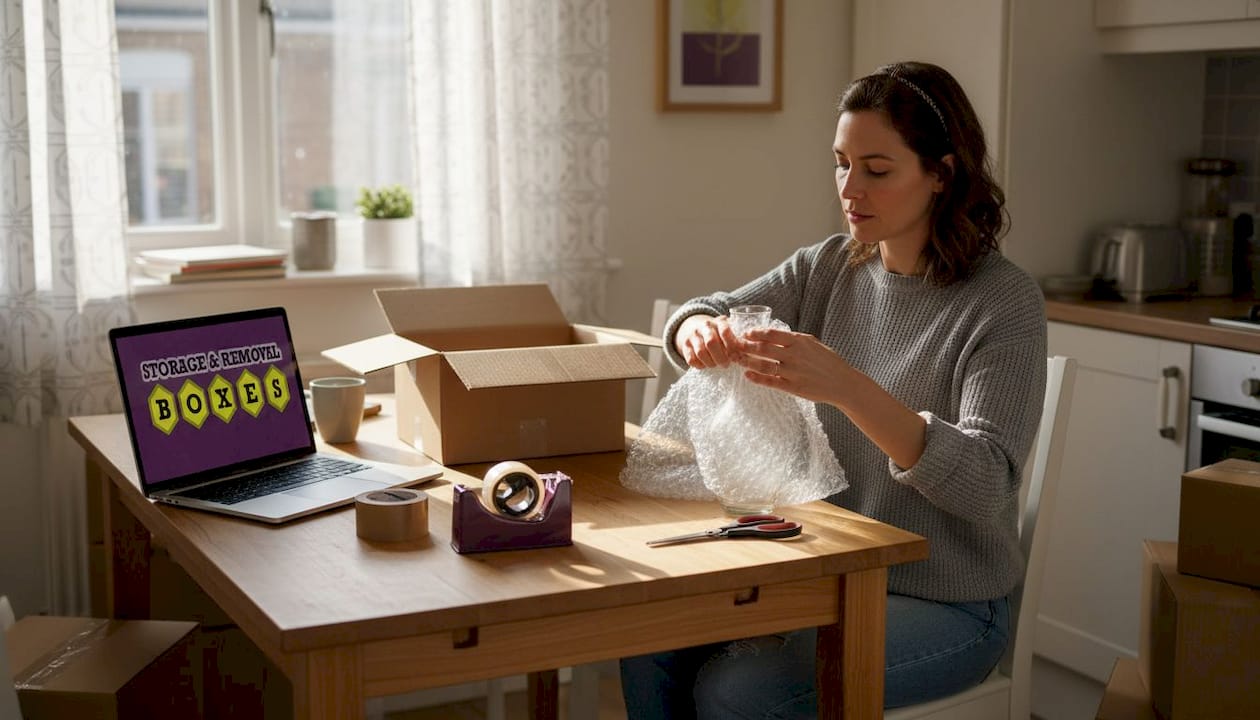
Wrapping a beloved vase in old newspaper or a kitchen towel before a move feels resourceful, but it’s a gamble many people lose. These makeshift materials compress, shift, and fail to absorb the repeated shocks that happen during loading, transport, and unloading. Bubble wrap, by contrast, is purpose-built for exactly this job. This guide covers everything you need to know: why bubble wrap outperforms alternatives, how to apply it correctly, when it is not the right choice, and which materials work best alongside it for a truly damage-free move or storage session.
Table of Contents
- What makes bubble wrap so effective?
- How to use bubble wrap correctly: Step-by-step
- When not to use bubble wrap: Common edge cases
- Bubble wrap versus other packing materials
- The overlooked risks and clever tricks for using bubble wrap
- Where to find quality bubble wrap and packing materials
- Frequently asked questions
Key Takeaways
| Point | Details |
|---|---|
| Bubble orientation matters | Facing bubbles inward maximises cushioning for fragile items. |
| Not always suitable | Avoid using regular bubble wrap with heavy or static-sensitive items. |
| Combine with other materials | Use foam or paper alongside bubble wrap for added protection in special cases. |
| Test before finalising | Shake or drop-test wrapped items to check protection levels before moving. |
What makes bubble wrap so effective?
There is a reason professional removal companies and courier services rely on bubble wrap above almost everything else. Its protective power comes from a simple but remarkably clever structure: thousands of sealed air pockets bonded to a flat plastic sheet. Each individual bubble acts as a miniature shock absorber, compressing on impact and then partially recovering its shape to absorb the next jolt.
This matters enormously during a house move or long-term storage, where items are not just subjected to a single drop but to dozens of micro-impacts: vibrations on a lorry, boxes being stacked, items shifting as a van corners. Bubble wrap is designed to cushion items directly, with those air-filled bubbles absorbing shocks that would otherwise travel straight through to your fragile belongings.
Here is what sets it apart from common alternatives:
- Newspaper: Provides minimal shock absorption. Ink can transfer to surfaces. The uneven thickness creates pressure points rather than even cushioning.
- Towels and clothing: Compress quickly under weight, losing most protective value within the first few minutes of loading. They also shift inside boxes.
- Tissue paper: Fine for scratch protection but offers almost nothing against impact.
- Bubble wrap: Delivers consistent, direct cushioning across the entire surface it covers, including delicate edges and corners where damage almost always starts.
Pro Tip: Bubble wrap is also reusable. As long as the bubbles remain intact after a move, you can store rolls away and use them again. This makes it more cost-effective over time than single-use alternatives.
For general packing purposes, standard bubble wrap rolls are the workhorse option, suitable for most household fragile items. Its lightweight nature means it adds almost no extra weight to your boxes, which is especially useful if you are paying for removal by weight or filling boxes to their maximum capacity.
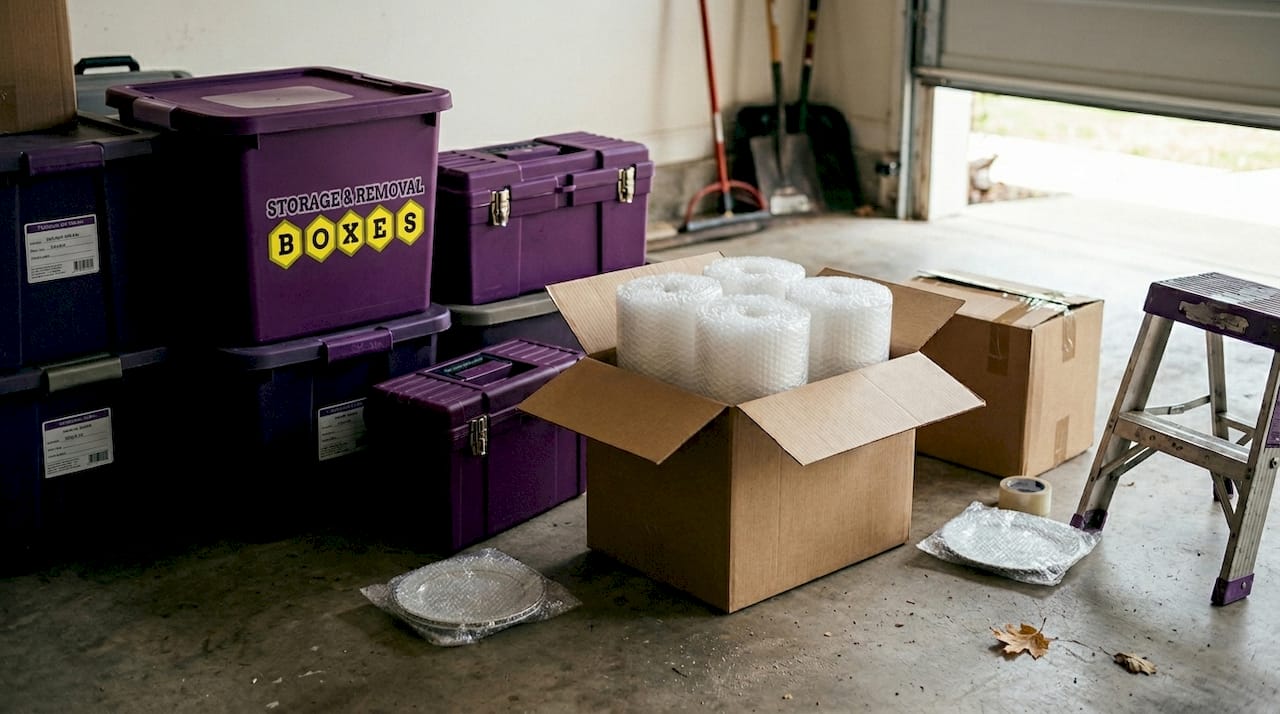
The versatility of bubble wrap also deserves mention. It moulds around irregular shapes, cups tightly around handles, spouts, and frames, and can be cut to any size with a pair of scissors. Whether you are packing a single wine glass or a full dinner service, shipping fragile items safely always comes back to even, consistent coverage, and that is exactly what a well-cut piece of bubble wrap provides.
How to use bubble wrap correctly: Step-by-step
Knowing you need bubble wrap is only the first step. How you apply it makes the difference between an item arriving intact and one arriving in pieces. The most common mistake is wrapping with the flat side against the item, which means the bubbles press outward and provide far less direct cushioning.
The correct technique is straightforward once you know it:
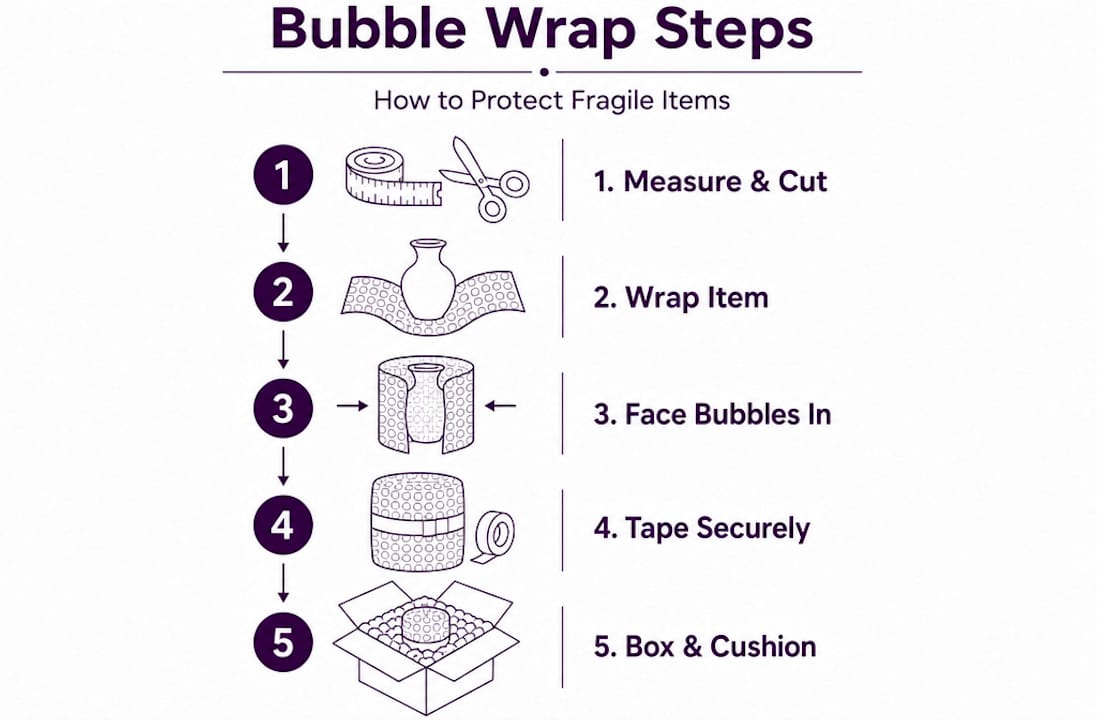
- Lay the bubble wrap flat, bubbles facing upward. Place your item in the centre of the sheet on the flat side.
- Fold the wrap up and over the item so the bubbles are now facing inward, directly contacting the object’s surface.
- Apply at least two layers for anything made of glass, ceramic, or with electronic components. Wrap with bubbles facing inward for direct cushioning, and use two or more layers for fragile items.
- Tape every fold and seam securely. Pay particular attention to corners and joins, which are the most likely points of failure. Fragile warning tape is ideal here as it both secures the wrap and signals handlers to take extra care.
- Give extra attention to protruding parts. Handles, spouts, feet, and decorative elements need additional wrapping. Fold a separate small piece of bubble wrap around each protrusion before completing the full wrap.
- Once wrapped, test the package. Gently shake it and give it a light tap on all sides. If you can feel the item moving inside the wrap, add another layer before placing it in the box.
- Fill any remaining box space. Even perfectly wrapped items can be damaged if they move around inside the box. Crumpled paper or additional bubble wrap fills voids effectively.
Pro Tip: Pre-formed bubble wrap bags are a superb time-saver for standard-sized items like glasses, mugs, and small ornaments. Simply slip the item in and seal. They remove the guesswork from wrapping irregularly shaped objects and are particularly useful when packing in a hurry.
Statistic callout: Studies and packing guides consistently recommend a minimum of two protective layers for glassware, yet the majority of amateur packers use only one. That single additional layer of bubble wrap can make the critical difference when a box is dropped or compressed during transit.
The step-by-step approach above applies equally whether you are packing for a removal lorry, a self-storage unit, or a postal shipment. The physics of impact do not change based on the journey length. Short drives on bumpy roads can be just as damaging as long motorway trips if boxes are poorly loaded or unsecured.
When not to use bubble wrap: Common edge cases
Bubble wrap is extraordinary in most situations, but it has genuine weaknesses that are worth understanding before you begin packing. Using it incorrectly can actually cause damage rather than prevent it.
Heavy or very dense items are the most common problem case. A large piece of cast iron cookware or a heavy stone ornament will compress the air bubbles almost immediately under its own weight. Once the bubbles are flat, there is no cushioning left. For these items, foam padding or moving blankets provide better sustained protection.
Static-sensitive electronics present a specific risk. Standard bubble wrap can generate static electricity as it flexes, and that static discharge can permanently damage circuit boards, hard drives, and graphic cards. The solution is simple but underused: anti-static bubble wrap is manufactured with a special coating that dissipates static charge safely. Always use it for motherboards, RAM, graphics cards, and any unboxed electronic component.
High-gloss and painted surfaces can also be problematic. The texture of bubble wrap can, on prolonged contact, leave faint impressions on very soft or freshly painted finishes. Wrapping a layer of acid-free tissue or packing paper around the item first, before applying bubble wrap over the top, solves this neatly.
Here is a quick reference comparison to help you decide:
| Scenario | Bubble wrap suitable? | Better alternative if not |
|---|---|---|
| Wine glasses and ceramics | Yes, 2+ layers | N/A |
| Flat-screen televisions | Yes, with screen protector | Moving blanket over bubble wrap |
| Static-sensitive electronics | Only anti-static type | Anti-static foam bags |
| Heavy cast iron items | No | Dense foam or moving blankets |
| Painted furniture surfaces | With paper layer first | Moving blankets |
| Mirrors and framed artwork | Yes, large bubble wrap rolls | Corner guards plus wrap |
Pro Tip: Before packing electronics, take photographs of all cable connections. Then wrap each component separately in anti-static bubble wrap and avoid for static-sensitive items using standard wrap. The cost difference between the two types is minimal, but the protection difference is substantial.
Understanding these edge cases is what separates a truly professional packing job from an amateur one. Most items are fine with standard bubble wrap correctly applied. A handful of specific categories need different solutions, and knowing which is which protects both your belongings and your budget.
Bubble wrap versus other packing materials
Choosing the right material for each item is a skill. Not everything needs bubble wrap, and some things benefit from a combination of materials. Here is how the main options compare.
| Material | Best use | Shock absorption | Surface protection | Weight |
|---|---|---|---|---|
| Bubble wrap | Glass, ceramics, electronics | Excellent | Good | Very light |
| Packing paper | Scratch-prone, lightweight items | Poor | Excellent | Light |
| Foam sheets | Stacking, pressure protection | Good | Very good | Light |
| Moving blankets | Large furniture, bulky items | Moderate | Excellent | Heavy |
| Corner guards | Frames, mirrors, furniture edges | Good (localised) | Good | Minimal |
The key insight from this comparison is that bubble wrap’s direct cushioning is preferable to paper, foam, or other materials specifically when shock absorption is the primary concern. For items where the main risk is scratching rather than impact, packing paper is lighter and often easier to work with.
Where bubble wrap consistently wins:
- Glass and ceramics: Nothing matches bubble wrap for absorbing the kind of sharp impact these materials are most vulnerable to.
- Irregular shapes: Its flexibility means it conforms to awkward shapes that foam sheets cannot easily accommodate.
- Multiple fragile items in one box: Layers of bubble wrap between items prevent them from knocking together.
Where other materials win:
- Large furniture and bulky items: Foam furniture protection and moving blankets provide better coverage for sofas, tables, and wardrobes where bubble wrap would be impractically slow to apply.
- Filling voids in boxes: Crumpled packing paper fills irregular gaps more effectively than bubble wrap.
- Stacking heavy boxes: Dense foam between layers of boxes distributes weight more evenly than bubble wrap, which compresses.
For items of particularly high value, the best approach is combining materials. Wrap the item in bubble wrap first, then place it in a box with foam corner guards, and fill remaining space with packing paper. You can see this layered approach demonstrated well in high-value packing guidance used by professional couriers. For wider items like paintings or large mirrors, jumbo bubble wrap rolls provide the coverage you need in a single pass.
The overlooked risks and clever tricks for using bubble wrap
After years of supplying packing materials to everyone from single-room movers to commercial removal companies, there are patterns we see repeatedly. The biggest one is confidence without technique. People buy the right materials but then apply them incorrectly, and then cannot understand why something broke.
The bubble orientation issue is the most persistent example. It seems counterintuitive that having the smooth side against your item makes it less protective, but this is genuinely a common error that costs people dearly. The bubbles need to press against the surface to do their job.
The second pattern is skipping the shake test. Wrapping an item and then placing it directly in a box, without ever testing whether the wrap is actually secure, is risky. Spend five seconds shaking the wrapped item before it goes into the box. If anything rattles or shifts, add another layer. This takes almost no time but catches a significant number of inadequate wraps before they cause damage.
A third, underappreciated issue is using the wrong format for the job. Standard small-bubble wrap is excellent for most household fragile items, but for electronics, the correct choice is always anti-static bubble roll. We stock it precisely because static damage to electronics is silent: the item may seem fine until you try to use it, at which point the damage is already done and irreversible.
Finally, combining materials deliberately rather than by accident produces the best results. Wrap the item in bubble wrap, but also add a layer of packing paper between the item and the wrap if the surface is delicate. Use corner guards on framed items before applying wrap. Avoid heavy items on compressible wrap and switch to foam for anything with genuine weight. These are not complicated decisions, but they require you to think about each item individually rather than reaching for the same solution for everything.
Clever packing is not about using more material. It is about using the right material in the right way for each specific item.
Where to find quality bubble wrap and packing materials
Armed with the knowledge of how to wrap correctly and which materials suit which situations, sourcing reliable supplies is the natural next step.
At StorageRemovalBoxes.co.uk, we supply everything covered in this guide, from wide rolls of bubble wrap suitable for large items and high-volume packing to individual formats for specialist needs. Our range includes standard, anti-static, and large-bubble variants to ensure you have exactly the right product for each item you are protecting. If you prefer to have everything sorted in one order, our complete moving kits bundle bubble wrap with the packing boxes, tape, and paper you need for a full move. We deliver nationwide, with bulk pricing available for removal companies and businesses.
Frequently asked questions
Should the bubbles face inwards or outwards when wrapping?
Always face the bubbles towards the item for the most effective shock absorption. Bubbles facing inward press directly against the surface and absorb impact energy before it reaches the item.
Can bubble wrap be reused after moving or storage?
Yes, provided the bubbles remain intact, bubble wrap can be used again for padding future shipments or storage cycles, making it a cost-effective long-term investment.
Is bubble wrap suitable for all electronics?
Not all electronics are safe with standard bubble wrap. Avoid static-sensitive electronics with regular wrap, and always use anti-static bubble wrap for unboxed components such as motherboards, hard drives, and graphics cards.
How many layers of bubble wrap are needed for fragile glassware?
At least two layers are recommended for glassware and ceramics to ensure sufficient cushioning, particularly for items with fine rims or protruding stems where damage is most likely.
Recommended
- 750mm Wide Large Bubble Wrap Roll – 50m Heavy Duty Protective Packaging
- 1500mm Wide Bubble Wrap Rolls with Large Bubbles – 50m Heavy Duty Protection
- 750mm Wide Bubble Wrap Roll – 100m Long Protective Packaging
- Big Bubblewrap Bags | Extra-Large Pouches for Frames & TVs
- How to Ship Fragile and High-Value Items Safely – Video Guide by Expediship