Moving Blankets: Ensuring Safe Transit for Fragile Items
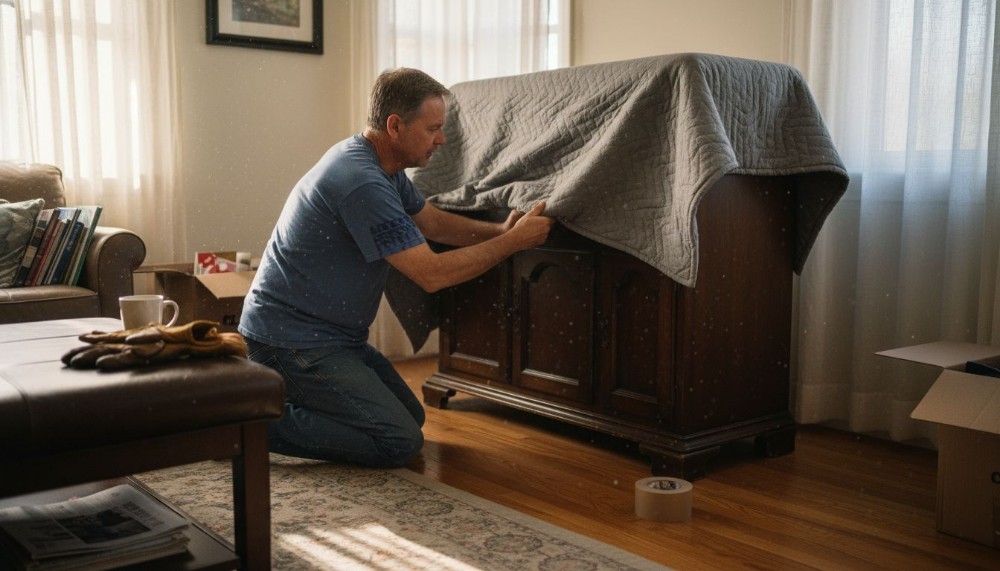
Moving house in the United Kingdom can quickly turn stressful when delicate furniture or heirlooms risk damage during transit. Packing boxes alone often leaves items vulnerable, but quality moving blankets add a vital layer of protection. Unlike thin emergency blankets initially developed by NASA, moving blankets are thick, cushioned coverings that serve as shock absorbers for your possessions. Discover how proper moving blanket use shields your belongings from scratches, dents, and breakage, ensuring a safer and smoother move every time.
Table of Contents
- What Are Moving Blankets And Their Purpose
- Types Of Moving Blankets And Key Materials
- Essential Features And Usage Tips
- Comparing Moving Blankets With Alternatives
- Common Mistakes When Using Moving Blankets
Key Takeaways
| Point | Details |
|---|---|
| Purpose of Moving Blankets | Moving blankets protect belongings from damage during transit by providing cushioning, scratch prevention, and reducing friction. |
| Importance in the UK | British households often contain valuable items that require more than standard packing. Moving blankets are essential for preserving antiques and fragile pieces. |
| Key Features to Consider | When choosing moving blankets, prioritise weight, material, size, and durability for optimal protection. |
| Usage and Maintenance | Proper wrapping and maintenance of moving blankets are crucial to ensure their effectiveness and longevity in protecting your possessions. |
What Are Moving Blankets and Their Purpose
Moving blankets are thick, padded coverings designed to shield your belongings during house moves or storage. Unlike emergency thermal blankets, these are purposeful protective layers that prevent scratches, dents, and breakage on furniture, appliances, and other fragile items.
They work by absorbing impact and minimising friction between items in your moving van or storage unit. Think of them as shock absorbers for your possessions. When boxes shift during transit or furniture bumps against walls, the blanket’s padding acts as a buffer.
How Moving Blankets Protect Your Items
Moving blankets provide several layers of protection:
- Cushioning: Thick padding absorbs impacts from bumps and jolts during transit
- Scratch prevention: Soft material prevents surface damage to wood, leather, and metal
- Friction reduction: Padding minimises movement and rubbing between stacked items
- Impact absorption: Physical padding protects against vibrations and sudden movements during transport
- Dust and moisture shield: Creates a barrier against dirt and environmental exposure
Why You Need Them for Your UK Move
British homes often contain cherished pieces antique furniture, family heirlooms, delicate glassware. Standard cardboard boxes alone won’t protect these adequately. Moving blankets fill that gap.
They’re particularly valuable if your removals journey involves multiple vehicle transfers, stairwells, or narrow hallways. These common moving scenarios create pinch points where damage occurs. Proper protection prevents costly repairs.
Key Features of Quality Moving Blankets
When selecting protective blankets for your move, look for these characteristics:
- Weight and thickness: Heavier blankets provide better cushioning
- Material composition: Wool, cotton, and synthetic blends each offer different protection levels
- Size variety: Different blanket dimensions accommodate furniture of varying sizes
- Secure fastenings: Corner loops and fastening points keep blankets in place during transit
- Durability: Quality blankets withstand multiple uses and removals
Moving blankets are an investment in protecting what matters most during your house move, preventing expensive replacements or repairs.
Unlike single-use packing materials, quality blankets function across multiple moves, making them economical long-term choices. Storage Removal Boxes supplies removal blankets and furniture pads alongside other comprehensive moving solutions, ensuring you have everything needed for safe transit in one place.
Pro tip: Wrap each major furniture piece individually and use blankets between stacked boxes to prevent the entire load from compressing during your journey.
Types of Moving Blankets and Key Materials
Moving blankets come in different types, each designed for specific protection needs. Your choice depends on what you’re moving, your budget, and the journey ahead. Understanding the options helps you select the right protection for your belongings.
The main types differ in material composition and thickness. Heavier, denser blankets offer superior cushioning, whilst lighter versions provide basic protection at lower cost. Most UK removals benefit from a combination of blanket types.

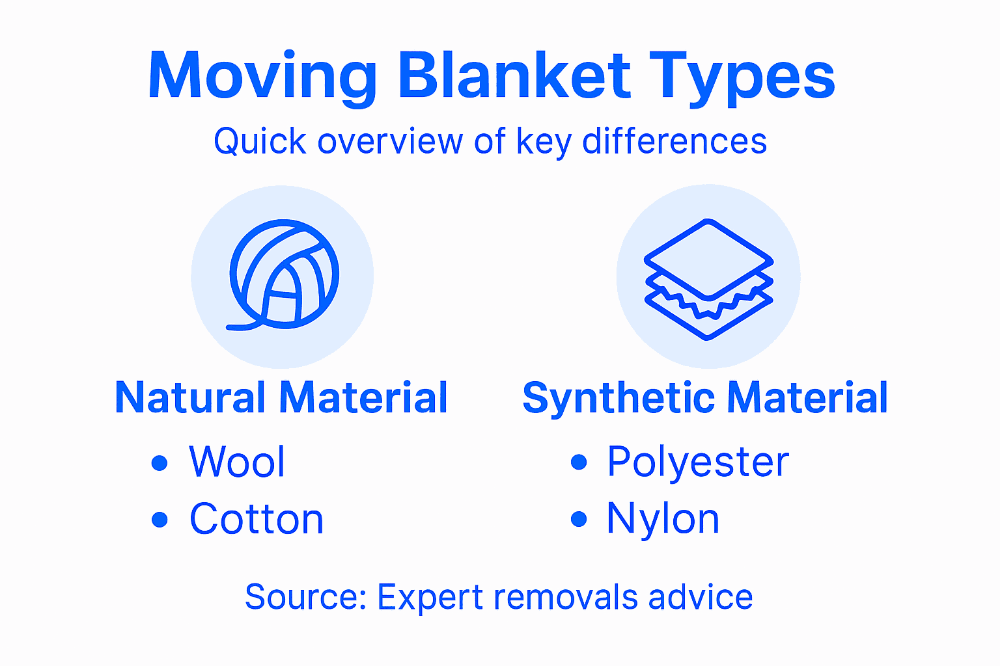
Natural Material Blankets
Wool and cotton blankets are traditional choices with proven track records:
- Wool blankets: Naturally durable, excellent cushioning, naturally fire-resistant, perfect for antique furniture
- Cotton blankets: Breathable, affordable, lightweight, ideal for everyday items
- Cotton-blend options: Balance durability with cost-effectiveness for general-purpose protection
Wool blankets absorb moisture naturally, protecting items from dampness during storage. Cotton blankets are easier to handle and wash between moves. Both materials provide natural thermal resistance alongside excellent cushioning properties.
To help you quickly select the right moving blanket, here’s a comparison of core materials used in removals:
| Material Type | Key Advantage | Typical Use | Moisture Resistance |
|---|---|---|---|
| Wool | Superior cushioning | Antique furniture | Naturally absorbs moisture |
| Cotton | Easy to wash and handle | Everyday possessions | Limited, may absorb damp |
| Synthetic (polyester) | Highly water-resistant | Storage units, quick moves | Excellent moisture resistance |
| Cotton-blend | Balanced durability & cost | General household items | Moderate, varies by blend |
Synthetic Material Blankets
Synthetic blankets offer modern advantages for specific situations:
- Polyester-based blankets: Water-resistant, lightweight, durable across multiple moves
- Synthetic blends: Combine affordability with moisture resistance
- Densely woven synthetics: Provide shock absorption comparable to wool at lower cost
Synthetic materials resist moisture far better than natural fibres, making them ideal for storage units or weather-exposed transport. They’re typically more economical for single moves.
Professional-Grade Construction
Modern moving blankets use densely woven cotton or synthetic fibres with padding layers like polyurethane or cotton batting. This construction focuses entirely on shock absorption and durability.
Thickness matters significantly. Standard blankets range from 40 ounces to 80 ounces per square yard. Heavier blankets cushion better but require more storage space.
Select blanket material based on your items’ value and your storage conditions wool for heirlooms, synthetics for humid environments, cotton for everyday household goods.
Choosing the Right Type for Your Move
Consider these factors when deciding:
- Item value: High-value antiques deserve wool blankets
- Storage environment: Damp spaces need synthetic or wool, not cotton alone
- Reusability: Plan for multiple moves or one-time use
- Budget: Synthetic blankets cost less but wear faster
- Storage space: Heavier blankets need more room between moves
Most homeowners benefit from combining types. Use wool for furniture, synthetics for boxes and cotton for general protection. Storage & Removal Boxes stocks multiple blanket materials alongside comprehensive moving supplies, ensuring you find the perfect match for your specific moving requirements.
Pro tip: Match blanket material to your storage location if your spare room or garage experiences temperature swings, synthetic or wool blankets outperform cotton by resisting moisture absorption.
Essential Features and Usage Tips
Quality moving blankets share specific characteristics that determine their protective effectiveness. Understanding these features helps you select blankets that genuinely shield your belongings rather than just covering them.
Thickness and density form the foundation of protection. Blankets should be substantial enough to absorb impacts without compressing flat. Flimsy blankets collapse under weight, leaving items vulnerable to damage.
Critical Features to Look For
When selecting moving blankets, prioritise these qualities:
- Adequate thickness: Minimum 40 ounces per square yard for basic protection, 80+ ounces for fragile items
- Durable fabric weave: Tightly woven material resists tearing during repeated use
- Full coverage capability: Blanket size should wrap items completely without gaps
- Reinforced edges: Prevents unravelling and maintains structural integrity
- Secure fastening loops: Corner attachments or grommets keep blankets firmly in place
Adequate thickness and durable fabric resist tearing whilst providing genuine impact absorption. Poor-quality blankets wear quickly and offer minimal protection on subsequent moves.
Proper Wrapping Techniques
How you use blankets matters as much as their quality. Correct wrapping maximises protection:
- Wrap items completely: Ensure no edges or corners remain exposed
- Double-layer fragile pieces: Fold blankets over very delicate items for extra cushioning
- Secure tightly: Use moving straps, stretch wrap, or rope to hold blankets firmly in place
- Avoid shifting: Items shouldn’t move within their blanket wrapping during transport
- Protect corners: Extra padding around sharp furniture edges prevents punctures
Loose blankets fail completely. When items shift during transit, protection disappears instantly. Proper securing keeps blankets snug throughout your journey.
Maintenance and Inspection
Keep blankets in top condition between moves:
- Inspect regularly: Check for thinning patches, tears, or weakness before each use
- Replace worn blankets: Blankets with significant damage lose protective effectiveness
- Store properly: Keep dry and folded neatly to prevent creasing and mould
- Clean gently: Remove dust and dirt without harsh washing that damages fibres
Regularly inspect blankets for wear and replace those with thinning or tears before they fail during your move.
Combining moving blankets with other protective materials enhances security significantly. Layer blankets with bubble wrap for electronics, foam corners for furniture, and cardboard dividers for stacked items.
Pro tip: Wrap each furniture piece individually rather than bundling multiple items together this prevents protective blankets from shifting and leaves gaps where damage occurs.
Comparing Moving Blankets with Alternatives
Moving blankets aren’t your only protection option during house moves. Several alternatives exist, each with distinct advantages and limitations. Understanding how they compare helps you choose the right solution for your specific items.
Bubble wrap, foam padding, and cardboard each serve different purposes. None replaces moving blankets entirely, but combining them creates comprehensive protection for varied belongings.
Bubble Wrap vs Moving Blankets
Bubble wrap excels at protecting small, delicate items but falls short for furniture:
- Bubble wrap strengths: Excellent for glassware, electronics, and small breakables; waterproof; lightweight
- Bubble wrap weaknesses: Covers limited surface area; punctures easily; requires excessive material for large items
- Moving blankets strengths: Cover larger surfaces; absorb impacts better; reusable across multiple moves
- Moving blankets weaknesses: More expensive initially; require more storage space between moves
Moving blankets provide thicker cushioning and cover larger surface areas than bubble wrap alone. For wrapping a sofa or dresser, blankets succeed where bubble wrap becomes impractical and wasteful.
Here’s a quick reference on how moving blankets complement alternative packing materials during a house move:
| Protective Material | Best Use Case | Unique Benefit | Limitation |
|---|---|---|---|
| Moving blankets | Large, fragile items | Impact absorption | Bulky to store between moves |
| Bubble wrap | Small breakables, electronics | Waterproof cushioning | Not practical for large furniture |
| Foam pads | Corners and sharp edges | Rigid shock protection | Poor coverage for irregular shapes |
| Cardboard | Surface scratch prevention | Lightweight shield | Minimal impact absorption |
Foam Padding and Cardboard Options
Specialised padding materials offer niche benefits:
Foam pads deliver rigid shock absorption but limited versatility. They work brilliantly for protecting furniture corners and edges, yet don’t adapt to irregular shapes. Cost escalates quickly when covering entire pieces.
Cardboard prevents scratches effectively but provides minimal cushioning. It’s lightweight and inexpensive, making it suitable for non-fragile items. However, cardboard crumples under pressure, failing when items stack or shift during transport.
Emergency Blankets vs Moving Blankets
Don’t confuse the two. Emergency thermal blankets provide heat insulation rather than physical cushioning, making them unsuitable for fragile items. They’re lightweight, waterproof, and designed for survival situations not moving protection.
Moving blankets are heavier, thicker, and specifically engineered to prevent dents and scratches during transit. The padding and construction differ fundamentally.
The Layered Protection Strategy
Most professionals combine multiple materials for optimal results:
- Start with moving blankets: Wrap furniture and large items completely
- Add foam corners: Protect sharp edges and vulnerable spots
- Use bubble wrap selectively: Shield electronics, glassware, and delicate pieces
- Employ stretch wrap: Secure everything firmly in place
- Add cardboard dividers: Separate stacked items within the van
The best protection strategy combines moving blankets as your primary layer with targeted alternatives for specific vulnerabilities.
This approach maximises safety whilst managing costs. Moving blankets provide the foundation; other materials address specific needs.
Pro tip: Reserve bubble wrap for your most fragile items and electronics, use foam pads exclusively for furniture corners, and rely on moving blankets as your primary wrapping material for cost-effective, comprehensive coverage.
Common Mistakes When Using Moving Blankets
Even quality moving blankets fail when used incorrectly. Most damage during house moves results from preventable mistakes rather than equipment limitations. Recognising and avoiding these errors protects your belongings effectively.
People rush through packing and overlook critical protection steps. Taking time to wrap items properly prevents costly damage and heartbreak.
Insufficient Coverage and Securing
The most common blanket mistakes happen before items even enter the van:
- Leaving edges exposed: Corners and edges poke through loose blankets, getting scratched or dented
- Loose wrapping: Items shift inside blankets during transit, negating all protection
- Inadequate fastening: Blankets slip off during loading, unloading, or sudden stops
- Single-layer coverage: Very delicate items need double wrapping for proper cushioning
- Relying solely on blankets: Failing to secure blankets properly with straps or padding allows movement and increases damage risk
Your blanket is only effective when it stays put. A blanket that shifts is nearly useless. Always secure with moving straps, stretch wrap, or rope.
Using Damaged or Worn Blankets
Reusing old blankets feels economical until protection fails:
- Thin patches: Worn areas compress easily, offering no cushioning
- Small tears: Expand during transit, creating larger gaps
- Compromised integrity: Deteriorating material won’t absorb impacts effectively
- Accumulated weakness: Previously used blankets may have hidden damage
Reusing worn or damaged blankets provides inadequate protection for valuable items. Inspect blankets before each move and retire those with visible wear.
Environmental and Maintenance Oversights
Conditions and preparation matter significantly:
Moisture exposure degrades blanket effectiveness and causes mould. Store blankets in dry locations and protect them during moves in wet weather. Cotton blankets particularly absorb moisture, reducing their protective qualities.
Inappropriate blanket selection for specific items wastes resources. Using lightweight blankets for heavy furniture or synthetic blankets in humid storage fails to provide adequate protection.
Neglecting maintenance between moves shortens blanket lifespan. Regular cleaning and minor repairs keep blankets functional across multiple removals.
The most expensive mistake is choosing the cheapest blankets or skipping proper wrapping, only to replace damaged furniture that costs far more.
Prevention costs less than replacement. Quality blankets used correctly outperform cheap alternatives misused.
Pro tip: Before each move, physically inspect every blanket for tears, thin spots, and weak seams discard questionable ones immediately rather than discovering failure partway through your house move.
Protect Your Valuables with Trusted Moving Blankets and Packing Supplies
Moving blankets are essential for shielding your fragile and valuable items from scratches, dents and impact during your house move. If you want peace of mind and reliable protection for your cherished furniture and belongings, investing in high-quality, durable moving blankets is a must. Storage and Removal Boxes understands these challenges and offers a comprehensive range of premium removal blankets and complementary packing materials tailored for UK moves.

Explore our selection of moving blankets and furniture pads designed to provide thick cushioning, moisture resistance and secure wrapping. Combine them with our robust packing boxes, bubble wrap and foam protectors for complete protection on every delicate item. Don’t risk damage from loose or insufficient covering when you can prepare like the professionals using trusted supplies from Storage & Removal Boxes Ltd. Start your safe and stress-free move today by visiting our website and securing the right packing solutions for your needs.
Frequently Asked Questions
What are moving blankets used for?
Moving blankets are thick, padded coverings designed to protect your belongings during transport or storage, preventing scratches, dents, and breakage.
How do I choose the right moving blanket for my items?
Select moving blankets based on the value of your items, the environment where they will be stored, whether you need reusable blankets, your budget, and the amount of storage space available.
What materials are moving blankets made of?
Moving blankets can be made from natural materials like wool and cotton, or synthetic materials such as polyester. Each offers different benefits in terms of cushioning, moisture resistance, and durability.
How should I use moving blankets effectively during a move?
Wrap each item completely with moving blankets, secure them tightly with straps or wrap, use double layers for fragile items, and inspect the blankets for wear before use to ensure proper protection.
Recommended
- Removal Blankets | Furniture Pads & Floor Protection UK
- Book Wraps for Shipping & Storage UK | Packaging Supplies
- Tissue & Wrapping Paper for Packing UK Home Movers
- Big Bubblewrap Bags | Extra-Large Pouches for Frames & TVs