Moving box workflow: your step-by-step guide for 2026

TL;DR:
- A moving box workflow is a structured process that protects belongings and reduces errors during packing and unpacking. Proper materials, early planning, and detailed labeling are essential to avoid damage, loss, and chaos. Digital tools and a step-by-step schedule help ensure a smooth, organized move from start to finish.
A moving box workflow is a systematic, room-by-room packing process that protects your belongings, reduces errors, and makes unpacking far less painful. Most people underestimate how much structure a successful move requires. Get the workflow right and you avoid the two most common disasters: broken items and boxes that nobody can find. This guide covers the materials you need, the schedule to follow, the packing techniques that professionals use, and the digital tools that keep everything organised. Whether you are moving a flat or relocating a small business, the same principles apply.
What materials do you need for an efficient moving box workflow?
The right supplies are the foundation of any packing box solution. Choosing the wrong box type or wrapping material is the single fastest way to cause damage before the van even leaves the driveway.
Double-walled cardboard boxes are the professional standard for house removals. They resist collapse under stacked weight, which single-wall boxes simply cannot match. A typical three-bedroom home requires around 80 medium boxes, though that number rises sharply for homes that have been lived in for many years.
For wrapping materials, acid-free packing paper and bubble wrap are the correct choices. Newspaper causes permanent ink stains on china and glass, so avoid it entirely. Fragile items need acid-free paper first, then a layer of bubble wrap over the top.
Pro Tip: Seal every box base using the H-taping method: one strip down the centre seam, then one strip along each edge. H-taping reinforces the base far more effectively than a single strip and prevents the bottom from giving way mid-carry.
| Supply | Purpose | Recommended quantity (3-bed home) |
|---|---|---|
| Small double-walled boxes | Heavy items: books, kitchenware | 20–30 |
| Medium double-walled boxes | General household goods | 40–50 |
| Large double-walled boxes | Light, bulky items: duvets, pillows | 10–15 |
| Acid-free packing paper | Wrapping fragile and delicate items | 2–3 reams |
| Bubble wrap rolls | Secondary layer for breakables | 2–3 rolls |
| Brown PVC tape and tape gun | Sealing and reinforcing boxes | 6–10 rolls |
| Colour-coded duct tape | Room identification on box sides | 1 roll per room |
| Marker pens | Labelling box contents and destination | 4–6 pens |
| Fragile warning labels | Alerting movers to handle with care | 1 pack |
You can review a full removal supplies checklist to make sure nothing is missed before packing day arrives.
How should you organise your packing schedule step by step?
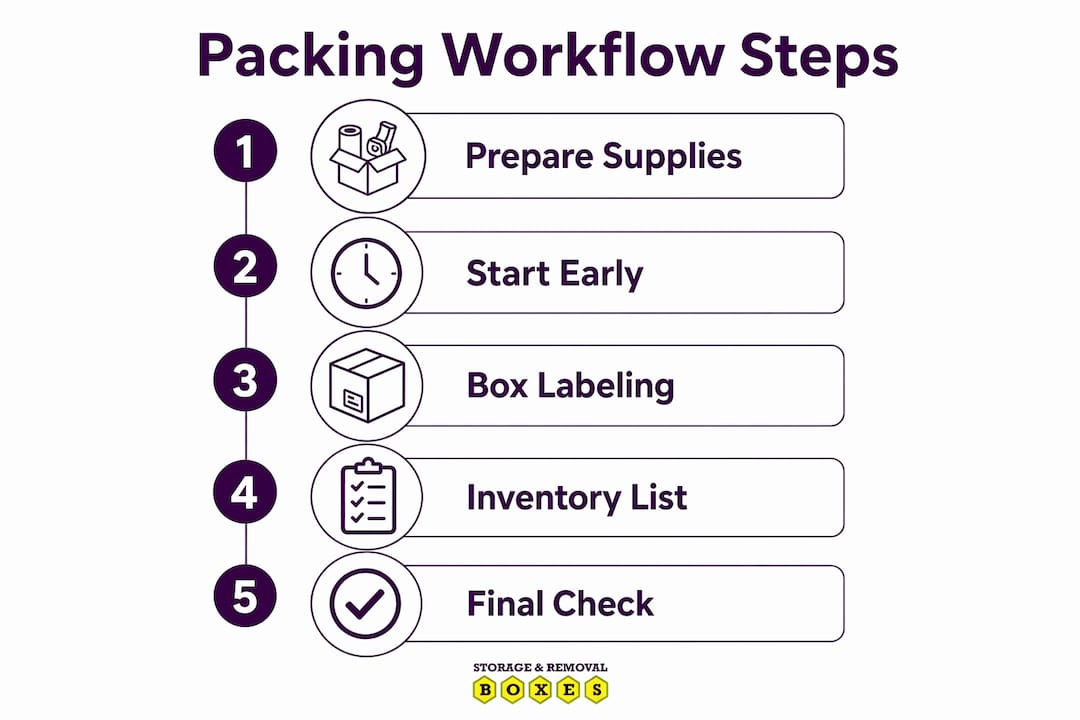
A structured packing schedule is what separates a calm move from a chaotic one. UK moving guidance recommends starting 6–8 weeks before moving day, beginning with the rooms you use least. That timeline gives a three-bedroom household enough time to pack steadily without disrupting daily life.

The logic behind packing in reverse order of room usage is straightforward. Your loft, garage, and spare room contain items you rarely touch. Pack those first and you barely notice the disruption. Your kitchen, on the other hand, is used every day. Leave it until the final 24–48 hours before the move.
Follow this numbered sequence for a reliable packing workflow:
- Declutter before you pack. Donate, sell, or discard anything you do not want to move. Packing items you will throw away at the other end wastes time and money.
- Gather all supplies. Order boxes, tape, paper, and bubble wrap before you start. Running out of materials mid-pack breaks momentum.
- Pack the loft, garage, and spare rooms. These are your lowest-disruption spaces. Work through them steadily over the first two to three weeks.
- Move to living rooms and bedrooms. Pack books, ornaments, and non-seasonal clothing. Leave out only what you need day to day.
- Pack the bathroom. Keep one set of toiletries accessible and box everything else.
- Pack the kitchen last. Box non-essential appliances, crockery, and pantry items two days before the move. Leave the kettle and one mug out.
- Assemble your essentials box. This single box stays with you, not on the van. Fill it with your kettle, chargers, medication, and documents. Experts consistently identify this as the single biggest factor in a smooth moving day.
Label every box on two sides, not just the top. When boxes are stacked, the top label is invisible. Write the destination room clearly and add a sequential number. Box 14 of 60 is far easier to track than an unlabelled box with “kitchen stuff” scrawled on one side.
Pro Tip: Create a master inventory list as you pack. Write the box number and a brief contents summary. This takes two minutes per box and saves hours of searching at the other end.
A methodical, phased approach is the simplest way to avoid the stress that comes from leaving everything to the last week.
What are the best practices for packing different item types?
Packing technique varies significantly by item type. Using the wrong method for fragile or heavy goods causes damage that proper materials and a little care would have prevented entirely.
Heavy items: books, files, and kitchenware
Pack heavy items exclusively in small boxes. Professional movers enforce a 10–15 kg weight limit per box to prevent injury and box failure. A large box full of books will exceed that limit easily and becomes a safety hazard. Small double-walled boxes keep weight manageable and protect both the contents and the person carrying them.
Fragile items: china, glass, and ornaments
Wrap each fragile item in acid-free packing paper first, then add a layer of bubble wrap. Never place bubble wrap directly on delicate surfaces, as the texture can mark or scratch finishes. Pack plates vertically, not flat. Vertical stacking distributes weight more evenly and dramatically reduces breakage. Fill any gaps in the box with scrunched packing paper so items cannot shift in transit.
Electronics and cables
Photograph the back of every device before disconnecting cables. That photograph takes ten seconds and saves twenty minutes of confusion at the other end. Label each cable with a sticky note or cable tie tag before coiling it. Pack electronics in their original boxes where possible. If original packaging is not available, use a medium double-walled box with generous bubble wrap on all sides.
Artwork and mirrors
Wrap artwork in acid-free paper, then bubble wrap, and tape the wrap securely. Stand framed pieces upright in boxes rather than flat. For large mirrors, apply masking tape in a cross pattern across the glass before wrapping. This holds shards together if the glass cracks and prevents a much worse outcome.
Pro Tip: For fragile item protection, use purpose-made cardboard dividers inside boxes when packing glasses or wine glasses. Dividers prevent items from knocking together and are far more reliable than improvised padding.
Avoid using towels or clothing as your primary wrapping material for breakables. They compress under weight and provide far less protection than bubble wrap. Use them to fill gaps at the top of boxes, not as a substitute for proper wrapping materials.
How can digital tools improve your moving logistics management?
Digital organisation turns a good packing plan into a reliable one. A spreadsheet or a free inventory app lets you log each box number, its contents, and its destination room as you pack. That record becomes your reference point throughout the move and during unpacking.
Colour-coded duct tape applied to two sides of each box speeds up room placement significantly. Assign one colour per room: blue for the bedroom, red for the kitchen, green for the living room. Removal crews can place boxes in the correct room without reading a single label. This cuts unpacking time and reduces the number of boxes that end up in the wrong place.
A master inventory list serves a second important purpose beyond unpacking. It provides a record for insurance claims if anything is lost or damaged in transit. A numbered box system means you can verify that all 60 boxes arrived at the destination, not just most of them.
For commercial moves or large households, consider these digital practices:
- Assign a unique QR code sticker to each box and link it to a shared spreadsheet entry.
- Use a shared cloud document so multiple people packing simultaneously can update the inventory in real time.
- Photograph the contents of each box before sealing it. This takes seconds and provides visual confirmation for insurance purposes.
- Log fragile boxes separately in your inventory with a “handle with care” flag so they are prioritised during unloading.
For those moving to the UK from abroad, a digital inventory is particularly valuable. Customs documentation often requires a detailed list of household goods, and a box-by-box record satisfies that requirement with minimal extra effort.
Key takeaways
A well-executed moving box workflow depends on starting early, choosing the right materials, and maintaining a numbered inventory from the first box to the last.
| Point | Details |
|---|---|
| Start 6–8 weeks early | Begin with least-used rooms and leave the kitchen until 48 hours before moving day. |
| Use double-walled boxes | Single-wall boxes collapse under stacked weight; double-walled cardboard is the professional standard. |
| Keep heavy items in small boxes | A 10–15 kg weight limit per box prevents injury and box failure during the move. |
| Pack fragile items in layers | Wrap in acid-free paper first, then bubble wrap; never use newspaper, which stains permanently. |
| Maintain a numbered inventory | A master list with box numbers and contents speeds up unpacking and supports insurance claims. |
Why I think most people get their packing workflow backwards
After watching countless moves go wrong at the planning stage, the pattern is always the same. People buy boxes too late, start packing too late, and spend the final 48 hours in a panic throwing things into whatever container is nearest. The result is unlabelled boxes, broken items, and an unpacking process that drags on for weeks.
The counterintuitive truth is that the most important packing decisions happen before you touch a single item. Choosing double-walled boxes over cheaper alternatives, ordering enough tape and wrapping materials upfront, and writing a room-by-room schedule on a calendar: these decisions cost almost nothing in time but pay back enormously on moving day.
I have also seen people dismiss the essentials box as unnecessary. They regret it every time. Arriving at a new property and spending an hour hunting through 60 boxes for a phone charger or a bottle of paracetamol is entirely avoidable. That one box, kept separate from everything else, is the clearest sign that someone has done this properly.
The blend of DIY packing and professional-grade materials is the right approach for most households. You do not need to hire a full packing service, though professional packing services cost £300–£600 and can pack an entire house in 4–6 hours if the budget allows. What you do need is the same quality of materials and the same methodical mindset that professionals bring. The workflow is not complicated. It just requires starting earlier than feels necessary and being more deliberate than feels natural.
— Adrian
How Storageremovalboxes supports your packing workflow
Storageremovalboxes supplies everything a well-planned move requires, from tall double-walled removal boxes built for bulky household goods to specialist marker pens designed for clear labelling on cardboard. All boxes are made from recyclable materials and built to the strength standards that professional removal crews rely on.
Pre-packed moving kits take the guesswork out of ordering by bundling the right quantities of boxes, tape, and wrapping materials for different home sizes. Nationwide delivery means your supplies arrive before you need them, not the day after. Browse the full range at Storageremovalboxes and order with enough lead time to start packing on schedule.
FAQ
How early should I start packing for a house move?
UK removal experts recommend starting 6–8 weeks before moving day. A three-bedroom home packed at a steady pace requires roughly four weeks of consistent effort.
What is the best box type for a house removal?
Double-walled cardboard boxes are the professional standard. They resist collapse under stacked weight and are significantly stronger than single-wall alternatives.
How heavy should moving boxes be?
Professional removal crews apply a 10–15 kg weight limit per box. Keep heavy items such as books and kitchenware in small boxes to stay within that limit safely.
Why should I avoid newspaper for wrapping fragile items?
Newspaper ink transfers permanently onto china and glass during transit. Acid-free packing paper and bubble wrap protect surfaces without leaving marks.
What should go in an essentials box?
Pack your kettle, phone chargers, medication, toiletries, snacks, and important documents. Keep this box with you rather than on the removal van so you can access it immediately on arrival.