Moving house step by step: your 2026 UK guide

- A successful house move requires early planning, detailed packing, and prompt utility setup to avoid chaos. Following a structured timeline, booking professionals, and organizing essential items improve efficiency and reduce stress on moving day. Proper labeling, quality materials, and timely notifications ensure belongings arrive intact and bills are accurate.
Moving house step by step is the process of organising and executing every task required for a smooth relocation, from the first declutter to the final utility switch. Most people underestimate how many interdependent deadlines a house move involves. Get the order wrong and you face billing disputes, missing post, and a chaotic first night. This guide covers the full stepwise moving process for UK residents in 2026, including Royal Mail redirection pricing, utility setup timelines, and packing strategies that actually work.
What are the key preparations before moving day?
Starting preparations 6–8 weeks before moving day is the single most effective way to prevent deadline clustering. When tasks pile up in the final week, mistakes multiply. Booking a removal company, notifying your utility providers, and sorting your possessions all take longer than expected.
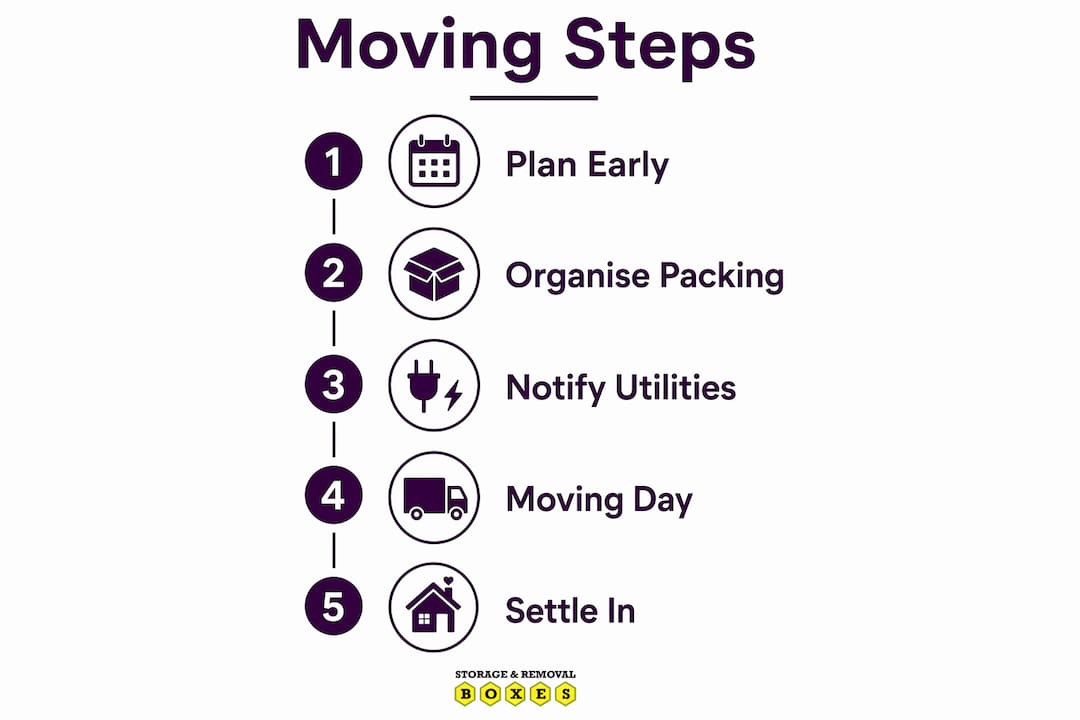
Follow this order of operations for house move planning:
- Eight weeks out: Set a moving budget. Include removal costs, packing materials, utility deposits, and Royal Mail redirection fees.
- Seven weeks out: Begin decluttering room by room. Sell, donate, or dispose of anything you will not take. Fewer items means lower removal costs.
- Six weeks out: Book your removal company or van hire. Reputable firms fill up fast, particularly around end-of-month dates.
- Four weeks out: A structured timeline at this stage prevents confusion across removals, logistics, and utilities. Notify your energy, water, and broadband providers of your move date.
- Two weeks out: Begin packing non-essential rooms. Confirm all bookings in writing.
- One week out: Set up Royal Mail postal redirection and complete your house moving checklist for any outstanding tasks.
Pro Tip: Create a shared digital checklist using Google Keep or Notion so every adult in the household can update tasks in real time. This prevents duplicated effort and missed steps.
Notifying your council tax office is a task many people leave too late. Updating council tax details promptly avoids financial penalties and ensures correct billing at both your old and new address from day one.
How to organise packing for a smooth move
Packing is where most house moves succeed or fail. A room-by-room strategy, combined with the right materials, removes the guesswork entirely.
Essential packing materials:
- Double-walled removal boxes in small, medium, and large sizes
- Bubble wrap rolls for fragile items
- Packing tape and a tape gun
- Foam protectors and moving blankets for furniture
- A black marker pen for labelling
- Coloured labels or stickers to colour-code rooms
Pack the heaviest items in small boxes and lighter items in large boxes. This sounds obvious, but it is the most common packing mistake. A large box filled with books will either split or injure someone.
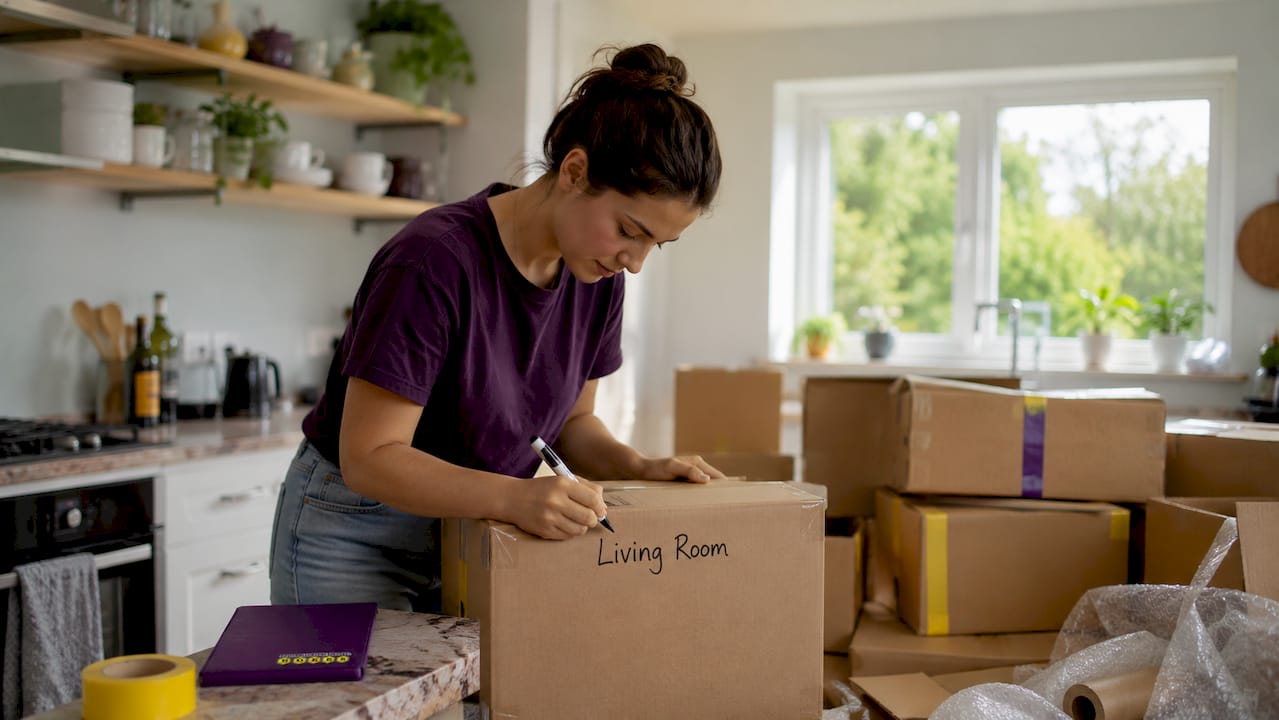
Label every box on the top and on one side. Write the destination room and a brief contents description. When boxes are stacked in a removal van, you can only read the side label.
Protecting fragile items
Fragile items need individual wrapping with bubble wrap, not just a layer at the top of the box. Plates pack best on their edge, not flat. Glasses need crumpled paper inside them before wrapping. For guidance on protecting fragile belongings, the difference between a double-walled box and a single-walled one matters significantly for anything breakable.
Packing materials: double-walled vs single-walled boxes
| Feature | Double-Walled Box | Single-Walled Box |
|---|---|---|
| Strength | High, suitable for heavy items | Moderate, suitable for light items |
| Fragile item protection | Excellent | Limited |
| Stackability | Strong under load | Can buckle when stacked |
| Best use | Books, kitchenware, electronics | Clothes, linens, soft items |
| Cost | Slightly higher | Lower |
Pro Tip: Pack a dedicated first-night box and keep it with you in the car, not on the removal van. A first-night box should cover 24–48 hours and include toiletries, bedding, chargers, medications, and a change of clothes for each person.
For families, separate essentials kits per person reduce first-night stress considerably. Label each bag with the person’s name so nothing gets mixed up during unpacking.
What steps are involved on moving day?
Moving day runs smoothly when you treat it like a project with a clear sequence. Improvising on the day costs time and energy.
- Before 8am: Do a final walkthrough of every room, cupboard, loft, and garage. Check nothing is left behind.
- At the start: Take dated photographs of meter readings at your old property. Photographing meters with timestamps prevents billing disputes and is considered professional standard practice.
- During loading: Direct the removal team clearly. Tell them which boxes are fragile and which rooms they belong to. Keep your first-night box and important documents with you at all times.
- On arrival: Do a walkthrough of the new property before unloading. Note any existing damage and photograph it immediately.
- At move-in: Take meter readings at the new property straight away. Contact your energy supplier with both sets of readings on the same day.
- After unloading: Unpack the first-night box first. Set up beds before anything else. A good night’s sleep makes the following days of unpacking far more manageable.
- End of day: Confirm with your removal company that all items are accounted for. Check your inventory list against what has arrived.
Pro Tip: Assign one person to manage the removal team and one person to manage children or pets. Splitting these roles prevents both from being neglected simultaneously.
For a detailed moving day guide covering logistics from a removal company perspective, the sequencing advice from professionals is worth reading before your move date.
How do you manage utilities and postal redirection?
Utility setup is the most commonly mismanaged part of any relocation. Utility setup requires at least 30 days’ advance planning to coordinate closing old accounts and starting new ones without interruption. That means contacting providers around four weeks before your move date.
Key utility and admin tasks
| Task | When to Act | Notes |
|---|---|---|
| Notify energy supplier | 4 weeks before | Provide move date and final meter reading |
| Arrange broadband transfer | 4–6 weeks before | New line installations can take 2–3 weeks |
| Contact water supplier | 2 weeks before | Register at new address on move-in day |
| Notify council tax | Move week | Contact both old and new local authorities |
| Update bank and insurers | 1–2 weeks before | Prevents missed correspondence |
| DVLA and HMRC | Within 30 days | Legal requirement for driving licence and tax records |
Royal Mail postal redirection is a safety net, not a substitute for updating your address directly with organisations. Royal Mail redirection costs approximately £33.99 for 3 months per person in 2026. Two adults redirecting post for 12 months costs around £138 in total. Set it up at least one week before moving day to avoid any gap in coverage.
Other organisations to notify promptly include:
- Your GP, dentist, and optician
- Your employer and pension provider
- HMRC for tax and benefits correspondence
- Any subscription services, including streaming and magazines
- Your children’s school or nursery
What common challenges arise during a move?
Most moving problems are predictable. Knowing them in advance means you can sidestep them entirely.
The most frequent issues and their fixes:
- Last-minute packing: Leaving packing until the final two days creates chaos. Start non-essential rooms four weeks out and stick to the schedule.
- Utility service gaps: Broadband is the most common casualty. New line installations take 2–3 weeks. Book early or arrange a mobile data backup for the first week.
- Misplaced items: Poor labelling is the cause in most cases. Every box needs a room label and a brief contents note. A numbered inventory list cross-referenced to box numbers is the professional approach.
- Children and pets on moving day: Both need a dedicated plan. Arrange for children to stay with a relative or friend for the day if possible. Keep pets in a quiet room with food and water, or use a boarding service.
- Unexpected delays: Completion delays on property transactions do happen. Keep your removal company informed and have a contingency plan for overnight storage if needed.
“The moves that go wrong are almost always the ones where someone assumed a task would sort itself out. Nothing sorts itself out on moving day.”
If the scale of your move feels unmanageable, professional packing services from removal companies are worth the cost. Many offer full or partial packing options. For guidance on safe packing and handling, the difference between a rushed pack and a methodical one shows up clearly when boxes are unloaded.
Key takeaways
A successful house move depends on starting early, following a structured sequence, and never leaving utilities, packing, or postal redirection to the final week.
| Point | Details |
|---|---|
| Start 6–8 weeks early | Book removals, begin decluttering, and notify providers well before moving day. |
| Pack room by room | Label every box with room and contents; use double-walled boxes for heavy or fragile items. |
| Prepare a first-night box | Keep essentials for 24–48 hours with you in the car, not on the removal van. |
| Photograph meter readings | Take timestamped photos at both properties on moving day to prevent billing disputes. |
| Set up Royal Mail redirection | Budget around £33.99 per person for 3 months and activate it at least one week before moving. |
What i have learnt from watching hundreds of moves go wrong
The most consistent mistake I see is treating the move itself as the main event. People spend weeks agonising over the removal company and almost no time thinking about what happens in the 48 hours after the van leaves. That is where the real stress lives.
The first-night box concept sounds simple, but most families skip it. They assume they will find things quickly enough. They never do. After a physically exhausting day, searching through 40 unlabelled boxes for a phone charger or a child’s favourite toy is genuinely demoralising. Pack that box first, label it clearly, and put it in your car before the removal team arrives.
I also think people underestimate the value of quality packing materials. A split box on the stairs or a shattered piece of crockery wrapped in a single sheet of newspaper is not bad luck. It is a predictable outcome of using inadequate materials. Double-walled boxes and proper bubble wrap are not luxuries. They are the difference between your belongings arriving intact and arriving damaged.
The other thing I would say is this: be honest about what you can manage yourself. If you have a large family, a lot of fragile items, or a tight timeline, professional packing help is money well spent. The goal is not to do everything yourself. The goal is to arrive at your new home without regret.
Get the right boxes and kits for your move
Packing well starts with having the right materials before you begin. Storageremovalboxes stocks a full range of packing boxes for house moves, from budget single-wall options to heavy-duty double-walled removal boxes built for fragile and bulky items.

If you want everything in one order, the home moving kits include boxes, bubble wrap, tape, and labels sized for different property types. Whether you are moving a one-bedroom flat or a four-bedroom house, Storageremovalboxes has a pre-assembled kit that removes the guesswork from your packing list. Nationwide delivery means your materials arrive before you need them, not on the morning of the move.
FAQ
How far in advance should i start planning a house move?
Start at least 6–8 weeks before moving day to allow time for booking removals, decluttering, and notifying utility providers without deadline pressure.
What should go in a first-night box?
A first-night box should contain toiletries, bedding, chargers, medications, and a change of clothes for each person, covering the first 24–48 hours without needing to unpack other boxes.
How much does royal mail postal redirection cost in 2026?
Royal Mail redirection costs approximately £33.99 for 3 months per person. Two adults redirecting for 12 months costs around £138 in total.
When should i take meter readings during a move?
Take dated, timestamped photographs of meter readings at your old property on moving day and at your new property immediately on arrival. Submit both sets to your energy supplier the same day.
Do i need to notify the council when i move house?
Yes. Notifying your local council promptly about your change of address is required to avoid incorrect council tax billing and potential financial penalties at both your old and new address.