Moving tips for storage users: your 2026 guide
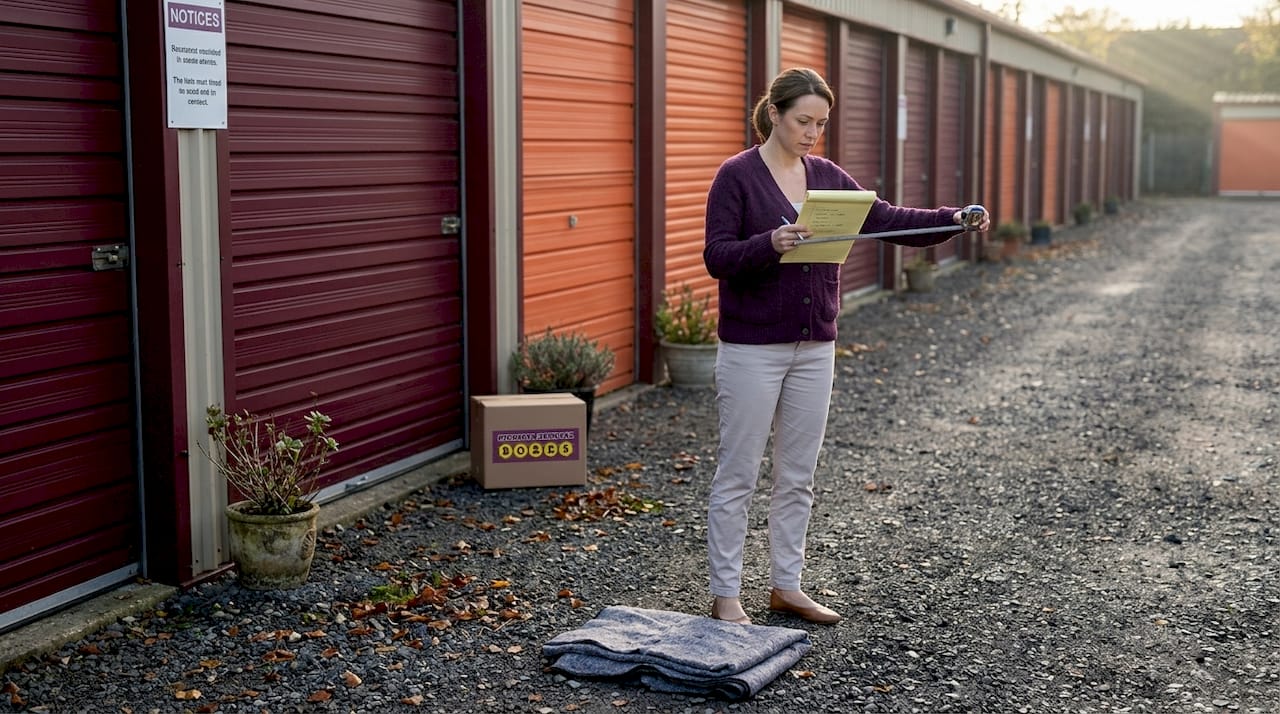
TL;DR:
- Effective storage management requires early booking, proper packing, and strategic loading to ensure quick retrieval and minimize damage. Selecting the correct unit size, labeling items precisely, and organizing for accessibility help create a smooth moving and storage experience. Using quality supplies and planning based on your timelines and needs can turn storage into a valuable asset during your move.
Moving with a storage unit involved is rarely as simple as it looks on paper. You have two locations to manage, belongings split across multiple spaces, and a tight timeline that refuses to stay tidy. The right moving tips for storage users make the difference between a chaotic week you want to forget and a transition you actually feel in control of. This guide covers everything from choosing the right unit size and packing your boxes properly, to loading your storage space with retrieval in mind so that nothing gets buried and nothing gets damaged.
Table of Contents
- Key takeaways
- 1. Plan your storage unit size from the start
- 2. Book early, especially in peak season
- 3. Use the right boxes and packing materials
- 4. Protect furniture properly before it goes in
- 5. Avoid plastic bags for storage
- 6. Label everything with real detail
- 7. Load your storage unit with retrieval in mind
- 8. Group items and separate your essentials
- 9. Coordinate movers and storage on moving day
- 10. Use storage to manage overlapping dates
- My honest take on moving with storage
- Pack smarter with the right supplies from Storageremovalboxes
- FAQ
Key takeaways
| Point | Details |
|---|---|
| Book early, move smart | Securing storage and movers 6 to 8 weeks ahead reduces costs, especially in peak season. |
| Pack by weight and room | Keep boxes under 50 pounds and label by room and contents for faster retrieval. |
| Load with access in mind | Leave a walking aisle in your unit so you can reach items without unloading everything. |
| Use storage as a buffer | Short-term storage reduces moving day pressure by letting you stage your transition gradually. |
| Choose the right unit size | Match your unit size to your home: a one-bedroom flat typically needs a 5x10 or 10x10. |
1. Plan your storage unit size from the start
One of the most overlooked moving tips for storage users is choosing the wrong unit size. Too small and you are cramming boxes dangerously. Too large and you are paying for empty space every month.
Unit size recommendations scale by home size: a one-bedroom property typically suits a 5x10 or 10x10 unit, a two-bedroom home needs a 10x15 or 10x20, and a three to four bedroom house usually requires a 10x20 or 10x30. If you are unsure, go one size up. You will need room to move around, not just stand in the doorway.
Think about what you are storing too. If you are only moving non-essentials into storage while you stage the property for sale, a smaller unit will do. If everything is going in during a gap between contracts, size up accordingly.
Pro Tip: Walk through your home and make a rough count of large furniture pieces before booking. Most storage providers have online calculators, but your own inventory will be more accurate.
2. Book early, especially in peak season
Availability is tighter than most people expect. Booking 6 to 8 weeks ahead during summer months or at month-end secures better rates and more choice. Movers and storage units fill up fast in peak season, and last-minute bookings almost always cost more.
Beyond timing, consider the day of your move. Mid-week and mid-month moves tend to be cheaper because demand is lower. A Wednesday move in the middle of the month can save you a meaningful amount compared to a Friday at the end of June.
Use this lead time to also put together your moving house checklist so nothing slips through the cracks while you are managing both a property move and a storage booking simultaneously.
3. Use the right boxes and packing materials
This is where a lot of storage users cut corners and regret it. The boxes you use for a house move and long-term storage need to be genuinely sturdy. Single-wall cardboard collapses under weight. Double-wall boxes hold their shape when stacked, which matters enormously when your unit is full and items are sitting under pressure for months.
Keep every box under 50 pounds. Heavier items like books, tools, and kitchenware should go into smaller boxes so the weight stays manageable and the cardboard does not give way. Lighter items like bedding and cushions can go into larger boxes without risk.
For long-term storage, plastic bins outperform cardboard because they resist moisture, pests, and compression. If you are storing items for more than a few months, mixing plastic bins for valuables with double-wall boxes for general items is a practical approach.
Pro Tip: Fill every box completely before sealing it. Half-empty boxes collapse when stacked, crushing contents in the box below. Use bubble wrap rolls or scrunched packing paper to fill gaps.
4. Protect furniture properly before it goes in
Disassembling large furniture before storage protects it from warping and damage, and it also creates space for more efficient stacking. Remove table legs, take bed frames apart, and store flat pieces upright against walls to save floor space.

Wrap exposed wood, glass, and upholstery in moving blankets or foam padding before anything else touches them. Scratches and dents in storage almost always happen during loading and unloading, not during the quiet months in between. Taking ten minutes to wrap a piece properly saves a repair bill later.
Disassembled furniture stacks better and suffers significantly less long-term damage compared to storing assembled pieces. This is especially true for sofas with removable feet, wardrobes with doors, and dining tables with bolt-on legs.
5. Avoid plastic bags for storage
This one catches people out. Plastic bags feel like a sensible solution for compressing soft items like duvets, cushions, and clothing. They are not. Plastic bags trap moisture, which leads to mildew, musty smells, and in some cases, permanent fabric damage.
If you need compression, use vacuum-sealed storage bags instead. These remove the air properly and seal tightly enough to prevent moisture ingress. They are particularly useful for seasonal bedding, towels, and soft furnishings that you will not need to access frequently.
For clothing and textiles in general, breathable wardrobe boxes are a far better option. They protect against dust while allowing air circulation, which keeps fabrics in good condition over time.
6. Label everything with real detail
Vague labels are the single biggest frustration when retrieving items from storage weeks or months later. “Kitchen stuff” tells you almost nothing. “Kitchen: pots, pans, baking trays, spice rack” tells you exactly what is inside and whether it is worth opening that box today.
Detailed labels and grouping boxes by room speeds retrieval and reduces the stress of sorting through a full unit. Use a good-quality marker pen and label on at least two sides of every box so you can read it regardless of how it is stacked.
Write the room name, a brief contents description, and whether the box contains fragile items. For anything you might need urgently, add a “PRIORITY” label so it goes in last and comes out first.
7. Load your storage unit with retrieval in mind
Most people load a storage unit like they are playing Tetris. Every gap filled, every inch used. That approach makes sense until the moment you need one specific box and it is buried behind everything else.
A walking aisle down the middle or side of your unit prevents you from having to unload the entire space to reach one item. Yes, it uses a little space. It saves enormous amounts of time and effort.
Load with a clear retrieval system in mind. Keep priority items accessible, heavier items low and stable towards the back walls, and fragile items protected at the front where you can see and reach them. Think of it as arranging a room rather than filling a skip.
8. Group items and separate your essentials
Your storage unit moving guide should always include a clear separation between what you are putting away for weeks and what you might need tomorrow. This is the organisation tip that most people skip and then regret during those first days in a new property.
Pack a dedicated “first day” bag or box containing items like bedding, toiletries, a change of clothes, phone chargers, and a kettle. Keep this with you or in your car. It should never go into the storage unit.
For everything else, group boxes by room and category. Keeping all your kitchen boxes together, all bedroom boxes together, and all garden items together means that when you start unloading, you are not hunting across the unit for matching sets of belongings.
9. Coordinate movers and storage on moving day
Moving day coordination between your removal team and your storage unit is where things go wrong if you have not planned it. Storage is a vital buffer that separates the high-pressure decisions of moving day from the logistics of settling in. Use it deliberately.
Give your movers a clear brief about what is going to storage and what is going to your new home. Label those categories with different coloured tape if needed. A red tape box goes to storage, a blue tape box goes to the property. Simple visual cues prevent expensive mistakes.
Verify mover reviews across multiple platforms before you book. A single glowing review on a company’s own website means very little. Cross-checking on Google and independent review platforms gives you a more honest picture of reliability.
10. Use storage to manage overlapping dates
One of the most practical uses of short-term storage that most people underestimate is handling the gap between move-out and move-in dates. Contracts rarely align perfectly. Short-term storage provides a buffer to manage these overlaps, turning what could be a frantic few days into a staged, manageable transition.
Rather than rushing everything into your new home before it is ready, stage your belongings into storage and move in batches. This approach also makes unpacking far less overwhelming because you bring things in as you are ready for them, not all at once.
You can find more practical advice on timing and prioritising your transition in this storage unit moving guide from Storageremovalboxes.
My honest take on moving with storage
I’ve seen moves go smoothly and moves go spectacularly wrong. The difference almost never comes down to bad luck. It comes down to whether the person treated their storage unit as a strategic part of the move or as an overflow bin.
What I’ve learned is that people who treat storage as a temporary dumping ground almost always end up unloading the entire unit at least once to find something they needed. That costs time, physical effort, and patience. People who think about retrieval before they put the first box in almost never have that problem.
The labelling lesson is one I’ve seen learned the hard way repeatedly. Moving is exhausting, and it’s tempting to scrawl “misc” on a box at 11pm and push it to the back of the unit. Three months later, “misc” contains your passport, your child’s school documents, and a box set you were going to sell. Specific labels feel like effort in the moment. They are an investment.
My honest take is that the single best thing you can do is think backwards. Before you pack anything, ask: when will I need this, and how quickly will I need to find it? Pack from that answer. Load from that answer. The whole process becomes simpler when retrieval is the starting point, not an afterthought.
— Adrian
Pack smarter with the right supplies from Storageremovalboxes
When you are packing for both a move and a storage unit, the materials you use genuinely matter. Thin cardboard and poor protection are the reasons belongings arrive damaged or deteriorate in storage.
Storageremovalboxes stocks everything you need in one place. The tall double-wall removal boxes are built to handle heavy loads and stack reliably in a unit for months. Pair them with moving blankets for furniture protection and bubble wrap for fragile items. If you prefer a ready-to-go option, the moving kits include boxes, tape, and packing materials sized for different homes. Order early so your supplies arrive before packing day, not on it.
FAQ
What size storage unit do I need for a house move?
Unit sizes scale with home size: a one-bedroom property typically suits a 5x10 or 10x10 unit, while a three to four bedroom house usually needs a 10x20 or 10x30. When in doubt, book one size larger than you think you need.
How far in advance should I book movers and storage?
Book 6 to 8 weeks ahead, especially if you are moving during summer or at the end of a month. Early booking secures better rates and more choice of dates.
How heavy should packing boxes be for storage?
Keep boxes under 50 pounds to reduce handling risk and prevent box failure. Put heavy items like books in smaller boxes and lighter items like bedding in larger ones.
Should I use plastic bags to pack soft items for storage?
No. Plastic bags trap moisture, which causes mildew on fabrics. Use vacuum-sealed bags or breathable wardrobe boxes for clothing, bedding, and soft furnishings.
How do I load a storage unit so I can find things easily?
Leave a walking aisle down the centre or side of the unit, place heavy items low at the back, and keep items you might need soon near the front. Label every box with specific contents, not just a room name.