Packing kit selection guide for your home move
TL;DR:
- A packing kit is a prepared collection of boxes, protective materials, tape, and labels for safe household item transport. Selecting the right materials ensures protection and avoids damage, with double-walled boxes being essential for stacking stability. For storage, stronger boxes, moisture protection, and detailed inventories are necessary to prevent long-term damage and facilitate retrieval.
A packing kit is defined as a pre-assembled or custom collection of boxes, protective materials, tape, and labels designed to pack and transport household belongings safely. Choosing the right kit is not a minor detail. The wrong materials cause damaged goods, wasted money, and serious stress on moving day. This packing kit selection guide covers the core materials you need, how to calculate quantities accurately, and how to match your kit to your specific move or storage scenario. Whether you are packing a studio flat or a five-bedroom family home, the principles are the same: right box, right material, right quantity.
What packing materials are essential for a safe kit?
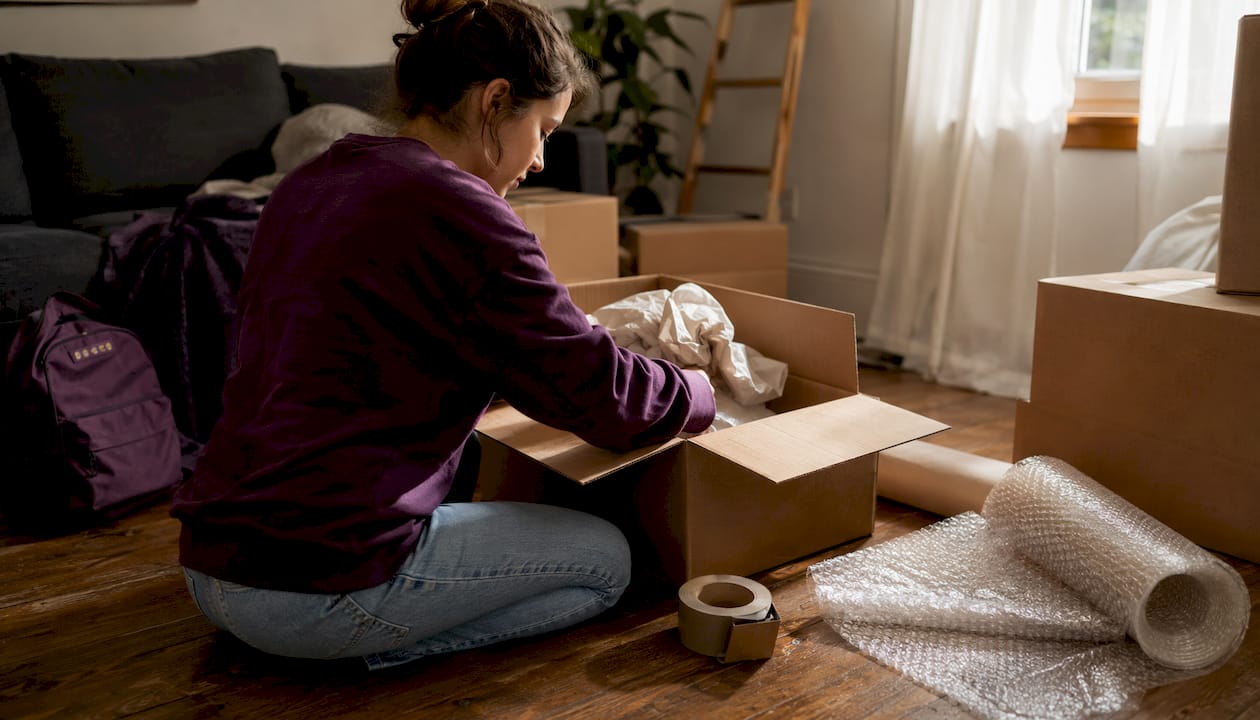
Double-walled boxes are the single most important component in any packing kit. They resist compression far better than single-walled alternatives, which matters when boxes are stacked three or four high in a removal van. Free supermarket boxes almost never meet the dry, square, and double-walled standard required for safe stacking, particularly for kitchen items and fragile goods.
Box size determines how safely you can pack. The golden rule is heavy items in small boxes, light items in large boxes. Books, tools, and tinned food go into small boxes. Duvets, cushions, and lampshades go into large ones. This keeps every box under 20kg, which is the recommended safe handling weight.
Wrapping materials divide into two categories. Packing paper is the workhorse: it packs densely, leaves no ink stains, and cushions surfaces cost-effectively. Bubble wrap is best reserved for your highest-risk items, such as wine glasses, ceramic figurines, and mirrors. Using bubble wrap on everything inflates cost without adding proportionate protection.
Tape is where many people cut corners and regret it. Wide, high-tack packing tape with a proper dispenser prevents box failure under load. Thin tape peels away from cardboard under weight, especially in warm vehicles. Buy a tape gun. It saves time and produces a far more secure seal than hand-tearing.
Optional but genuinely useful additions include:
- Wardrobe boxes with hanging rails, which eliminate the need to fold and iron suits or dresses
- Mattress covers to protect against dirt, moisture, and tears during transit
- Removal blankets to wrap furniture legs, mirrors, and artwork without scratching surfaces
- Foam corner protectors for picture frames and glass-topped furniture
| Material | Primary purpose | Best for |
|---|---|---|
| Double-walled boxes | Structural protection and stacking | All household items |
| Packing paper | Surface cushioning and void fill | Crockery, glassware, ornaments |
| Bubble wrap | Shock absorption | Mirrors, electronics, ceramics |
| High-tack tape | Box sealing and base reinforcement | All boxes |
| Removal blankets | Furniture surface protection | Sofas, tables, wardrobes |
Pro Tip: Buy at least two tape dispensers. One always runs out at the worst moment, and stopping to reload mid-pack breaks your rhythm entirely.
How do you estimate the right quantity of packing supplies?
Most people underestimate their box needs by around 30%, which leads to last-minute panic buying at inflated prices. The fix is simple: calculate your estimate, then add 30% as a buffer before you order.
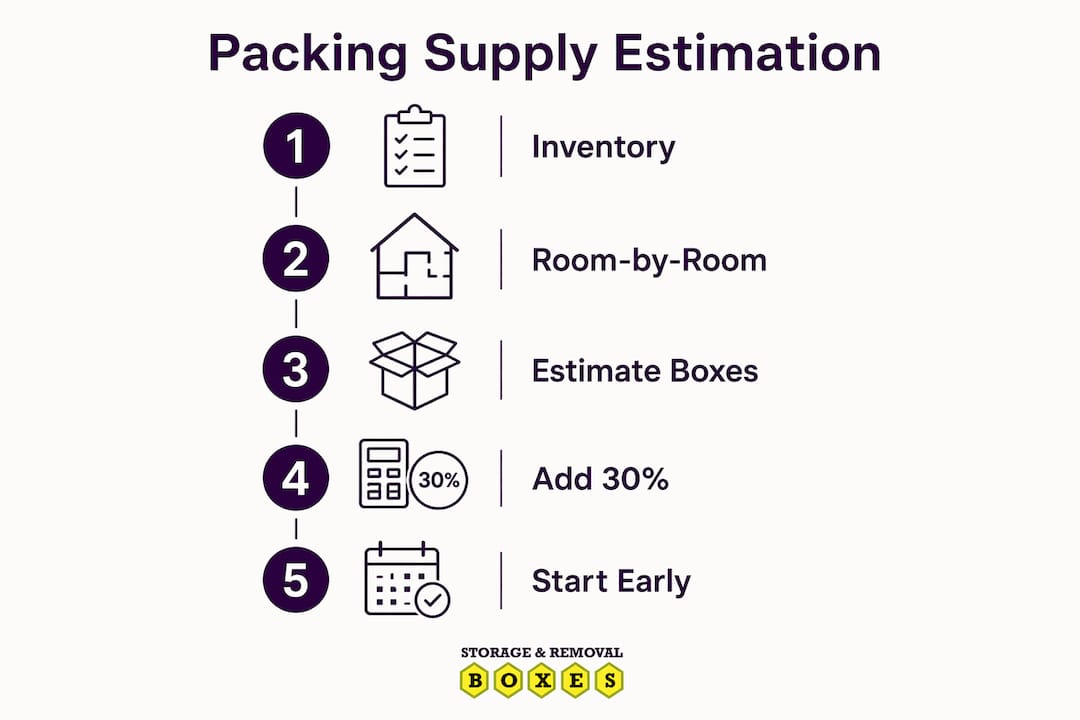
A room-by-room inventory is the most reliable method. Walk through each room and count the approximate number of box-loads, not individual items. A typical kitchen fills 10–15 boxes. A living room with books and ornaments fills 8–12. A bedroom fills 6–10, depending on wardrobes and storage.
For a rough total, a three-bedroom house typically requires 40–60 moving boxes. Households with large book collections or extensive kitchenware sit at the higher end of that range. Smaller homes need fewer, but the proportional underestimation problem applies equally.
| Home size | Estimated box count | Notes |
|---|---|---|
| Studio or one-bedroom flat | 15–25 boxes | Fewer large items, lighter load |
| Two-bedroom house | 25–40 boxes | Moderate contents, one or two heavy rooms |
| Three-bedroom house | 40–60 boxes | Standard family home benchmark |
| Four or five-bedroom house | 60–100 boxes | Large collections, multiple storage areas |
Packing for storage rather than an immediate move changes the calculation. Items going into long-term storage need more protective wrapping per box, which increases your material use without necessarily increasing your box count.
Pro Tip: Start packing 6–8 weeks before moving day, beginning with seasonal items and rooms you use least. Decluttering as you go reduces your total box count and saves money on materials.
How do you choose the right kit for your move or storage scenario?
Pre-assembled removal kits suit most standard household moves. They are calibrated for typical room counts and include a balanced mix of box sizes, tape, and protective materials. The main advantage is convenience: one order, one delivery, no mental arithmetic.
Custom kits make more sense when your home has unusual contents. A household with a large vinyl record collection, a home studio, or extensive glassware needs a higher proportion of small boxes and specialist wrapping than a standard kit provides. Building a custom kit based on your actual inventory prevents overspending on items you will not use.
Long-distance and international moves demand premium materials throughout. Boxes face more handling, more vibration, and longer transit times. Double-walled boxes are non-negotiable. Bubble wrap usage increases. Every box needs reinforced base taping.
Common mistakes to avoid when selecting your kit:
- Overfilling large boxes with heavy items, making them impossible to lift safely
- Mixing fragile and heavy items in the same box without adequate separation
- Using single-walled boxes for kitchen items or anything that will be stacked
- Skipping specialist boxes for clothing, which leads to creased and damaged garments
- Buying cheap tape that fails under load in warm or humid conditions
Pack according to risk: high-value or sentimental items need premium protection regardless of cost. Linen and clothing can use economical space-saving methods such as vacuum bags or wardrobe boxes.
Pro Tip: For fragile instruments or specialist items, specialist packing guidance such as safe instrument packing applies the same principles used in professional removals: rigid outer protection, internal cushioning, and zero movement inside the case.
Step-by-step guide to using your packing kit effectively
Set up a dedicated packing station before you open a single box. Lay out your tape gun, marker pens, packing paper, and bubble wrap on a table. Having everything within arm’s reach cuts packing time significantly and reduces errors.
Follow this sequence for each room:
- Assemble the box and reinforce the base with two strips of tape running in opposite directions.
- Add a cushioning layer of scrunched packing paper to the bottom of every box before placing items inside.
- Wrap fragile items individually in packing paper, then add a secondary layer of bubble wrap for anything with a high breakage risk.
- Load heaviest items first, placing them flat at the bottom of the box.
- Fill all gaps with packing paper or foam padding to prevent items shifting in transit.
- Seal the top with two strips of tape and label immediately before moving to the next box.
Label boxes on two sides, not just the top. When boxes are stacked in a van or storage unit, the top label is invisible. Side labels let removal teams and family members identify contents without unstacking everything. Include the destination room and a brief contents description on every label.
“The most common packing error is overfilling large boxes with heavy items, rendering them unsafe to lift and prone to breaking at the base. Keep every box under 20kg and you eliminate the most frequent cause of move-day injury and damage.”
Pack an essentials box last. This box travels in the car, not the van, and contains everything you need for the first 24 hours: kettle, mugs, phone charger, toilet paper, a change of clothes, and any medication. Label it clearly and keep it separate from the main load.
Pro Tip: Use a black marker pen with a thick nib for labelling. Fine-point pens are illegible from more than half a metre away, which slows down unloading considerably.
How does packing for storage differ from packing for a move?
Boxes used for storage require higher standards than those used for a single move. They face longer stacking durations, limited access for checking contents, and potential exposure to temperature fluctuations and humidity. Single-walled boxes are not suitable for storage lasting more than a few weeks.
Moisture and pest protection are genuine concerns in storage environments. Wrap textiles and soft furnishings in sealed plastic bags before boxing them. Avoid packing anything damp. Use silica gel sachets in boxes containing electronics, leather goods, or wooden items.
Arrange box contents to prevent shifting over time. Items that move inside a box during storage cause gradual damage that you will not notice until you unpack months later. Fill every void with packing paper or foam padding, even more thoroughly than you would for a short move.
Additional protective items worth including for storage:
- Mattress covers to guard against dust and moisture
- Furniture covers or removal blankets for upholstered pieces
- Foam corner protectors for picture frames and mirrors stored upright
- Clearly printed inventory labels on every box, listing contents and the date packed
Pro Tip: Number your storage boxes and keep a separate written or digital inventory listing what is in each numbered box. This saves hours when you need to retrieve a specific item without unpacking everything.
Key takeaways
The most effective packing kit combines double-walled boxes in the right sizes, quality tape, packing paper, and targeted bubble wrap, matched to your home size and the fragility of your belongings.
| Point | Details |
|---|---|
| Use double-walled boxes | Single-walled boxes buckle under stacking and are unsuitable for kitchen or fragile items. |
| Apply the weight rule | Keep every box under 20kg by putting heavy items in small boxes and light items in large ones. |
| Add a 30% buffer | Most people underestimate box needs by 30%, so always order more than your initial count. |
| Label on two sides | Side labels remain visible when boxes are stacked, speeding up unloading and storage access. |
| Upgrade for storage | Long-term storage demands stronger boxes, moisture protection, and a numbered inventory system. |
What I have learned from watching people pack badly
Every move I have seen go wrong shares the same root cause: the packing kit was chosen too quickly and too cheaply. Someone grabbed whatever boxes were available, bought a single roll of thin tape, and assumed packing paper was an optional extra. By moving day, boxes were splitting, items were shifting, and the removal team was spending time repacking rather than loading.
The insight that changes everything is this: your packing kit is not a cost to minimise. It is insurance for every object you own. A broken television or a chipped set of crockery costs far more than the difference between cheap and quality materials.
I have also noticed that people consistently underestimate how long packing takes. A three-bedroom house that looks manageable on a Sunday afternoon is still only half-packed by Thursday evening. Starting early and packing incrementally, room by room, is not cautious advice. It is the only approach that actually works without chaos at the end.
The labelling step is the one most people skip when they are tired. Do not skip it. Unlabelled boxes create a second unpacking problem on top of the first. Write the room and a brief description on every box, every time, without exception. The five seconds it takes saves thirty minutes of confusion at the other end.
— Adrian
Storageremovalboxes: quality kits for every home size
Choosing the right materials is only half the task. Having them arrive on time, in the right quantities, makes the difference between a calm move and a stressful one.
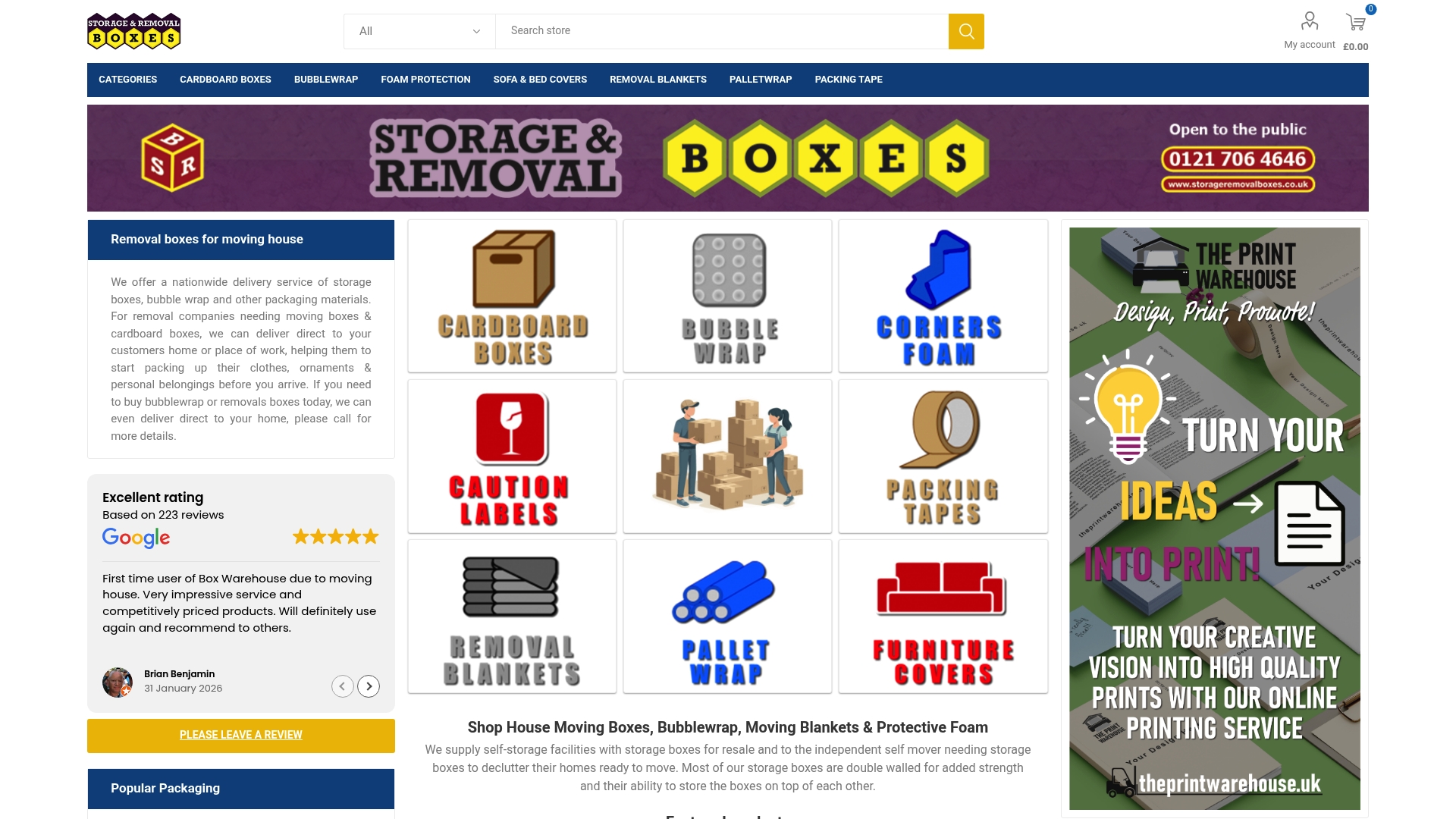
Storageremovalboxes supplies double-walled moving boxes in a full range of sizes, alongside pre-assembled home moving kits calibrated for different household sizes. Every kit includes strong tape, protective materials, and the box mix needed for a typical UK move. If your home has specific requirements, the removal box packs section lets you build a custom order with exactly the quantities you need. Nationwide delivery is available, and the product range covers everything from bubble wrap to removal blankets, all in one order.
FAQ
What is included in a standard packing kit?
A standard packing kit includes a selection of double-walled boxes in mixed sizes, packing tape, packing paper or bubble wrap, and marker pens for labelling. Some kits also include wardrobe boxes or mattress covers for larger households.
How many boxes does a three-bedroom house need?
A three-bedroom house typically requires 40–60 moving boxes, with more needed for households with large book collections or extensive kitchenware. Always add a 30% buffer to your initial estimate to avoid shortages.
What is the safest weight limit for a moving box?
The recommended maximum weight per box is 20kg. Keeping boxes under this limit reduces injury risk and prevents box bases from failing under load.
Should I use packing paper or bubble wrap for fragile items?
Use packing paper as your primary wrapping material for most fragile items, as it cushions surfaces and fills voids without adding bulk. Reserve bubble wrap for your highest-risk pieces, such as mirrors, wine glasses, and electronics.
Do storage boxes need to be different from moving boxes?
Boxes used for storage require stronger materials, clearer labelling, and additional moisture protection compared to those used for a single move. Double-walled boxes are the minimum standard for any storage lasting more than a few weeks.