Packing materials for a safe, organised move in 2026
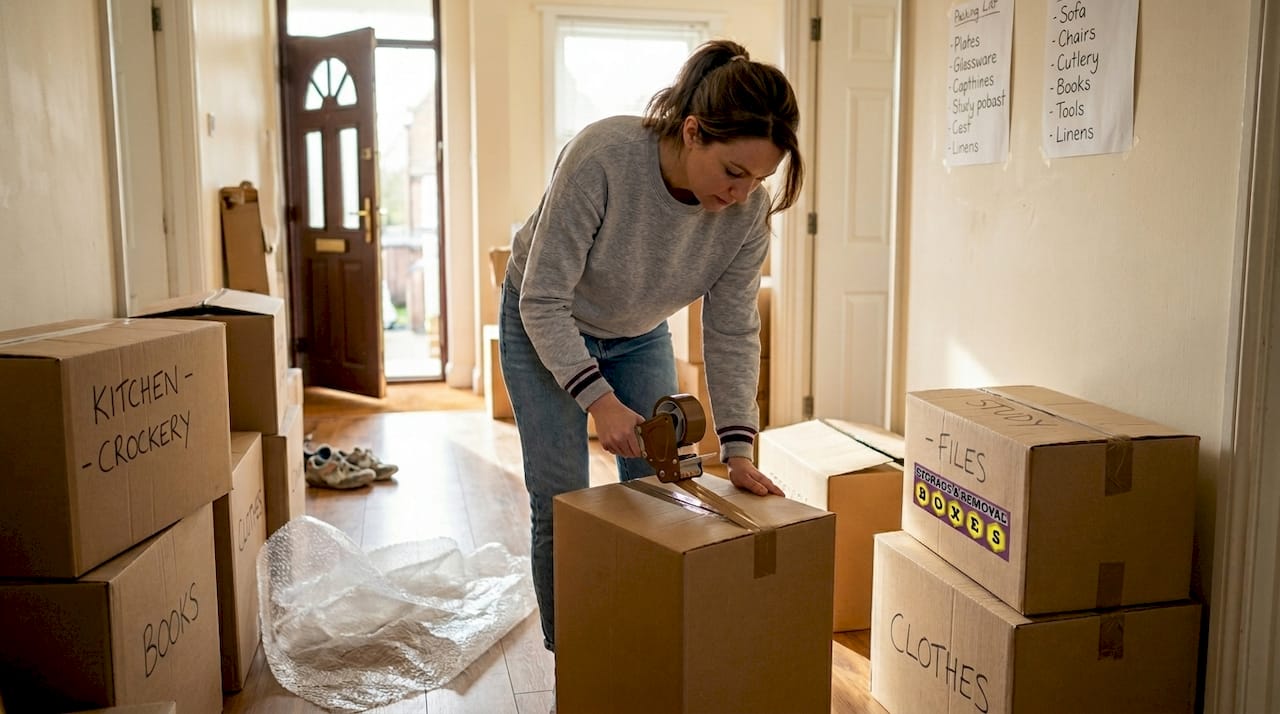
- Choosing durable, suitable, and eco-friendly packing materials reduces damage and saves money.
- Properly sized and reinforced cardboard boxes, combined with protective wraps, ensure item safety.
- Clear labelling and secure sealing enhance efficiency and prevent mishaps during moving.
Moving home is one of the most demanding tasks you’ll face, and the packing materials you choose can make or break the entire process. Pick the wrong box or skip the bubble wrap, and you risk arriving at your new home to find broken crockery, damaged furniture, or crushed keepsakes. The good news is that selecting the right materials is straightforward once you know what to look for. This guide walks you through every key option, from cardboard boxes and foam sheets to tape and labels, so you can pack with confidence and protect everything you own.
Key Takeaways
| Point | Details |
|---|---|
| Select for safety | Strong materials reduce risk of breakage and simplify unpacking. |
| Match materials to items | Choose boxes, wraps and protection based on item size and fragility. |
| Label and secure | Correct sealing and labelling prevent loss and make unpacking easier. |
| Reuse and recycle | Many packing materials can be reused or recycled for future moves. |
Understanding packing materials: Criteria for selection
Before you order a single box or roll of wrap, it pays to think carefully about what you actually need. Choosing suitable packing materials is crucial for safe transport and storage, and rushing this step is where most people go wrong. A clear set of criteria will save you money and prevent damage.
Here are the key factors to weigh up before buying:
- Durability: Your boxes and wrapping must withstand stacking, lifting, and the occasional bump. Flimsy materials collapse under weight, which puts everything inside at risk.
- Suitability: Not every material works for every item. Heavy books need strong bases, glassware needs cushioning, and clothes can often go into softer bags or lighter boxes.
- Environmental impact: Recyclable and reusable materials are a smart choice. Cardboard is widely recycled across the UK, and many protective wraps can be kept for future use.
- Cost-efficiency: Quality does not always mean expensive. Buying in bulk or choosing a pre-packed removal kit often brings the price per unit down significantly.
- Versatility: Materials that serve multiple purposes, such as moving blankets that double as furniture covers, offer better overall value.
Think about your specific situation too. A one-bedroom flat requires far fewer materials than a four-bedroom family home, and the types of items you own will shape your choices. Antiques, artwork, and electronics all demand more protection than everyday kitchenware.
Pro Tip: When selecting materials, factor in long-term storage as well as the move itself. Many boxes and protective wraps can be repurposed to store seasonal items in your new home, making them a genuinely worthwhile investment.
Cardboard boxes: Types and benefits
Cardboard boxes are the backbone of any house move, but they are not all created equal. Choosing the right size and wall strength for each type of item is one of the simplest ways to prevent damage.
Here is how to match box size to contents:
- Small boxes are ideal for heavy items such as books, tins, and tools. Keeping weight concentrated in smaller boxes makes them far easier and safer to lift.
- Medium boxes suit kitchenware, small appliances, and toys. They offer a good balance between capacity and manageable weight.
- Large boxes work well for lighter bulky items like duvets, pillows, and lampshades.
- Extra-large boxes are best reserved for very light items such as bedding or soft furnishings, where volume matters more than weight.
Beyond size, wall thickness is critical. Single wall boxes are fine for lightweight, non-fragile goods, but double wall boxes offer greater protection for heavier and fragile items. The extra layer of corrugated cardboard absorbs impacts and resists crushing when boxes are stacked during transit or storage.
‘Double wall boxes are preferred for fragile or heavy belongings.’
For books, always use small double wall boxes and fill any gaps with crumpled paper to stop movement. Kitchenware benefits from medium boxes with each item individually wrapped. Clothes can go into large boxes or wardrobe boxes, which keep garments on hangers and arrive crease-free.
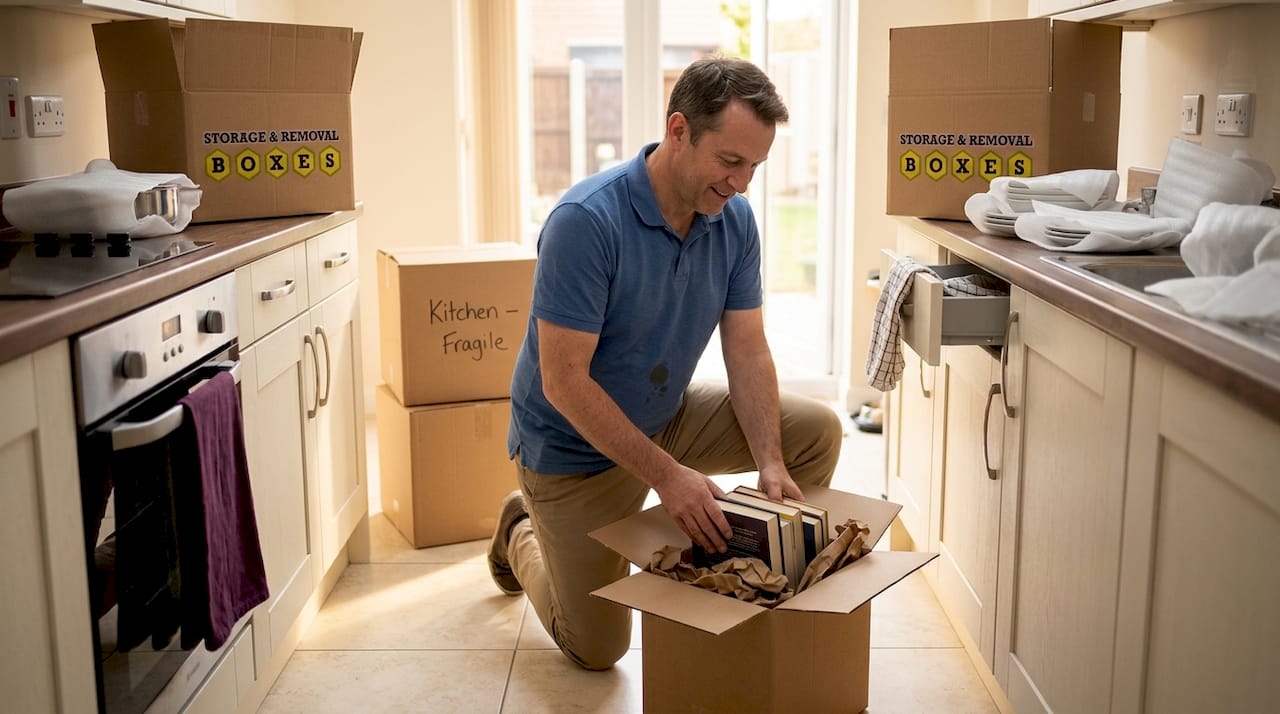
Pro Tip: Label every box on the side, not just the top. When boxes are stacked, side labels are the only ones you can actually read, and this small habit speeds up unpacking enormously.
Protective materials: Bubble wrap, foam and blankets
Boxes alone are rarely enough. Protective materials fill the gaps, absorb shocks, and prevent items from shifting during transit. Understanding which material suits which item helps you avoid over-spending while still keeping everything safe.
Bubble wrap, foam, and blankets safeguard fragile items against impacts, and each has its own strengths:
- Bubble wrap is the go-to choice for glassware, ceramics, and electronics. The air-filled pockets absorb sudden jolts and vibrations. Wrap each item individually and secure with tape.
- Foam sheets and corner guards are particularly effective for picture frames, mirrors, and delicate furniture edges. Foam conforms to irregular shapes and provides consistent cushioning.
- Moving blankets are thick, padded covers designed for large items like sofas, wardrobes, and white goods. They prevent scratches and dents during loading and unloading.
Here is a quick comparison to help you decide:
| Material | Best for | Effectiveness | Relative cost |
|---|---|---|---|
| Bubble wrap | Glassware, electronics | High for impacts | Low to medium |
| Foam sheets | Artwork, furniture edges | High for scratches | Medium |
| Moving blankets | Large furniture, appliances | High for abrasion | Medium to high |
For maximum protection, combine materials. Wrap a vase in bubble wrap, place it in a box lined with foam sheets, and fill remaining space with packing paper. If you want a ready-made solution, removals packs bundle the most commonly needed materials together, which saves time and ensures you do not forget anything. You can also browse dedicated foam protection choices or pick up moving blankets separately for larger items.
Securing and labelling: Tapes, markers and accessories
Once everything is packed, the final step is sealing and labelling each box correctly. This is where many people cut corners, and it often leads to boxes bursting open or items ending up in the wrong room.
Using quality tape and proper labelling is essential for avoiding mishaps during moving. Follow these steps for every box:
- Choose the right tape. Brown packing tape is strong and reliable for most boxes. Clear tape works for lighter loads. For anything fragile, use tape printed with a fragile warning so handlers know to take care.
- Apply tape generously. Run tape along the full length of the base seam and add two strips across the width. Do the same on the top. A single strip is rarely enough for heavier boxes.
- Use a quality marker pen. A box marker pen with permanent, smudge-resistant ink ensures your labels stay readable throughout the move, even if boxes get damp.
- Write clearly on multiple sides. Note the contents and the destination room on at least two sides of every box.
- Add priority markers. Mark boxes you will need to open first, such as bedding and kitchen essentials, with a star or the word ‘urgent’ so they are easy to find on moving day.
Useful accessories include tape dispensers, which speed up the sealing process considerably, and box cutters for safe and easy opening at the other end. A removals pack often includes several of these essentials together.
Pro Tip: Use colour-coded labels, one colour per room, and stick a matching colour swatch to the door of each room in your new home. Removal teams can then place boxes in the right rooms without asking, which saves a great deal of time.
Our perspective: Why smart packing beats last-minute improvisation
After years of supplying packing materials to homeowners across the UK, one pattern stands out clearly. The moves that go smoothly are almost always the ones where someone took time to plan their materials in advance. The moves that end in broken items, frantic searches, and insurance headaches are usually the ones where boxes were grabbed from a supermarket skip the night before.
Old, recycled supermarket boxes are a genuine risk. They have already been weakened by previous use, moisture, and stacking. They fail under weight, and when one box fails mid-move, it can bring down everything stacked on top of it.
Packing materials are not just boxes. They are your preparation tools. Investing in purpose-made, strong materials means you spend less time worrying and more time focusing on the bigger picture of settling into your new home. As we always say, investing in the right materials translates into peace of mind and less hassle. For broader expert removal advice, planning ahead is consistently the single biggest factor in a successful move.
Explore trusted packing supplies for your next move
Now that you know exactly what to look for, sourcing your materials is the straightforward next step. At Storage Removal Boxes, you will find everything covered in this guide, all in one place and ready for fast UK-wide delivery.
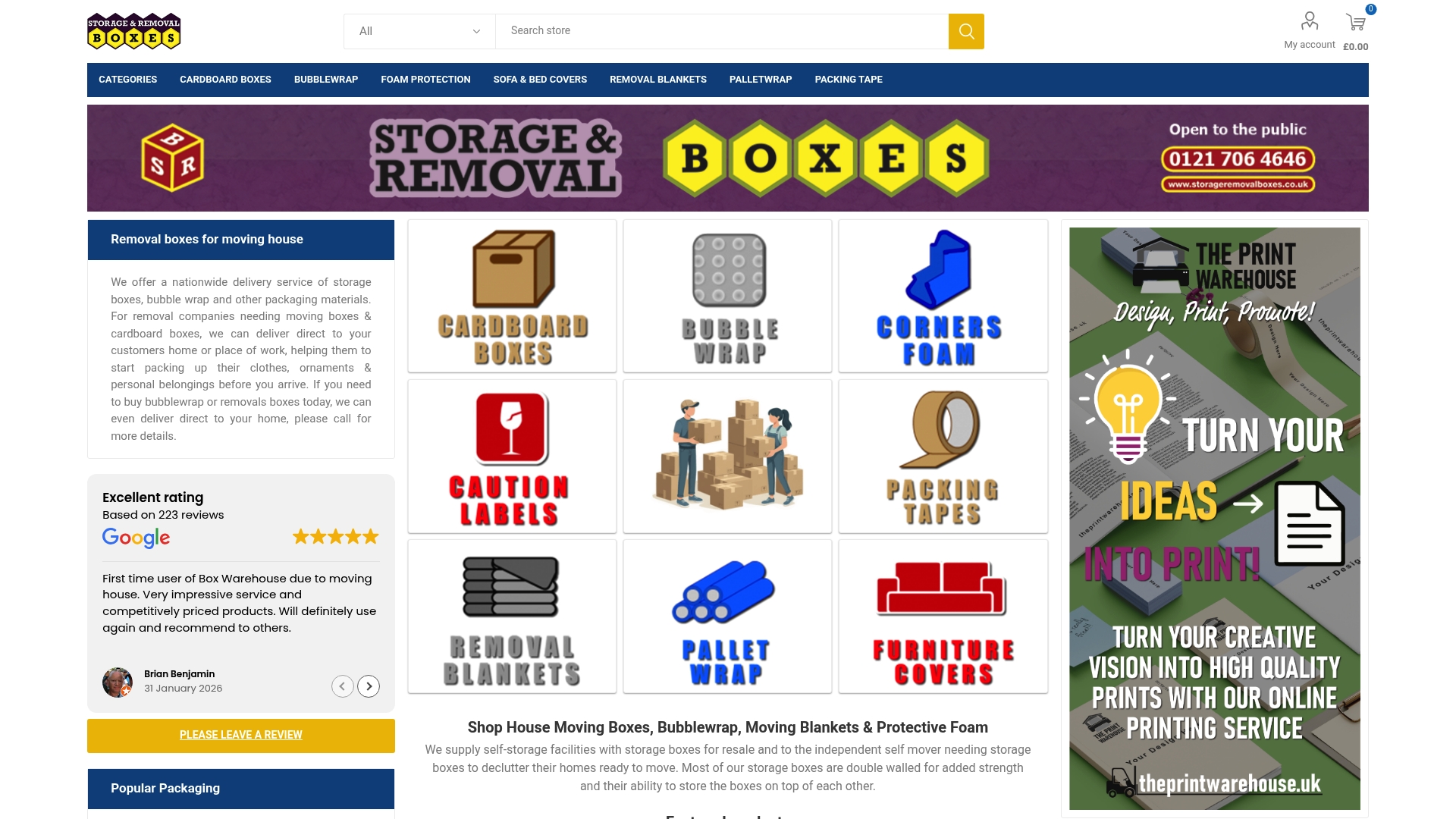
Browse the full boxes category for sizes to suit every room and item type, or go straight to large double wall boxes if you have bulky or fragile belongings to protect. For cushioning, our wide bubblewrap rolls are ideal for glassware, mirrors, and electronics. Bulk discounts are available, and pre-packed removal kits take the guesswork out of ordering entirely.
Frequently asked questions
What type of box is best for fragile items?
Double wall boxes protect fragile goods better than single wall alternatives because the extra corrugated layer absorbs impacts and resists crushing during transit and stacking.
Can packing materials be reused or recycled after a move?
Most cardboard boxes and foam protection can be recycled, and recycling and reusing packing materials saves money and reduces waste. Moving blankets and bubble wrap sheets are particularly well suited to reuse.
Is bubble wrap necessary for every item?
Bubble wrap is ideal for impact-sensitive belongings such as glassware and electronics, but robust items like books or folded clothing can be packed safely with packing paper or moving blankets instead.
How do I label packing boxes efficiently?
Use a permanent black marker pen and colour-coded labels to identify contents and the destination room, which makes unpacking faster and more organised. Proper labelling leads to quicker and safer moves overall.
What’s the most cost-effective packing material?
Single wall boxes are the budget option for non-fragile goods, but investment in sturdy materials prevents losses and breakages that would cost far more to replace than the original saving.