Packing with newspaper: the complete moving guide
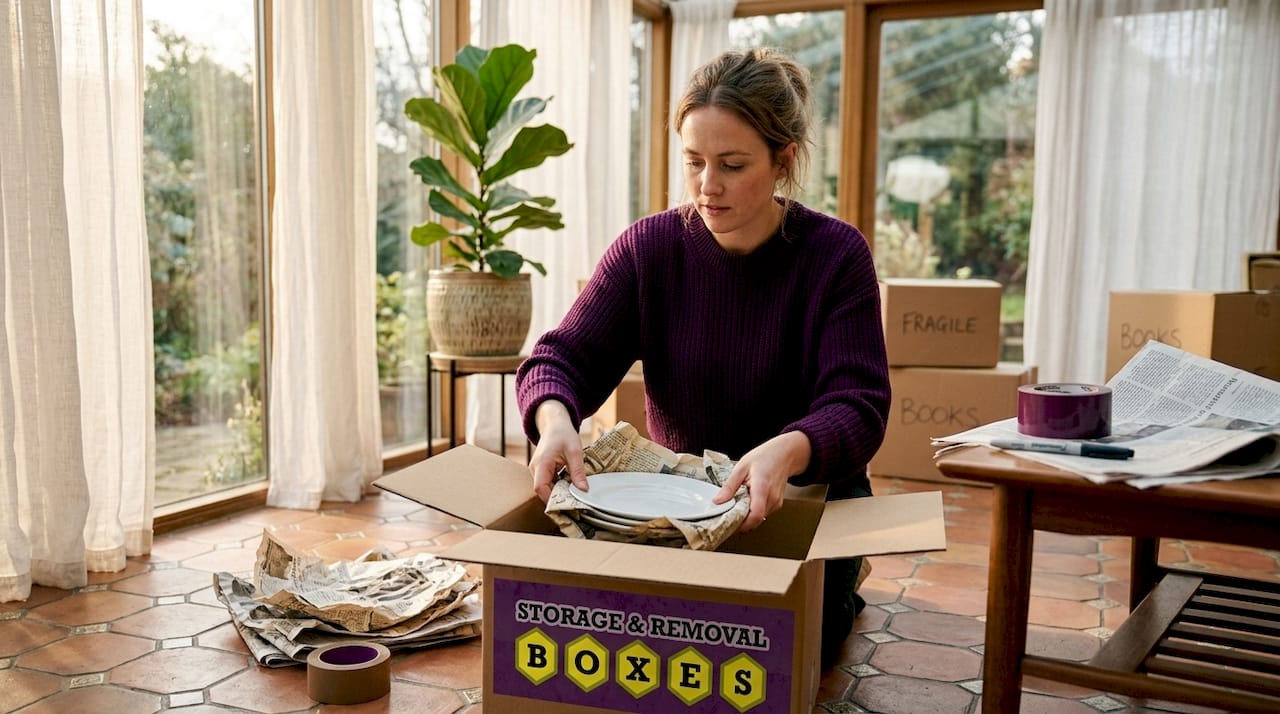
- Using unprinted packing paper is safer than newspaper for protecting delicate or light-colored items, preventing ink transfer. Proper packing techniques, like vertically stacking dishes and filling all gaps, significantly reduce breakage risk during moving. Combining eco-friendly materials with correct preparation ensures a secure, affordable, and environmentally conscious packing process.
Moving house or clearing out for storage always comes down to the same question: how do you protect your belongings without spending a fortune? Packing with newspaper is one of the oldest answers to that question, and for good reason. It costs next to nothing, it reuses material you already have, and it works surprisingly well when you know what you are doing. The catch is that most people do not know what they are doing. Ink transfer, crushed boxes, and shattered ceramics are all avoidable. This guide covers exactly how to get it right.
Table of Contents
- Key takeaways
- Packing with newspaper: materials and preparation
- How to pack fragile items with newspaper
- Common mistakes when packing with newspaper
- Eco-friendly alternatives and enhancements
- My honest take on newspaper packing
- Pack smarter with the right supplies
- FAQ
Key takeaways
| Point | Details |
|---|---|
| Newspaper works, but with limits | Printed newspaper can stain light-coloured items; use it only as filler or outer layers, not direct wrapping. |
| Preparation prevents most damage | Gather the right materials before you start, including tape, markers, and the correct box type for the weight. |
| Vertical stacking protects dishes | Pack plates and bowls on their edges, not flat, and fill all voids to stop shifting during transit. |
| Unprinted paper is worth the upgrade | Ink-free packing paper outperforms newspaper for direct contact with fragile or porous surfaces. |
| Eco-friendly options exist | Honeycomb packing paper and recycled newsprint offer strong protection without plastic waste. |
Packing with newspaper: materials and preparation
Before you wrap a single item, the materials you choose will determine whether your belongings arrive intact. The most common mistake people make is treating all newspaper as equal. There is a significant difference between printed newspaper and unprinted packing paper, and that difference matters enormously for anything pale, porous, or precious.
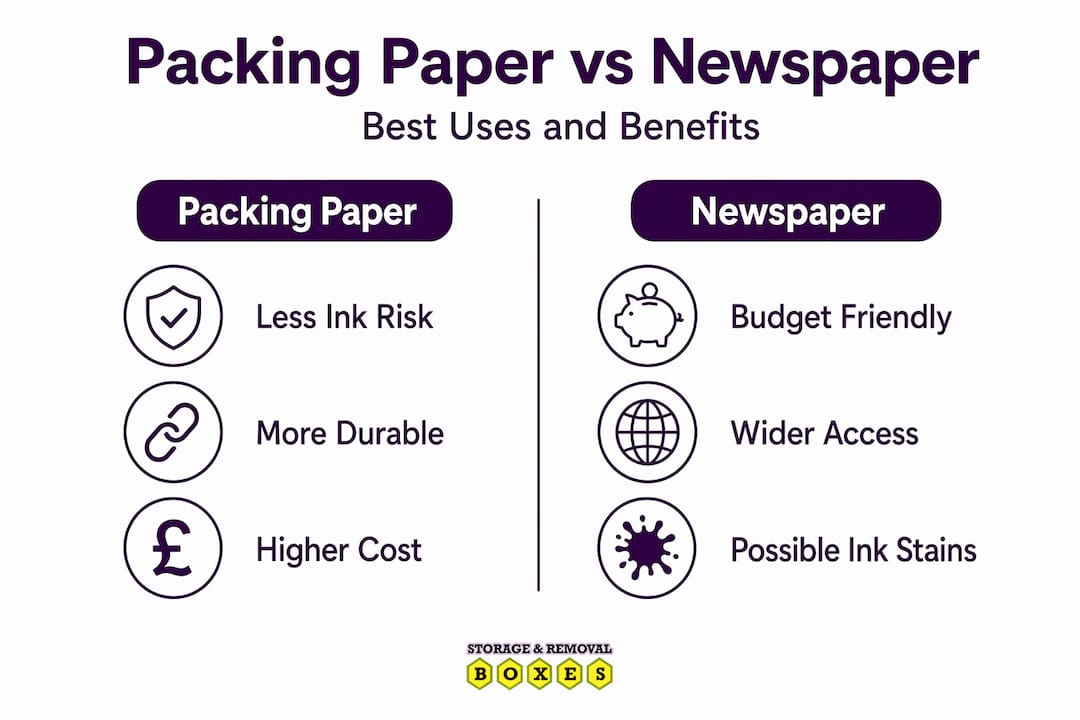
Printed newspaper ink can transfer onto fragile items and cause permanent staining. White ceramic mugs, light-coloured crockery, and unglazed pottery are particularly vulnerable. If you are using printed newspaper, keep it away from direct contact with these surfaces. Use it as an outer layer or as void filler only.
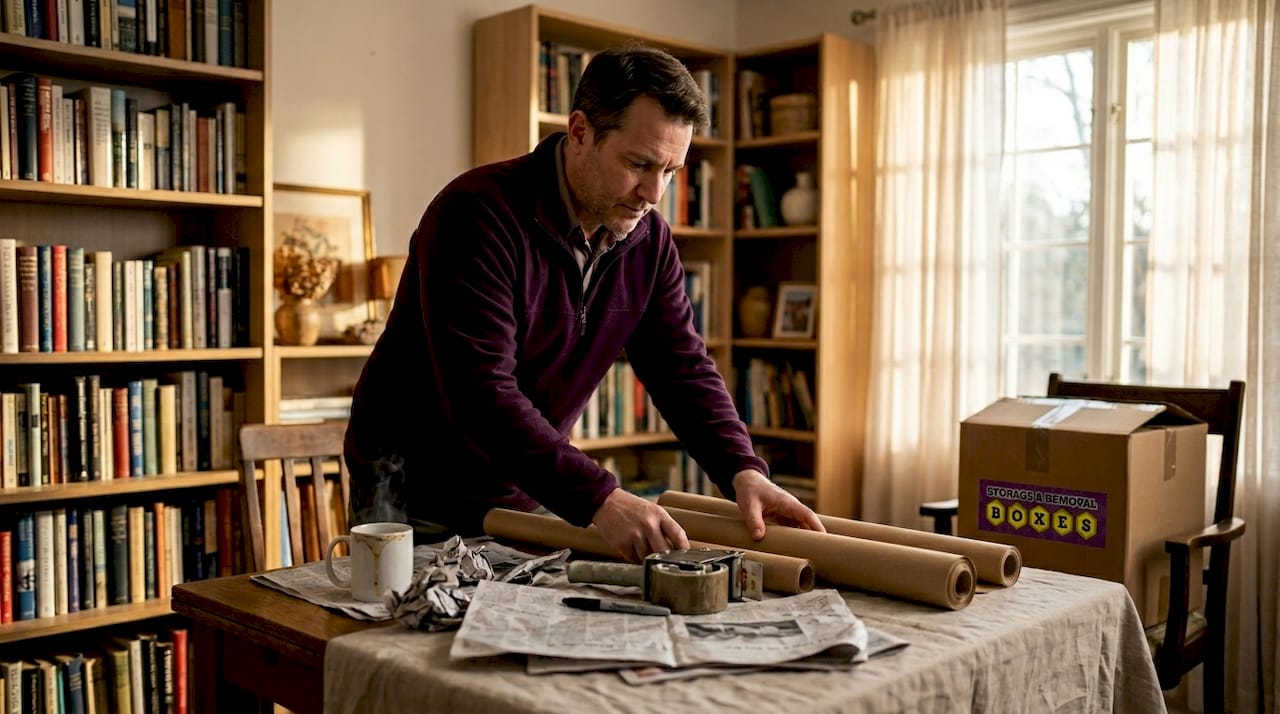
Here is what you need to gather before you start:
- Newspaper or unprinted packing paper. Collect a good stack. You will use more than you expect.
- Packing tape and a dispenser. Secure your wrapping and seal your boxes properly.
- Scissors. For trimming paper around awkward shapes.
- Permanent marker. Label every box clearly with contents and handling instructions.
- Boxes in the right sizes. Small boxes for heavy items like books, medium boxes for kitchenware, large boxes for lighter bulky items.
Pro Tip: If you want the benefits of newspaper packing without the ink risk, look for unprinted newsprint offcuts. They are inexpensive, eco-friendly, and give you a clean surface every time. Storageremovalboxes stocks ink-free newspaper offcuts specifically for this purpose.
Here is a quick comparison of the main packing materials to help you decide what to use where:
| Material | Protection level | Ink transfer risk | Eco impact | Cost |
|---|---|---|---|---|
| Printed newspaper | Moderate | High | Low (reuse) | Free |
| Unprinted packing paper | High | None | Low (recyclable) | Low |
| Honeycomb packing paper | Very high | None | Very low (plastic-free) | Medium |
| Bubble wrap | High | None | High (plastic waste) | Medium |
| Recycled foam sheets | High | None | Medium | Medium |
Unprinted packing paper tears less easily and cushions better than standard newspaper, making it a more reliable choice for anything genuinely fragile. That said, printed newspaper still has a useful role as crumpled void filler and as a base layer inside boxes, where it never touches your items directly.
Set up your workspace before you begin. A large table or cleared floor space works well. Keep your tape dispenser within reach and your boxes pre-assembled with the bottoms taped securely in a cross pattern.
How to pack fragile items with newspaper
Once your materials are ready, technique is everything. The following steps will walk you through packing fragile items using newspaper safely and effectively.
Line the base of the box. Place 3 to 4 inches of crumpled newspaper or packing paper at the bottom. This is your shock-absorbing foundation. Filling the base with crumpled material prevents items from hitting the box floor if it is dropped or jolted.
Wrap each item individually. Lay a sheet of newspaper flat, place the item in the centre, and fold the paper up and around it. Twist the ends to secure. For anything with a handle or spout, wrap those separately first with a smaller piece of paper before wrapping the whole item.
Add a second layer for anything delicate. A single sheet of newspaper compresses quickly under pressure. Two layers give you meaningful cushioning. For glassware, wrap in a spiral motion from base to rim so no surface is left exposed.
Pack dishes vertically, not flat. This is the single most important rule for crockery. Packing plates on their edges distributes force along the strongest axis of the plate and dramatically reduces breakage. Think of how records are stored in a crate.
Fill every gap. After placing your wrapped items, scrunch newspaper into balls and push it firmly into every space between items and along the sides of the box. Void space is the main enemy in any packed box. If items can move, they will collide.
Add a top layer of cushioning. Before closing the box, add another 2 to 3 inches of crumpled paper on top. This protects against anything stacked above the box pressing down.
Do the shake test. Close the box and give it a firm shake. If you hear or feel movement inside, open it and add more filler. A well-packed box should feel solid and produce no rattling.
Label clearly. Write the contents and the word FRAGILE on at least two sides of the box in large, clear letters.
Pro Tip: For light-coloured ceramics or unglazed items, wrap in a layer of clean white tissue paper first, then add the newspaper layer over the top. This gives you the cushioning of newspaper without any ink contact.
Common mistakes when packing with newspaper
Even experienced packers make errors that lead to breakages. Knowing what to avoid is just as useful as knowing what to do.
The ink transfer problem is the most frequently overlooked issue. Avoid using printed newspaper for direct wrapping of light-coloured or porous surfaces. The risk is not just cosmetic. Some inks can be difficult to remove from unglazed ceramics entirely, and the staining may be permanent.
Under-filling boxes is another serious error. Boxes should be filled to a firm, level top so they can be stacked without the top collapsing inward. A half-empty box is structurally weak and allows items to shift freely during transit.
Here are the most common packing mistakes and how to correct them:
- Flat-stacking plates. Always pack dishes on their edges. Flat stacking concentrates all impact force on the face of the plate.
- Using too little paper. More paper equals more protection. Do not ration it.
- Mixing heavy and light items in the same box. Heavy items crush lighter ones. Keep similar weights together.
- Not taping box bases properly. A single strip of tape is not enough. Cross-tape the base and run a strip along each seam.
- Ignoring box quality. Double-wall boxes reduce breakage risk for heavy glassware and ceramics significantly compared to single-wall alternatives.
When newspaper is simply not enough, do not force it. Certain items, including antiques, high-value glassware, and anything with thin stems or fine detail, deserve purpose-made foam wrapping or specialist packing materials. Newspaper is excellent for everyday crockery and general kitchenware. It is not the right tool for everything.
Labelling is often treated as an afterthought, but it is part of your protection strategy. A box marked FRAGILE and THIS WAY UP is handled differently by removal teams and by your own future self when unloading. Use a permanent marker pen that is clearly legible on cardboard.
Eco-friendly alternatives and enhancements
The benefits of newspaper packing are real, but the options have expanded considerably. If you want to go further in reducing your environmental impact, or simply want better protection, several alternatives are worth knowing about.
Unprinted newsprint and packing paper remain the most practical upgrade from printed newspaper. They are made from recycled materials, fully recyclable after use, and carry none of the ink transfer risk. Ink-free paper is affordable and eco-friendly, making it the most sensible default choice for anyone packing delicate belongings.
Honeycomb packing paper is worth a closer look if you have not encountered it before. When stretched, it creates a textured, interlocking structure that grips around items and holds its shape under pressure. Honeycomb paper is plastic-free, reusable, and provides excellent cushioning, making it a genuine alternative to bubble wrap for most applications.
Here is how these materials compare for eco-conscious packing:
| Material | Recyclable | Reusable | Plastic-free | Best use |
|---|---|---|---|---|
| Printed newspaper | Yes | Limited | Yes | Void filler, outer layers |
| Unprinted packing paper | Yes | Limited | Yes | Direct wrapping of all items |
| Honeycomb packing paper | Yes | Yes | Yes | Fragile items, glassware |
| Recycled cardboard sheets | Yes | Yes | Yes | Dividers between layers |
A practical approach for most moves is to combine materials. Use printed newspaper as your base filler and outer wrapping layer, unprinted paper for direct contact with items, and honeycomb paper for anything particularly fragile. This keeps costs down while giving you the protection where it counts most.
For sourcing, check with local newsagents or print shops for end-of-roll newsprint. It is often free or very cheap. After your move, paper materials can go straight into your household recycling. For guidance on choosing the right packing materials for your move, it is worth comparing options before you buy. Eco-conscious packing means choosing materials that protect items and are easy to recycle or reuse.
My honest take on newspaper packing
I have watched a lot of people pack for moves, and the pattern is almost always the same. They start confidently, run out of newspaper halfway through, and start cutting corners on the items that matter most. The result is a box of broken mugs and a very frustrating first day in a new home.
In my experience, the single biggest improvement most people can make is switching from printed newspaper to unprinted packing paper for anything they actually care about. The cost difference is minimal. The protection difference is not. I have seen ink from a single sheet of newspaper permanently mark a set of white plates that someone had owned for twenty years. That is a genuinely avoidable loss.
What I find interesting is how the conversation around packing materials has shifted. A few years ago, bubble wrap was considered the gold standard. Now, with better awareness of plastic waste, people are actively looking for alternatives, and the alternatives have genuinely caught up. Honeycomb paper, in particular, has surprised me with how well it performs around awkward shapes like wine glasses and ceramic figurines.
My practical advice: do not treat newspaper as your only tool. Use it generously for filler and outer layers. Invest in a roll of unprinted packing paper for your direct-contact wrapping. And never skip the shake test. A box that passes the shake test will almost always arrive intact. A box that does not pass it almost never does.
Pack smarter with the right supplies
Newspaper gets you a long way, but the right boxes and tools make the real difference between a stressful move and a smooth one. At Storageremovalboxes, you will find tall double-wall removal boxes built specifically for fragile and heavy items, with the structural strength to handle stacking without collapsing. Pair them with essential removal supplies including packing tape, foam protectors, and markers, and you have everything you need for a well-protected move. Nationwide delivery means you can have it all at your door before packing day.
FAQ
Can you use newspaper to pack fragile items?
Yes, but with care. Use printed newspaper only as void filler or an outer layer, never in direct contact with light-coloured or porous items, as the ink can cause permanent staining. Unprinted packing paper is a safer choice for direct wrapping.
How much newspaper do you need to pack a house?
More than you think. A typical kitchen alone will need several hundred sheets. Collect newspapers for a few weeks before your move, or supplement with unprinted packing paper from a packaging supplier to cover all your fragile items properly.
Is newspaper better than bubble wrap for packing?
Newspaper is free and eco-friendly, but packing paper cushions better and tears less easily than newspaper. Bubble wrap offers superior protection for very fragile items, though honeycomb packing paper is a strong plastic-free alternative that performs comparably.
How do you stop newspaper ink from staining items?
Wrap delicate or light-coloured items in a layer of white tissue paper or unprinted newsprint first, then add printed newspaper over the top. This creates a barrier between the ink and your belongings while still giving you the cushioning benefit.
What boxes are best for packing fragile items with newspaper?
Double-wall cardboard boxes are the correct choice for anything heavy or fragile. Single-wall boxes compress under weight and offer far less protection. Always tape the base in a cross pattern and fill the box completely so it feels firm when closed.