Protective packaging options for fragile items: 2026 guide
TL;DR:
- Choosing proper protective packaging significantly reduces damage rates during shipping and storage. Double-wall corrugated boxes, layered cushioning, and reinforced sealing are essential components for minimizing transit breakage. Eco-friendly materials like honeycomb Kraft paper provide sustainable protection without compromising safety.
Protective packaging options are materials and methods designed to safeguard fragile items during moving, storage, or shipping by preventing damage from shocks, vibrations, and compression. Choosing the wrong combination is not a minor inconvenience. Damage rates drop from 18% to under 4% when correct cushioning thickness and double-boxing are applied. Whether you are moving house, dispatching goods to customers, or putting valuables into storage, the right protective packaging materials determine whether your items arrive intact.
1. Double-wall corrugated cardboard boxes
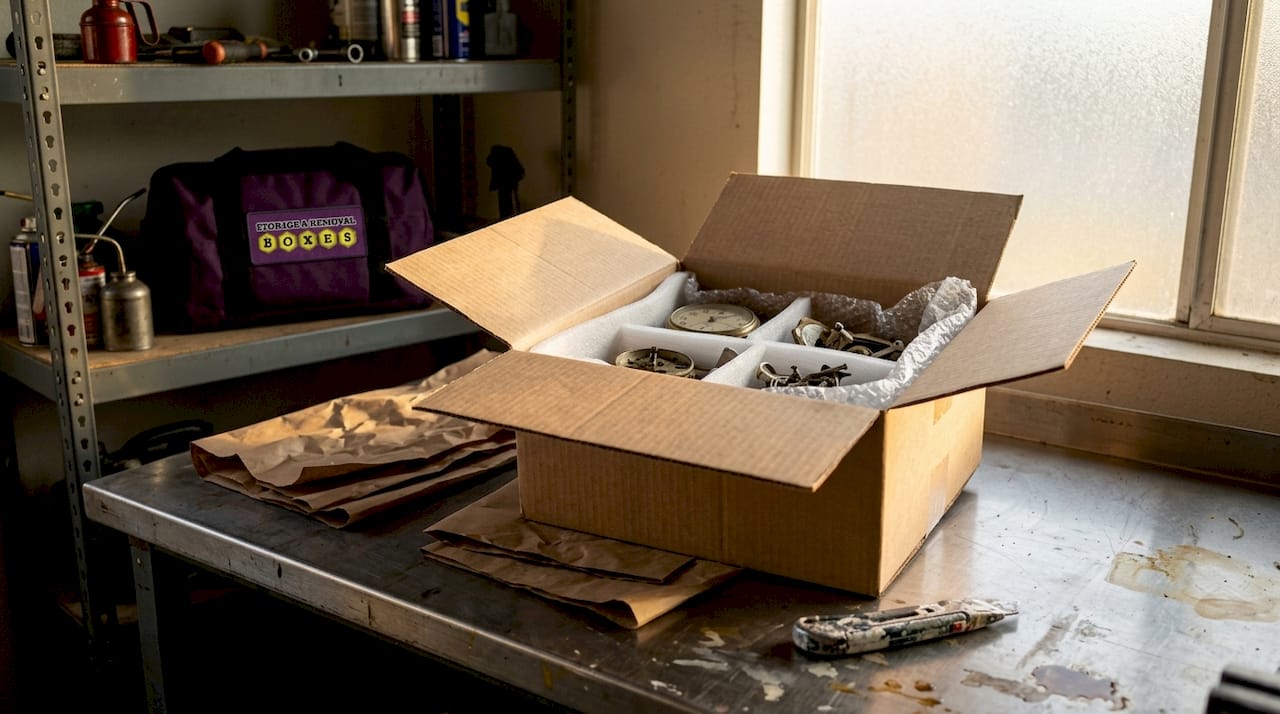
Double-wall corrugated boxes are the single most important component in any protective packaging system. The double-wall construction adds a second fluted layer between the outer and inner liners, which significantly increases compression resistance and stacking strength compared to single-wall cartons. For heavy or fragile items, this structural difference is not cosmetic. It is the difference between a box that holds its shape under a 30 kg stack and one that collapses.
DHL recommends high-quality double-wall or tri-wall corrugated boxes as the starting point for packing fragile items, specifically because corner collapse and compression failure are leading causes of transit damage. Tri-wall boxes add a third fluted layer for the heaviest or most valuable shipments. For most household moves and standard courier shipments, double-wall is the practical and cost-effective choice.
2. Bubble wrap
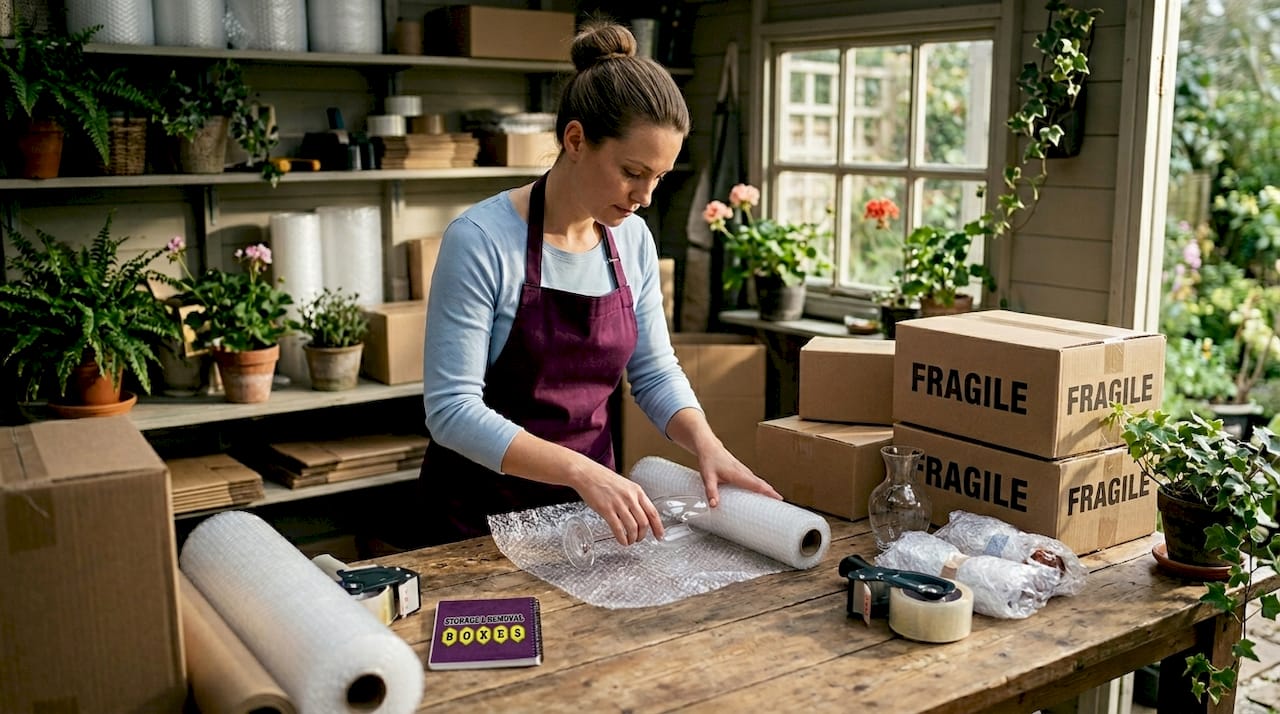
Bubble wrap is the most widely recognised cushioning material and performs two roles: shock absorption and void fill. The air-filled bubbles compress on impact, dissipating kinetic energy before it reaches the item inside. For glassware, ceramics, and electronics, wrapping each piece individually in bubble wrap before placing it in a box is standard practice.
Bubble wrap, foam sheets, air pillows, and moulded pulp inserts are the preferred cushioning materials for fragile shipments. Loose packing peanuts alone are discouraged because they shift during transit, creating unprotected gaps. Rolls of bubble wrap in varying widths give you the flexibility to wrap items of different sizes without waste.
Pro Tip: Use small-bubble wrap for delicate surfaces like glassware and large-bubble wrap for heavier items needing more impact absorption. Layering both types gives you surface protection and structural cushioning simultaneously.
3. Foam sheets and inserts
Foam sheets offer a denser, more consistent cushioning layer than bubble wrap and are particularly effective for items with flat or irregular surfaces. Polyethylene foam does not tear easily, resists moisture, and maintains its thickness under repeated compression. Electronics, framed artwork, and precision instruments benefit from foam wrapping because it conforms to the item’s shape without leaving pressure marks.
Foam padding in sheet or roll form can be cut to size, making it adaptable for customised packing options where standard sizes do not fit. Moulded foam inserts take this further by creating a cavity shaped exactly to the product, eliminating all internal movement. The trade-off is cost: moulded inserts require tooling and are economical only at volume.
4. Air pillows
Air pillows are inflated plastic pouches used primarily as void fill rather than direct cushioning. They occupy empty space inside a box, preventing the contents from shifting during transit without adding significant weight. For e-commerce businesses dispatching mixed-size orders, air pillows are a practical and affordable protective alternative to foam peanuts.
The key limitation of air pillows is that they provide less direct impact absorption than foam or bubble wrap. They work best in combination with a primary cushioning layer around the item itself. Selecting appropriate materials depends on the damage mode: impact, vibration, compression, or movement. Air pillows address movement and void fill; they do not replace cushioning.
5. Packing paper and foam wrap
Unprinted packing paper is one of the most affordable protective alternatives available and is effective for wrapping individual items to prevent surface scratches and abrasion. It is particularly useful for crockery, where multiple sheets can be wrapped around each piece and then bunched into gaps as additional void fill. Unlike newspaper, unprinted paper leaves no ink transfer on surfaces.
Foam wrap combines the surface protection of paper with light cushioning, making it a step up for more delicate items. It is thinner than foam sheets, so it adds minimal bulk while still absorbing minor impacts. For businesses packing large volumes of mixed fragile goods, foam wrap offers a balance between protection, cost, and storage space.
6. Corrugated inserts and cell dividers
Corrugated dividers are the most underused protective packaging material for fragile items. A cell divider system creates individual compartments inside a box, so each item is physically separated from its neighbours. This is the correct approach for shipping wine glasses, bottled goods, or any collection of identical fragile items. Without dividers, items knock against each other even when individually wrapped.
Reinforced edges and dividers help absorb shock and prevent items becoming projectiles inside the box during sudden stops or drops. Corrugated inserts are available in standard cell configurations or can be cut to custom dimensions. For businesses shipping fragile products regularly, investing in the correct divider configuration reduces breakage rates more reliably than adding extra bubble wrap.
7. Corner protectors
Corner collapse is one of the most common packaging failure modes, and it is almost entirely preventable. Foam corner protection fits over the edges and corners of boxed items or the box itself, reinforcing the points most vulnerable to impact during handling. For framed artwork, mirrors, flat-screen televisions, and large appliances, corner protectors are not optional. They are the primary defence against the specific stress pattern that corners experience when a package is dropped.
Foam corner protectors are reusable, lightweight, and available in sizes to fit most standard box dimensions. Cardboard corner protectors offer a more rigid alternative and are preferred when stacking stability matters as much as impact protection.
8. The box-in-box method
The box-in-box method is the industry standard for shipping high-value or particularly fragile items. The process places the item, cushioned inside an inner box, inside a larger outer box with a cushioning layer filling the gap between the two. DHL recommends approximately 14 cm size difference between inner and outer boxes to allow adequate dunnage on all sides.
Follow these steps to implement the method correctly:
- Wrap the item in bubble wrap or foam and place it in the inner box with at least 5 cm of cushioning on all sides.
- Seal the inner box with reinforced tape using the H-taping method.
- Place the sealed inner box inside the outer box, centred, with cushioning filling all gaps.
- Perform the shake test: if anything moves, add more fill material before sealing.
- Seal the outer box with reinforced tape and label it clearly as fragile.
Industry guidance recommends at least 3 inches of cushioning on all sides, with double-boxing applied for items above 10 lb. The shake test is not optional. Internal movement is the primary cause of damage in otherwise well-packed boxes.
Pro Tip: When choosing your outer box, select one rated for at least 32 ECT (Edge Crush Test) or a burst strength of 200 lb per square inch. These ratings appear on the box manufacturer’s stamp and confirm the box can withstand the compression forces of stacking in a courier vehicle.
9. Reinforced packing tape
Tape is the most overlooked component in protective packaging, yet proper sealing with pressure-sensitive packing tape using the H-taping method improves box compression resistance by up to 30%. Poor sealing causes more damage than insufficient padding in a significant number of cases. The H-taping method applies tape along the centre seam and across both ends of the seam, creating a reinforced H shape that distributes stress across the box face.
Use tape that is at least 48 mm wide and rated for the weight of the contents. Standard office tape and thin parcel tape are not adequate for boxes above 5 kg. Reinforced filament tape, which embeds fibreglass strands in the adhesive layer, is the correct choice for heavy or high-value shipments.
10. Eco-friendly packaging solutions
Biodegradable packing peanuts, honeycomb Kraft paper, and moulded pulp are growing alternatives that match the cushioning performance of conventional materials. Honeycomb Kraft paper, in particular, has gained traction because it wraps around items like paper but provides structural cushioning through its hexagonal cell structure. Major carriers now accept these materials without restriction.
For businesses with sustainability commitments, switching to eco-friendly packaging solutions does not require a compromise on protection. Moulded pulp inserts made from recycled paper pulp offer the same immobilisation properties as foam inserts and are fully compostable. The cost per unit is comparable to foam at moderate volumes. For individuals, honeycomb paper is available in rolls and is a practical replacement for bubble wrap in most household moving scenarios.
11. Choosing the right option by item type
Matching protective packaging to the specific item and shipping scenario is where most packing errors occur. The table below summarises the best protective packaging materials by item category.
| Item type | Primary material | Secondary/void fill | Notes |
|---|---|---|---|
| Glassware and crockery | Foam wrap or bubble wrap | Corrugated cell dividers | Individual wrapping plus dividers required |
| Electronics | Anti-static foam or bubble wrap | Air pillows | Avoid standard foam near circuit boards |
| Framed artwork and mirrors | Corner protectors plus foam sheets | Corrugated board facing | Box-in-box for items above 60 cm |
| Antiques and collectibles | Moulded foam inserts | Double-wall box-in-box | Customised packing options recommended |
| Bottled goods | Corrugated cell dividers | Foam wrap per bottle | Upright orientation; leak-proof inner seal |
For packing fragile items for moving, the combination of double-wall boxes, foam or bubble wrap cushioning, and corrugated dividers covers the majority of household fragile categories. Businesses shipping at volume should consider ISTA testing standards to validate their packaging design against real distribution hazards, including shock, vibration, and compression cycles.
Pro Tip: Label every fragile box on at least three sides using a permanent marker. A clearly labelled box is handled differently by couriers and removal teams. Storageremovalboxes stocks box marker pens designed specifically for writing on corrugated surfaces.
Key takeaways
The most effective protective packaging combines double-wall corrugated boxes with layered cushioning, internal immobilisation, and reinforced tape sealing to reduce transit damage rates from 18% to under 4%.
| Point | Details |
|---|---|
| Box quality is the foundation | Double-wall or tri-wall corrugated boxes prevent corner collapse and compression failure. |
| Cushioning must be layered | Combine bubble wrap or foam with void fill to address both impact and internal movement. |
| Immobilisation prevents most damage | The shake test confirms no internal movement before sealing; movement causes the majority of breakages. |
| Tape sealing adds structural strength | H-taping with 48 mm reinforced tape improves compression resistance by up to 30%. |
| Eco-friendly options perform equally | Honeycomb Kraft paper and moulded pulp match conventional cushioning performance and are carrier-accepted. |
What I have learned from years of watching boxes fail
The most common mistake I see is treating bubble wrap as a complete solution. People wrap an item generously, drop it into a box with space around it, and consider the job done. The item then shifts freely inside the box during transit, and the bubble wrap provides almost no protection against repeated lateral impacts. The box is the structure. The cushioning is the shock absorber. The immobilisation is what actually stops damage.
Corner collapse is the second failure mode that surprises people. A box can have excellent cushioning inside and still fail catastrophically because the corners buckle under stacking weight, compressing the contents. This is why I always advocate for double-wall boxes and foam corner protectors on anything of value. The cost difference between a single-wall and double-wall box is negligible compared to the cost of replacing a broken item.
The other thing worth saying plainly: tape matters more than most people realise. I have seen well-packed boxes arrive damaged because the base seam opened under weight. H-taping takes thirty seconds longer than a single strip down the middle. That thirty seconds has saved more items than any amount of extra bubble wrap.
My honest advice for 2026 is to invest in quality corrugated boxes, use layered cushioning, and never skip the shake test. Eco-friendly packaging solutions like honeycomb Kraft paper are now genuinely good enough to replace bubble wrap for most applications, and the sustainability benefit is real. Balance cost, protection, and environmental impact by choosing materials appropriate to the item, not the cheapest option available.
Get the right protective packaging materials from Storageremovalboxes
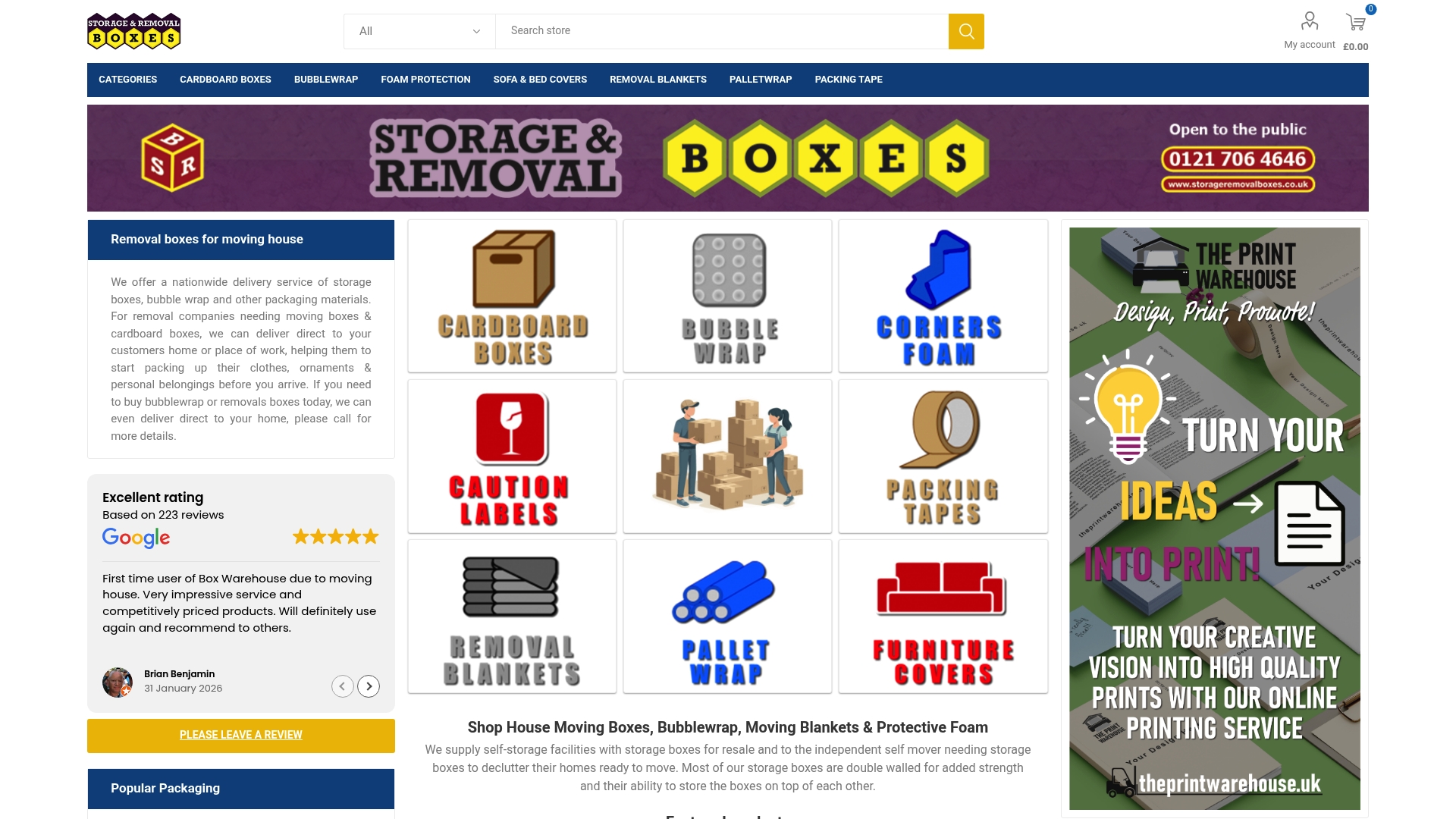
Storageremovalboxes supplies everything covered in this guide, delivered across the UK. Their large double-wall removal boxes are built to the strength ratings required for heavy and fragile items, with dimensions suited to the box-in-box method. Alongside these, you will find foam protection materials in sheet and roll form, bubble wrap rolls in multiple widths, and foam corner protectors for edge reinforcement. Bulk pricing is available for removal companies and storage facilities. Browse the full range at Storageremovalboxes and select the materials matched to your specific fragile items before your next move or shipment.
FAQ
What is the best protective packaging for fragile items?
The best approach combines a double-wall corrugated box with at least 5 to 7.5 cm of cushioning on all sides using bubble wrap or foam, plus corrugated dividers where multiple items share a box. The box-in-box method is recommended for high-value or particularly fragile items.
How much cushioning do fragile items need?
Industry guidance recommends at least 3 inches (7.5 cm) of cushioning on all sides of a fragile item. Items above 10 lb should be double-boxed to reduce damage rates significantly.
Are eco-friendly packaging materials as protective as conventional ones?
Yes. Biodegradable packing peanuts, honeycomb Kraft paper, and moulded pulp inserts match the cushioning performance of foam and bubble wrap and are accepted by major carriers. They are a practical choice for both individuals and businesses with sustainability requirements.
What does the shake test involve?
The shake test means gently shaking a sealed or nearly sealed box to check for any internal movement. If contents shift or rattle, more cushioning or void fill must be added before final sealing. Internal movement is the primary cause of damage in transit.
When should I use the box-in-box method?
Use the box-in-box method for items that are high in value, particularly fragile, or above 10 lb in weight. DHL recommends approximately 14 cm size difference between the inner and outer boxes to allow adequate cushioning on all sides.