Removal blankets: Essential protection for your UK move
TL;DR:
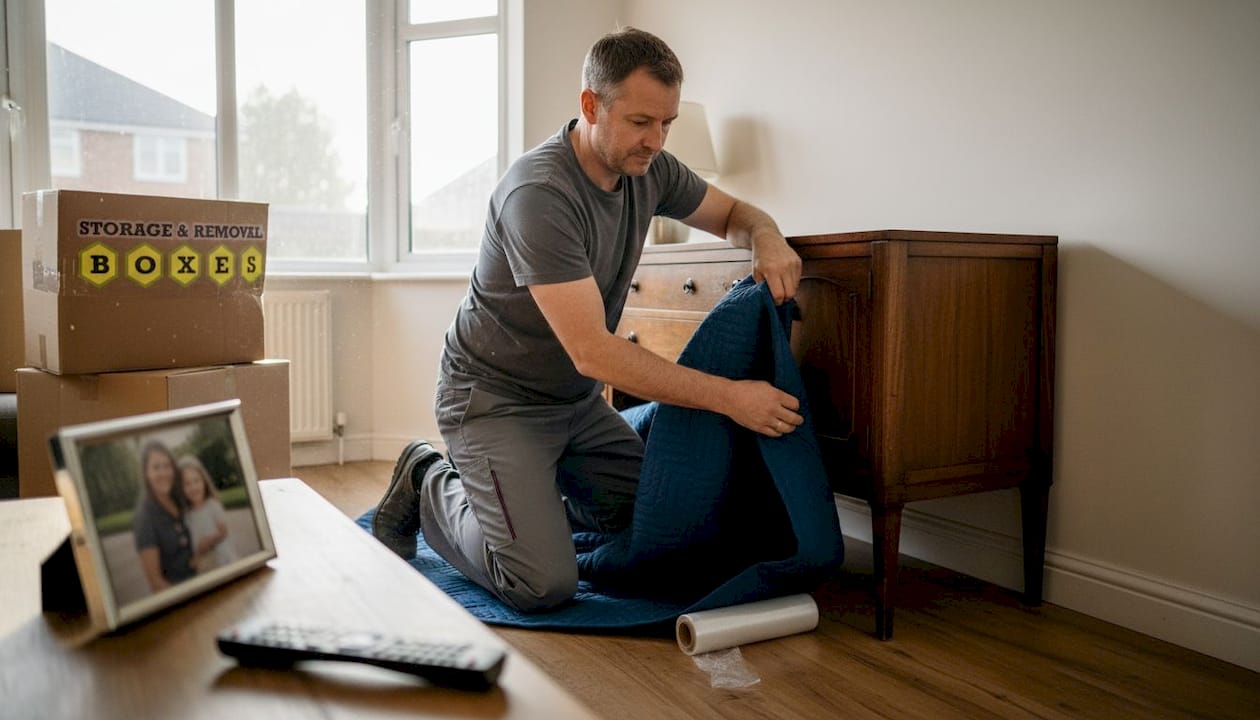
- Removal blankets are heavy-duty, padded textiles designed to protect furniture during moving. Their proper use involves full coverage, securing with stretch wrap, and careful loading to prevent damage. Effectiveness depends heavily on application discipline, not just the quality of the blanket.
Removal blankets: Essential protection for your UK move
Most people assume a few old bed sheets or a roll of plastic wrap will keep their furniture safe during a move. In practice, that assumption leads to scratched dining tables, gouged wood finishes, and cracked glass. Removal blankets are purpose-built to solve these problems, and there is a significant difference between improvised padding and a product designed specifically for transit. This article explains exactly what removal blankets are, how they work, what they can and cannot protect against, and how to use them correctly so your belongings arrive in the same condition they left in.
Table of Contents
- What are removal blankets and how do they work?
- Key features and limitations of removal blankets
- How to use removal blankets for maximum protection
- Advanced tips and common pitfalls when using removal blankets
- The uncomfortable truth most people miss about removal blankets
- Complete your moving kit with reliable packing essentials
- Frequently asked questions
Key Takeaways
| Point | Details |
|---|---|
| Core protection purpose | Removal blankets cushion and shield belongings from knocks and abrasions during a move. |
| Limitations exist | They do not provide waterproofing, so extra layers are needed if rain is likely. |
| Best-use practice | Full coverage, especially on edges and corners, and proper securing are vital for maximum effect. |
| Expert strategies | Doubling blankets and adding stretch wrap or corner protectors increases protection for valuable furniture. |
What are removal blankets and how do they work?
A removal blanket is a heavy-duty, padded textile designed exclusively to protect furniture and large items during transportation. Unlike a household blanket or duvet, removal blankets are engineered with layered construction: a tough outer fabric shell and a thick inner filling that absorbs mechanical energy. The outer shell is typically a woven polyester or cotton blend that resists tearing and abrasion, while the filling is often a recycled fibrous material compressed into a dense, shock-absorbing layer. The combination creates a buffer between your belongings and everything they might collide with.
The way removal blankets function is straightforward but highly effective. When a removal van accelerates, brakes, or travels over an uneven road surface, items inside shift and vibrate. Unprotected furniture rubs against van walls, against other items, or against strapping equipment. That friction is what causes scratches, scuffs, and surface damage. Cushioning against impact and abrasion reduces the transfer of that mechanical energy directly to the item’s surface, which is precisely what a well-made removal blanket achieves.
There are two broad types commonly available in the UK market:
- Standard furniture blankets: Lighter weight, suitable for lower-value items and shorter journeys.
- Heavy-duty quilted blankets: Thicker construction with tighter quilting, better suited to antiques, hardwood furniture, appliances, and long-distance moves.
You can explore the full range of removal blankets explained to understand what construction suits your specific needs. For most household moves, quilted moving blankets offer an excellent balance between protection and ease of use.
| Item type | Risk without blanket | Protection provided |
|---|---|---|
| Polished wood furniture | Scratches, surface gouges | Absorbs friction and impact |
| Glass-fronted cabinets | Shattering, frame damage | Cushions vibrations and knocks |
| Leather sofas | Scuffs, surface tears | Prevents abrasion against walls |
| White goods (appliances) | Dents, panel damage | Reduces impact from sudden stops |
| Mirrors and artwork | Breakage | Provides a soft barrier layer |
A common misconception is that a folded duvet provides equivalent protection. It does not. A duvet is not dense enough to absorb meaningful mechanical shock, and it shifts and bunches during transit, leaving sections of the item exposed. As part of any thorough furniture transport checklist, purpose-built blankets are consistently listed as non-negotiable for protecting high-value or fragile pieces.
“Removal blankets are purpose-built tools, not household comfort items repurposed. Their layered construction is calibrated to handle the mechanical forces that occur during real transit conditions.”
For wood furniture, leather upholstery, glass cabinet doors, and high-value antiques, a removal blanket is not optional. It is the only realistic line of defence against the vibration, friction, and impact forces that accumulate over any journey longer than five minutes.
Key features and limitations of removal blankets
Removal blankets perform a specific protective function very well. Understanding precisely what that function covers, and where it ends, will help you layer your protection strategy correctly.
Here are the main protective features of a good quality removal blanket:
- Impact cushioning: The padded interior absorbs energy from bumps, kerbs, and sudden vehicle movements, reducing the force transmitted to your item’s surface.
- Friction reduction: The soft textile barrier prevents direct contact between hard surfaces, eliminating the rubbing that causes scratches and scuffs.
- Edge and corner buffering: When wrapped tightly and secured, the blanket adds a soft layer over the most vulnerable areas of any piece of furniture.
- Surface insulation: The blanket acts as a thermal buffer too, protecting wooden items from condensation forming on a cold metal van floor.
- Grouping items safely: A blanket placed between two adjacent items in a van prevents them from marking each other, even when the load shifts.
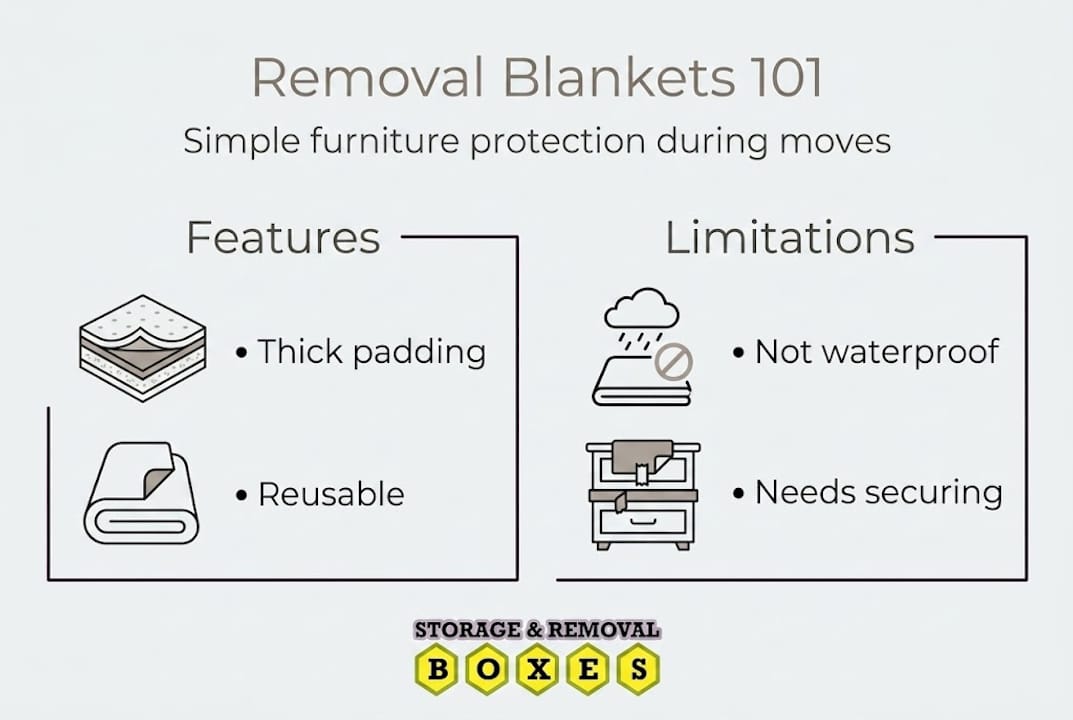
However, knowing where removal blankets fall short is equally important. Removal blankets are not waterproof, meaning they offer no meaningful protection against rain or prolonged moisture exposure. A wet blanket can actually become a problem, holding moisture against a wood or leather surface and potentially causing water damage.
| Protection type | Removal blanket | Bubble wrap | Plastic sheeting | Foam wrap |
|---|---|---|---|---|
| Impact absorption | Excellent | Good | Poor | Good |
| Friction resistance | Excellent | Moderate | Low | Moderate |
| Waterproofing | None | Low | High | Low |
| Edge protection | Good | Moderate | Low | Excellent |
| Flexibility | High | High | High | Moderate |
Pro Tip: If your move takes place during autumn or winter in the UK, where rain is virtually guaranteed, layer a heavy-duty plastic sheet over your blanket-wrapped furniture before loading it into the van. This two-layer approach keeps the blanket dry and your items doubly protected.
For longer journeys or large furniture pieces, heavy-duty quilted blankets provide a meaningfully thicker protective layer than standard options. Consulting a thorough residential moving checklist will also help you anticipate which items need which type of protection before move day arrives.
The realistic expectation is this: no single packing material covers every risk. Bubble wrap protects against vibration but slides easily and bunches under pressure. Plastic sheeting repels water but does nothing for impact. Foam is excellent for edges but impractical for wrapping large surfaces. Removal blankets sit at the centre of an effective protection system, handling the mechanical risks that are most likely to cause visible damage during a typical UK move.
How to use removal blankets for maximum protection
Owning the right blankets is only half the task. How you apply them determines whether your furniture arrives undamaged. Full coverage including corners and edges is consistently identified as the most important factor in whether a blanket actually prevents damage during transit.
Follow these steps for best results:
- Clear and clean the surface. Remove any loose parts such as drawers, glass panels, or detachable legs before wrapping. These should be packed separately.
- Lay the blanket flat and position the item. For smaller furniture, centre the item on the open blanket. For larger pieces, drape the blanket over the item from the top down.
- Fold up and cover all corners first. Corners and edges are the areas most likely to make contact with hard surfaces, so fold the blanket material over them in a double layer before pulling the rest of the blanket around the body of the item.
- Wrap all exposed surfaces. Pull the remaining fabric tight across the faces and back of the item. Avoid leaving gaps; every exposed section is a potential contact point.
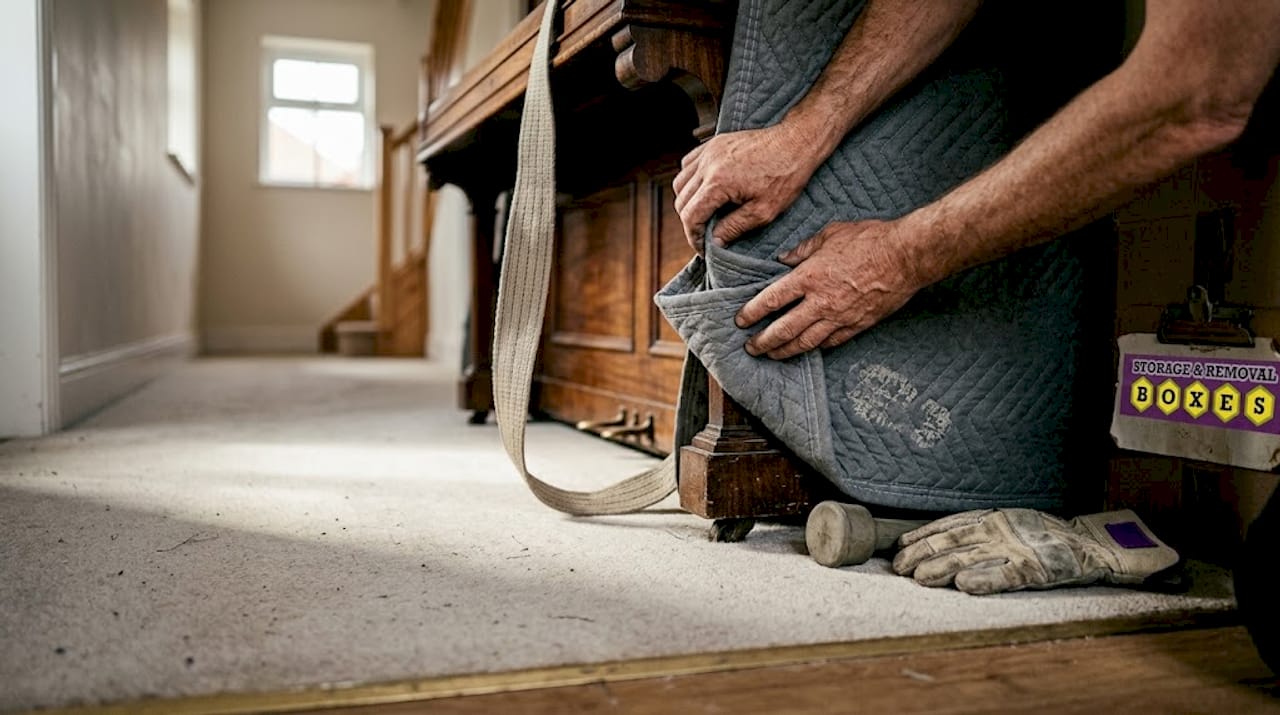
- Secure the blanket without damaging the finish. For safe transit of fragile items, stretch wrap is the preferred securing method. Wind it around the outside of the blanket in overlapping spirals. For wood furniture specifically, protecting wood furniture during a move recommends securing with stretch wrap and adding corner and edge protection over the most vulnerable zones.
- Check for shifting before loading. Give the wrapped item a gentle shake. If the blanket moves independently of the item, add another layer of stretch wrap.
- Load the item carefully. Place wrapped furniture against the van wall and, where possible, strap it to securing points inside the vehicle.
Pro Tip: Double-fold the blanket over corners and the bottom edges of any item before securing. These are the zones most likely to drag against van floors during loading, and a single layer of fabric is simply not enough to prevent marking on polished or lacquered surfaces.
A common mistake is assuming that a loosely draped blanket offers the same protection as a properly secured one. During transit, even small vibrations can cause a loose blanket to shift several centimetres, leaving corners exposed exactly when the van hits a pothole. Using a relocation logistics guide to plan your loading sequence also helps, as items loaded last are most likely to shift during braking.
Advanced tips and common pitfalls when using removal blankets
Once you have the basics right, a few additional precautions will significantly reduce your risk of damage. Most problems with removal blankets come not from the blanket itself, but from how it is applied and secured.
The most frequent failure points are:
- Exposed corners and edges: These account for the majority of visible damage after a move. Corners and edges are the highest-risk areas, and partial wrapping that leaves them uncovered is the single most common error. Double the blanket material here, or add dedicated foam corner protectors underneath before wrapping.
- Using tape directly on finished surfaces: Standard packing tape can pull away varnish, stain wood, and leave adhesive residue on leather. Always secure the blanket using stretch wrap wound around the outside of the fabric, not tape applied to the furniture itself.
- Blanket shifting in the vehicle: Wrapping an item well but failing to strap it inside the van is a frequent oversight. The wrapped item and the blanket must both be fixed in position. Even a well-secured blanket cannot compensate for an item that slides freely during transit.
- Partial coverage: Wrapping three sides of a wardrobe and leaving the back exposed because it “faces the wall” in the van is a mistake. Van loads shift during transport, and the back can end up in direct contact with another item or the vehicle interior.
- Stacking items on wrapped furniture without adding extra padding: Blankets mitigate scuffs and impacts but do not prevent heavy load pressure from crushing softer materials or bowing shelves.
Pro Tip: Pair every blanket application with stretch wrap and add foam corner protectors to the highest-risk zones before you wrap. This three-component approach, blanket plus stretch wrap plus foam corners, provides genuinely professional-grade protection for most household items.
A detail that many DIY movers overlook is the loading order. Heavy items loaded on top of blanket-wrapped pieces will compress the padding and, over a long journey, begin to cause pressure damage. Always load heaviest items first against the bulkhead, and stack lighter wrapped pieces on top or around them.
Professional removal crews are trained to anticipate load-shifting risks. They know that a blanket is a protective layer, not a structural solution. For DIY moves, the most important thing you can do is take the extra few minutes to secure everything properly before closing the van door. Rushing this stage is where most damage actually happens.
The uncomfortable truth most people miss about removal blankets
Here is something that removal guides rarely say plainly: having good removal blankets does not automatically protect your belongings. The blanket is only as effective as the person applying it.
At StorageRemovalBoxes.co.uk, we see a consistent pattern. Customers invest in quality supplies and then rush the packing process on move day. A corner is left exposed. A blanket is tucked but not secured. The stretch wrap runs out and someone substitutes masking tape directly on a polished surface. These small compromises are where damage originates, not from any failure of the blanket material itself.
The uncomfortable truth is that removal blanket real-world performance depends entirely on discipline in the details. Covering every surface, doubling over every edge, checking every secured blanket before loading, and strapping items inside the vehicle. Professionals do not cut corners on these steps because they know the mechanical forces involved. DIY movers often do, because move day is exhausting and time pressure builds.
The fix is simple: slow down at the wrapping stage. Every ten extra seconds spent on a corner could save hundreds of pounds in repair costs.
Complete your moving kit with reliable packing essentials
Having understood how removal blankets work and how to apply them correctly, the next practical step is making sure you have everything you need before move day.

Removal blankets work best as part of a complete packing system. At StorageRemovalBoxes.co.uk, you will find all the packing materials needed to protect your belongings from start to finish. Browse our range of sturdy removal boxes for every size of household item, stock up on bubble wrap for fragile pieces, and pair them with our blankets and foam protectors for a complete, professional-grade kit. We offer nationwide delivery across the UK, so you can have everything ready well before move day arrives.
Frequently asked questions
Are removal blankets reusable, or are they single-use?
Removal blankets are made for repeated use and can serve many moves if kept clean and dry between uses.
Can I put removal blankets directly on delicate surfaces like polished wood?
Yes, but secure them with stretch wrap rather than sticky tape, since stretch wrap is safer for finished wood and leather and leaves no adhesive residue.
Will removal blankets protect my belongings if it rains during the move?
No. Removal blankets offer no waterproof protection against heavy rain, so pair them with plastic sheeting over the outside when moving in wet weather.
What is the most common mistake when using removal blankets?
Leaving corners and edges uncovered is the most frequent error, and these are precisely the zones most likely to sustain damage during transit.