The role of recyclable materials in removals
Recyclable materials sit at the heart of sustainable moving in the UK. Choosing cardboard boxes, biodegradable wraps, and reusable blankets over single-use plastics cuts the volume of waste sent to landfill, lowers the carbon footprint of a move, and keeps your choices aligned with the UK waste hierarchy. Under the UK’s Extended Producer Responsibility regulations, packaging fees will be modulated from 2026 based on recyclability, so the financial case for choosing better materials is sharpening every year. Reusing packing materials before recycling them is the stronger environmental choice, not just a nice gesture. Storageremovalboxes supplies double-walled cardboard boxes, moving blankets, and packing kits built to be used multiple times and recycled at end of life.
Key points at a glance:
- Recyclable and reusable packing materials reduce landfill waste and carbon emissions
- The UK waste hierarchy prioritises prevention and reuse above recycling
- EPR regulations from 2026 create direct financial incentives for recyclable packaging
- Common recyclable materials include cardboard boxes, paper tape, and biodegradable wraps
- Reusing boxes several times before recycling delivers the greatest environmental benefit
- Storageremovalboxes offers durable, eco-conscious packing materials with nationwide delivery
Table of Contents
- How the UK waste hierarchy shapes your packing material choices
- Which packing materials can you recycle or reuse during a move?
- Best practices for integrating recyclable materials into your move
- Expert perspectives on recycling vs reuse in sustainable removals
- How Storageremovalboxes supports eco-friendly removals
- What are the real limitations of recycling packing materials?
- What happens when packing materials are disposed of improperly?
- End-of-life options for recyclable packing materials after a move
- Real-world examples of recyclable materials working in removals
- Storageremovalboxes: durable, recyclable packing materials for your move
- Key takeaways
How the UK waste hierarchy shapes your packing material choices
The UK waste hierarchy ranks waste management options in five tiers: prevention, reuse, recycling, recovery, and disposal. Recycling sits third, not first. That distinction matters enormously for anyone buying packing materials, because it means a box used three times and then recycled is categorically better than a box recycled after a single move.
The hierarchy is not advisory. Businesses handling packaging waste in England, Scotland, Wales, and Northern Ireland are legally required to apply it. Under the reformed Extended Producer Responsibility scheme, packaging fees will be modulated from 2026 using a red, amber, and green system tied to recyclability. Materials that are easier to recycle pay less. That means choosing mono-material packaging, avoiding black plastic and PVC, and favouring established recycling routes are now financial decisions as much as environmental ones.
Packaging design matters too. Multi-material packaging, contaminated cardboard, and mixed-plastic wraps all reduce recyclability and push materials down the hierarchy. The practical upshot: single-material cardboard boxes with paper tape are far easier to recycle than taped-up plastic-lined alternatives.
“The waste hierarchy is not a marketing concept. It is the legal framework that businesses across England, Scotland, Wales and Northern Ireland are required to apply when handling waste. Its order of priority is unambiguous: prevention, reuse, recycling, recovery, disposal. In that order.” — Reuseabox
Which packing materials can you recycle or reuse during a move?
The range of recyclable and reusable options available to UK movers is wider than most people realise.
Recyclable materials:
- Single-wall and double-wall corrugated cardboard boxes
- Paper packing tape (fully recyclable with the box)
- Kraft paper and biodegradable packing paper
- Cardboard dividers for glassware and crockery
Reusable materials:
- Rental plastic crates (cleaned and recirculated between moves)
- Washable moving blankets for furniture and fragile items
- Biodegradable bubble wrap alternatives
Cardboard boxes and plastic crates are the most debated pairing. Corrugated cardboard outperforms plastic crates in many environmental impact categories unless the crates reach a high reuse count. According to current research, plastic crates require about 63 rotations to outperform cardboard in climate impact; after that point, a plastic crate used across hundreds of customers’ moves carries a much lower per-move footprint. For a one-off residential move, cardboard is still the practical default. For frequent movers or high-volume commercial relocations, rented plastic crates become the stronger environmental choice.
Used commercial cardboard boxes are worth a specific mention. A box sourced second-hand from a business that received it as inbound packaging has already absorbed its production carbon. Reusing it for a house move adds a second useful life at near-zero additional environmental cost.
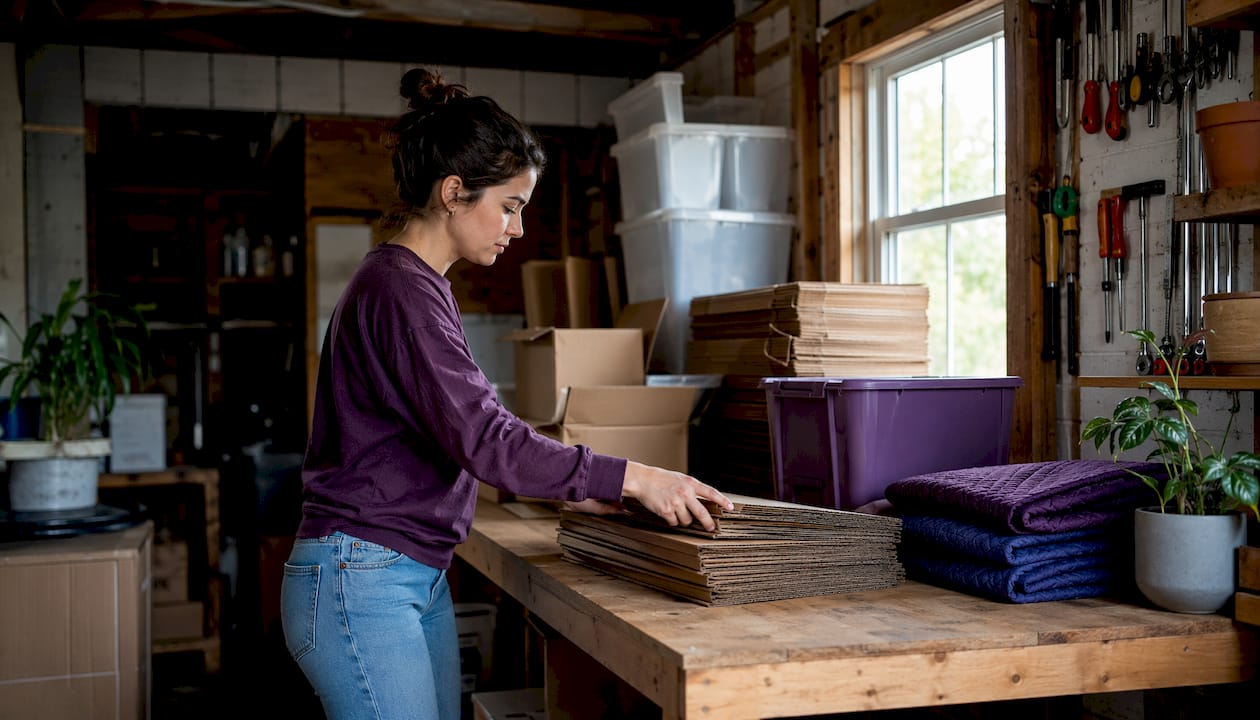
Pro Tip: Combine reusable moving blankets for furniture with recyclable double-walled cardboard boxes for general packing. That pairing covers most household moves without any single-use plastic entering the process.
Best practices for integrating recyclable materials into your move
Getting the most from recyclable and reusable packing materials takes a bit of planning, but the steps are straightforward.
- Declutter before you pack. Research suggests 40% of items packed during a move are never used in the new home. Fewer items means fewer boxes, less waste, and a lower carbon footprint from the outset.
- Source certified eco-friendly materials. Look for cardboard boxes made from recycled content or sourced from sustainably managed forests. Paper tape and biodegradable wraps are widely available and fully compatible with cardboard recycling streams.
- Reuse boxes multiple times before recycling. Each additional use lowers the per-move carbon cost. Boxes used several times before recycling carry meaningfully lower impact than single-use cartons.
- Avoid shrink-wrap where possible. A three-bedroom move using shrink-wrap generates 8–15kg of single-use plastic, whereas pad-wrap with moving blankets uses none.
- Sort materials properly after the move. Contaminated cardboard, wet boxes, or tape-covered wraps reduce recyclability. Remove tape, flatten boxes, and keep cardboard dry before kerbside collection.
- Choose reusable plastic crates for high-value or fragile items. Their waterproofing and stack reliability offer protection that cardboard cannot match for longer storage or outdoor unloading.
Pro Tip: Ask your removal firm whether they offer a carton take-back scheme. Many collect empty boxes after the move, check them, and put them back into circulation. That single step can extend a box’s useful life considerably and keeps materials out of the recycling stream prematurely.
Expert perspectives on recycling vs reuse in sustainable removals
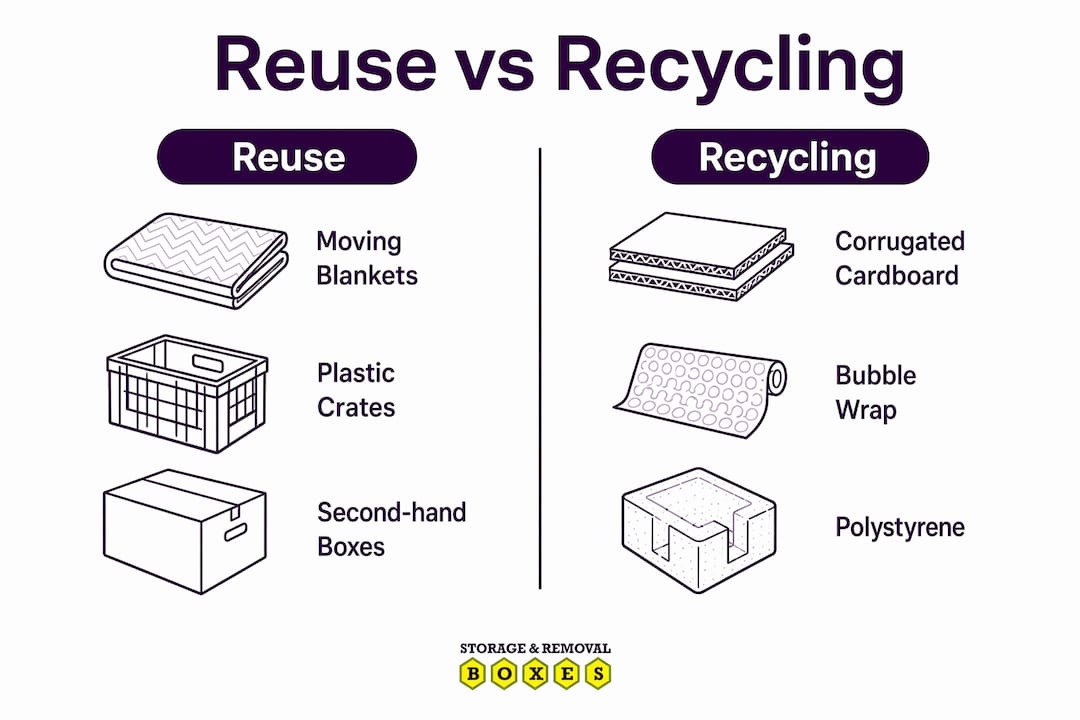
There is a persistent misconception in the removals industry: that recycling cardboard is the sustainable endpoint. It is not. Reuse ranks a full tier above recycling in the UK waste hierarchy, and the energy gap between the two pathways is substantial.
To recycle a cardboard box, it must be collected, transported, sorted, contamination-checked, pulped with water and chemicals, dried, re-sheeted, and converted back into a box. To reuse one, you collect it, quality-check it, and put it back into circulation. Every recycling cycle also shortens fibre length, progressively reducing the quality of the material until it eventually leaves the loop altogether.
- Reuse avoids the energy and resource costs of pulping, drying, and remaking
- Recycling is still far preferable to landfill or incineration
- No single material is universally best: the right choice depends on move frequency, volume, and logistics
- Operational factors, including load efficiency and route planning, affect total environmental impact alongside material choices
- Scaling reuse systems, such as take-back programmes and crate rental networks, compounds environmental savings across many moves
The ‘fit-for-purpose’ principle is the most useful frame here. A one-off residential move and a business relocating offices every two years have different optimal material mixes. Forcing a single solution onto both scenarios produces neither the best environmental outcome nor the best practical one. Early decluttering, coordinated logistics, and material take-back programmes all reduce impact beyond what packing material choices alone can achieve.
How Storageremovalboxes supports eco-friendly removals
Storageremovalboxes supplies packaging for moving built around durability and recyclability. The product range includes double-walled cardboard boxes in multiple sizes, designed to handle several moves before reaching end of life, and pre-packed home moving kits sized to different households to reduce over-ordering and waste.
- Double-walled boxes made from recyclable corrugated cardboard, suitable for heavy loads and multiple uses
- Moving blankets that replace single-use plastic wraps for furniture protection
- Bubble wrap, foam protectors, and foam corner guards for fragile items, available as recyclable or reusable options
- Pre-packed removal kits matched to household size, reducing the guesswork that leads to excess packaging
- Nationwide delivery, with customer support to help match materials to the UK waste hierarchy
The emphasis on product strength is directly relevant to sustainability: a box that survives three moves without deforming is a box that stays out of the recycling stream for longer. Storageremovalboxes also provides guidance on choosing materials that align with EPR requirements, which is increasingly relevant for businesses managing packaging compliance.
What are the real limitations of recycling packing materials?
Recycling is genuinely valuable, but it has limits that are worth understanding before you plan a move around it.
Cardboard recycling is not a closed loop. Up to 30% of cardboard collected for recycling is contaminated by food, liquid, tape, or labels and ends up downgraded to general waste. The cardboard that does make it through requires significant energy per tonne, plus the freshwater and chemicals associated with pulping. Each cycle shortens fibre length, meaning cardboard can only be recycled a finite number of times before the fibres are too short to be useful.
Plastic bubble wrap and polystyrene present a harder problem. Both are rarely accepted by kerbside recycling collections in the UK. They typically require specialist drop-off points, and many end up in general waste regardless of intent. Choosing biodegradable alternatives or washable moving blankets sidesteps this problem entirely rather than relying on a recycling infrastructure that often cannot handle them.
The cost dimension is shifting too. Under EPR, packaging producers now bear the full cost of managing household packaging waste. Materials that are harder to recycle will attract higher fees, making the financial case for reuse and recyclable mono-materials stronger with each passing year.
What happens when packing materials are disposed of improperly?
Improper disposal of packing materials, particularly plastic wraps, polystyrene, and non-recyclable tapes, contributes directly to landfill accumulation and plastic pollution. Plastic that enters general waste rather than a specialist recycling stream does not degrade meaningfully; it fragments into microplastics that enter soil and waterways.
Contaminated cardboard is a subtler problem. A wet or food-contaminated box placed in a recycling bin can downgrade an entire batch of otherwise recyclable material. That batch then goes to landfill or incineration rather than back into the paper fibre supply chain. The practical fix is straightforward: keep cardboard dry, remove tape before recycling, and never mix food-contaminated materials with clean packaging.
For businesses, improper disposal carries regulatory risk. The UK waste hierarchy is a legal requirement, not a guideline. Businesses that cannot demonstrate they have applied it when handling packaging waste face scrutiny under EPR compliance frameworks.
End-of-life options for recyclable packing materials after a move
Once packing materials have reached the end of their useful life, several routes exist depending on material type.
Cardboard boxes are the simplest case. Flatten them, remove tape where possible, and place them in kerbside recycling. Most UK local authorities accept corrugated cardboard. Boxes in good condition are better offered to neighbours, community groups, or listed on local exchange platforms for reuse before recycling.
Moving blankets from Storageremovalboxes are washable and reusable across many moves. When they eventually wear out, textile recycling banks or charity collections are the appropriate route.
Bubble wrap and foam protectors require more care. Standard plastic bubble wrap is not accepted by most kerbside collections. Specialist plastic film recycling points, available at many large supermarkets, are the correct disposal route. Biodegradable bubble wrap alternatives can go into composting streams, though checking the specific product’s certification is advisable.
Plastic crates rented through a removal firm return to the provider at the end of the move and re-enter circulation. Their end-of-life recycling, when they eventually wear out, is handled by the rental operator rather than the customer.
Real-world examples of recyclable materials working in removals
The pattern among UK movers making genuine environmental progress tends to follow a consistent shape: they combine reuse and recyclable materials rather than treating either as the complete solution.
A removal firm operating a carton take-back scheme collects empty boxes after each job, quality-checks them, and reissues them on subsequent moves. Many boxes complete several moves before retirement. That approach keeps materials in circulation longer, reduces demand for new cardboard production, and lowers per-move carbon without requiring customers to change their behaviour significantly.
Businesses relocating offices have found that rented plastic crates, combined with smart storage solutions for smaller items, reduce both packaging waste and van loading time. The crates stack reliably, require no tape, and return to the provider at the end of the move.
Households that declutter before packing, source used commercial cardboard boxes, and use moving blankets instead of shrink-wrap consistently report less waste to dispose of after the move. The combination of fewer items, reused materials, and recyclable packaging at end of life is the closest thing to a complete sustainable removals approach available to most UK movers today.
Storageremovalboxes: durable, recyclable packing materials for your move
If you want packing materials that hold up across multiple moves and meet the UK’s recyclability standards, Storageremovalboxes is the practical starting point. The range covers everything from tall double-wall removal boxes built for heavy loads to moving blankets that replace single-use plastic wraps entirely. Pre-packed moving kits take the calculation out of ordering, so you get the right volume of materials without excess packaging sitting in a skip after the move. All products are made from recyclable materials and designed to be used more than once before reaching end of life. Nationwide delivery and expert guidance on matching materials to your move size mean you can put together an eco-conscious packing plan without the usual coordination overhead. Browse the full range at Storageremovalboxes and order what your move actually needs.
Key takeaways
Reusing packing materials before recycling them is the single most effective step UK movers can take to reduce the environmental impact of a removal.
| Point | Details |
|---|---|
| Reuse beats recycling | The UK waste hierarchy places reuse above recycling; using boxes several times before recycling lowers per-move carbon. |
| EPR fees from 2026 | Packaging fees will be modulated by recyclability from 2026, creating a direct financial incentive for mono-material, recyclable packaging. |
| Shrink-wrap generates significant waste | A three-bedroom move using shrink-wrap generates 8–15kg of single-use plastic; moving blankets eliminate that entirely. |
| Cardboard vs plastic crates | Plastic crates require approximately 63 uses to break even with cardboard on climate impact; cardboard remains the practical default for one-off moves. |
| Storageremovalboxes | Supplies double-walled recyclable boxes, moving blankets, and pre-packed kits designed for multiple uses and aligned with UK waste hierarchy principles. |