Security labels: your complete guide for 2026

TL;DR:
- Security labels provide visible proof of tampering to protect products and assets from theft and counterfeiting. Proper selection and application of the appropriate label type ensure effective security, especially in regulated industries like pharmaceuticals. Regular inspection and matching labels to environmental conditions maximize their protective value.
Security labels are specially designed stickers that provide visible, verifiable evidence of tampering or unauthorised access, protecting products and assets from theft, counterfeiting, and warranty fraud. The industry distinguishes between tamper-evident, tamper-resistant, and tamper-proof labels, each serving a different security objective. Choosing the wrong type is one of the most common and costly mistakes businesses make. This guide explains how each type works, where to use them, and how to apply them correctly so your goods stay protected from the moment they leave your hands.
What types of security labels exist and how do they function?
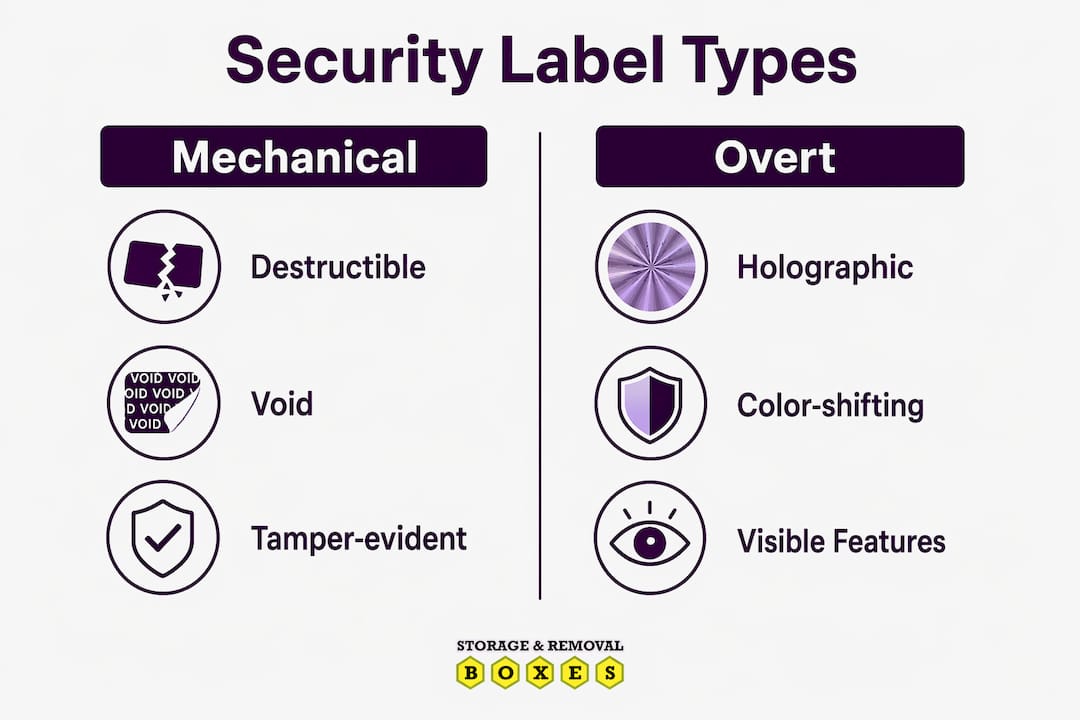
Security labels fall into four broad categories: mechanical, overt, covert, and digital. Each category uses a different mechanism to deter or detect interference.
Mechanical types
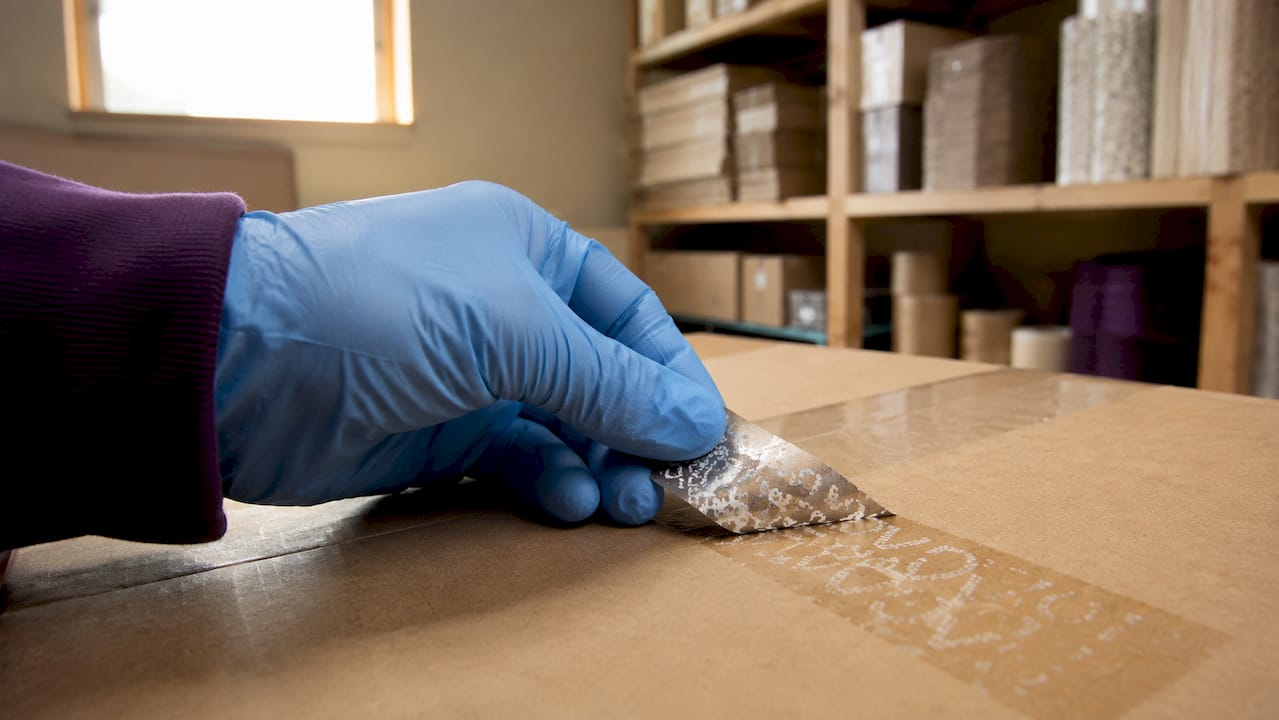
The two main mechanical tamper-evident label types are destructible vinyl and void labels. Destructible vinyl shatters into fragments when someone tries to peel it away, making removal impossible without obvious damage. Void labels leave a permanent hidden message, such as “VOID,” “OPENED,” or a checkerboard pattern, on the surface beneath when lifted. That message cannot be erased or reversed. Both types give you immediate, physical proof that a product has been accessed.
Overt features
Overt features are visible to anyone who looks. Holograms and colour-shifting inks are the most common examples. A hologram changes appearance depending on the viewing angle, making it extremely difficult to replicate without specialist equipment. Colour-shifting inks work similarly, shifting between two colours as the label tilts. These features are designed for consumer verification: a customer can check authenticity without any tools or training.
Covert and digital features
Security labels combine overt features like holograms with covert ones such as microprinting and serialisation to prevent counterfeiting and track products through the supply chain. Microprinting embeds tiny text invisible to the naked eye, readable only under magnification. Serialisation assigns a unique identifier to each label, enabling individual product tracking. RFID chips and QR codes take this further, allowing real-time authentication and supply chain visibility through a simple scan.
| Feature type | Mechanism | Typical application |
|---|---|---|
| Destructible vinyl | Shatters on removal | Warranty seals, asset tags |
| Void labels | Leaves permanent pattern | Packaging, electronics, cabinets |
| Holograms | Visual angle shift | Consumer goods, pharmaceuticals |
| Microprinting | Invisible text | High-value products, documents |
| RFID / QR codes | Digital scan authentication | Logistics, supply chain tracking |
- Void labels suit most general packaging and asset protection needs.
- Holograms add a consumer-facing layer of brand trust.
- Microprinting and serialisation are best for regulated industries.
- RFID and QR codes work well when you need digital audit trails.
Pro Tip: Match the feature type to the point of verification. If a warehouse operative checks your goods, a void label is sufficient. If a consumer verifies authenticity at point of sale, a hologram or QR code delivers more confidence.
How do tamper-evident labels differ from tamper-resistant and tamper-proof options?
The terminology in this market causes genuine confusion, and that confusion leads buyers to choose the wrong product. Industry guidance clarifies the regulatory distinction between these three terms, and the difference matters especially in pharmaceuticals and food packaging.
Tamper-evident labels show visible, irreversible proof that a product has been accessed. The evidence cannot be hidden or undone. This is the standard required by pharmaceutical regulators and food safety bodies for consumer-facing packaging.
Tamper-resistant labels deter interference but do not necessarily prove it happened. A tamper-resistant label might use a strong adhesive or a reinforced material that is difficult to remove, but a skilled person could potentially do so without leaving clear evidence.
Tamper-proof labels are largely a marketing term. Few labels are truly tamper-proof; the phrase typically describes high-resistance labels that combine deterrence with evidence. No label is physically impossible to defeat given enough time and resources.
Selecting the appropriate label performance for your actual security need is more effective than chasing an impossible standard. Focus on what evidence you need to see, and choose the label that delivers exactly that.
Practical scenarios help clarify the choice:
- A pharmaceutical blister pack requires a tamper-evident label to meet regulatory standards.
- A server cabinet in a secure office may only need a tamper-resistant seal to deter casual interference.
- A high-value electronics shipment benefits from a tamper-evident void label so any breach is immediately visible on arrival.
Confusing these categories leads to over-spending on features you do not need, or under-protecting goods in regulated environments. Focus on the evidence you need rather than the label’s marketing description.
What are best practices for selecting and applying security labels?
Choosing the right anti-tamper label is only half the task. Applying it incorrectly can render even the best label useless.
Assess your environment first. Indoor use on clean, flat surfaces suits standard tamper-evident materials. Outdoor environments, or anywhere with moisture, UV exposure, or temperature extremes, require labels with protective lamination or specialist coatings. Standard tamper-evident materials degrade in harsh outdoor conditions without weatherproofing, leading to premature label failure.
Prepare the surface properly. Applying labels on dirty or greasy surfaces prevents tamper evidence from triggering as intended. Clean the surface with an appropriate solvent, allow it to dry fully, and apply the label at room temperature. A greasy or textured surface creates a gap between the adhesive and the substrate, which a bad actor can exploit to lift and replace the label without triggering the void pattern.
Match the label to the chain of custody. A simple two-step journey from warehouse to customer needs a different label than a product passing through five international distribution centres. Choosing label types aligned to chain of custody complexity avoids unnecessary costs and improves security effectiveness. For complex logistics, serialised labels with QR codes or RFID give you a digital audit trail at every handover point. You can find practical guidance on label selection for logistics to help match the right product to your workflow.
Incorporate custom security features where appropriate. Custom security labels can include your brand logo, a unique serial number, or a specific void message. Customisation makes counterfeiting harder because a fraudster cannot simply purchase a generic label to replace yours.
Integrate labels into your inspection process. Labels alone do not prevent fraud; inspection during intake, shipping, or sales is what makes them effective. Assign responsibility for checking labels at each handover point, and define a clear process for what happens when tampering is detected.
Pro Tip: Test your chosen label on the actual substrate under real-world conditions before ordering in bulk. Adhesion performance on a smooth metal asset tag differs significantly from performance on a corrugated cardboard box.
What industries and applications benefit most from security labels?
Security seal stickers and anti-tamper labels add measurable value across a wide range of sectors. The common thread is any situation where proof of access matters.
Healthcare and pharmaceuticals represent the most regulated environment. Tamper-evident labels on medicine packaging are a legal requirement in many markets, protecting patients from contaminated or counterfeit products. The stakes here are high enough that overt and covert features are often combined on a single label.
Electronics and IT asset management use void labels extensively. Applying a void seal over a screw or access panel on a laptop, server, or piece of test equipment immediately reveals if someone has opened the device. This protects warranty terms and deters internal theft.
Logistics and shipping benefit from packaging security labels applied to carton seams and pallet wraps. A void label across the opening of a tamper-evident security tape application confirms that a parcel has not been opened in transit. This is particularly valuable for high-value or sensitive shipments.
Retail and consumer goods use holograms and serialised labels to fight counterfeiting. A consumer who knows what an authentic hologram looks like can verify a product in seconds at point of sale.
| Industry | Primary label type | Key benefit |
|---|---|---|
| Pharmaceuticals | Tamper-evident, holographic | Regulatory compliance, patient safety |
| Electronics | Void labels | Warranty protection, theft deterrence |
| Logistics | Void, serialised | Chain of custody verification |
| Retail | Holographic, QR code | Anti-counterfeiting, consumer trust |
Security labels form part of a broader anti-counterfeiting strategy, not a standalone measure. Pairing them with documented inspection processes and staff training multiplies their effectiveness considerably. For broader guidance on secure packaging practices, the principles align closely with how labels should be deployed.
Key takeaways
Security labels work only when the right type is matched to the right environment, applied correctly, and backed by an active inspection process.
| Point | Details |
|---|---|
| Know your terminology | Tamper-evident proves access; tamper-resistant deters it; tamper-proof is largely a marketing claim. |
| Match label to environment | Outdoor use requires weatherproof lamination; indoor labels on clean surfaces perform as specified. |
| Prepare surfaces properly | Clean, dry, grease-free surfaces are non-negotiable for void and destructible labels to function correctly. |
| Integrate into processes | Labels signal tampering; your team must check and respond to that signal at every handover point. |
| Avoid over-specifying | A destructible vinyl label often delivers the same protection as a hologram at a fraction of the cost. |
Why I think most businesses get security labels wrong
After years of working with packaging and logistics clients, the pattern I see most often is not a failure of the label itself. It is a failure of process. A business invests in quality void labels, applies them correctly, and then nobody at the receiving end actually checks them. The label does its job perfectly. The tamper evidence is right there. But because no one is looking, the information is wasted.
The second most common mistake is over-specifying. I have seen small retailers spend significantly more on holographic labels with microprinting for products that would be just as well protected by a basic destructible vinyl seal. The hologram impresses nobody if the product sits behind a counter and never leaves a controlled environment. Spend on complexity only where complexity earns its keep.
The third mistake is under-testing. Businesses order thousands of labels based on a specification sheet, then discover the adhesive does not bond properly to their particular packaging surface. Testing on your actual substrate, in your actual conditions, before committing to volume is not optional. It is the step that separates a label that works from one that gives you a false sense of security.
My honest recommendation: start with the simplest label that delivers the evidence you need. Add features only when you can point to a specific threat that simpler options cannot address. And build the checking process before you order the labels.
— Adrian
Packaging and security supplies from Storageremovalboxes
Protecting goods during a move or in storage starts with the right materials working together. Storageremovalboxes stocks a full range of packaging supplies designed for exactly this purpose, from large double-wall removal boxes built to carry heavy loads safely, to tamper-evident security tape that confirms whether a carton has been opened in transit.

Whether you are packing a home, securing stock for a storage unit, or preparing goods for a professional removal, pairing strong boxes with the right sealing and labelling products gives you confidence at every stage. Browse the full range of warning and security labels alongside boxes, bubble wrap, and foam protection at Storageremovalboxes, all available with nationwide UK delivery.
FAQ
What is a tamper-evident label?
A tamper-evident label shows visible, irreversible proof that a product or package has been opened or interfered with. Common mechanisms include void patterns and destructible vinyl that cannot be reapplied after removal.
What is the difference between void labels and destructible labels?
Void labels leave a permanent “VOID” or similar message on the surface beneath when peeled away. Destructible labels shatter into fragments on removal, making them impossible to lift intact.
Are tamper-proof labels genuinely tamper-proof?
No label is physically impossible to defeat. “Tamper-proof” is a marketing term for high-resistance labels that combine deterrence with evidence; selecting the right label for your actual security need is more effective than seeking an absolute guarantee.
Can security labels be used outdoors?
Standard tamper-evident materials are designed for indoor use. Outdoor applications require labels with protective lamination or specialist coatings to prevent degradation from moisture, UV light, and temperature changes.
How do I apply a security label correctly?
Clean the surface thoroughly, remove any grease or dust, and allow it to dry completely before applying the label at room temperature. Applying to a dirty or greasy surface prevents the tamper evidence mechanism from triggering as intended.