Self storage explained: simplify moving and organise your space
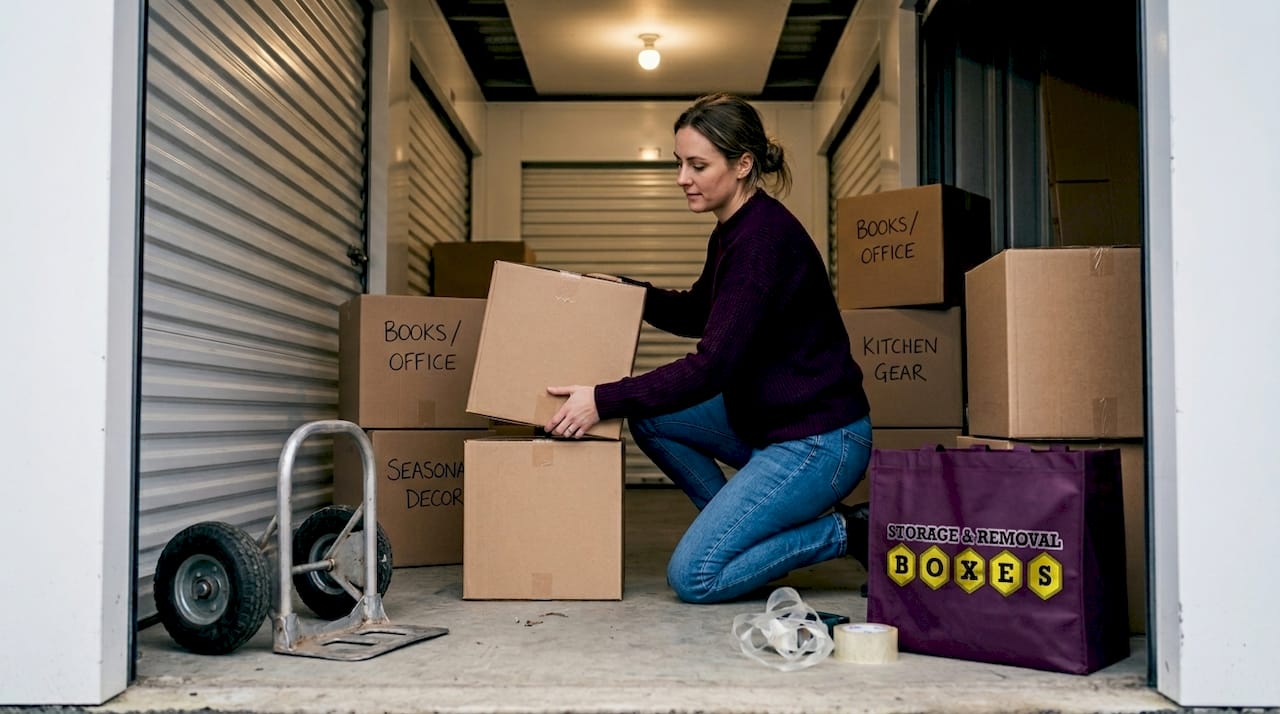
- Self storage has become a popular, secure, and flexible solution for UK households needing extra space during moves, renovations, or life changes. It offers various unit types with secure access and convenient hours, enabling users to manage their belongings independently. Proper planning, organization, and quality packing materials significantly enhance storage efficiency and safety.
Self storage has transformed from a niche solution into a mainstream option for millions of UK households, yet many people still confuse it with traditional warehousing or assume it’s only for businesses. The UK self storage market now has over 2,900 facilities offering around 64 million square feet of rentable space, making it one of the fastest-growing property sectors in the country. Whether you’re between homes, renovating a kitchen, or simply drowning in boxes after years of accumulation, self storage could be exactly the breathing room you need. This guide will give you the clarity to choose well, pack smart, and make the most of every square foot.
Key Takeaways
| Point | Details |
|---|---|
| Self storage defined | Self storage provides secure, flexible space for organising or moving your belongings on your own terms. |
| Options and flexibility | Choose from a range of unit types to match your access needs, budget, and storage quantity. |
| Security essentials | Modern facilities offer robust security, but using high-quality boxes and clear labelling boosts safety and convenience. |
| Efficient space use | Planning ahead and organising your storage saves money, protects your items, and reduces stress. |
What is self storage?
Self storage is exactly what it sounds like: a secure, lockable space you rent exclusively for your own use. Unlike traditional removals storage where a company warehouses your possessions under their control, self storage puts you in charge. You hold the key, you set the schedule, and only you decide what goes in or comes out.
The Self Storage Association UK defines a self storage unit as a securable, static space of under 500 square feet with exclusive access granted to the customer. That definition separates it clearly from shared warehousing, porterage storage, and other solutions where operators handle your goods on your behalf.
Who actually uses self storage? The answer might surprise you. It’s not just students stuffing furniture in over summer. Common users include:
- Families moving house who need a gap between leaving and arriving
- Homeowners mid-renovation who need furniture out of the way
- People downsizing and needing time to sort through decades of belongings
- Small businesses storing stock, equipment, or archive documents
- Landlords between tenancies keeping furniture safely offsite
- Individuals going through a life change such as divorce or bereavement
The process is straightforward. You choose a unit size, sign a rental agreement, and gain access, usually within the same day. Most contracts are monthly rolling, meaning no long-term commitment is required. You load and unload yourself, which keeps costs down compared to managed storage. Knowing what a storage removal box is matters here because the right box dramatically affects how efficiently you fill the space.
Self storage isn’t just a room to dump things you can’t decide about. Used well, it’s a practical tool that gives you time, space, and control during the most chaotic moments in life.
Types of self storage: options for every need
With a firm grasp of what self storage is, let’s look at the main types available across the UK. The 64 million square feet of storage space spread across 2,900-plus facilities is not all identical. Understanding your options prevents you from renting the wrong type and regretting it two months in.
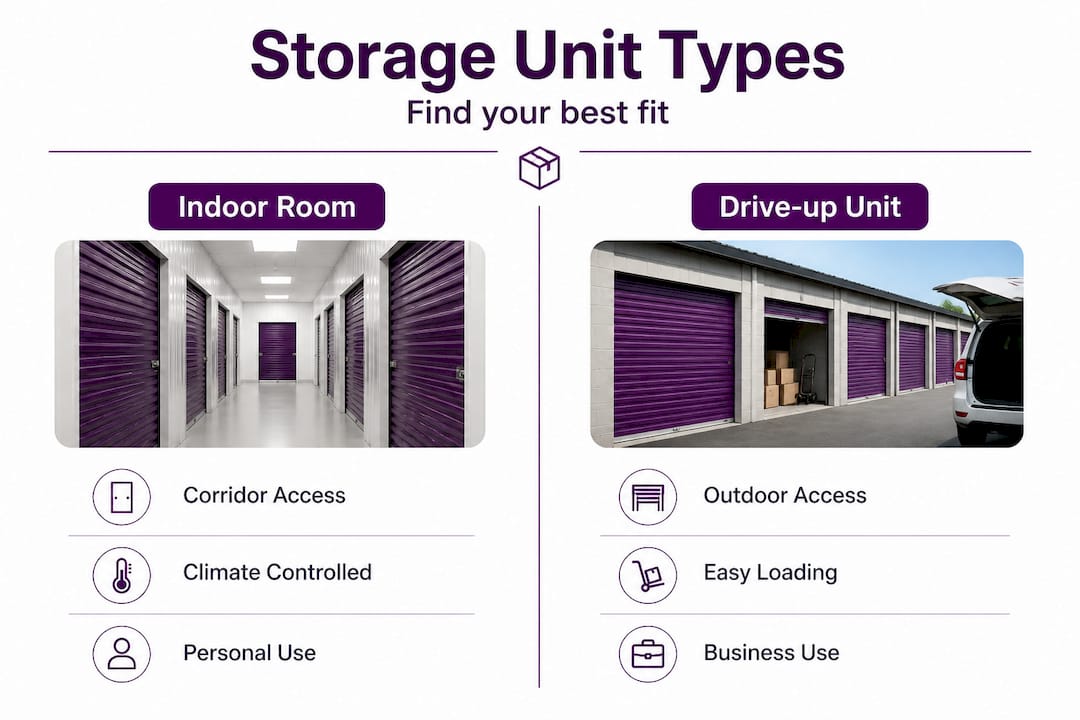
| Type | Access | Security | Size range | Best for | Flexibility |
|---|---|---|---|---|---|
| Indoor room | Corridored, internal | High (CCTV, alarms) | 10 sq ft to 200 sq ft | Furniture, boxes, valuables | Monthly rolling |
| External container | Drive-up, outdoor | Moderate | 20 sq ft to 300 sq ft | Bulky items, less fragile goods | Monthly rolling |
| Drive-up unit | Direct vehicle access | Moderate to high | 50 sq ft to 300 sq ft | Frequent access, heavy loads | Monthly rolling |
| Climate-controlled | Indoor, temperature managed | High | 25 sq ft to 200 sq ft | Antiques, electronics, documents | Monthly rolling |
Indoor rooms are the most common choice across UK facilities. They sit inside a building, often accessed via lifts and corridors, and benefit from multiple layers of physical security. Drive-up units suit you if you’re loading heavy items regularly because you can pull a van right up to the door. External containers are weatherproof but not always climate-controlled, making them better for robust items than delicate furniture or electronics.
Follow these steps when selecting a unit:
- Assess your volume. List every item you plan to store and estimate how many boxes or cubic metres you’re dealing with.
- Decide how often you’ll need access. If you need items weekly, drive-up or ground-floor units save enormous time and effort.
- Check location. A storage site that’s 40 minutes away sounds fine until you need something urgently on a Sunday evening.
- Compare contract terms. Look for notice periods, price-increase clauses, and whether insurance is included or extra.
- Inspect the unit in person. Photos on a website never capture moisture smells, floor quality, or corridor width.
Exploring types of storage solutions can also help you see how different unit types align with specific household needs, particularly if you’re also managing a removal at the same time. For those coordinating a full house move, understanding self storage in logistics reveals how professional movers integrate storage into the overall timeline.

Pro Tip: If you’re uncertain about size, choose one unit size up from your estimate. The cost difference between a 50 sq ft and a 75 sq ft unit is usually modest, but the ability to stack properly and leave access lanes inside the unit saves time and prevents damage on every visit.
How secure and convenient is self storage?
Now that you know your options, let’s tackle the two questions almost every first-time user asks: is it safe, and can I actually get to my things when I need them?
Security has improved dramatically across UK facilities over the past decade. The SSA UK standard requires each unit to be a securable, static space with exclusive customer access, meaning you should never share a unit or an access code with facility staff or other customers. Beyond that baseline, most reputable sites offer:
- 24-hour CCTV surveillance covering all corridors, entrances, and external areas
- Individual unit alarms that trigger if the door is opened without the correct access code
- PIN-coded or fob-operated entry gates so only paying customers enter the site
- Perimeter fencing and security lighting
- On-site staff during business hours, and in some cases overnight security
- Contents insurance options, either bundled with the rental or available as an add-on
Convenience is equally strong. Many UK facilities now operate extended hours, commonly 7am to 10pm, with a growing number offering 24-hour access seven days a week. Some sites even allow you to book online, sign digitally, and receive an access code without ever speaking to a person, which suits those with unpredictable schedules.
Here’s a quick checklist of what to verify before committing to a storage site:
- Is there CCTV covering individual unit corridors, not just entrances?
- Does the unit door have its own dedicated lock, and can you add a second padlock?
- What are the exact access hours, and is there an emergency contact number?
- Is contents insurance mandatory, optional, or excluded from the contract?
- Are there lifts if your unit is on an upper floor?
- Is the facility independently audited or a member of the SSA UK?
Packing plays a direct role in security too. Well-packed boxes are harder to damage accidentally and easier to identify if anything goes missing. Following self storage packaging tips before you load up will protect fragile items and make retrieval far smoother. Knowing the relevant storage box standards ensures you’re using containers that won’t collapse under their own weight when stacked, which is a common and entirely avoidable mishap.
| Facility feature | Why it matters | What to look for |
|---|---|---|
| CCTV coverage | Deters theft and resolves disputes | Footage stored for at least 30 days |
| Individual alarms | Detects unauthorised unit access | Alert linked to monitoring centre |
| Access control | Limits site entry to customers | PIN, fob, or app-based system |
| Insurance options | Covers replacement value | Check policy exclusions carefully |
| Customer support | Helps with issues promptly | On-site staff or fast phone response |
Pro Tip: Always label your boxes clearly on the side, not just the top. When boxes are stacked, side labels mean you can read contents without shifting everything. Use colour-coded labels by room for even faster retrieval.
Practical tips: getting the most out of self storage
Understanding security is just one part of the picture. Getting value from your storage unit also depends on how you pack, how you organise the space, and how well you maintain your setup over time. Across the 2,900-plus facilities operating in the UK, the customers who get the most from their units follow a surprisingly consistent approach.
Follow these steps to set up your unit for maximum efficiency:
- Use uniform box sizes. Standard-sized boxes stack far more stably and efficiently than a random assortment of shapes. Fill boxes fully to prevent collapse when stacked.
- Put the heaviest items at the bottom. Sofas and wardrobes go to the back walls and floor. Lighter boxes go on top. This isn’t just common sense; it’s weight distribution that protects both items and you.
- Create a central access aisle. Leave a clear path down the middle of the unit so you can reach boxes at the back without unloading everything in front. Many people skip this and regret it every single visit.
- Place frequently needed items near the front. If you’re accessing seasonal clothes or documents monthly, they shouldn’t be buried behind the chest freezer.
- Keep an inventory list. A simple numbered list stored on your phone or emailed to yourself takes 20 minutes to make and saves hours of searching later.
- Photograph the contents before you lock up. This supports any insurance claim and jogs your memory when you can’t quite recall which box holds the kitchen items.
There are also a few things you genuinely cannot store in any reputable UK self storage facility, regardless of how well packed they are:
- Perishable food, live plants, or anything organic that can rot or attract pests
- Flammable liquids such as petrol, paint, solvents, or gas canisters
- Explosives, firearms, or hazardous chemicals
- Illegal items of any kind
- Live animals (this should go without saying, but it appears in terms and conditions for a reason)
Getting clarity on your self-storage and packaging needs before booking a unit is a worthwhile exercise. It helps you avoid over-renting space and ensures you arrive with the right materials rather than improvising on the day.
Common mistakes families make when using self storage for the first time:
- Underestimating the space needed and having to book a second, more expensive unit
- Using old supermarket boxes that collapse under weight, damaging contents beneath
- Failing to insure contents and discovering the hard way that the facility’s liability is limited
- Ignoring moisture and not using silica gel packets or moisture absorbers in humid units
- Storing items haphazardly and then spending twice as long unpacking at the end
A fresh look at self storage: why a little planning goes a long way
Here’s an opinion you won’t find in every guide: most people’s problems with self storage have nothing to do with the facility. They have everything to do with the 48 hours before they arrive with a van.
The industry has become remarkably good at security, access, and competitive pricing. What it can’t do is compensate for rushed packing, mismatched boxes, and zero organisation strategy. We’ve seen customers arrive at storage units with bin bags, loose coat hangers, and boxes that are half-full simply because they ran out of time to pack properly. They pay for 100 square feet and can only use 60 of it effectively. That’s money spent on air.
The genuinely underrated investment isn’t a larger unit. It’s better boxes and a clear labelling system. A double-walled removal box, properly filled and labelled on the side, stacks confidently. It protects contents from compression damage. It retrieves cleanly. A supermarket wine box does none of those things reliably. Understanding the real value of removal boxes shifts the way you think about the whole storage experience.
The other overlooked habit is reassessment. Life changes fast. A unit you rented during a house move might still be sitting there a year later, quietly charging you each month, full of things you’ve already replaced. We’d argue that revisiting your storage twice a year, once before summer and once before Christmas, is as practical as reviewing your home insurance. Needs change. Your storage strategy should too.
Make self storage easier with the right boxes and materials
Ready to organise your space and make sure your belongings arrive safely? The single most effective upgrade you can make before loading a storage unit is upgrading your packing materials.
At Storage and Removal Boxes, we supply robust double-walled boxes, packing kits, bubble wrap, foam protectors, and moving blankets specifically designed for UK households going through a move or using self storage. Whether you need a handful of removal boxes for a small unit, or a full set of moving packs tailored to your home size, we have everything in one place with nationwide delivery. Browse our range of safe packing materials and start your storage experience the right way, with supplies you can trust.
Frequently asked questions
How much space does a typical self storage unit provide in the UK?
Most units are under 500 sq ft of securable space with exclusive access, but practical sizes typically range from 10 to 200 square feet depending on the provider.
Can I access my self storage unit at any time?
Many UK facilities offer extended or 24-hour access, but hours vary by site, so always confirm specific access times before signing a contract.
What can’t I store in a self storage unit?
Most UK providers prohibit perishable food, flammable liquids, explosives, hazardous chemicals, and illegal items for safety and insurance reasons.
Is self storage safe for valuable items?
Modern UK facilities typically use CCTV, individual unit alarms, and pin-coded access, but taking out contents insurance independently gives you a more reliable safety net for high-value possessions.
How do I choose the right storage unit size?
List everything you plan to store, estimate the total volume, ask the facility for a size guide, and consider renting one size larger than your estimate to allow for proper organisation inside the unit.