Self storage in logistics: how it supports your move
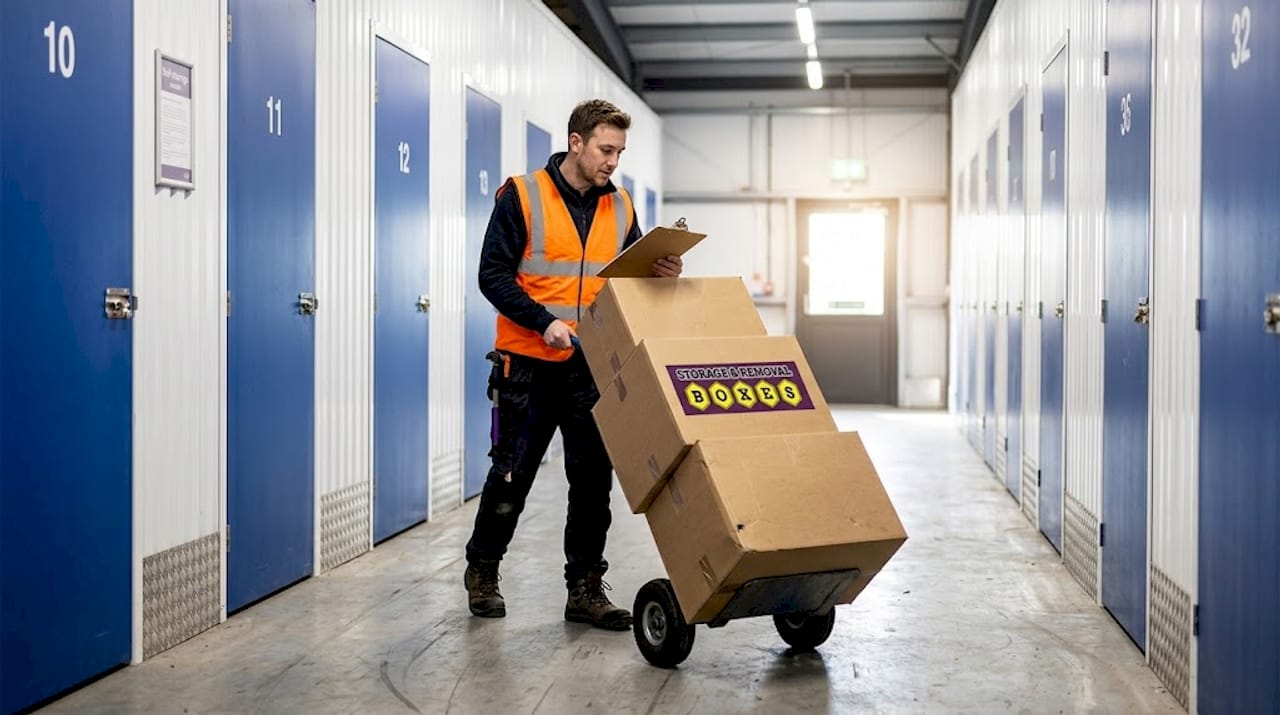
TL;DR:
- Self storage offers flexible, customer-managed units ideal for short-term logistics needs.
- It enables phased packing and transportation, reducing stress and damage risks during moves.
- Suitable for temporary storage gaps, stock overflow, and event logistics, but not for hazardous goods.
Many people assume self storage is simply a place to stash unwanted furniture. In a logistics context, though, it is something far more useful. Self storage acts as a flexible, customer-controlled holding point within a broader chain of moving, distributing, and transporting goods. Whether you are a family relocating between properties, a small business managing stock overflow, or a removal company bridging scheduling gaps, understanding what self storage really means in logistics can save you time, money, and considerable stress. This guide covers the definition, practical applications, comparisons with traditional warehousing, and actionable advice on when to use it.
Table of Contents
- Defining self storage in logistics
- How self storage enhances packing and transportation
- Comparing self storage and traditional logistics warehousing
- When and why to choose self storage for logistics
- Why the real value of self storage in logistics is often underestimated
- Create a seamless logistics experience with the right storage tools
- Frequently asked questions
Key Takeaways
| Point | Details |
|---|---|
| Flexible short-term storage | Self storage lets you hold goods securely and access them whenever you need during moves or business operations. |
| Improved logistics efficiency | Using self storage can streamline packing, reduce transit stress, and solve bottlenecks in your move or supply chain. |
| Clear choice factors | Choose self storage when you want direct control and access, but look to warehousing for long-term, provider-managed needs. |
| Real cost and risk benefits | Self storage can reduce the risk of damaged or misplaced goods by giving you more control over their handling and timing. |
Defining self storage in logistics
At its core, self storage means renting a secure, private unit or container that you access and manage yourself. Unlike a managed warehouse, nobody else handles your goods. You pack them, you move them in, and you retrieve them on your own schedule. That distinction matters enormously in a logistics setting.
In logistics, self storage is frequently used as a holding area for goods awaiting collection, onward transport, or final delivery. Think of it as a buffer zone in your supply chain. A removal firm might use a unit to stage furniture between a client’s old and new property. An e-commerce seller might use one to hold seasonal stock before a busy period. A family might use it to store packed boxes while waiting for their new home to become available.
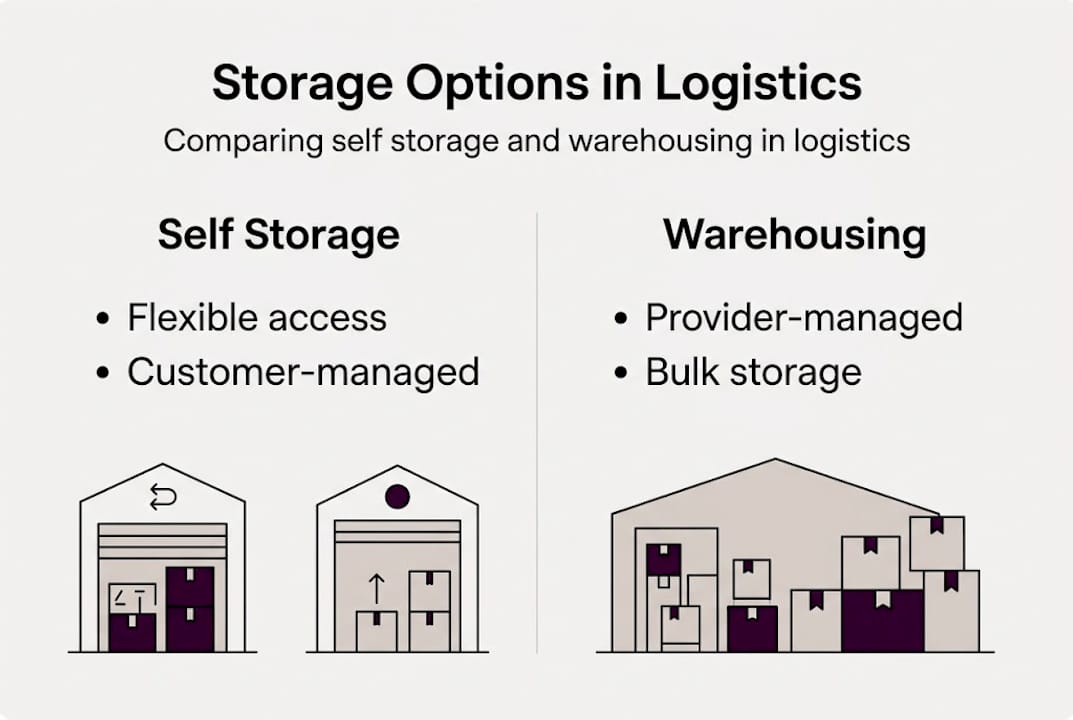
This differs fundamentally from traditional warehousing. In a warehouse, a third-party provider manages the goods, controls access, and often charges based on complex contracts. With self storage, you are in charge. Stress-free storage options like these give you the autonomy that rigid warehouse arrangements rarely offer.
The UK market has recognised this value. The self storage sector grew by 6% in 2025, reflecting rising demand from both individuals and businesses who need adaptable logistics solutions.
Key features that make self storage attractive in a logistics context include:
- Flexible rental terms, usually month to month, with no long-term commitment
- 24/7 access at most modern facilities, so you can retrieve or add goods at any hour
- Range of unit sizes, from small lockers to large rooms suitable for full household contents
- Customer-managed access, meaning you control who enters and when
- Scalability, so you can upsize or downsize your unit as your logistics needs shift
As our self storage packaging guide explains, self storage offers a flexible option for both individuals and businesses needing to temporarily hold goods during a move or distribution process. That flexibility is precisely what makes it such a powerful logistics tool.
Pro Tip: Before signing any rental agreement, confirm whether the facility offers 24/7 access and what security measures are in place. CCTV coverage, individual alarms, and secure locks are the minimum you should expect.
How self storage enhances packing and transportation
Now that we have defined self storage’s role, let us explore its impact on the moving and logistics process.
One of the most underappreciated benefits of self storage in logistics is the ability to phase your packing and transportation. Rather than attempting to move everything in a single, chaotic day, you can pack room by room, transporting loads to your unit as they are ready. This approach reduces pressure on moving day and dramatically lowers the risk of damage.
Using self storage facilities can smooth out logistical hurdles, such as goods arriving ahead of schedule or a lack of space at the destination. That is a common scenario for businesses receiving supplier deliveries before their premises are ready, and for families whose new property completion is delayed.
Here is a practical sequence that works well for most logistics situations:
- Audit your items before packing. Categorise by fragility, size, and frequency of use.
- Pack non-essentials first and move them to your storage unit early, freeing up space at your origin point.
- Label every box clearly with contents and destination room. This saves hours when retrieving.
- Transport in stages, using your unit as a relay point rather than trying to coordinate a single enormous move.
- Retrieve in order, starting with items you need immediately at the new location.
For e-commerce sellers and SMEs, self storage also minimises congestion at fulfilment points. Instead of cramming stock into an office or spare room, a nearby unit keeps inventory accessible without disrupting daily operations. Students moving between term-time accommodation and home use it to avoid the cost of transporting everything twice.
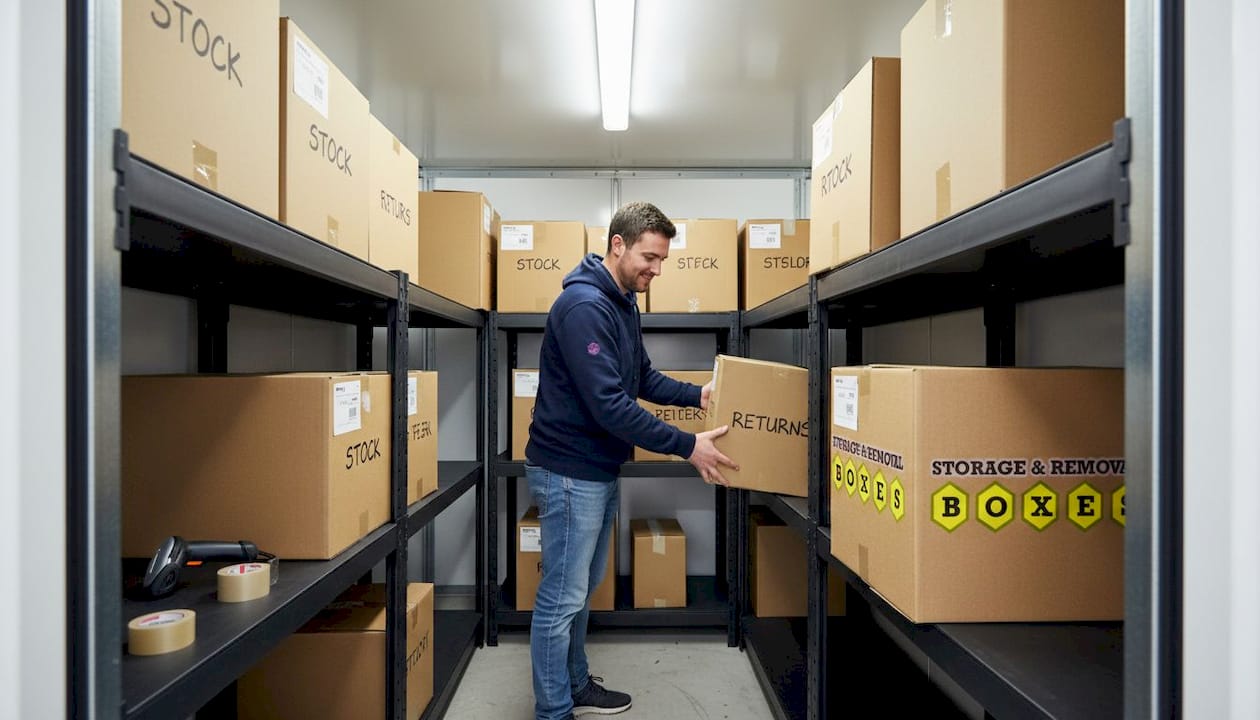
If you want to organise long-distance moves effectively, self storage is often the missing piece that makes the timeline manageable. You can also browse self-storage solutions and types of storage solutions to match the right approach to your specific situation.
Pro Tip: Always catalogue stored items using a simple spreadsheet or app. Note the box number, contents, and date stored. When you need something urgently, you will find it in seconds rather than searching through dozens of boxes.
Comparing self storage and traditional logistics warehousing
To highlight where self storage truly stands out, let us compare it head to head with traditional logistics warehousing.
The differences are significant, and choosing the wrong option can cost you both time and money. Traditional warehousing suits businesses with high-volume, ongoing logistics needs and the budget for long-term contracts. Self storage suits everyone else.
“Self storage facilities typically provide month-to-month rental and direct customer access, while warehouses require contracts and restricted entry.”
| Feature | Self storage | Traditional warehousing |
|---|---|---|
| Management | Customer-managed | Provider-managed |
| Contract length | Month to month | Fixed term, often 12+ months |
| Access | Direct, often 24/7 | Scheduled, provider-controlled |
| Cost structure | Pay for space used | Complex pricing with handling fees |
| Scalability | Easy to upsize or downsize | Difficult to adjust mid-contract |
| Best suited for | Individuals, SMEs, removal firms | Large-scale commercial logistics |
For most personal moves and small business logistics needs, self storage wins on nearly every measure. Warehouse storage options do have their place, particularly for businesses managing large inventories with complex handling requirements. But for the majority of UK movers and small operators, the flexibility and direct access of self storage is far more practical.
Key reasons people choose self storage over warehousing:
- No need to book access slots or wait for provider staff
- Costs are transparent and predictable
- You can visit your unit as often as needed without additional charges
- Units can be vacated quickly when your logistics situation changes
Reviewing storage box standards is also worth doing before you commit to any storage arrangement, as the quality of your packaging directly affects how safely goods survive in any facility.
When and why to choose self storage for logistics
Having seen the differences, let us decide when self storage is actually the best fit.
Self storage is especially valuable as a stopgap for goods in transit, for businesses scaling up, or during complex relocations. But it is not the right answer for every situation. Here is how to assess your needs clearly.
Scenarios where self storage is the ideal choice:
- Home moves with a gap between properties: When your sale completes before your purchase, self storage bridges the gap without the cost of delaying the chain.
- Business stock overflow: Seasonal peaks, new product launches, or office relocations often create temporary stock surges that a unit handles efficiently.
- Event logistics: Exhibitions, pop-up shops, and promotional events need somewhere to hold materials between dates.
- Student relocations: Avoiding double transport costs between term-time and home addresses.
| Scenario | Self storage suitable? | Why |
|---|---|---|
| Short-term move gap | Yes | Flexible terms match timing needs |
| Long-term inventory management | No | Warehousing is more cost-effective |
| Business scaling | Yes | Easy to upsize without new contracts |
| Hazardous goods storage | No | Most facilities prohibit this |
| Fragile item holding | Yes | With correct packaging in place |
A word of caution: self storage is not appropriate for hazardous materials, flammable goods, perishable items, or anything requiring specialist environmental controls. Always read the facility’s terms carefully.
Pro Tip: Ask your chosen facility about their insurance arrangements and whether your goods are covered under their policy or your own. Many home and business insurance policies do not automatically extend to off-site storage, so a separate policy may be needed. Sourcing the right self-storage boxes and quality packing materials is equally important for protecting your goods once inside.
For storage for long moves, the combination of a well-chosen facility and robust packing materials is what separates a smooth relocation from a stressful one.
Why the real value of self storage in logistics is often underestimated
Stepping back, here is a perspective you will rarely see in standard guides.
Most people think of self storage as a last resort. Somewhere to put things you cannot quite bring yourself to throw away. That framing sells it massively short. In 2026, the most effective movers and small logistics operators treat self storage as a proactive strategy, not a reactive one.
The businesses and individuals who use self storage well are not doing so because they ran out of space. They are doing so because they want control. Control over timing, over access, over cost. When a delivery arrives two weeks early, they have a plan. When a property chain collapses, they do not panic. That resilience is worth far more than the monthly rental fee.
Conventional logistics thinking focuses on speed and volume. But for most UK movers and small operators, timing flexibility is the real competitive advantage. Self storage gives you that. Our self-storage pack options are designed with exactly this mindset, giving you everything you need to make a unit work hard for your logistics goals.
The uncomfortable truth is that poor logistics planning costs far more than a storage unit ever would. Damaged goods, missed deadlines, and rushed moves are expensive. A well-used self storage unit is an investment in getting things right.
Create a seamless logistics experience with the right storage tools
Having the right facility is only half the equation. The other half is ensuring your goods are packed and protected properly before they go in. Poorly packed items can shift, crush, or sustain damage even in the most secure unit.
At StorageRemovalBoxes.co.uk, we supply everything you need to make self storage work effectively within your logistics plan. From robust double-walled boxes to protect with bubblewrap for fragile items, our products are built for the demands of real moves and storage situations. You can find the right boxes for every size of unit and every type of item, with nationwide delivery so your supplies arrive before your move begins. One place, everything you need.
Frequently asked questions
What is the difference between self storage and warehousing in logistics?
Self storage gives you flexible, personal access to your unit on your own schedule, while warehousing is managed by the provider with restricted access and fixed contract terms. As noted in our storage box standards guide, self storage facilities typically provide direct access where warehouses may have contractual restrictions.
How does self storage help with moving house or business in the UK?
It provides a convenient, flexible holding point for belongings between properties or business premises, smoothing out timing gaps during the move. Self storage provides a convenient stopgap for moves and business transitions where timing cannot always be perfectly aligned.
Is self storage safe for valuable or fragile items?
Yes, modern facilities use robust security and climate controls, but proper packing is essential to protect items during storage. Proper packaging enhances the safety of items in self storage and reduces the risk of damage significantly.
When should I consider self storage for my logistics needs?
When you need short-term, flexible storage during a move, a scaling business, or a logistics bottleneck, self storage is the practical choice. Self storage is ideal for flexible short-term storage requirements where warehousing would be unnecessarily costly or restrictive.