Self storage organisation tips: your 2026 guide

TL;DR:
- Proper self storage organization involves planning layouts, using suitable containers, and maintaining disciplined habits for efficient access. Clear plastic bins, thoughtful zoning, and a master inventory list help prevent disorder and protect belongings from moisture and pests. Consistent routines, such as returning items to designated zones and checking for damage, ensure long-term storage success.
Self storage organisation is defined as the systematic arrangement and categorisation of belongings within a storage unit to maximise usable space and simplify retrieval. Done well, it transforms a cluttered unit into a functional space you can navigate in minutes. Done poorly, it turns every visit into a frustrating excavation. The self storage organisation tips in this guide cover everything from container selection and layout planning to zoning strategies and maintenance habits, drawing on proven 2026 best practices used by professional removal companies and storage facilities across the UK.
1. What are the best containers and packing materials for self storage?

Clear plastic bins provide visibility and better protection against moisture and pests compared to cardboard. That single advantage saves you from opening every box to find what you need. For items where cardboard is preferred, choose uniform-sized, double-walled boxes so stacks remain stable and predictable.
Uniform box sizing is not just about aesthetics. It means every stack is the same footprint, which makes your layout map accurate and your aisles consistent. Mixing random box sizes creates unstable towers and wasted vertical space.
For fragile or valuable items, the right protective materials make a real difference:
- Bubblewrap rolls for glassware, ceramics, and electronics
- Foam padding and corner guards for furniture edges and picture frames
- Furniture protection blankets for sofas, mattresses, and wooden surfaces
- Silica gel packets placed inside boxes to absorb ambient moisture
Pro Tip: Place silica gel packets inside boxes containing books, documents, or electronics. Concrete storage floors can sweat moisture upward, and a single damp season can ruin paper or corrode metal components.
2. How to plan and lay out your storage unit for maximum efficiency
Layout planning is the single most impactful step in storage unit organisation. A poorly planned unit forces you to unpack half the contents every time you need one item. A well-planned unit lets you walk in, locate the item, and leave in under two minutes.
Follow these steps in order:
- Draw a simple floor plan before you move a single box in. Sketch the unit dimensions and mark where each zone will sit.
- Place heavy furniture and appliances along the walls. This keeps the centre of the unit clear and lowers the unit’s centre of gravity.
- Disassemble large furniture before storage. Beds, wardrobes, and tables take up far less floor space when broken down, and stacking safety improves significantly.
- Stack boxes to a maximum of four high. Stacking beyond four boxes creates instability and a genuine safety hazard. That limit applies regardless of box size or weight.
- Leave a central aisle or T-shaped walkway. Never pack the unit to 100% capacity. You need clear access to every zone without disturbing other items.
- Elevate everything off the concrete floor. Wooden pallets raise items at least two inches above the surface. Concrete floors sweat moisture, and direct contact causes box softening, mould, and furniture warping over time.
- Place items you access most frequently nearest the door. Seasonal decorations and archived documents can go at the back; everyday tools and clothing should stay at the front.
Pro Tip: Photograph your unit layout on your phone after the initial setup. When you return weeks later, the photo reminds you exactly where each zone is without guesswork.
Here is a quick reference for layout priorities:
| Priority | Action | Reason |
|---|---|---|
| High | Leave central aisle clear | Allows retrieval without disturbing other items |
| High | Elevate items on pallets | Prevents moisture damage from concrete floors |
| High | Stack maximum 4 boxes | Prevents collapse and injury |
| Medium | Disassemble large furniture | Saves floor space and improves stability |
| Medium | Draw a layout map | Speeds up retrieval on future visits |
3. What zoning strategies improve storage organisation?
Dividing the unit into logical zones transforms it from storage chaos into a functional space. The principle is simple: group items by type and access frequency, then assign each group a fixed location. That fixed location never changes, so retrieval becomes automatic.
Effective zones for most storage units include:
- Furniture zone along the back and side walls
- Box zone in the centre, stacked on pallets in uniform rows
- Documents and archives zone in clearly labelled, waterproof containers near the front
- Seasonal items zone at the back, rotated twice a year
- Equipment and tools zone near the door for regular access
The most powerful tool in any zoning system is a Master Inventory List. Assigning each box a unique number and recording its contents in a master document means you never open the wrong box. A spreadsheet on your phone works perfectly. Update it immediately every time you add or remove an item.
Here is how zoning compares with and without a Master Inventory List:
| Approach | Retrieval speed | Risk of lost items | Organisation durability |
|---|---|---|---|
| Zones only, no inventory | Moderate | Medium | Declines over time |
| Zones with Master Inventory List | Fast | Low | Maintained long term |
| No zones, no inventory | Slow | High | None |
Freestanding shelving units add another layer of control if your unit is large enough. Shelves keep boxes off the floor, improve visibility, and allow you to store irregularly shaped items without stacking risks. Label every shelf clearly with its zone name.
4. What maintenance habits keep your storage unit organised?
Organisation is not a one-time task. Without consistent habits, even the best-planned unit degrades into disorder within a few months. The good news is that the habits required are simple and take very little time.
The most damaging habit in storage unit management is the drop and run. This means placing an item wherever is convenient rather than returning it to its designated zone. One drop-and-run visit is harmless. Ten visits later, the unit is unrecognisable.
Build these habits into every visit:
- Return every item to its designated zone before you leave, without exception.
- Update your Master Inventory List immediately after adding or removing anything. Delayed updates lead to inaccurate records and lost items.
- Inspect for moisture and pests every three months. Check box bases, furniture legs, and any items stored directly against walls.
- Check box stability on each visit. Boxes compress over time, and a stack that was safe in January may be leaning by April.
- Rotate seasonal items twice a year. Move summer items to the back in autumn and winter items to the back in spring. This keeps the front zone relevant and clutter-free.
Pro Tip: Keep a small bag near the unit door containing a torch, a box cutter, a roll of packing tape, and a permanent marker. These four items cover 90% of what you need during an unplanned visit, and having them on site means you never have to improvise.
For guidance on avoiding common organisational mistakes during moves and storage transitions, the 2026 storage user guide from Storageremovalboxes covers the most frequent errors in detail.
5. What items should you avoid storing in self storage units?
Knowing what not to store is as important as knowing how to organise what you do store. Prohibited items create fire risks, attract pests, cause rot, and expose you to legal liability.
Prohibited items include:
- Perishables and food of any kind. Even sealed tins attract rodents and insects over time.
- Hazardous materials including fuel, propane, paint, solvents, and cleaning chemicals. These are fire risks and are banned by virtually every UK storage facility.
- Weapons and ammunition, which require licensed storage under UK law.
- Illegal goods of any description.
- Living things, including plants and animals.
- Uninsured high-value items such as cash, jewellery, and original artwork, which are better suited to a bank vault or specialist facility.
Beyond prohibited items, some belongings require careful preparation before storage. Items must be cleaned and dried thoroughly before going into a unit. Appliances with residual moisture, upholstered furniture with food odours, and clothing that is even slightly damp will develop mould within weeks. For advice on packing fragile items safely before storage, Storageremovalboxes has a dedicated guide covering preparation techniques for delicate belongings.
Always read your storage facility’s terms and conditions before signing. Most UK facilities conduct periodic checks, and storing prohibited items can result in immediate contract termination and financial penalties.
Key takeaways
Effective self storage organisation requires a clear layout plan, consistent zoning, a numbered inventory system, and disciplined maintenance habits to protect belongings and save time on every visit.
| Point | Details |
|---|---|
| Choose the right containers | Clear plastic bins protect against moisture and pests better than cardboard boxes. |
| Plan your layout before loading | Draw a floor plan, leave a central aisle, and stack no more than four boxes high. |
| Elevate items off the floor | Wooden pallets prevent moisture damage from concrete floors sweating upward. |
| Use zones and a Master Inventory List | Numbered boxes with a detailed master record cut retrieval time significantly. |
| Maintain consistent habits | Avoid drop-and-run behaviour and update your inventory list on every visit. |
What I have learnt from years of watching storage units go wrong
Most people treat a storage unit like a skip with a padlock. They load it fast, close the door, and assume the organisation will sort itself out. It never does.
The units I have seen work best share one characteristic: the person who set them up spent thirty minutes planning before they moved a single item in. That half hour pays back every time they visit. The units that descend into chaos share a different characteristic: the person treated the first visit as the last time they would ever think about the space.
The Master Inventory List is the single most underused tool in self storage. People resist it because it feels bureaucratic. In practice, a simple numbered spreadsheet on your phone takes two minutes to update and saves you from spending twenty minutes unpacking boxes looking for a single document. I have seen people pay for an extra month of storage simply because they could not find what they needed and assumed it was still in the unit.
The other mistake I see repeatedly is ignoring the floor. Concrete floors in UK storage facilities are not sealed against moisture. A wet winter will push damp upward through the concrete, and anything sitting directly on the floor will absorb it. Pallets are cheap. Replacing water-damaged furniture is not.
If you take one thing from this guide, let it be this: treat your storage unit like a room in your home, not a place where organisation goes to die.
— Adrian
Get the right supplies from Storageremovalboxes
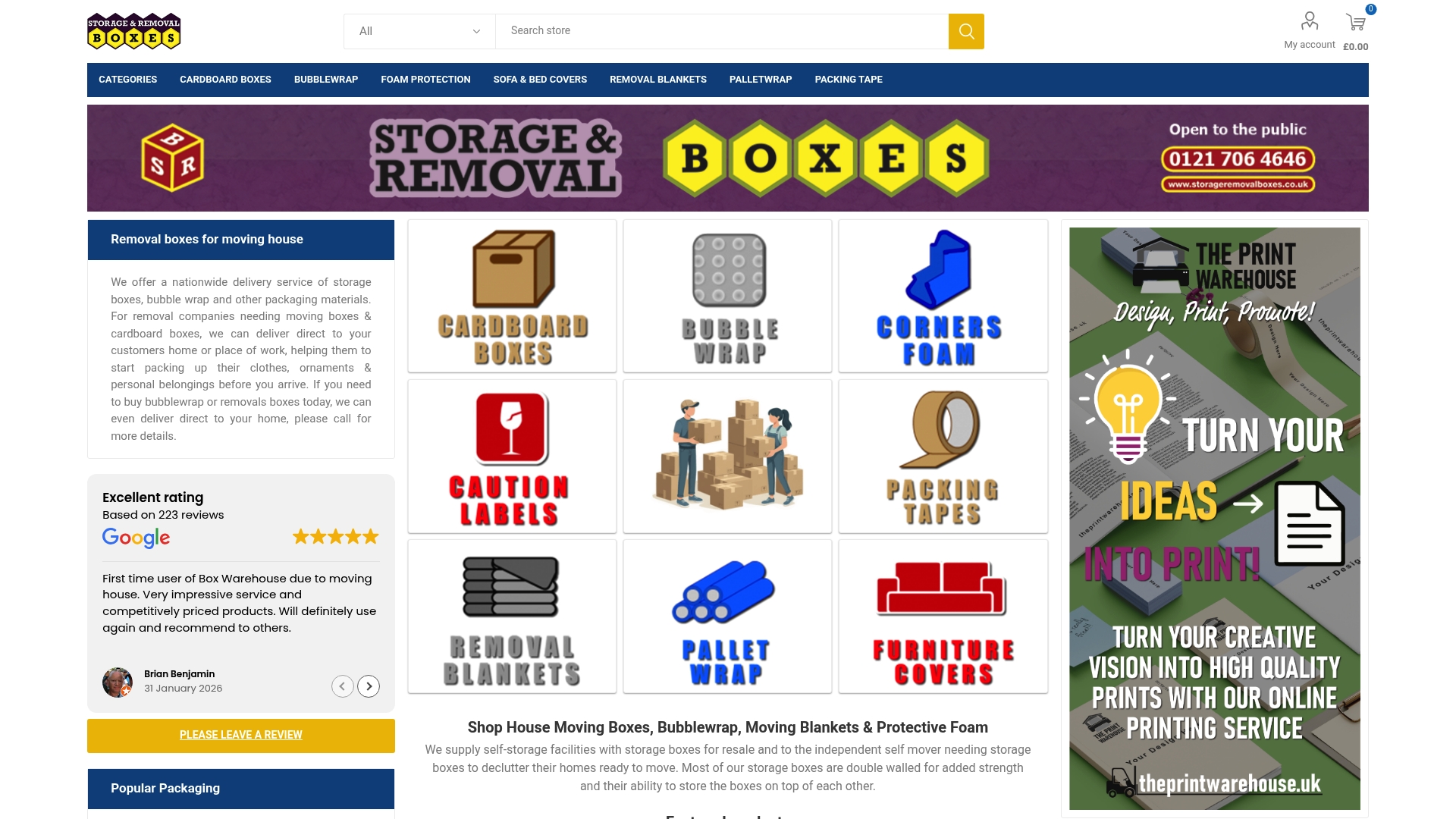
Good organisation starts with good materials. Storageremovalboxes supplies everything you need to set up a well-organised, properly protected storage unit. The large tall double-wall removal boxes are built for stacking, with reinforced walls that hold their shape under load. Pair them with bubblewrap rolls for fragile items, foam corner protection for furniture edges, and moving blankets for upholstered pieces and wooden surfaces. All products are available with nationwide UK delivery, so you can have everything on site before you load a single box.
FAQ
What is the maximum safe stacking height for storage boxes?
The maximum safe stack height is four boxes. Stacking beyond four creates instability and a risk of collapse, regardless of box size or weight.
Should I use cardboard boxes or plastic bins for self storage?
Clear plastic bins offer better protection against moisture and pests and allow you to see contents without opening them. Cardboard is acceptable for short-term storage when boxes are uniform-sized and kept off the floor on pallets.
How do I keep track of what is in my storage unit?
Assign each box a unique number and maintain a Master Inventory List, ideally as a spreadsheet on your phone. Update the list immediately every time you add or remove an item to keep records accurate.
What items are prohibited in UK self storage units?
Prohibited items include food, perishables, hazardous materials such as fuel and solvents, weapons, illegal goods, and living things. Always check your facility’s terms before storing anything unusual.
Why should I elevate items off the storage unit floor?
Concrete floors sweat moisture, particularly in winter. Placing items on wooden pallets at least two inches above the floor prevents box softening, mould growth, and furniture warping caused by that upward damp.