Step-by-step guide to packing for removals in the UK
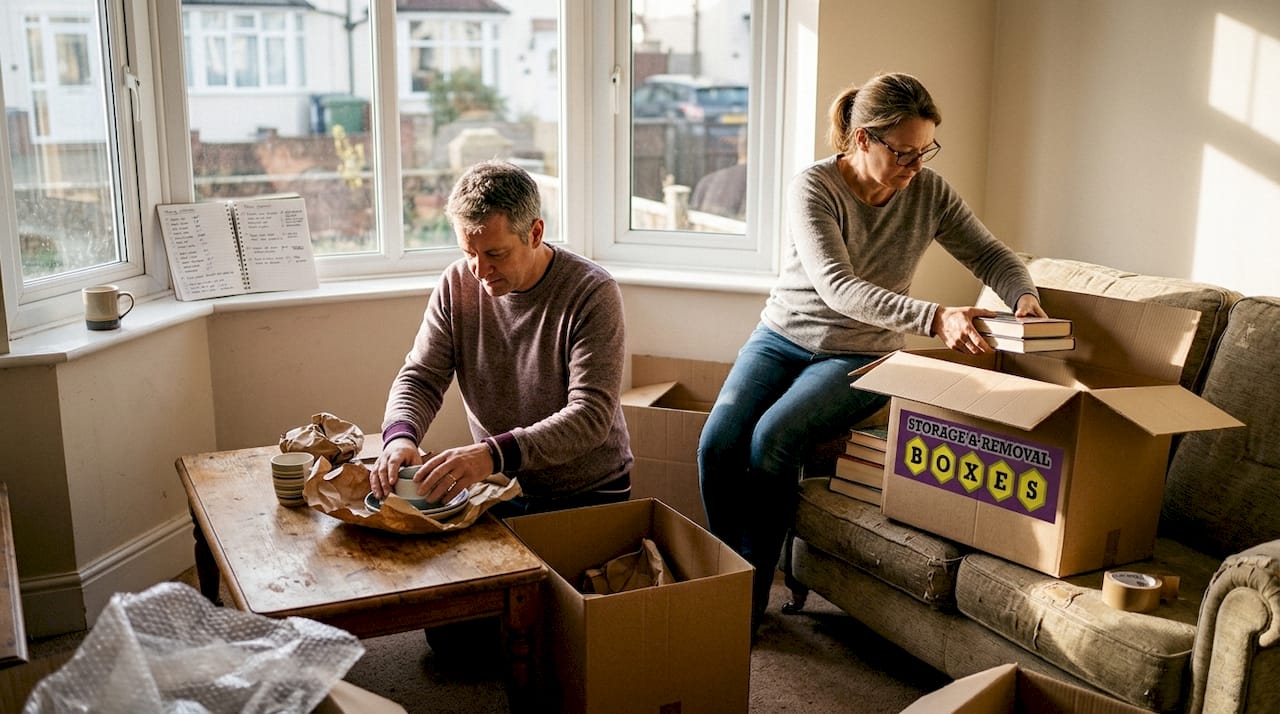
Moving house is stressful enough without the sinking feeling of unwrapping a shattered dinner plate at your new address. 65% of movers make packing errors that stem directly from poor planning, and half break kitchen items simply by not stacking them correctly. The good news is that most breakages, losses, and last-minute panics are entirely avoidable. This guide walks you through every stage of removal packing, from gathering your materials to unpacking at the other end, so you can move with confidence rather than crossed fingers.
Table of Contents
- What you need to get started
- Declutter and organise before you pack
- How to pack each room efficiently
- Safe loading, transport, and unpacking
- What most guides miss about removal packing
- Tools to make your move smoother
- Frequently asked questions
Key Takeaways
| Point | Details |
|---|---|
| Plan packing early | Starting with the right supplies and a plan helps prevent costly mistakes and lost items. |
| Declutter to save money | Reducing the items you take can cut moving costs by up to 20% and make packing easier. |
| Pack room by room | Packing methodically by room with specialist materials protects your belongings and streamlines unpacking. |
| Use proper labelling | Clearly labelling every box improves safety, speeds up loading, and ensures quick finding of essentials. |
What you need to get started
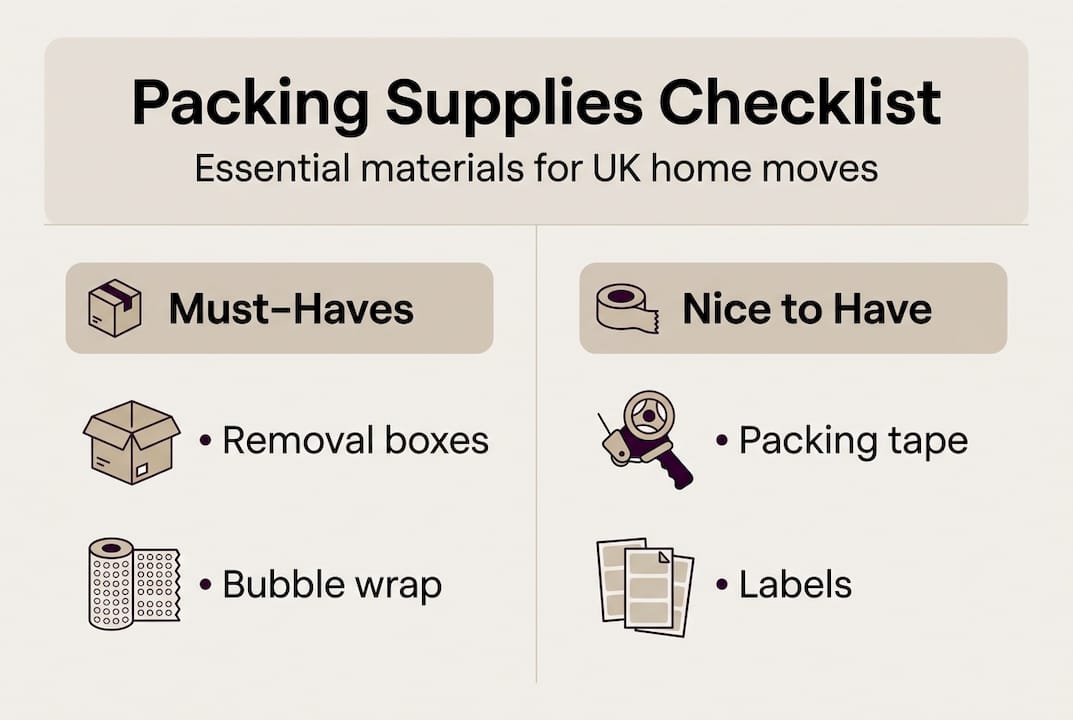
Before a single item goes into a box, you need the right materials to hand. Turning up on packing day without enough tape or bubble wrap is the fastest route to a chaotic move. Here is what every household should gather before starting:
- Double-walled removal boxes in small, medium, and large sizes
- Packing tape and a good tape dispenser
- Bubble wrap and packing paper for fragile items
- Foam protectors and moving blankets for furniture
- Permanent marker pens for labelling
- Fragile and directional warning labels
- Wardrobe boxes for hanging clothes
One of the first decisions you will face is whether to pack yourself or hire professionals. Both options have genuine merit depending on your budget and timeline.
| Factor | DIY packing | Professional packing |
|---|---|---|
| Cost | £50 to £200 in materials | Adds £200 to £500 to your quote |
| Time | 30 to 50 hours for a 3-bed home | One day for a 3-bed home |
| Insurance | Your responsibility | Typically covered by the firm |
| Materials | Standard retail | Specialist removal grade |
Professional packers bring specialist materials and speed, but DIY packing gives you full control over how your belongings are handled. For most households, a hybrid approach works well: hire professionals for fragile or high-value items and pack everyday belongings yourself.
Pro Tip: Before you buy anything, work through a moving house checklist to calculate exactly how many boxes and how much protective material you will need. Buying too little mid-pack wastes time and money.
Specialist removal boxes are worth the investment over supermarket cardboard. They are designed to stack safely, resist crushing under load, and protect contents during transit on uneven roads.
Declutter and organise before you pack
With your supplies in hand, it is time to lighten your load and your costs. Packing everything you own is a mistake many movers make. The more you move, the more it costs and the longer unpacking takes.
The most effective method is to sort every room into four categories:
- Keep: Items you use regularly and genuinely need
- Donate: Good-condition items that local charities will accept
- Sell: Higher-value items worth listing online or at a car boot sale
- Recycle or dispose: Worn, broken, or outdated items with no resale value
This approach is not just tidying for its own sake. Decluttering before a move can reduce your overall removal volume and costs by 10 to 20%. On a typical 3-bed local removal costing £800 to £1,200, that saving is meaningful.
Statistic: Moving on a Friday or during peak summer months can add 20 to 30% to your removal quote. Choosing a mid-week slot in spring or autumn is one of the simplest ways to reduce costs without compromising on service.
There are also items you should never pack, regardless of how organised you are. Hazardous materials including paint, household chemicals, aerosols, and perishable food are either prohibited by removal companies or genuinely dangerous in a sealed van. Dispose of them responsibly before moving day.
Pro Tip: Start decluttering at least four weeks before your move. Rushing this stage means you end up packing things you do not need, paying to move them, and then throwing them away at the other end. Check out these house removal tips for a broader timeline to keep you on track.
Once each room is sorted, group your remaining belongings by category and room destination. This makes packing far faster and unpacking genuinely logical.
How to pack each room efficiently
After sorting and minimising your belongings, follow this step-by-step packing method for each room in your home.
- Start with rooms you use least. Spare bedrooms, loft storage, and garages should be packed first. Leave the kitchen, bathroom, and bedroom essentials until last.
- Wrap fragile items individually. Each fragile item should be wrapped in bubble wrap or packing paper before going into a box. Never wrap multiple items together.
- Stack plates and glasses upright. Plates packed vertically in dish packs survive transit far better than those laid flat. Glasses should stand upright with padding between each one.
- Fill every gap. Empty space inside a box allows items to shift and collide. Use soft materials such as clothing, towels, or scrunched packing paper to fill voids completely.
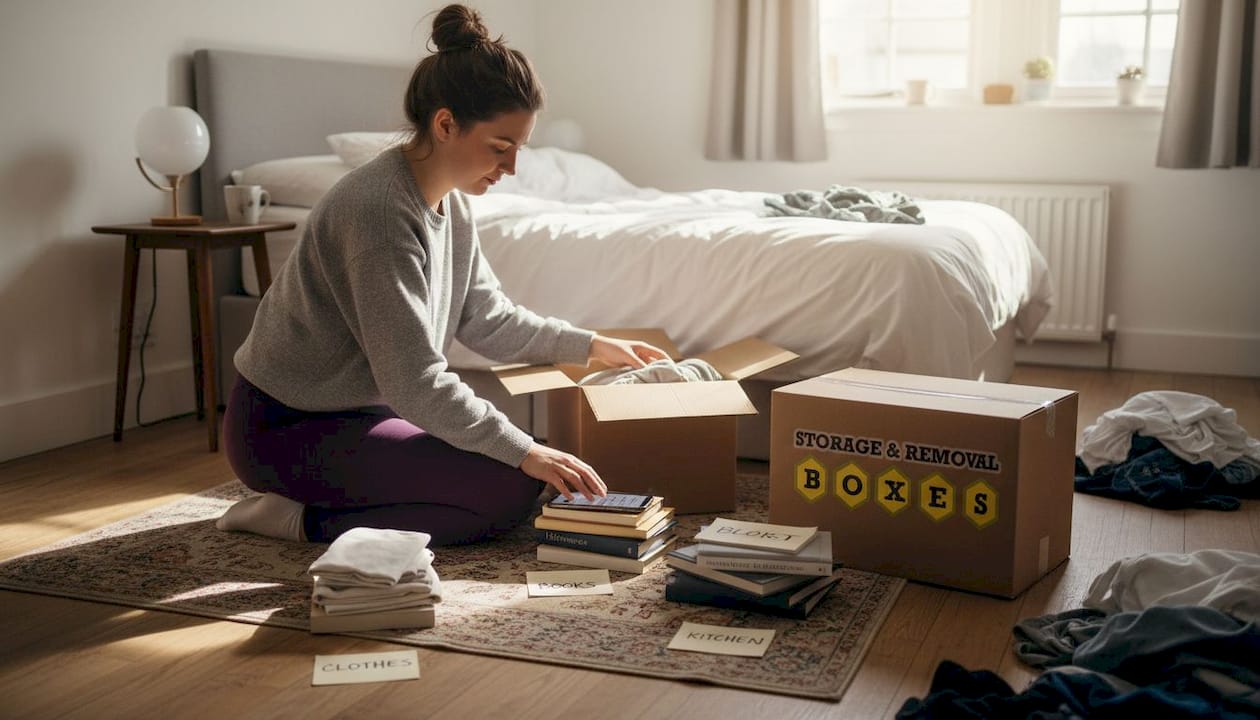
- Label every box clearly. Write the destination room and a brief contents description on at least two sides. Mark fragile boxes with labels on all four sides and the top.
“The single most common cause of breakages during a move is not rough handling — it is inadequate internal packing that allows items to move inside the box.”
Here is a quick reference for best practices by room:
| Room | Key packing approach | Common mistake |
|---|---|---|
| Kitchen | Plates upright, wrap each glass, label fragile | Overfilling boxes with mixed weights |
| Living room | Bubble wrap electronics, disassemble flat-pack | Leaving cables loose and unlabelled |
| Bedroom | Wardrobe boxes for clothes, vacuum bags for bedding | Mixing heavy books with soft items |
| Bathroom | Seal liquids in zip bags, wrap mirrors | Packing full bottles that leak in transit |
Pro Tip: Use your home removal pack advice to match box sizes to contents. Heavy items like books belong in small boxes. Large boxes are for light, bulky items like duvets and cushions.
Never mix very heavy and very light items in the same box. The weight distribution makes boxes awkward to carry and increases the risk of the base giving way.
Safe loading, transport, and unpacking
Packing is only half the task. Next comes careful loading, transport, and unpacking for a truly stress-free move.
Loading the removal van correctly is as important as how you packed the boxes. Follow these principles:
- Heaviest boxes go in first, placed flat on the van floor against the cab wall
- Furniture and appliances should be loaded next, secured with straps where possible
- Lighter boxes are stacked on top of heavier ones, never the reverse
- Fragile boxes should be placed where they will not shift, ideally wedged between stable items
- Your essentials box (kettle, phone charger, toiletries, documents) travels with you in the car, not in the van
The labelling system you built during packing pays off at this stage. Boxes labelled with their destination room can be unloaded directly to the correct space, saving you from shuffling heavy boxes around your new home.
Statistic: Poor planning accounts for the majority of packing mistakes. Taking 30 minutes to create a loading plan before moving day dramatically reduces the chance of damage or disorganisation during transit.
When unpacking, resist the urge to open everything at once. Work room by room, starting with the kitchen and bathroom so your home becomes functional quickly. Check each box for breakages as you go and photograph any damage before disposing of packaging, in case you need to make an insurance claim.
Pro Tip: Use moving kits for safe removal that include all the protective materials you need in one order. It removes the guesswork and ensures you have the right quantity of everything before you start.
Keep your original packing materials for a few days after moving in. If something is damaged, the packaging is evidence. If everything arrives safely, most cardboard boxes can be recycled or passed on to the next mover.
What most guides miss about removal packing
Most packing guides focus on technique, and technique matters. But in our experience, the moves that go wrong rarely fail because someone used the wrong size box. They fail because the person packing ran out of time, ran out of energy, or talked themselves out of buying enough bubble wrap to save a few pounds.
Procrastination is the real enemy of a smooth move. Starting packing two weeks before moving day feels early until you realise how long it actually takes. The packing best practices that experienced movers rely on are not complicated. They are simply applied consistently and started early enough to matter.
There is also a psychological element that nobody talks about. Packing up a home you have lived in for years is emotionally draining. That tiredness leads to shortcuts: boxes that are not quite full enough, items that are not quite wrapped well enough, labels that are written in a hurry and impossible to read later. Recognising that this is normal helps you plan for it. Build in breaks. Pack in short sessions rather than marathon days. And never skimp on materials when you are tired and tempted to make do.
Methodical execution, not perfection, is what gets you through a move intact.
Tools to make your move smoother
A solid packing strategy only works when you have reliable materials to back it up. Flimsy boxes, cheap tape that peels in a cold van, and inadequate bubble wrap are false economies that cost far more in broken belongings than they save at checkout.

At StorageRemovalBoxes.co.uk, we supply everything covered in this guide, built specifically for UK removals. Our removal boxes are double-walled for genuine load-bearing strength, and our bubble wrap supplies come in sizes suited to everything from wine glasses to flat-screen televisions. Pick up a box marker pen that writes clearly on cardboard in any light, so your labelling system actually works on moving day. We offer nationwide delivery and pre-packed removal kits sized for different homes, so you can order everything in one go and get on with the move.
Frequently asked questions
What is the most efficient way to pack fragile items for removal?
Wrap each item individually in bubble wrap or packing paper, stack plates and glasses upright, fill all gaps with soft materials, and apply fragile labels to every side of the box.
How much do packing supplies typically cost for a home move in the UK?
DIY packing materials cost between £50 and £200, while hiring professional packers adds £200 to £500 on top of your standard removal quote.
Can decluttering really save money on removals?
Yes. Sorting before you pack can reduce your removal volume and overall costs by 10 to 20%, making both packing and unpacking considerably more manageable.
Are there any items I should not pack when moving?
Do not pack hazardous materials such as paint, chemicals, or perishables, as they can be prohibited by removal companies or pose a genuine safety risk in transit.