Storage box standards: ensuring safe transit in 2026

TL;DR:
- Industry standards ensure storage boxes can withstand stacking and transport pressures.
- Double wall boxes are recommended for fragile and heavy items due to higher strength.
- Proper packing, labelling, and using certified boxes reduce damage and improve moving efficiency.
Most people heading into a move grab whatever boxes they can find, whether from a supermarket, a neighbour, or the back of a cupboard. It feels practical, even resourceful. But random boxes fail at the worst possible moment, when your belongings are stacked in a van travelling at speed or piled high in a storage unit. Industry standards for storage boxes exist precisely because not all cardboard is equal. This guide walks you through what those standards actually mean, how to read material grades and certifications, which sizes suit which items, and how to apply proper packing and stacking techniques so your move goes smoothly from start to finish.
Table of Contents
- What are industry standards for storage boxes?
- Materials and construction: choosing the right box for safe transport
- Standard sizes and labelling: how to match your belongings to the right box
- Packing, stacking, and transport: applying standards for maximum safety
- Why using standardised boxes beats improvised solutions
- Explore quality, certified storage boxes for your move
- Frequently asked questions
Key Takeaways
| Point | Details |
|---|---|
| Standards ensure safety | Boxes made to industry standards protect your belongings better during transit. |
| Double wall for fragile items | Double-walled boxes should be used for heavier or delicate possessions to prevent breakage. |
| Label boxes clearly | Proper labelling makes your move faster and safer, reducing confusion and accidents. |
| Follow packing guidelines | Stack and pack according to standards to avoid crushed boxes and damaged contents. |
| Invest in quality | Standardised boxes pay dividends in peace of mind and successful move outcomes. |
What are industry standards for storage boxes?
The phrase ‘industry standards’ sounds like dry regulatory language, but for anyone moving house, it translates into something very practical: will this box hold together under pressure? In the UK and across Europe, storage and removal boxes are governed by BS EN ISO standards, a set of benchmarks that specify how much weight a box can bear, how it should be constructed, and how it must be labelled.
One of the most important measures is the BCT, or Box Compression Test rating. This tells you the maximum load a box can withstand before it collapses. A box with a higher BCT is essential when you plan to stack multiple boxes on top of one another, which is almost always the case during a move or in self-storage.
Material grades are another key element. The two most common types are:
- Single wall corrugated cardboard: One layer of fluted material between two flat sheets. Suitable for lighter loads such as books, clothing, or kitchen items.
- Double wall corrugated cardboard: Two layers of fluting, offering significantly greater rigidity and crush resistance. Ideal for heavy or fragile items.
Certified boxes carry a printed stamp or mark on the base or side panel that indicates the grade, the manufacturer’s details, and the maximum load. This mark is your assurance that the box has been tested to a defined standard, not just assembled from whatever cardboard was available.
| Standard element | What it tells you |
|---|---|
| BCT rating | Maximum compression load before collapse |
| Wall grade | Single or double wall construction |
| Certification mark | Confirms testing and compliance |
| Manufacturer code | Traceability and quality assurance |
As industry standards ensure structural integrity in storage boxes, buying certified products removes the guesswork entirely. If you are exploring storage solutions for moving for the first time, understanding these standards is the foundation of every good decision you will make. You can also find more detail on self storage packaging to see how standards apply across different storage scenarios.
Pro Tip: Always check for a certification mark on the base of a box before you buy. If there is no mark, the box has not been independently tested and may not perform as expected under load.
Materials and construction: choosing the right box for safe transport
Understanding the standards is closely linked to knowing which materials and construction details best meet those requirements. Corrugated cardboard is the dominant material in removal boxes, and for good reason. It is lightweight relative to its strength, made from recyclable materials, and available in grades that suit everything from paperback books to heavy kitchen appliances.
The grade of corrugated board refers to the thickness and density of the fluting inside. A heavier flute grade absorbs more impact and resists crushing more effectively. When you are packing items that cannot be replaced, such as glassware, ceramics, or electronics, the grade of the box matters enormously.
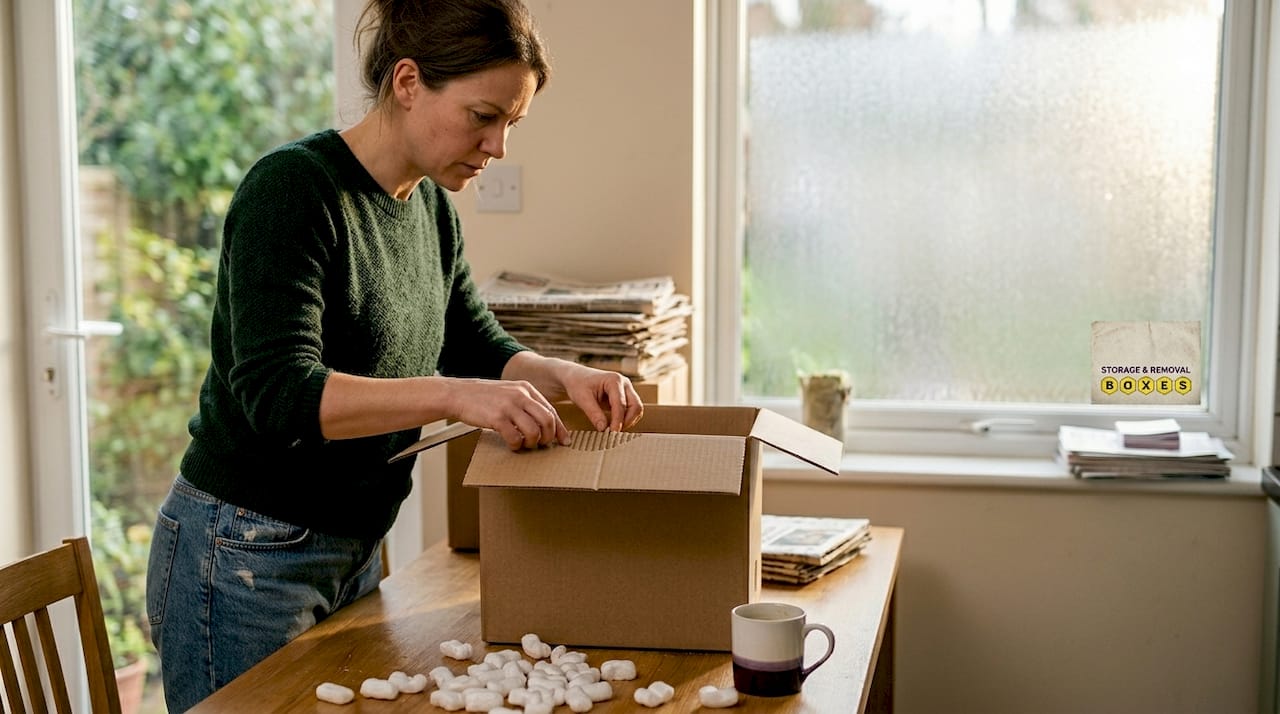
Here is a direct comparison to help you decide:
| Feature | Single wall box | Double wall box |
|---|---|---|
| Construction | One fluted layer | Two fluted layers |
| Strength | Moderate | High |
| Best for | Clothing, books, light kitchenware | Glassware, electronics, heavy items |
| Weight capacity | Up to around 20 kg | Up to around 30 kg or more |
| Stackability | Limited | Excellent |
Choosing the right box is a straightforward process when you follow these steps:
- Weigh the items you plan to pack in each box before selecting a size.
- Identify fragility. If anything in the box can break, move up to a double wall option.
- Check the BCT rating to confirm the box can handle stacking pressure.
- Look for reinforced corners on double wall boxes, as these add further resistance to impact during loading and unloading.
- Match the box size to the load. A large box filled with heavy items is harder to carry safely and puts more stress on the base.
As double-walled storage boxes are recommended for heavy or fragile items, it is worth investing in the right grade from the outset rather than repacking damaged goods later. A heavy-duty double walled box is particularly useful for items like monitors, kitchen mixers, or collections of framed photographs.
Pro Tip: For electronics or glassware, double-walled boxes offer superior protection. Pair them with bubble wrap or foam inserts for an additional layer of cushioning that standards alone cannot provide.
Standard sizes and labelling: how to match your belongings to the right box
Once the right materials are selected, matching the correct size and ensuring proper labelling are crucial for an efficient and safe move. Standard box sizes in the UK are typically described as small, medium, and large, with dimensions that have been refined over many years of practical use by removal companies.
| Box size | Typical dimensions (inches) | Recommended contents |
|---|---|---|
| Small | 18 x 18 x 10 | Books, DVDs, heavy kitchenware, tools |
| Medium | 18 x 18 x 12 | Pots, pans, toys, small appliances |
| Large | 18 x 18 x 24 | Bedding, pillows, lampshades, clothing |
| Tall/wardrobe | 18 x 18 x 30+ | Hanging clothes, curtains, bulky items |
The logic behind these sizes is not arbitrary. Small boxes are designed to hold dense, heavy items without becoming impossible to lift. Large boxes are intended for light, bulky goods. Mixing this up is one of the most common mistakes movers make, and it leads to boxes that are either dangerously heavy or structurally stressed from overpacking.
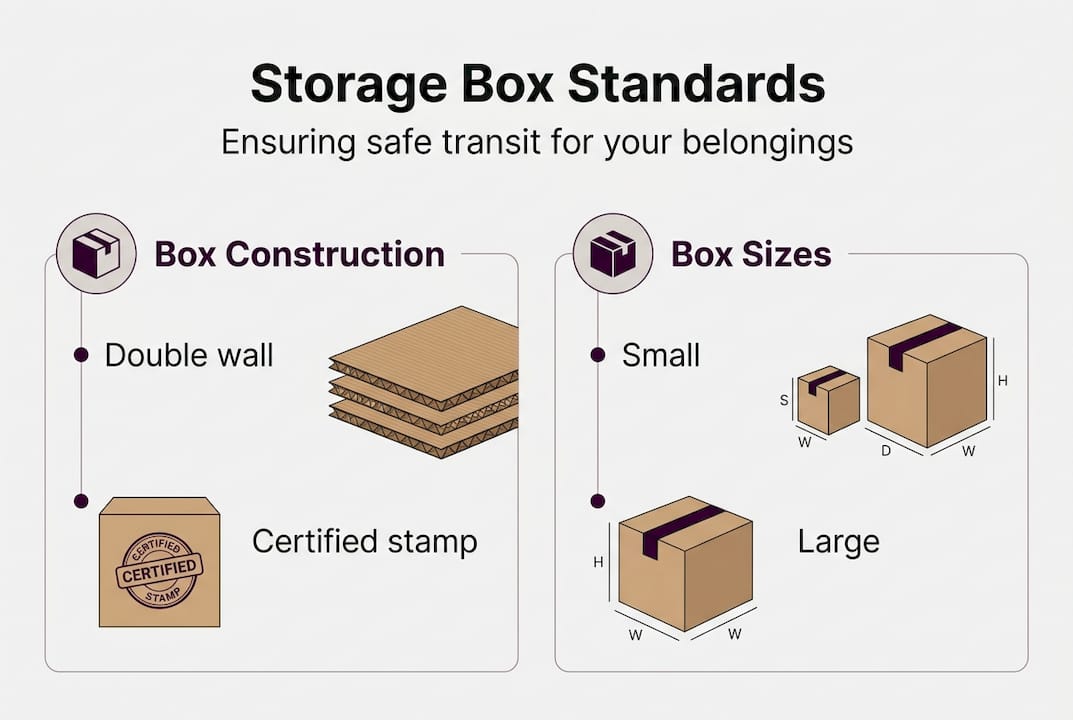
Labelling is the other half of the equation. Industry standards require clear labelling for safety, stacking order, and inventory management. A well-labelled box tells everyone handling it exactly what is inside, which room it belongs to, and whether it needs special care.
The most effective labelling practices include:
- Writing the destination room on at least two sides of the box
- Marking fragile in large, clear letters on the top and sides where relevant
- Noting the general contents so you can find items without opening every box
- Using numbered labels to cross-reference an inventory list
Properly labelled and standard-sized boxes speed up the moving process by up to 20%, which on a full house move can save considerable time and reduce the risk of items going missing. Browsing cubed cardboard boxes or storage box packs can help you find the right combination of sizes for your specific move.
Packing, stacking, and transport: applying standards for maximum safety
With your selected boxes prepared and labelled, applying correct packing and stacking techniques completes the safe moving process. Standards do not just govern the box itself; they inform how you use it.
Follow these steps when packing:
- Line the base of every box with a layer of bubble wrap or crumpled paper before adding items.
- Place the heaviest items at the bottom and lighter items on top to keep the centre of gravity low.
- Fill all gaps with packing paper or foam to prevent items shifting in transit.
- Do not overfill. The lid should close flat without bulging, which indicates the box is at capacity.
- Seal every box with strong packing tape applied in a H-pattern across the top and base.
Common mistakes that undermine even the best boxes include:
- Leaving empty space inside, which allows items to move and collide
- Stacking heavy boxes on top of lighter, less rigid ones
- Using boxes that have been previously wet or damaged
- Ignoring the stacking arrows or weight indicators printed on certified boxes
“Correct stacking technique prevents crushing and makes boxes safer to transport. Always stack heaviest boxes at the base and work upward by weight, never by convenience.”
As correct stacking technique prevents crushing and makes boxes safer to transport, the order in which you load a van matters as much as the quality of the boxes themselves. For smaller or more specialist items, a slim postal box or corrugated packaging solution can protect awkward shapes that do not fit standard removal boxes.
Why using standardised boxes beats improvised solutions
There is a persistent belief that any sturdy-looking box will do the job. Experienced movers know this is not true, and the evidence from real moves bears it out consistently.
Grocery boxes and random packaging have unknown BCT ratings, inconsistent dimensions, and no certification. They may have been weakened by moisture, previous loads, or storage conditions you cannot assess. When they fail, they do not just inconvenience you; they can damage irreplaceable items and slow down your entire move.
Standardised boxes, by contrast, are predictable. You know exactly how much weight each one can carry, how high you can stack them, and how they will perform in a loaded van. That predictability is what essential storage solutions are built around, and it is why professional removal companies will not use anything else.
Most homeowners underestimate how much inconsistent box sizes affect a move. When boxes vary in dimension, they do not stack neatly, they waste space in the van, and they create unstable columns that shift in transit. Standardised sizes interlock. They fill a van efficiently and stay put.
The cost difference between certified removal boxes and free random boxes is smaller than most people expect, especially when you factor in the cost of replacing a broken television or a shattered set of dishes. Investing in quality, standardised boxes pays for itself in damage prevention, and it makes the physical work of moving considerably easier for everyone involved.
Explore quality, certified storage boxes for your move
Now that you understand what makes a storage box genuinely fit for purpose, choosing the right ones for your move becomes much simpler. You do not need to second-guess grades, sizes, or stacking limits when the products you buy have already been tested and certified to industry standards.
At StorageRemovalBoxes.co.uk, we stock a full range of double-walled, certified removal boxes to suit every room and every type of belonging. From tall double wall removal boxes for wardrobes and bulky items to the complete range of all removal boxes in every standard size, everything is built to perform under real moving conditions. If you want everything in one order, our moving kits bundle the right mix of box sizes with essential packing materials so you are ready to go from day one.
Frequently asked questions
What are the main industry standards governing storage boxes in the UK?
Most UK storage boxes follow BS EN ISO standards, which ensure strength, durability, and appropriate labelling for moving and transport. These standards cover BCT ratings, material grades, and structural integrity across all certified products.
Should I use single wall or double wall boxes for fragile items?
Double wall boxes are best for fragile items as they provide extra protection and meet higher industry standards. As double-walled boxes are recommended for heavy or fragile loads, they are the safer choice whenever breakage is a concern.
How does box labelling help with a smooth moving process?
Clear labelling speeds up sorting and unloading, prevents loss, and helps movers handle boxes according to industry safety guidelines. Properly labelled boxes can reduce move time by up to 20% and significantly lower the chance of items being misplaced.
How can I ensure my packed boxes comply with industry standards?
Choose certified boxes, pack items securely following weight limits, and label each box clearly as per moving guidelines. Applying correct stacking technique throughout loading and transport ensures your boxes perform as intended from collection to delivery.
Recommended
- Self storage packaging: protect your belongings in 2026
- Why use removal boxes for a safer, easier move in 2026
- 6 Essential Types of Storage Solutions for Safe Moving
- What Is Storage Removal Box? 5 Benefits for Safe Moves 2026
- America Conex | Shipping Containers For Sale | New & Used | Affordable Cheap With Fast Delivery
- Stap voor stap veulentransport: behoud >95% kwaliteit in 2026