Storage organisation tips for homes and families
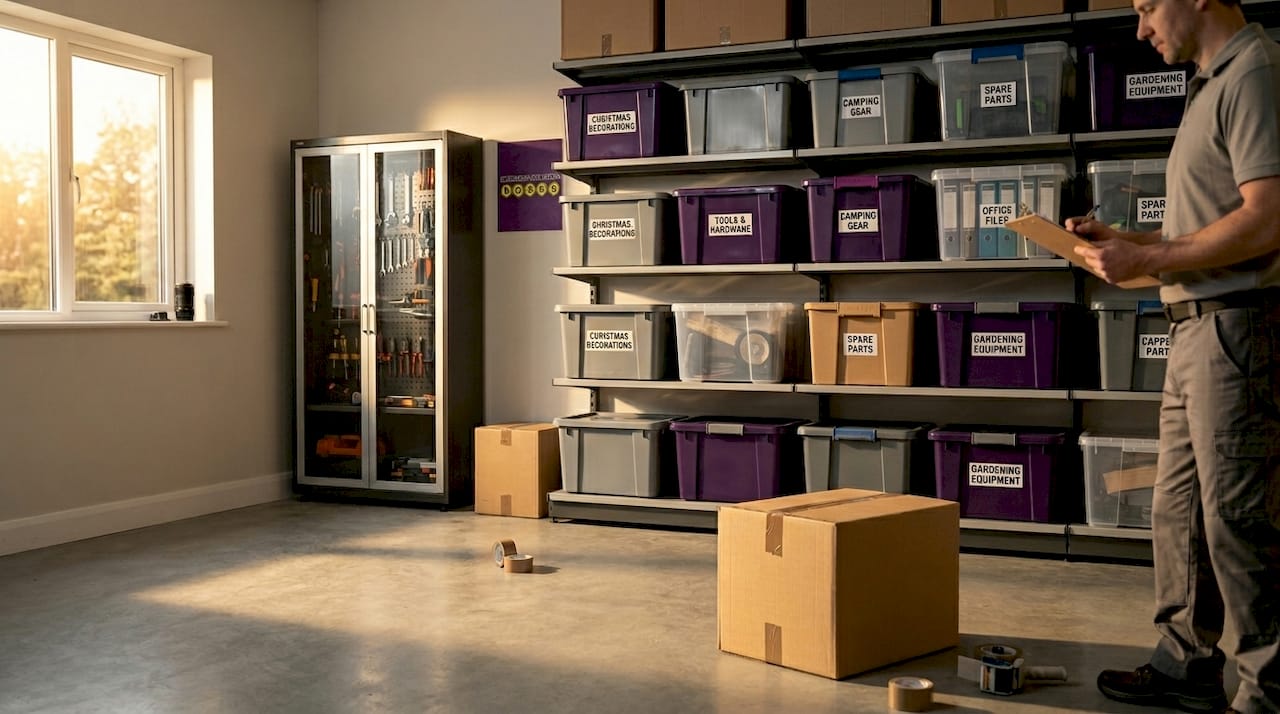
- Effective storage organization involves zoning spaces by usage and labeling with specific details to improve accessibility. Choosing environment-appropriate containers and maintaining clear walkways prevent clutter and prolong system longevity, while regular reviews help sustain order. Prioritizing practical retrieval and return ease over aesthetics ensures storage systems remain functional for everyday use.
Effective storage organisation is the practice of creating intentional, user-friendly systems that maximise space, reduce clutter, and make retrieval effortless. Most households treat storage as an afterthought, shoving items into cupboards and boxes without a plan. The result is wasted time, duplicated purchases, and spaces that feel permanently chaotic. The storage organisation tips in this guide draw on expert research from sources including BoxBuddy, HGTV, and IKEA to give you practical, zone-and-label-focused strategies that work for families and individuals alike.
1. Zone your storage space before you move a single box
Zoning is the single most important principle in any organised storage system. It means dividing your space into defined areas by category or frequency of use, so every item has a logical home and you never have to hunt through unrelated boxes to find what you need.
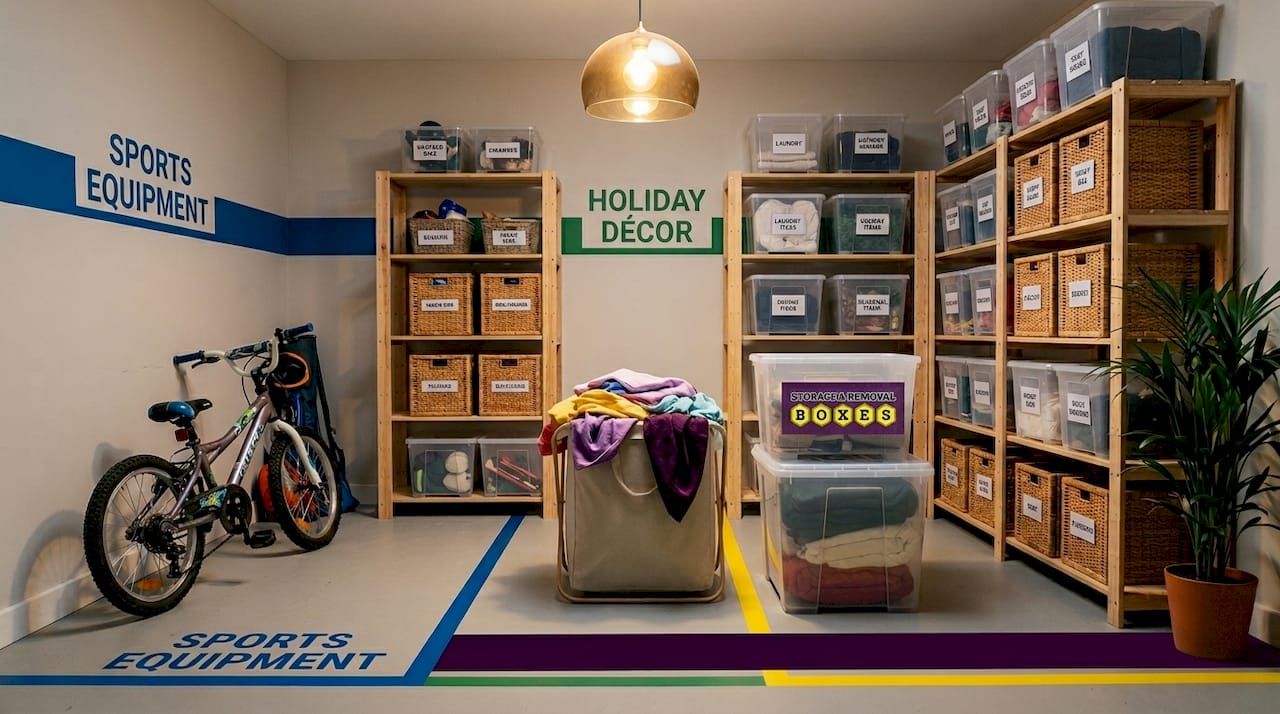
In a self-storage unit, the most effective approach uses an A, B, C zone model. Zone A sits near the entrance and holds items you access regularly. Zone B occupies the middle and contains seasonal or occasional items. Zone C, at the back, stores things you rarely need. This layout, recommended by BoxBuddy’s storage mapping guide, prevents the frustrating scenario where retrieving one item means moving twenty others.
The same logic applies at home. In a garage, keep gardening tools and sports equipment near the door. In a wardrobe, place everyday clothing at eye level and archive boxes on the top shelf. The Minima Method zone approach confirms that a zone-first layout prevents clutter from returning, because the boundaries themselves signal when something is out of place.
- Place high-frequency items within arm’s reach of the entrance or door
- Group by category first, then by access frequency within each category
- Avoid mixing zones, as category creep is the fastest way to undo a good system
- Leave a clear centre aisle of at least two to three feet in any storage unit or garage
Pro Tip: Sketch your space on paper before placing anything. Mark walkways first, then assign zones around them. Retrieval cost, not capacity, should drive every placement decision.
2. How clear labelling systems improve storage usability
Labelling is not just about knowing what is in a box. Done well, it reduces decision friction by matching the way people actually search for things, which is by location and purpose rather than strict category names.
A label that reads “under-sink cleaning supplies” is more useful than one that reads “cleaning.” A label that reads “kids’ winter coats, ages 5 to 8” is more useful than “clothes.” Specificity matters most for items you access infrequently, because vague labels force you to open every box before finding what you need. For high-churn areas like kitchen drawers, simpler labels work fine because you already know the contents through daily use.
- Use a label maker or permanent marker for boxes you plan to store long-term
- Write on painter’s tape for temporary or transitional storage, so labels are easy to update
- Add a zone prefix to each label, for example “Garage B: Camping” or “Loft C: Tax Records 2020 to 2023”
- Avoid decorative fonts that are hard to read at a glance
Label fatigue is real. If your system requires reading fifteen labels to find one item, the system is too complex. Keep the hierarchy to two levels: zone, then contents. Anything deeper becomes noise.
Pro Tip: Involve every family member in the labelling process. Label consistency across users is what keeps a system functional for years, not just weeks.
3. Choosing containers that match your environment
The container you choose determines whether your organisation system lasts six months or six years. Cardboard boxes are fine for short-term moves, but in garages, basements, and storage units, moisture and pests degrade cardboard, collapsing your system from the inside out.
For any space exposed to temperature changes or humidity, latching plastic bins are the correct choice. They stack reliably, protect contents from damp, and survive the kind of rough handling that comes with seasonal access. Heavy items belong on the floor or on low shelves. Lighter, bulkier items can go higher. This weight distribution prevents toppling and makes retrieval safer, particularly in garages where children may be present.
| Container type | Best use | Key advantage |
|---|---|---|
| Clear latching bin | Garage, basement, storage unit | Visible contents, moisture resistant |
| Opaque latching bin | Loft, archive storage | Reduces visual noise, durable |
| Cardboard removal box | Short-term moves, dry indoor spaces | Lightweight, recyclable, stackable |
| Modular drawer organiser | Kitchen, bathroom, desk drawers | Customisable divisions, easy to rearrange |
| Open shelf basket | Living room, bedroom, hallway | Quick access, decorative option |
Clear containers work best for high-churn categories where you are still learning the system, because you can scan contents without opening anything. Opaque bins reward strong labelling and reduce the visual clutter that makes a space feel overwhelming. IKEA’s LÅDMAKARE range demonstrates this balance well, mixing open shelves with sliding doors to display some items and conceal others.
Pro Tip: Do not standardise on one container type throughout your home. Match the container to the environment and access pattern. A latching bin in the garage and a wicker basket in the living room can both be part of the same organised system.
4. How to organise drawers and smaller storage spaces
Drawers are where organisation systems most often collapse. Without intentional division, a kitchen drawer becomes a jumble of batteries, takeaway menus, and mystery cables within a fortnight of being sorted.
The fix is physical division, not willpower. Modular drawer organisers from brands such as Joseph Joseph or IKEA’s SKUBB range let you subdivide a drawer into sections that match your actual items. HGTV experts note that daily-use items placed closest to the front of a drawer, with less-used items behind, cuts the time spent rummaging by a significant margin. The same principle applies to bathroom drawers, where a divided tray keeps toothpaste, floss, and cotton buds separated and immediately accessible.
- Keep one category per section, never mix unrelated items in the same compartment
- Leave at least one empty section in every drawer. Empty space helps systems breathe and prevents overflow from creeping in
- Use shallow trays for flat items like cutlery and stationery, deeper sections for bulkier items
- Avoid storing items in drawers that belong in a dedicated box or bin elsewhere
The discipline here is limiting what goes in. A drawer that holds twenty items stays organised. A drawer that holds forty becomes a storage black hole regardless of how many dividers you add.
5. Decluttering tactics that keep your storage effective long-term
A well-organised storage space does not stay that way on its own. Without a maintenance habit, even the best system degrades within a few months. The key is building review triggers into your routine rather than relying on motivation.
Use duplication as your primary signal. When you find two of the same item in different zones, that is a sign the system needs a review. When a bin overflows, that is a sign the category has grown beyond its allocated space. Neither problem requires a full reorganisation. Both require a ten-minute adjustment.
- Schedule an annual sort of your storage unit or loft, ideally before a seasonal change when you are already accessing those spaces
- Build a flex zone into your layout, a small designated area for transitional items that do not yet have a permanent home
- Involve the whole family by using labels and containers simple enough for everyone to understand and return items correctly
- When a category grows, expand the zone rather than letting items spill into adjacent zones
- Donate or discard before adding new items, treating storage capacity as a fixed resource
The zone-first approach works precisely because zones create visible boundaries. When a zone is full, you are forced to make a decision rather than simply pushing things further back. That decision point is where clutter is stopped before it starts. For families managing a move alongside a reorganisation, the moving tips for storage users guide from Storageremovalboxes covers how to integrate these habits into a relocation plan.
6. Applying the centre aisle rule in storage units and garages
Skipping a centre aisle in a storage unit is the single most common and most costly mistake. Moving 20 or more boxes to retrieve one item from the back of a unit can cost one to two hours of labour per visit. That time adds up quickly across a year of seasonal access.
The rule is straightforward. Leave a clear walkway of two to three feet running from the entrance to the back of the unit or garage. Place shelving units and stacked bins along the walls. This layout means you can walk directly to any zone without disturbing anything else. It also makes it far easier to spot when something is out of place.
In a garage, the same principle applies. A 2026 guide from Better Homes and Gardens recommends storing heavy items low, using vertical wall space for tools and equipment, and keeping the floor clear of anything that does not need to be there. The floor is a retrieval route, not a storage surface.
For anyone managing a storage unit alongside a house move, the self-storage best practices guide from Storageremovalboxes covers layout planning in detail, including how to map a unit before loading it.
7. Balancing aesthetics with function in home storage
Visible storage, such as open shelving in a kitchen or a wardrobe without doors, looks appealing in photographs but creates a maintenance burden in real life. Every item on an open shelf is a decision about whether it looks tidy enough to be seen. That is a significant cognitive load to add to a storage system.
The practical solution is to mix concealed and visible storage deliberately. Wirecutter recommends specialist closet organisers that combine visible racks for everyday items with hidden storage for things you access less often. This prevents wardrobes and closets from becoming clutter catch-alls while still giving you the visual satisfaction of an ordered space.
Sustainable storage systems share one quality: they are pleasant to use. When putting something away feels easy and the result looks good, people actually do it. That is the real goal of any home storage solution. For guidance on choosing the right containers for different room types, the types of storage solutions guide from Storageremovalboxes is a practical starting point.
Key takeaways
Effective storage organisation depends on zoning, labelling, and container choice working together as a system rather than as isolated fixes.
| Point | Details |
|---|---|
| Zone before you store | Divide space by access frequency before placing any item, using A, B, C zones for storage units. |
| Label with specificity | Write location and purpose on every label, not just a broad category name. |
| Match containers to environment | Use latching plastic bins in garages and basements; reserve cardboard for dry, short-term use only. |
| Leave empty space | Empty space in drawers and flex zones prevents overflow and keeps systems functional over time. |
| Build in review triggers | Use duplication and overflow as signals to adjust zones, not as reasons to start from scratch. |
Why I stopped trying to make storage look perfect
The most organised storage space I have ever seen belonged to a family of five with three children under ten. It was not beautiful. The bins were mismatched, the labels were written in marker on masking tape, and there was a dedicated “not sure yet” box near the garage door. But every family member could find anything in under a minute, and more importantly, they could put things back correctly without being reminded.
That experience changed how I think about storage organisation entirely. The goal is not a system that looks good in a photograph. The goal is a system that works after other people use it, repeatedly, without supervision. Aesthetics matter only insofar as a pleasant system encourages people to maintain it. Beyond that, they are a distraction.
The advice I give now is to design for your worst day, not your best intentions. On a tired Tuesday evening, will you actually open three nested containers to put away the scissors? Probably not. But if the scissors have a labelled slot in a drawer organiser near where you use them, you will. That is the difference between a system that lasts and one that collapses by February.
Prioritise retrieval speed and return ease above everything else. The rest follows.
Get the right boxes and labels for your storage system

A good organisation system is only as strong as the materials holding it together. Storageremovalboxes supplies large double-wall removal boxes built to stack safely and withstand the weight of long-term storage, making them a reliable choice for loft, garage, and self-storage use. For labelling, the box marker pen from Storageremovalboxes writes clearly on cardboard and plastic, so your labels stay legible for years. Browse the full range of packing materials for 2026 to find everything you need in one place, from bubble wrap to moving blankets, all available with nationwide UK delivery.
FAQ
What is the most effective way to organise a storage unit?
Divide the unit into A, B, and C zones by access frequency, and leave a clear centre aisle of two to three feet. Placing frequently needed items near the entrance and rarely used items at the back reduces retrieval time significantly.
Should I use clear or opaque storage bins?
Clear bins work best for high-churn categories where you are still learning the system, as you can scan contents without opening them. Opaque bins suit stable, well-labelled categories and reduce visual clutter in visible storage areas.
How often should I declutter my storage spaces?
An annual review, ideally timed to a seasonal change, is the minimum for most households. Use overflow and duplication as signals that a zone needs adjusting between scheduled reviews.
How do I stop drawers from becoming cluttered again?
Use modular drawer organisers to create fixed sections for each category, and leave at least one empty section to absorb new items without disrupting the system. Limiting the total number of items stored in a drawer is more effective than adding more dividers.
What containers should I avoid in a garage or basement?
Cardboard boxes degrade quickly in moisture-prone environments, as damp and pests break them down and undermine the organisation system. Latching plastic bins are the correct choice for garages, basements, and any space with temperature fluctuations.