The complete moving box checklist for a stress-free UK move
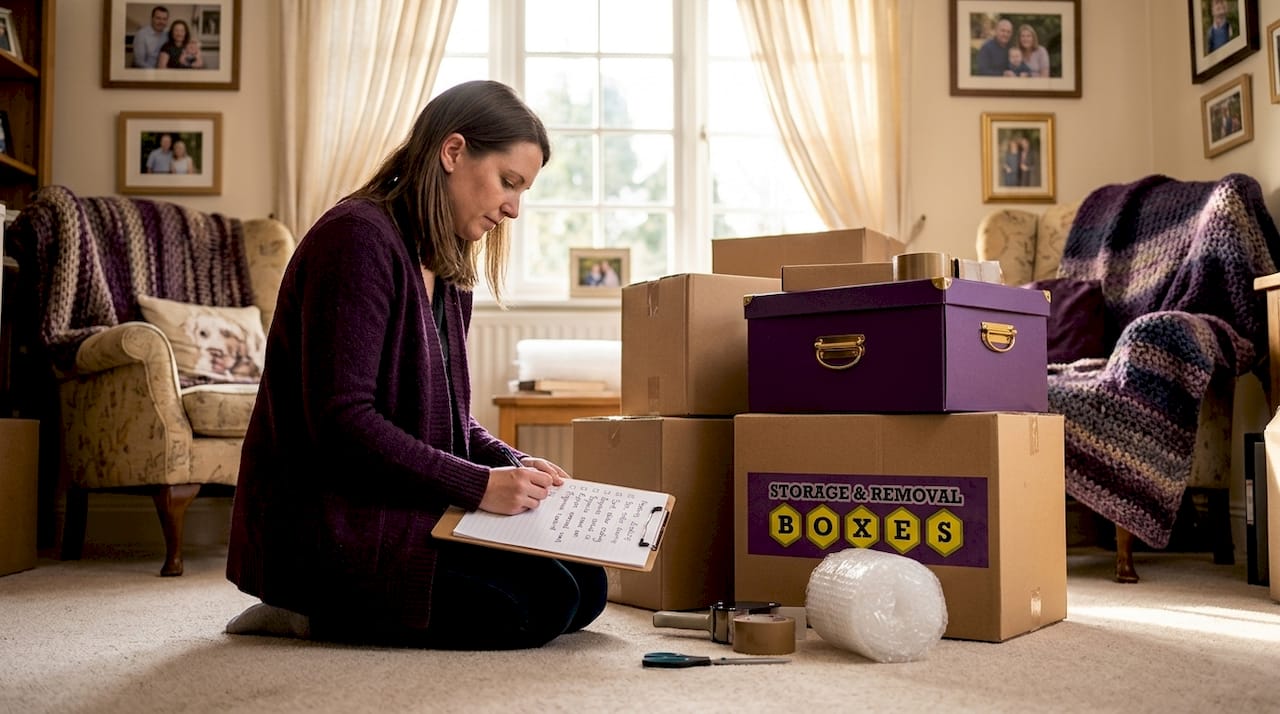
- Moving house is one of the most stressful events, mainly due to disorganized packing that can damage belongings and cause chaos. A well-planned, room-by-room moving box checklist alongside the right supplies ensures a systematic approach, protecting items and saving time. Combining logistical packing strategies with thorough administrative updates guarantees a smooth transition and peace of mind during your move.
Moving house is consistently ranked as one of the most stressful life events a person can face, and a large part of that stress comes down to disorganised packing. Boxes mislabelled, essentials buried in the removal van, and fragile items wrapped in nothing but hope — these are the hallmarks of a move gone wrong. Whether you’re a first-time buyer packing up a studio flat or a family of four leaving a three-bedroom semi, a well-structured moving box checklist is the single most effective tool for protecting your belongings, your sanity, and your time on moving day.
Key Takeaways
| Point | Details |
|---|---|
| Box planning is crucial | Choosing the right mix of box sizes and labelling by room prevents stress and damage. |
| Essentials box is a lifesaver | Keeping vital items separately accessible avoids panic and confusion on moving day. |
| Inventory lists reduce mistakes | A tick-off list ensures nothing gets left behind across packing, loading, and unloading. |
| Admin and property checks matter | Final meter readings, property photos, and address updates are critical for a smooth handover. |
| Combining logistics with admin wins | The best moves blend solid packing tactics with smart preparation and notifications. |
How to plan your moving box checklist
A checklist without a plan is just a list. To make it genuinely useful, you need to build it around the logic of how items are packed, moved, and unpacked. The room-by-room approach is the most effective method, and it works for moves of any scale.
Here’s how to build your plan from scratch:
- Walk through every room and mentally group items by fragility, weight, and frequency of use.
- Assign box sizes logically. As the moving house packing checklist advises, use small sturdy boxes for heavy or dense items and larger boxes for lighter, bulkier ones. This prevents back injuries and box collapse during transport.
- Create a room-by-room box count. Before you pack a single item, estimate how many boxes each room will need. This prevents you running out of supplies halfway through.
- Label each box clearly with both the destination room and a brief contents summary, as labelling moving boxes efficiently makes unpacking significantly faster and less chaotic.
- Maintain an inventory or tick-off list. Either a simple spreadsheet or a written log works well. Assign each box a number, and record what’s inside it.
- Pack non-essential items first. Books, off-season clothing, and decorative items should be boxed weeks before moving day.
Your UK moving house checklist should tie directly into this packing plan. Think of them as two halves of the same system, not separate tasks.
Pro Tip: Give each room its own dedicated list and set a target box count before you start. When you hit that number, it’s a clear signal that the room is ready. Anything over the count means you’ve probably added clutter you don’t need to take with you.
Essentials for your moving boxes: packing supplies and materials
With your checklist structure clear, it’s time to assemble the right supplies for a smooth packing experience. Having the correct materials to hand before you begin saves enormous amounts of time and prevents panic-buying the night before the move.
Here are the core supplies every mover needs:
- Double-walled cardboard boxes in small, medium, and large sizes
- Bubble wrap for fragile items such as glassware, ceramics, and mirrors
- Packing paper for wrapping dishes, filling void spaces, and layering between items
- Strong packing tape (at least 50mm wide) with a tape gun for speed
- Permanent markers in black and red for labelling
- Pre-printed labels or sticky notes for quick room identification
- Stretch wrap for securing drawers, wrapping furniture, and bundling loose items
- Foam corner protectors for picture frames, TVs, and furniture edges
- Moving blankets for sofas, white goods, and wooden furniture
Established UK packing guidance recommends combining protective materials, strong tape, and a clear marking system with an inventory process to make sure nothing gets left behind. This is particularly important for larger homes where it’s easy to lose track of individual items across multiple rooms.
| Material | Best used for | Cost efficiency |
|---|---|---|
| Bubble wrap | Fragile items, glassware, ceramics | Medium, reusable |
| Packing paper | Dishes, filling gaps, wrapping ornaments | High, versatile |
| Stretch wrap | Furniture, bundling, securing drawers | High, fast to apply |
| Foam protectors | Electronics, picture frames, mirrors | Medium, targeted use |
| Moving blankets | Large furniture, white goods | High, reusable many times |
The types of removal boxes you choose make a genuine difference to the safety of your belongings in transit. Double-walled boxes are worth the slightly higher cost because they resist crushing when stacked, which is exactly what happens in a removal van.
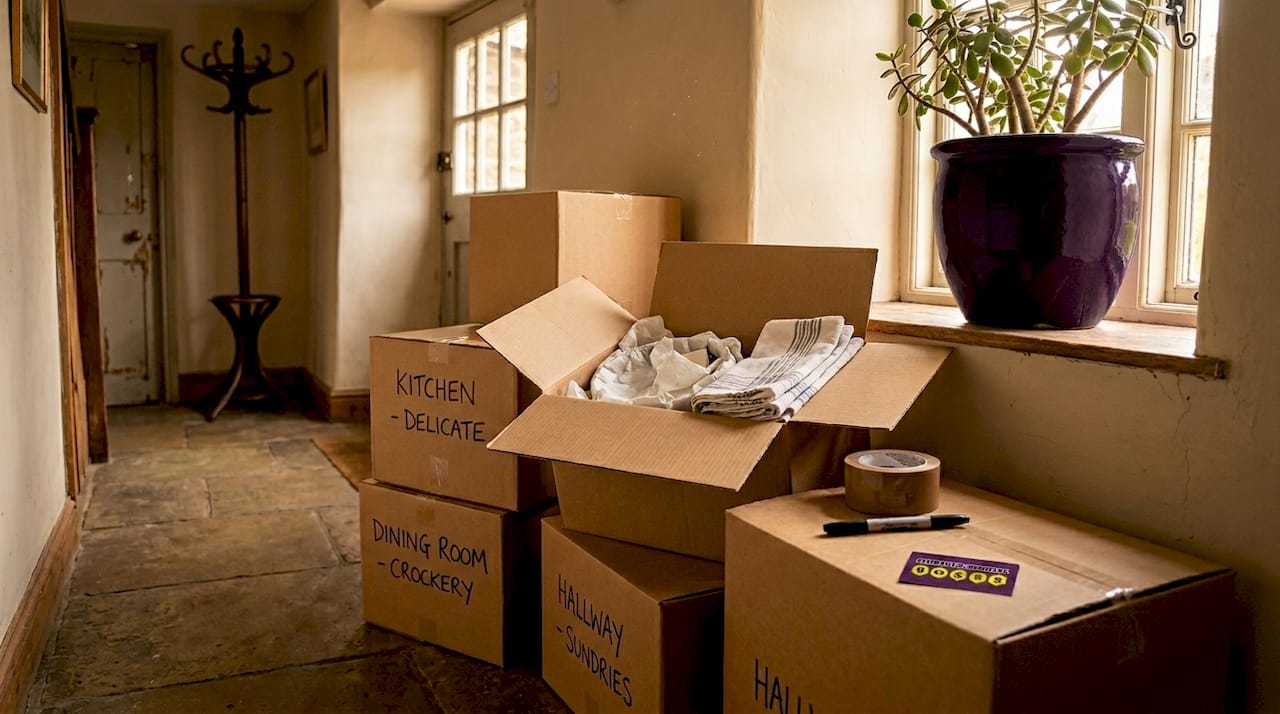
Pro Tip: Don’t overlook household items as free packing materials. Towels, duvets, pillowcases, and jumpers are excellent padding for fragile items and reduce the total amount of bubble wrap you need to buy. Pack them around delicate objects and you save money while also filling those items’ boxes more efficiently.
For an honest comparison of professional packing vs DIY, it’s worth knowing that most movers who pack themselves save a significant amount of money, provided they use quality materials and follow a systematic approach.
Room-by-room moving box checklist
Having gathered your supplies, here’s how to tackle each part of your home systematically and efficiently.
Kitchen
- Plates, bowls, and mugs: wrap individually in packing paper, pack in medium boxes
- Glasses and stemware: wrap in bubble wrap, pack upright in small boxes
- Pots, pans, and baking trays: nest together, pad with packing paper, medium boxes
- Small appliances (toaster, kettle): original boxes if available, otherwise medium with bubble wrap
- Pantry items: small boxes only, check for spills and seal jars with cling film
Bedrooms
- Clothing: use wardrobe boxes for hanging items, large boxes for folded
- Bedding and duvets: large boxes or vacuum storage bags to compress volume
- Books: small boxes only, books are heavy and damage boxes when overfilled
- Personal electronics: original packaging where possible, otherwise bubble wrap in medium boxes
Bathroom
- Toiletries: small boxes, seal liquids in zip-lock bags inside
- Towels: double as packing material for fragile bathroom items
Living room
- Books and DVDs: small boxes
- Cushions and throws: large boxes, lightly packed
- Ornaments and picture frames: individual bubble wrap, foam corners, medium boxes
- Electronics and cables: label cables before disconnecting, medium boxes
Storage areas and garage
- Tools: small and medium boxes, wrap sharp items carefully
- Garden equipment: disassemble where possible, larger boxes or wardrobe boxes
Browse removal packs and kits to find pre-curated sets that include the right mix of box sizes for different home types, saving you the time of working out quantities from scratch.
| Room | 2-bed flat (box count) | 3-bed house (box count) | Recommended sizes |
|---|---|---|---|
| Kitchen | 8 to 12 | 12 to 18 | Small, medium |
| Bedrooms | 10 to 15 | 18 to 28 | Small, medium, large, wardrobe |
| Bathroom | 2 to 4 | 4 to 6 | Small |
| Living room | 6 to 10 | 10 to 16 | Small, medium, large |
| Storage/garage | 4 to 8 | 8 to 15 | Medium, large |
| Total estimate | 30 to 49 | 52 to 83 | Mixed |
As the moving house packing checklist recommends, always label every box by destination room and contents before it leaves the house. It takes thirty seconds per box and saves hours of confusion at the other end.
Moving day and day-one essentials box
Beyond room-by-room packing, there’s one special box no mover should overlook: your immediate essentials for the first few hours in your new home.
This single box can be the difference between a chaotic first night and a manageable one. Pack it last, load it last into your own car rather than the removal van, and open it first when you arrive.
What to include in your day-one essentials box:
- Kettle, mugs, teabags, coffee, and milk (UHT milk avoids the fridge issue)
- Bedding and pillows for one night, or a sleeping bag
- Toiletries including toothbrush, toothpaste, soap, and toilet roll
- Phone chargers and laptop charger clearly labelled
- Basic cleaning supplies including cloths and multi-surface spray
- First aid kit with paracetamol and plasters
- Important documents including tenancy agreements, mortgage paperwork, and IDs
- Children’s or pets’ essentials for immediate comfort on arrival
- A small amount of cash and your keys to the new property
- Snacks and any prescription medication
“A ‘moving day / day-one essentials box’ should be packed separately with items needed immediately on arrival — including bedding, toiletries, chargers, kettle and mugs, cleaning basics, first aid, and important documents — and kept accessible rather than in the removal van.” What to pack in your day-one moving box
The logic here is simple. Removal vans get unloaded in no particular order. If your essentials are buried inside one of fifty identical boxes, you will spend your first hour at a new home tearing tape off everything trying to find the kettle. That is not how anyone wants to start a new chapter.
For this box specifically, consider using a clearly coloured or distinctive box for your essentials so it stands out immediately at both ends of the journey. Reference the day-one essentials guidance for a full breakdown of items you might otherwise overlook.
Pro Tip: Write “OPEN FIRST” in large bold letters on every side of this box using a red permanent marker. Not one side. Every side. That way, regardless of how it’s set down, the instruction is visible to whoever’s unloading.
Key admin and property checks: beyond just boxes
Moving with peace of mind requires you to stay on top of vital admin and property condition tasks that go hand-in-hand with boxing up your life.
Most people think of moving as a purely physical activity. The boxes, the van, the unpacking. But the administrative side of a move can cause problems that linger for months if it’s neglected.
Follow these steps in order:
- Set up Royal Mail redirection at least two weeks before moving day. The change of address checklist recommends this as a safety net while you systematically notify every individual organisation.
- Notify key organisations promptly, including HMRC, DVLA, council tax, your utility providers, broadband supplier, GP, and dentist.
- Take photos of every room in your current property before you begin packing and again after cleaning. This is especially important for renters protecting their deposit.
- Locate all meters (gas, electricity, water) and take dated readings on the day you leave. Send these to your suppliers immediately.
- Document the condition of your new property when you arrive. Take timestamped photos before bringing in any furniture, and report any pre-existing damage in writing.
- Return all keys to agents or previous owners and get written confirmation of receipt.
The moving house checklist UK complete guide highlights that property condition documentation and meter readings are particularly important for UK rentals, where disputes over deposits remain common. Don’t leave yourself exposed.
For renters specifically, a rental property cleaning checklist is a useful companion document to work through before handing back the keys.
Pro Tip: Handle all your admin tasks in the week before moving day, not on the day itself. By moving day, your energy is depleted and your attention is on logistics. Completing admin early means nothing falls through the cracks when you’re exhausted.
Why the best moving box checklist blends logistics with admin
Most moving checklists fall into one of two camps. They’re either entirely focused on the physical mechanics of packing — box sizes, tape quantities, bubble wrap footage — or they’re broadly administrative, covering change of address forms and utility notifications. The honest truth is that neither type, on its own, is enough.
We’ve spoken with customers who packed immaculately. Every box was labelled, every fragile item was wrapped, and the removal van was loaded in perfect sequence. But they hadn’t redirected their post. Within a week, important correspondence had gone to the old address, including a council tax notice and a bank statement. Small administrative gaps caused disproportionate headaches.
The moving house checklist guidance from Uswitch makes this contrast clear: some resources focus heavily on packing mechanics, while others treat the move as a broader system encompassing property evidence and notifications. The most resilient movers combine both streams.
Think of it this way. Your packing plan is the tactical layer of your move. It handles the physical objects. Your admin plan is the strategic layer. It handles the systems your life depends on. Neglect either one and the move feels incomplete, even if the boxes arrived safely.
We believe the essential packing materials you choose are only as effective as the broader framework they sit within. A great packing job protects your belongings. A great admin process protects your continuity.
Get the right moving boxes and packing supplies for your UK move
Ready to put your checklist into action? The right supplies make all the difference between an efficient, stress-free move and a chaotic one.

At Storage Removal Boxes Ltd, we stock everything covered in this guide. From robust double-walled boxes in every size to bubble wrap rolls, packing paper, tape guns, foam protectors, and moving blankets, it’s all available in one place with nationwide delivery. You can explore moving box options to find the right sizes for each room, and shop bubble wrap to keep your fragile items protected throughout the journey. Whether you’re moving a one-bedroom flat or a large family home, our pre-packed removal kits take the guesswork out of quantities and ensure you have exactly what you need before moving day arrives.
Frequently asked questions
How many moving boxes do I need for a two-bedroom flat?
A typical two-bedroom flat requires between 25 and 40 boxes of mixed sizes, covering clothing, kitchenware, and general household items. As a practical packing guide notes, using a room-by-room approach with varied box sizes helps you estimate accurately.
What should I avoid packing in my moving boxes?
Avoid packing hazardous materials such as aerosols, flammable liquids, and batteries in bulk, as well as important documents, medication, or anything you’ll need immediately on arrival.
How can I make sure nothing is left behind during my move?
Use a tick-off inventory system, assigning a number to each box and recording its contents. Creating a list and ticking off items as you pack is the most reliable method for ensuring nothing is left behind.
Is a moving day essentials box really necessary?
Yes. An accessible essentials box prevents the chaos of searching through a van full of boxes for a toothbrush or charger. Pack it separately and keep it in your own car rather than the removal van.
Who do I need to notify about my change of address?
Set up Royal Mail redirection first, then notify HMRC, DVLA, council tax, utilities, broadband, your bank, and your GP or dentist as soon as possible before or after moving day.