The role of packaging in item protection: 2026 guide
TL;DR:
- Packaging acts as the main defense for products against physical, environmental, and handling risks during transit. It consists of three layers—primary, secondary, and tertiary—each serving a unique protective function to ensure products arrive intact. Selecting appropriate materials and designing packaging early in the product development process significantly reduces damage and costs.
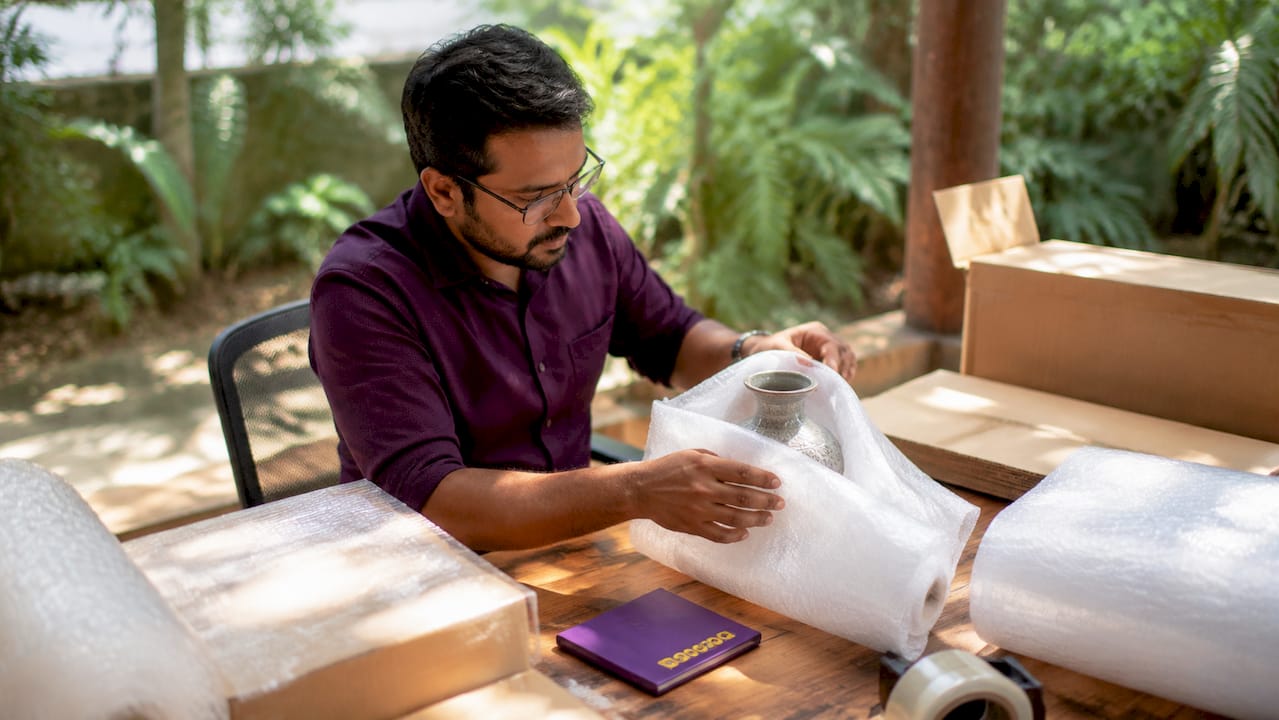
Packaging is the primary defence between a product and every physical, environmental, and handling risk it faces from the moment it leaves a shelf to the moment it arrives intact. The role of packaging in item protection spans three distinct engineering layers: primary, secondary, and tertiary. Each layer addresses a different category of risk, from direct contact damage to bulk transport stress. Understanding how these layers work together, which materials perform best for fragile goods, and how packaging engineering decisions made early in a product’s development determine whether items survive the journey is the difference between a successful delivery and a costly return.
What are the key layers of packaging and how do they contribute to protection?
Packaging divides into three levels, each with a distinct protective function. Treating them as a single system rather than separate choices is what separates effective protection from guesswork.
Primary packaging is the layer in direct contact with the product. It preserves the item’s condition, prevents contamination, and absorbs minor surface impacts. For fragile goods, this layer typically uses materials like expanded polyethylene (EPE) foam inserts, moulded pulp trays, or blister packs that conform to the product’s shape.
Secondary packaging groups primary packages together and provides structural stability. A corrugated cardboard box holding several individually wrapped ceramic mugs is a classic example. This layer absorbs compression forces during stacking and prevents individual items from colliding with each other.
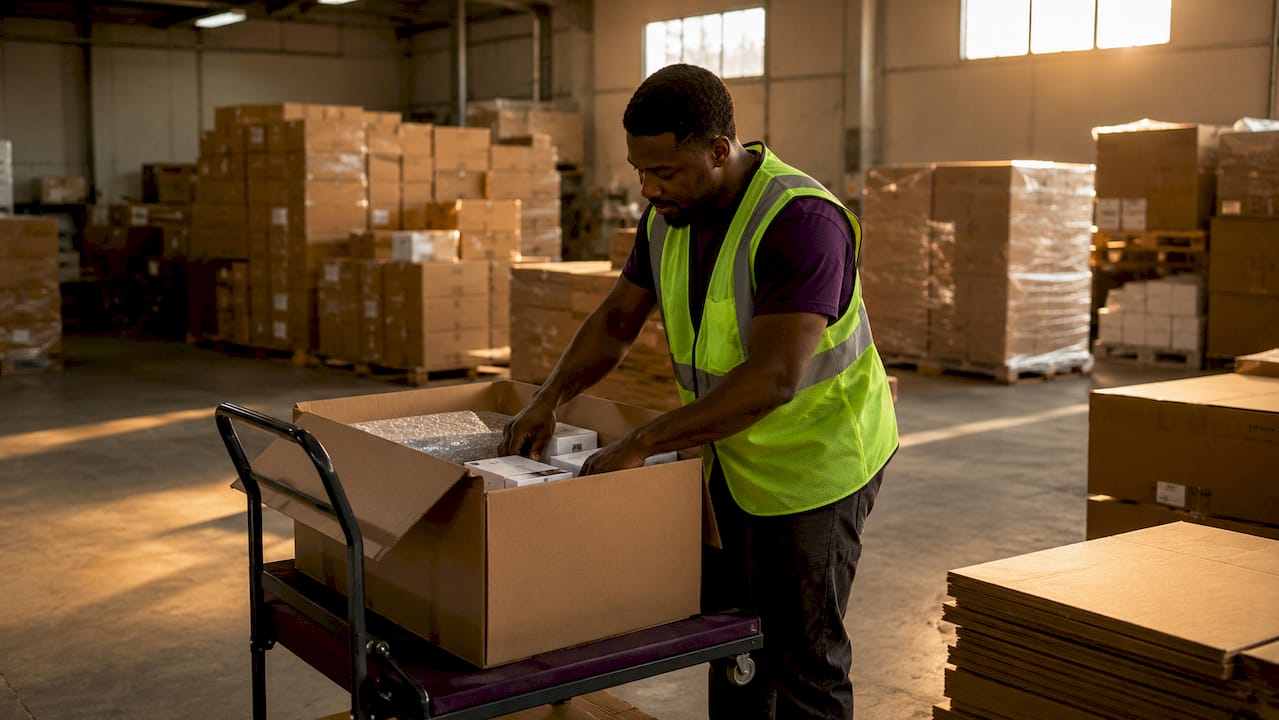
Tertiary packaging handles bulk consolidation for transport. Pallets wrapped in stretch film, shrink-wrapped pallet loads, and heavy-duty corrugated transit cases all fall into this category. This layer takes the brunt of forklift handling, warehouse stacking, and long-distance freight movement.
The three layers work together as a system. A weakness in any single layer transfers stress to the others. A fragile ceramic piece with excellent EPE foam primary packaging but placed in a flimsy secondary box will still arrive cracked if the secondary layer collapses under warehouse stacking pressure. Understanding packaging terminology helps both individuals and businesses make informed choices at each level.
Which packaging materials best protect fragile items and why?
The choice of packaging material determines how well a product survives impact, vibration, moisture, and temperature change. No single material excels at everything. The art lies in matching material properties to the specific risks a product will face.
| Material | Key protective property | Best suited for | Trade-off |
|---|---|---|---|
| Expanded polyethylene (EPE) foam | Multi-impact cushioning, moisture resistance | Electronics, glassware, ceramics | Higher cost than bubble wrap |
| Bubble wrap | Single-impact cushioning, lightweight | Books, small household items | Degrades after first impact |
| Kraft paper | Void fill, surface scratch prevention | Irregular shapes, general goods | Minimal shock absorption |
| Corrugated board | Compression strength, structural support | Outer boxes, stacking loads | Heavy when wet |
| Hybrid fibre-polymer systems | Moisture barrier combined with structural strength | Perishables, high-value electronics | More complex to recycle |
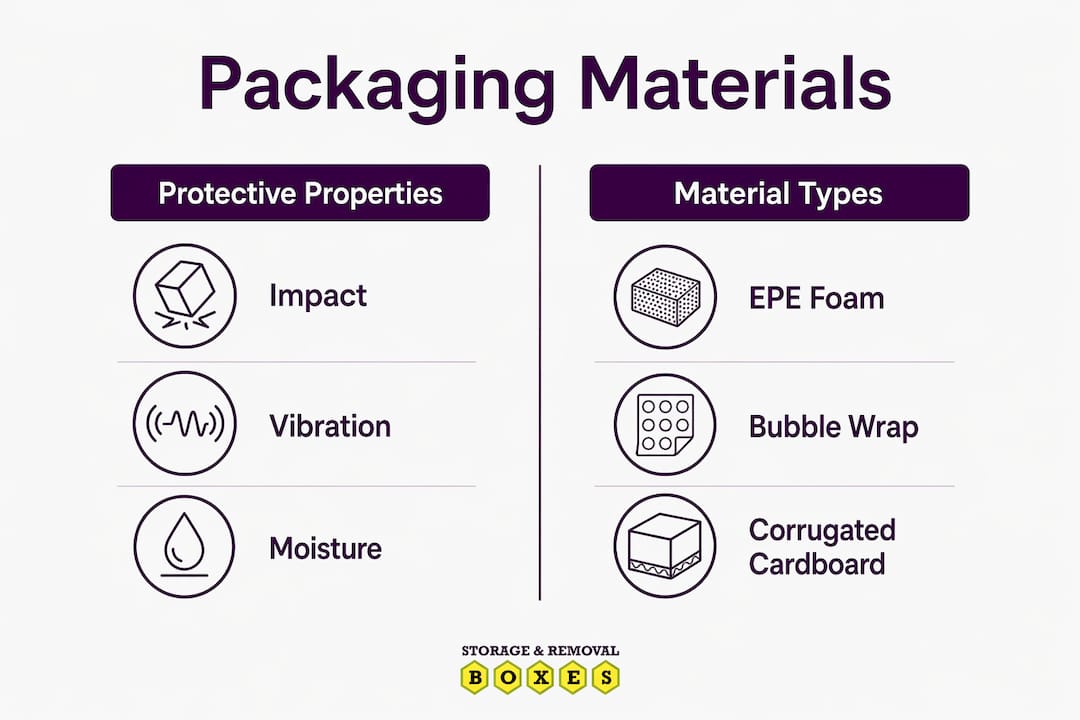
EPE foam outperforms bubble wrap for fragile items because it cushions across multiple impacts rather than just one. Bubble wrap’s air pockets collapse on first compression and offer little protection thereafter. EPE foam also resists moisture, which matters when goods pass through cold storage or humid loading bays.
Closed-cell EPE foam is economically justified for products valued above £40. Below that threshold, bubble wrap or kraft paper void fill often provides sufficient protection at lower cost. The decision is not purely about material performance. It involves balancing protection, cost, and sustainability simultaneously.
Hybrid fibre-polymer systems are gaining ground in 2026 because they combine the structural strength of corrugated fibre with the moisture barrier properties of polymer coatings. This matters for items shipped through multiple climate zones or stored in facilities without climate control.
Pro Tip: For glassware and ceramics, use EPE foam sheets to wrap each piece individually before placing it in a double-walled corrugated box. Fill any remaining void with kraft paper rather than leaving empty space, since empty space allows items to shift and collide during transit.
You can also explore eco-friendly bubble wrap options if you want to balance protection with environmental responsibility without compromising on cushioning performance.
How does packaging design engineering influence the effectiveness of item protection?
Transport damage rarely results from a single event. It accumulates from packaging engineering decisions made weeks or months before a product ships. Treating packaging as a logistical afterthought rather than an engineering discipline is the single most common cause of preventable product damage.
Packaging engineering must begin during the product development phase, with a dedicated budget. When packaging is designed after the product is finalised, engineers are forced to work around constraints rather than designing protection from the ground up. The result is packaging that fits the product’s shape but fails to address its specific vulnerabilities.
Key risks that packaging engineering must address include:
- Vibration fatigue: Repeated low-level vibration during road or air freight causes cumulative micro-damage to fragile components, even when no single impact is severe enough to cause visible breakage.
- Compression creep: Stacked boxes exert sustained pressure on lower layers. Packaging materials compress over time, reducing cushioning effectiveness.
- Moisture ingress: Humidity and condensation degrade both the packaging structure and the product inside, particularly for electronics and wooden items.
- Electrostatic discharge: Sensitive electronics require more than standard packaging. Anti-static pink bags block internal charge buildup but do not shield against external static fields. Metal-layer shielding bags are required for true electrostatic protection.
Packaging that meets generic compliance standards can still fail in real supply chain conditions. A box that passes a standard drop test may collapse under the specific stacking configuration used in a particular warehouse. Testing must replicate actual conditions, not just tick regulatory boxes.
Pro Tip: Before committing to a packaging design for a fragile product, run it through your actual supply chain rather than a laboratory simulation. Ship a sample batch through your real logistics route and inspect every item on arrival. This reveals failure points that standardised tests miss.
For a deeper look at how industry standards apply to real packing decisions, the 2026 industry standards guide from Storageremovalboxes covers the key benchmarks worth knowing.
What practical strategies can individuals and businesses adopt to protect items effectively?
Effective item protection methods do not require expensive materials or complex systems. They require matching the right materials and methods to the specific product, journey, and storage conditions involved.
Match packaging to product value and fragility. A £10 mug and a £500 camera lens need different levels of protection. Assess the product’s weight, fragility, and value before choosing materials. EPE foam inserts are appropriate for high-value fragile items. Kraft paper void fill suits lower-value goods with irregular shapes.
Use cushioning on all six sides. Impact can come from any direction during transit. Line the base, sides, and top of every box with cushioning material. A minimum of 5cm of cushioning between the product and the box wall is a widely accepted standard for fragile goods.
Add moisture barriers where needed. Silica gel sachets inside sealed poly bags protect electronics and wooden items from humidity during storage. This is particularly relevant for self-storage, where temperature fluctuations are common. The self-storage packaging guide from Storageremovalboxes covers this in detail.
Label boxes clearly and accurately. “Fragile,” “This way up,” and “Do not stack” labels change how handlers treat packages. Warning labels are low-cost and measurably reduce mishandling. A black marker pen used consistently across all boxes also helps removal teams and storage staff identify contents quickly.
Consolidate and palletise for bulk transport. Loose boxes shift during transit. Palletising and wrapping in stretch film prevents movement and reduces the risk of boxes toppling or being crushed under uneven loads.
Choose sustainable options where protection is not compromised. Recycled corrugated board, biodegradable bubble wrap, and paper void fill all offer credible protection for many product types. Sustainable packing materials have improved significantly and now match conventional options for most non-specialist applications.
Common pitfalls to avoid include reusing old boxes that have lost structural integrity, leaving void space inside boxes, using tape that fails in cold or humid conditions, and assuming that a product’s original manufacturer packaging is sufficient for secondary transport.
What emerging trends are shaping protective packaging in 2026?
The packaging industry in 2026 is moving away from single-material solutions towards systems that combine protection, sustainability, and brand communication simultaneously.
Hybrid fibre-polymer materials are the most significant material shift. By combining renewable fibre structures with thin polymer moisture barriers, manufacturers achieve protection levels previously only possible with fully plastic packaging, while reducing plastic content substantially. This matters for businesses facing tighter environmental regulations across the UK and EU.
Packaging now functions as a silent salesperson, influencing customer trust and purchase decisions before the product is even used. This has shifted packaging design from a purely functional discipline to one that integrates brand identity with protective engineering. The unboxing experience is now a measurable commercial factor.
Key trends shaping protective packaging in 2026:
- Renewable polymer coatings replacing traditional plastic laminates on corrugated boards
- Custom-moulded EPE foam inserts produced at lower cost through improved tooling
- Paper-based void fill systems replacing polystyrene peanuts in most standard applications
- Digital printing on corrugated boxes enabling fragile and handling instructions to be printed directly rather than applied as separate labels
- Increased regulatory pressure on single-use plastics driving adoption of biodegradable alternatives
For businesses and individuals moving or storing fragile items, staying current with protective packaging options means accessing better protection at comparable or lower cost than older material choices.
Key takeaways
Effective item protection requires treating packaging as an engineering system, not a logistical convenience, with material and design choices made early and tested against real conditions.
| Point | Details |
|---|---|
| Three-layer packaging system | Primary, secondary, and tertiary layers each address distinct risks and must work together. |
| EPE foam for fragile goods | Expanded polyethylene foam outperforms bubble wrap for items valued above £40 due to multi-impact cushioning. |
| Engineering decisions determine outcomes | Transport damage accumulates from early design choices, not single transit events. |
| Test in real conditions | Generic compliance standards do not guarantee protection across specific supply chains. |
| Sustainability and protection align | Hybrid fibre-polymer systems and biodegradable options now match conventional materials for most applications. |
Why packaging deserves more than an afterthought
I have seen the same mistake repeated across house moves, small business shipments, and commercial logistics operations. Someone spends months selecting the right product, then wraps it in whatever box is to hand and wonders why it arrives damaged. The financial cost is obvious. The reputational cost, particularly for businesses, is less visible but more lasting.
The insight that changed how I think about this came from understanding that damage is an engineering outcome, not bad luck. When a ceramic piece arrives cracked, the failure point was almost certainly the moment someone chose a single-walled box over a double-walled one, or skipped the foam insert to save £2. That decision, made weeks earlier, determined the outcome.
Packaging design is a strategic investment, not a cost to minimise. For businesses, the return on that investment shows up in lower return rates, fewer customer complaints, and stronger brand trust. For individuals moving home, it shows up in arriving at a new house with everything intact rather than spending the first week filing insurance claims.
My advice is to involve packaging decisions at the same stage you make product or logistics decisions. Do not treat it as the last step. The materials exist, the knowledge exists, and the cost difference between adequate and excellent packaging is rarely as large as people assume.
— Adrian
Ready to protect your items properly?
Whether you are moving home, packing for self-storage, or shipping fragile goods for your business, the right materials make the difference between items arriving intact and items arriving in pieces.
Storageremovalboxes stocks double-walled moving boxes, EPE foam protectors, bubble wrap rolls, warning labels, and complete packing materials for a safe move all in one place. The range covers everything from individual fragile items to full household removals, with nationwide delivery across the UK. If you need guidance on which materials suit your specific situation, the Storageremovalboxes team is available to help you choose correctly the first time.
FAQ
What is the role of packaging in item protection?
Packaging protects items by providing a physical barrier against impact, vibration, moisture, and handling stress during storage and transport. It operates across three layers: primary, secondary, and tertiary, each addressing different risk categories.
Which packaging material is best for fragile items?
Expanded polyethylene foam is the best choice for fragile items because it cushions across multiple impacts and resists moisture. It is particularly cost-effective for products valued above £40.
Does standard packaging compliance guarantee product safety?
No. Packaging can meet generic compliance standards and still fail in specific supply chain conditions. Testing must replicate the actual logistics route, stacking configurations, and environmental conditions the product will face.
What is the difference between anti-static and shielding packaging?
Pink anti-static bags prevent internal charge buildup but do not block external static fields. Metal-layer shielding bags are required to protect sensitive electronics from electrostatic discharge originating outside the package.
How do I choose between bubble wrap and EPE foam for moving?
Use bubble wrap for lower-value items and single-transit moves where cost is the priority. Choose EPE foam for high-value fragile items, repeated moves, or storage situations where moisture resistance matters.