Warning labels: a compliance guide for 2026

TL;DR:
- Warning labels must include six elements mandated by GHS standards to ensure safety and compliance. Regulatory frameworks like OSHA and CLP enforce strict matching of labels and safety data sheets, requiring immediate updates for any changes. Common mistakes include improper signal word use, unlabelled secondary containers, and missing supplier contact details, risking enforcement actions and safety hazards.
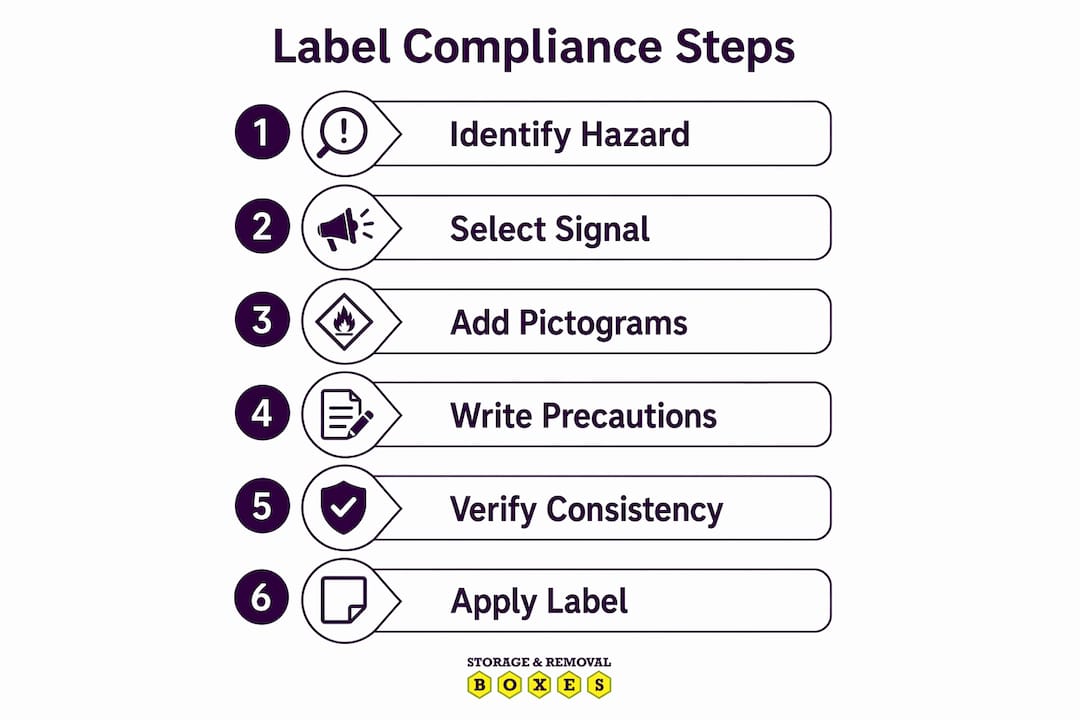
Warning labels are standardised notices attached to products or containers that communicate specific hazards and required safety actions clearly and immediately. Under the Globally Harmonised System of Classification and Labelling of Chemicals (GHS), adopted by OSHA and referenced across UK and EU frameworks, compliant hazardous labels require six elements: a product identifier, signal word, hazard statements, pictograms, precautionary statements, and supplier contact information. Getting these right is not optional. Missing even one element exposes businesses to regulatory fines, product recalls, and, most critically, preventable injury.
What must be on compliant warning labels?
A warning label is only legally valid when it contains all six GHS-mandated components. Each element serves a distinct function, and none can substitute for another.

| Element | Function | Example |
|---|---|---|
| Product identifier | Names the chemical or product | “Sodium Hypochlorite Solution” |
| Signal word | Indicates hazard severity | “Danger” or “Warning” |
| Hazard statements | Describes the specific risk | “Causes severe skin burns” |
| GHS pictograms | Visual hazard symbols | Flame, skull and crossbones, corrosion |
| Precautionary statements | Instructs on safe handling | “Wear protective gloves” |
| Supplier information | Contact details for the manufacturer or distributor | Company name, address, phone number |
The signal word deserves particular attention. “Danger” applies to high-severity hazards; “Warning” applies to lower-severity ones. Only one signal word should ever appear on a label, and it must be the most severe applicable. Placing both on the same label is a direct regulatory violation.
GHS pictograms are equally non-negotiable. These standardised symbols, defined by the United Nations GHS framework and adopted internationally, transcend language barriers so that hazard communication works even when workers do not share a common language. A flame symbol communicates flammability whether the reader speaks English, Polish, or Mandarin. That universality is precisely why the system exists.
Precautionary statements tell people what to do, not just what to fear. A label that says “Toxic if inhaled” without adding “Use only outdoors or in a well-ventilated area” leaves the reader with a problem and no solution. Both halves are required.
Pro Tip: When designing a label, draft the six elements separately before combining them. This forces you to verify each one is present and accurate before the label goes to print.
How do regulations influence warning label requirements?
Regulatory frameworks set the floor for what hazard labels must contain, and the consequences of falling short are real and well-documented.
The OSHA Hazard Communication Standard (HazCom 2012) aligned the United States with the GHS framework, requiring chemical manufacturers and importers to produce compliant labels and Safety Data Sheets (SDS). In the UK, the Classification, Labelling and Packaging (CLP) Regulation performs the same function, drawing directly from GHS principles. Both frameworks share a core requirement: the label and the SDS must tell the same story.
This is where the “Golden Thread” concept becomes critical. The Golden Thread principle requires that the product identifier on the label matches exactly what appears in the corresponding SDS. If the SDS is updated, the label must be updated immediately. A mismatch between the two documents is a compliance failure, regardless of how minor the difference appears.
UK and Irish regulatory bodies enforce these standards actively. In june 2026, product recalls included baby neck floats and a product called Squeezy Dumplings due to excessive benzene levels and physical hazard risks linked to inadequate labelling. These are not edge cases. They are examples of what happens when labelling is treated as an afterthought rather than a compliance requirement.
Key regulatory obligations for businesses operating in the UK include:
- Aligning all chemical labels with the CLP Regulation and GHS framework
- Maintaining SDS documents that match label content exactly, per the Golden Thread principle
- Updating labels promptly whenever SDS content changes
- Providing supplier contact information on every hazardous product label
- Ensuring labels are durable enough to remain legible throughout the product’s life cycle
California’s Proposition 65 adds an additional layer for businesses selling into the US market. Since 2018, Proposition 65 labels must identify specific chemicals causing cancer or reproductive harm and direct consumers to the official P65 warnings website. Many UK exporters apply these warnings across their entire product range for consistency, rather than managing separate label versions.
Regulatory inspections frequently cite labelling as a core deficiency. Mislabelling and missing hazard communication rank among the most common violations found during workplace safety audits. The financial penalties are significant, but the reputational damage from a product recall is often worse.
What common mistakes should be avoided in warning labels?
The most frequent labelling errors are not complex. They are simple oversights that compound over time.
Misusing signal words is the single most common mistake. “Danger” and “Warning” are not interchangeable. “Danger” signals an immediate, severe hazard. “Warning” signals a lesser but still significant risk. Using “Warning” on a product that poses an immediate lethal risk is a regulatory violation and a genuine safety failure. Signal words must reflect actual hazard severity, and only one should appear per label.
Failing to update labels after SDS revisions is the second major pitfall. Businesses often update their Safety Data Sheets when formulations change, then forget to revise the corresponding labels. The Golden Thread requirement makes this a direct compliance breach. A practical fix is to build label review into the SDS update process as a mandatory step, not an optional follow-up.
Secondary containers cause consistent problems. When a chemical is transferred from its original container into a smaller, portable one for workplace use, the secondary container still requires hazard communication. It does not need the full six-element label, but it must carry a product identifier and relevant hazard symbols. Leaving a secondary container unlabelled is one of the most cited violations during inspections.
Omitting supplier contact information is surprisingly common, particularly on labels designed in-house. Businesses focus on the hazard content and forget that a name, address, and contact number are mandatory elements. Without this information, the label is non-compliant regardless of how accurate the hazard statements are.
Pro Tip: Laminate or use waterproof label stock for any product that will be stored in damp conditions or handled frequently. A label that peels or fades mid-transit provides no protection at all.
What types of warning labels exist and when to use them?
Not all caution signs and hazard labels serve the same purpose. Choosing the right type for the right context is as important as getting the content correct.
GHS hazard labels are the standard for chemical containers in commercial and industrial settings. These carry all six required elements and must comply fully with the CLP Regulation in the UK. They are non-negotiable for any product classified as hazardous under GHS criteria.
Simplified secondary container labels apply when a chemical is decanted into a smaller container for immediate workplace use. A simplified label with a product identifier and hazard symbols is sufficient here, provided the full original container remains nearby and accessible. This approach reduces label clutter without sacrificing compliance.
Logistics and handling labels serve a different function entirely. These are the caution signs and warning tags that protect goods during transit and storage. Common categories include:
- Fragile labels, which alert handlers to take extra care with breakable contents. Fragile warning labels with a broken glass symbol communicate the risk visually, even before the text is read.
- Handle with care labels, which indicate that contents require gentle handling due to weight, sensitivity, or value. Handle with care stickers at 80x110mm are a standard size used across UK logistics operations.
- Do not stack labels, which prevent compression damage to boxes containing delicate or irregularly shaped items.
- This way up labels, which indicate correct orientation for containers holding liquids or items that can shift.
- Keep dry labels, which warn against moisture exposure for electronics, documents, or hygroscopic materials.
For businesses managing pallet shipments, applying the correct warning tags at the pallet level is equally important. A pallet transportation checklist helps confirm that labelling is applied consistently before goods leave the warehouse.
ISO symbols underpin most logistics labels. The ISO 780 standard defines pictograms for package handling, and these symbols are recognised across international supply chains. Using ISO-compliant symbols means your labels communicate correctly whether a package is handled in Birmingham or Bangkok.
Bulk warning label packs of 1,000 fragile and caution stickers are a practical solution for removal companies, storage facilities, and logistics operators who need consistent labelling across high volumes of packages.
Key takeaways
Compliant warning labels require all six GHS elements, must align with the corresponding Safety Data Sheet, and must use signal words that accurately reflect hazard severity.
| Point | Details |
|---|---|
| Six elements are mandatory | Every compliant hazardous label needs a product identifier, signal word, hazard statements, pictograms, precautionary statements, and supplier contact information. |
| Signal words are not interchangeable | Use “Danger” for high-severity hazards and “Warning” for lower-severity ones. Never use both on the same label. |
| The Golden Thread is a legal requirement | The product identifier on the label must match the SDS exactly. Update labels immediately whenever the SDS changes. |
| Secondary containers still need labels | A simplified label with a product identifier and hazard symbols is required, even for small or temporary workplace containers. |
| Logistics labels protect goods in transit | Fragile, handle with care, and do not stack labels reduce damage and liability during removal, storage, and delivery. |
Why I think most businesses underestimate labelling until it costs them
Most businesses treat labelling as the last step in a product launch, something to sort out once everything else is done. That is exactly the wrong order of operations. I have seen companies invest heavily in product development and packaging design, then rush the label at the end because the launch date is fixed. The result is a label that is technically present but practically useless: wrong signal word, missing supplier details, or hazard statements copied from a similar but not identical product.
The regulatory inspection is where this catches up with you. Inspectors do not grade on effort. They check whether the six elements are present, whether the signal word is correct, and whether the label matches the SDS. A label that fails any one of those checks is a violation, full stop.
What I have found actually works is treating the label as a document, not a sticker. It needs a version number, a review date, and a named owner who is responsible for keeping it current. When the SDS changes, that person updates the label. When the product formulation changes, the label review happens before the new batch ships. That discipline is what separates businesses that sail through inspections from those that get cited repeatedly for the same deficiencies.
The other thing most articles do not say: label durability matters as much as label content. A perfectly compliant label printed on standard paper stock, applied to a container stored in a damp warehouse, will be illegible within weeks. Waterproof stock and permanent adhesive are not premium options. They are the minimum standard for any label that needs to survive real-world conditions.
— Adrian
Packaging and labels from Storageremovalboxes
Storageremovalboxes supplies warning labels and caution stickers for parcels, removals, and storage, alongside the full range of packaging materials you need to protect labelled goods in transit.
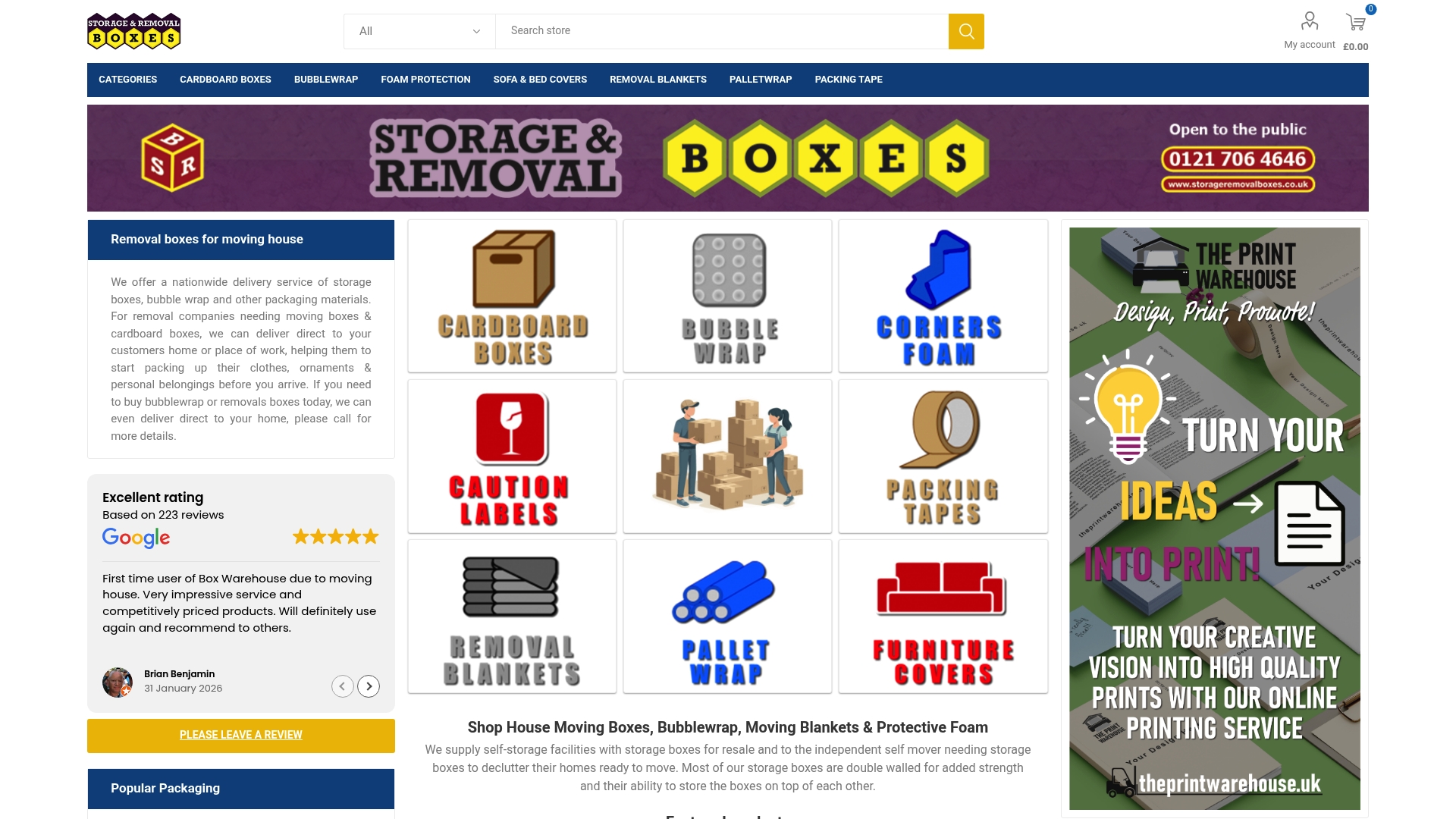
Whether you are packing fragile items for a house move or managing a commercial storage operation, the right label on the right box makes a measurable difference to how goods arrive. Pair your labels with tall double-wall removal boxes built to carry heavy loads without compression failure. Storageremovalboxes delivers across the UK, with bulk pricing available for removal companies and storage facilities that need consistent, reliable supplies.
FAQ
What are warning labels?
Warning labels are standardised notices that communicate specific hazards and required safety actions for a product or substance. Under GHS and CLP frameworks, compliant hazardous labels must include six mandatory elements.
What is the difference between “Danger” and “Warning” on a label?
“Danger” indicates a high-severity hazard with immediate risk of serious harm or death. “Warning” indicates a lower-severity hazard. Only one signal word should appear on any single label.
Do secondary containers need warning labels?
Secondary containers do not require the full six-element GHS label, but they must carry a product identifier and relevant hazard symbols to remain compliant with OSHA and CLP requirements.
What happens if a warning label does not match the Safety Data Sheet?
A mismatch between the label and the SDS violates the Golden Thread principle and constitutes a regulatory breach. Businesses can face fines and are required to update labels immediately when SDS content changes.
What types of warning labels are used in logistics and removals?
Common logistics labels include fragile, handle with care, do not stack, this way up, and keep dry stickers. These use ISO 780-compliant pictograms and protect goods during transit, storage, and removal operations.