What is protective packaging: a guide for movers
TL;DR:
- Proper protective packaging immobilizes items inside boxes to prevent damage during transit and handling. It involves sufficient cushioning, strong containment, clear labels, and adherence to industry standards for fragile items. Following best practices reduces breakage, cuts costs, and improves overall safety during shipping.
Protective packaging is defined as the materials and methods used to prevent damage to items during transit, handling, and storage. For anyone planning a house move or shipping fragile goods, understanding this discipline is the difference between items arriving intact and facing costly breakage. The industry standard for fragile shipments now specifies minimum 5cm cushioning on all six internal sides of a double-walled corrugated box, sealed with tamper-proof tape at least 48mm wide. That single standard tells you everything about how seriously the sector takes internal protection.
What are the main types of protective packaging materials?
Bubble wrap, double-walled boxes, and foam inserts form the core of any effective protective packaging solution. Each material serves a distinct role, and choosing the wrong one for a given item is one of the most common causes of transit damage.
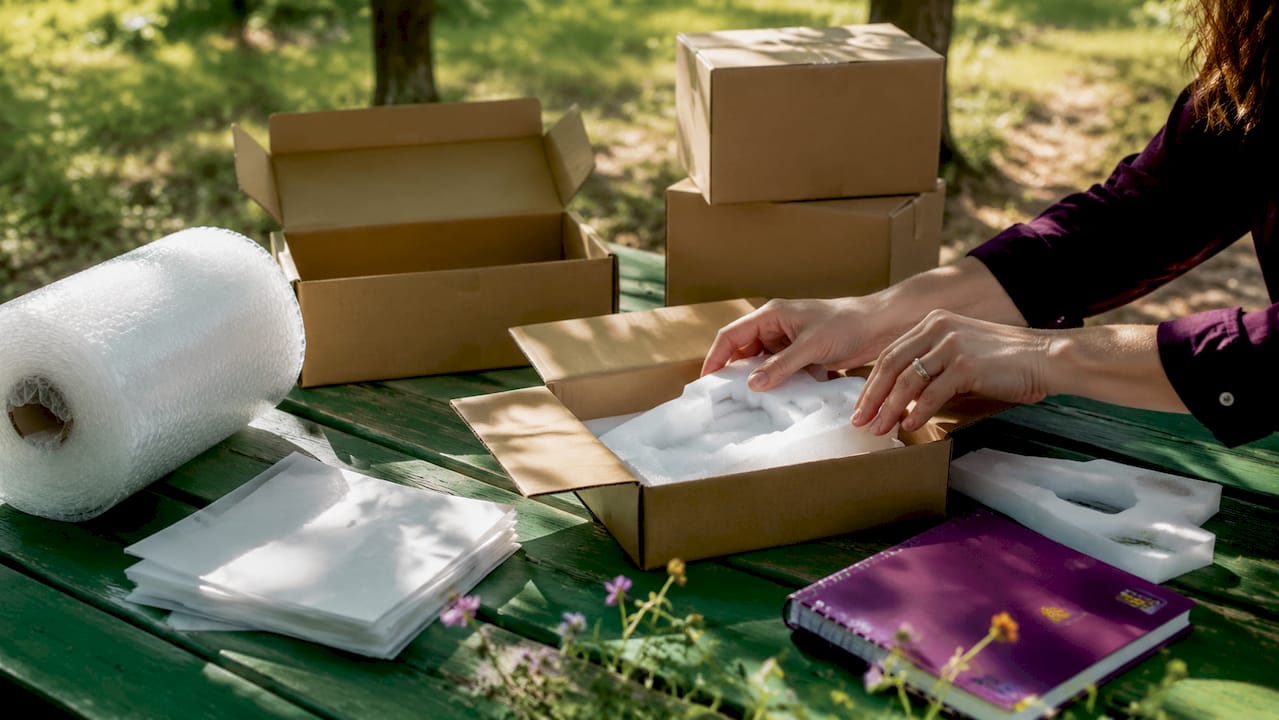
Bubble wrap comes in two main varieties: small-bubble and large-bubble. Small-bubble wrap sits directly against the item surface and absorbs fine vibrations and minor impacts. Large-bubble wrap adds a secondary cushioning layer for heavier shock absorption. At least three layers of bubble wrap are recommended for valuable or fragile items. That layering approach absorbs kinetic energy at multiple points rather than relying on a single sheet.
Double-walled corrugated boxes provide the outer containment that holds everything together. Double-walled boxes resist crushing far better than single-wall alternatives under heavy loads, making them the mandatory choice for books, kitchenware, and any dense household items. A single-wall box may look adequate on a shelf but will buckle under stacking pressure in a removal van.
Void-fill materials occupy the empty space inside a box after the item is wrapped. Options include:
- Polystyrene peanuts for lightweight, irregular gaps
- Foam chips for general cushioning around wrapped items
- Custom foam inserts cut to the item’s exact shape, which eliminate all internal movement and offer the highest level of protection
- Crumpled kraft paper as a recyclable alternative for lighter goods
Specialist materials address specific item types. Archival tissue paper is the correct choice for direct contact with antiques, china, and artworks because newspaper transfers ink and can permanently stain delicate surfaces. Anti-static wrap protects electronics from electrostatic discharge during transit.
Labelling and sealing complete the system. Applying a clearly visible “Fragile” label on at least three faces of a box increases the likelihood of careful handling and supports any insurance claim if damage does occur.
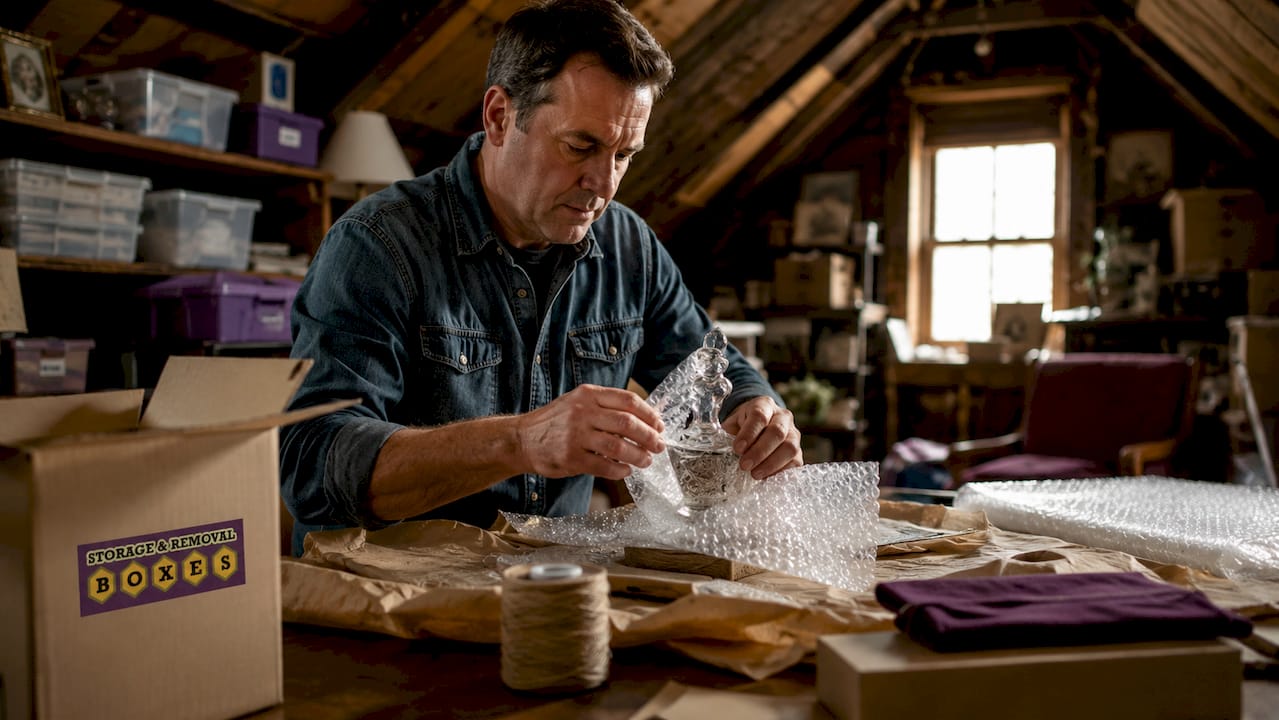
Pro Tip: When wrapping glassware, start at one corner and roll the item diagonally across the bubble wrap sheet. This technique ensures full coverage without gaps at the base or rim.
What are the industry standards for packing fragile items?
The zero breakage standard sets a clear benchmark for anyone packing fragile goods professionally or for a house move. It requires a new double-walled corrugated box, a minimum of 5cm cushioning on all six internal sides, and tamper-proof tape at least 48mm wide applied across all seams. These are not suggestions. They are the minimum conditions under which a fragile item can be considered properly protected for transit.
The standard also specifies the sequence of protection layers:
- Base layer: Place at least 5cm of foam chips, bubble wrap, or crumpled kraft paper at the bottom of the box before any item goes in.
- Item wrapping: Wrap the item in a minimum of three bubble wrap layers, starting with small-bubble wrap directly against the surface.
- Void fill: Pack all remaining space with void-fill material so the item cannot shift in any direction.
- Seal: Apply 48mm tamper-proof tape across all box seams, including the base.
- Label: Mark “Fragile” on at least three external faces using a permanent marker or pre-printed labels.
“Immobilising the item inside the box is the best defence against breakage. Relying on a stronger outer box alone is not enough. The internal engineering is what prevents damage at every handling point along the route.”
The shake test is the simplest quality check available. If you can feel any movement when you shake a sealed box, there is insufficient cushioning or void fill. Reopen the box and add more material before sealing again. This single check catches the majority of packing failures before they become breakage claims.
For glass-fronted artwork, applying an “X” of masking tape across the glass holds shards in place if the glass breaks, reducing the hazard during unpacking. It does not prevent breakage, but it significantly reduces injury risk.
What are the benefits of using proper protective packaging?
Correct protective packaging reduces the likelihood of breakage, but its benefits extend well beyond that single outcome. Effective packaging reduces operational costs beyond the initial shipping expense by cutting returns, damage claims, and replacement purchases. For someone moving house, a broken item means not just the cost of replacement but the time and stress of sourcing it again mid-move.
The key benefits of using proper protective packaging materials include:
- Reduced breakage risk: Correct cushioning and immobilisation prevent the physical forces of transit from reaching the item.
- Lower secondary costs: Fewer damaged items means fewer insurance claims, fewer returns, and no replacement purchases.
- Documented fragility: Tamper-evident sealing and “Fragile” labels create a visible record that supports any claim if a courier mishandles a package.
- Improved handling efficiency: The right box size and correct void fill make stacking and loading faster and safer for removal teams.
- Peace of mind: Knowing a box meets the zero breakage standard removes uncertainty from the moving process entirely.
Matching packaging to item characteristics prevents unnecessary costs and bulk, and reduces environmental impact. Overpacking is not a neutral error. It wastes materials, adds weight, and can actually make boxes harder to handle safely.
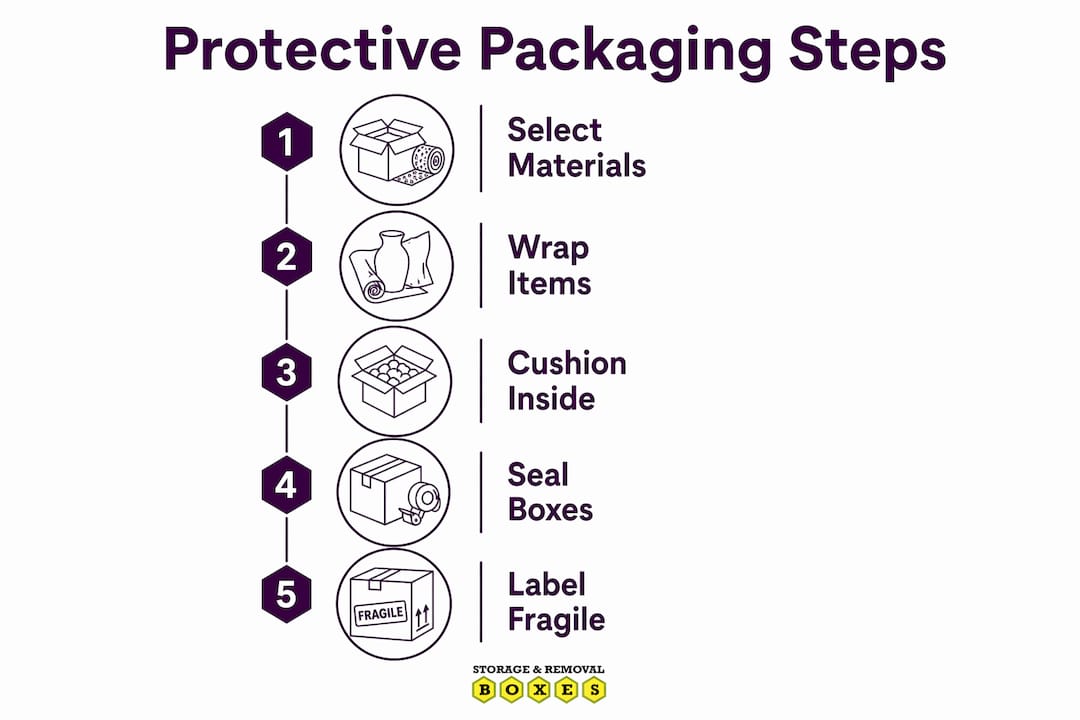
How to use protective packaging materials step by step
Packing fragile items correctly follows a clear sequence. Skipping any step increases the risk of damage at the handling points where most breakage occurs, including manual loading and automated sorting.
Choose the right box. Select a strong double-walled box sized so the item fits with at least 5cm of clearance on all sides. A box that is too large wastes void fill and allows movement. A box that is too small forces the item against the walls.
Prepare the base. Add at least 5cm of foam chips, bubble wrap, or crumpled kraft paper to the bottom of the box before placing anything inside.
Wrap the item. Use small-bubble wrap for the first layer directly against the item’s surface. Add two further layers of bubble wrap, securing each with tape. For antiques or china, use archival tissue paper as the first contact layer before bubble wrap.
Centre the item. Place the wrapped item in the middle of the box, not against any wall. Centring distributes impact forces evenly across all cushioning layers.
Fill all voids. Pack foam chips, peanuts, or crumpled kraft paper into every gap until the item cannot move in any direction. Verify this with the shake test.
Seal the box. Apply tamper-evident tape at least 48mm wide across all seams, including the base. Run at least three strips across the top seam.
Label clearly. Write “Fragile” and “This Way Up” on at least three faces using a permanent marker. For high-value items, add a contents label inside the box as well.
For very fragile or valuable items, double boxing adds a second layer of protection. Place the sealed inner box inside a larger outer box, with at least 5cm of cushioning material between the two. This technique is standard practice in the logistics and transport sector for high-value shipments.
Pro Tip: For electronics, always use anti-static wrap as the first layer before bubble wrap. Standard bubble wrap can generate static electricity that damages sensitive components.
Key takeaways
Protective packaging works because it immobilises items internally, absorbs impact forces, and creates a documented chain of care from packing to delivery.
| Point | Details |
|---|---|
| Internal immobilisation is critical | Custom foam inserts or sufficient void fill prevent movement, which is the primary cause of breakage. |
| Five centimetres is the minimum | The zero breakage standard requires 5cm cushioning on all six internal sides of a double-walled box. |
| Three bubble wrap layers for fragile items | Apply small-bubble wrap first, then two further layers to absorb kinetic impact effectively. |
| Label three faces as “Fragile” | Visible labelling on three box faces supports careful handling and strengthens any insurance claim. |
| Match material to item type | Archival tissue for antiques, anti-static wrap for electronics, and custom foam for irregular shapes. |
Why I think most people get protective packaging wrong
After years of observing how items arrive after moves and shipments, the pattern is consistent. Most damage does not happen because someone used the wrong outer box. It happens because the item was not immobilised inside the box. People add padding around an item and assume the job is done. The item still shifts by two or three centimetres during transit, and that movement is enough to cause a crack or a chip.
The other persistent myth is that more padding always means better protection. One-size-fits-all packaging is the leading cause of transit damage, not the solution to it. A delicate ceramic figurine needs a custom foam insert or dense void fill that holds it completely still. Wrapping it in four layers of large-bubble wrap and hoping for the best is not engineering. It is guessing.
The labelling point also gets underestimated. Most damage at manual handling points happens because the handler did not know the box contained something fragile. A “Fragile” label on one face is easy to miss when a box is stacked. Three faces is the standard because it means the label is visible regardless of orientation. That small detail changes how every person in the handling chain treats the package.
My honest advice: spend the extra five minutes on internal void fill, do the shake test every time, and never skip the labelling step. Those three habits eliminate the vast majority of transit damage before it happens.
— Adrian
Packing materials from Storageremovalboxes for your next move
Storageremovalboxes supplies everything needed to meet the zero breakage standard for house moves and fragile shipments across the UK.
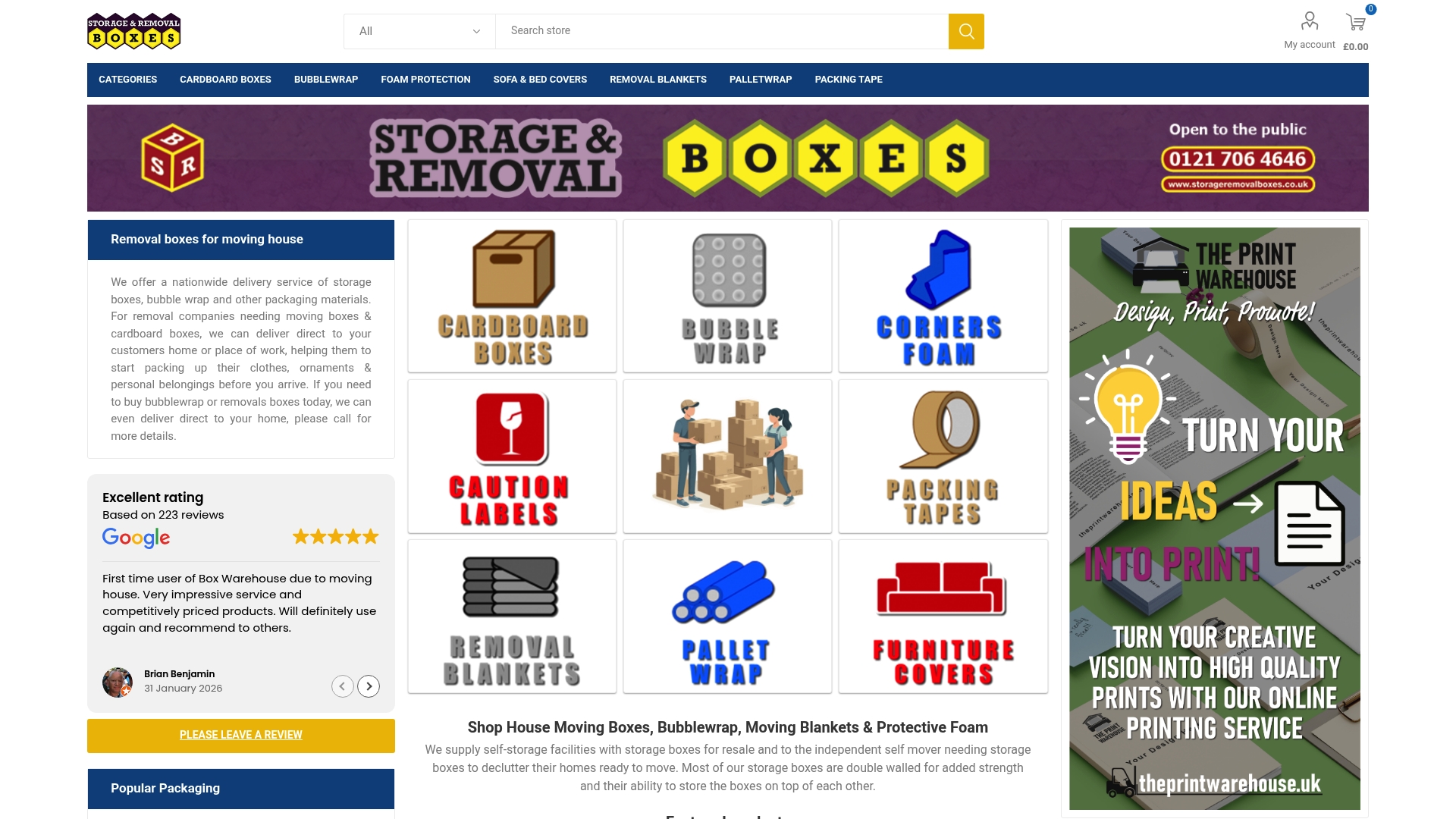
The range includes large double-walled removal boxes built to resist crushing under load, bubble wrap rolls in small and large bubble options, foam protection inserts for immobilising fragile items, and tamper-evident tape in the 48mm width required by industry standards. Pre-packed moving kits bundle the core materials together for different household sizes, removing the guesswork from the shopping process. Bulk quantities are available for removal companies and larger moves, with nationwide delivery throughout the UK.
FAQ
What is protective packaging used for?
Protective packaging is used to prevent damage to items during transit, handling, and storage. It combines cushioning materials, containment boxes, and sealing methods to absorb impact and immobilise contents.
What materials are used in protective packaging?
The most common protective packaging materials are bubble wrap, double-walled corrugated boxes, foam inserts, void-fill peanuts, archival tissue paper, and tamper-proof tape. The correct choice depends on the item’s weight, shape, and fragility.
How much cushioning do I need for fragile items?
The zero breakage standard requires a minimum of 5cm cushioning on all six internal sides of the box. If you can feel any movement when shaking the sealed box, add more void fill before sealing.
Is bubble wrap enough to protect fragile items?
Bubble wrap alone is not sufficient for most fragile items. At least three layers are recommended, and bubble wrap should be combined with a double-walled box and void fill to eliminate all internal movement.
What is eco-friendly protective packaging?
Eco-friendly protective packaging uses recyclable or biodegradable materials such as kraft paper void fill, cardboard inserts, and corrugated double-walled boxes made from recycled fibre. These materials meet the same cushioning standards as conventional options while reducing waste.