Sustainable packaging for UK house moves: a practical guide

TL;DR:
- Choosing reusable and recycled materials for packing reduces environmental impact during a UK house move. Fewer boxes and logistics options like reuse and decluttering cut waste and carbon emissions significantly. Using certified, durable, and recyclable packing supplies enhances sustainability and compliance.
Sustainable packaging is packaging designed to minimise environmental impact across its entire lifecycle, from the materials sourced to make it, through its use protecting your belongings, to how it is disposed of or recovered after the move. For anyone buying packing supplies in the UK, that translates to a straightforward set of choices: reduce the volume you use, reuse durable containers and blankets wherever possible, and select recyclable or compostable materials when you do need to buy new. UK law backs this up: The Packaging (Essential Requirements) Regulations 2015 require that packaging volume and weight be limited to the minimum necessary and that materials be designed for reuse or recovery.
The three highest-value actions for a greener move:
- Reduce: declutter before you pack so you move fewer things in fewer boxes
- Reuse: use suitcases, blankets, and sturdy boxes you already own before buying anything new
- Recycle or compost: when you must buy, choose recycled cardboard, paper-based tape, and biodegradable void fill
Storageremovalboxes.co.uk stocks removals-grade options across all three categories, from double-walled recycled cardboard boxes to reusable moving blankets suited to repeated use.
Table of Contents
- Why does sustainable packaging matter for a UK house move?
- What sustainable packing materials should you actually use?
- How do you choose sustainable packing for your move?
- Pack like a pro: a reuse-first timeline for move day
- Where can you source sustainable packing materials in the UK?
- What are the real cost and environmental trade-offs?
- Key takeaways
- A supplier’s perspective on sustainable packing
- Ready to buy sustainable moving supplies?
- Useful UK sources for further reading
Why does sustainable packaging matter for a UK house move?
The packaging choices you make for a move have a measurable effect on waste and carbon, but the two biggest levers are volume and logistics: fewer boxes mean fewer lorry trips, and fewer trips mean lower fuel use. Packaging materials themselves are secondary to that.
A substantial portion of items packed during a typical house move are never used in the new home. Industry estimates from removals operators suggest that decluttering and reuse-first packing can cut packaging waste significantly on move day. That means the most sustainable decision you can make is often not which box to buy, but what to leave behind.
The reuse versus recycle question matters here too. A reusable plastic crate returned and used across many moves typically delivers a lower environmental impact than a single-use recyclable cardboard box, even when that box is made from recycled content. Self-storage guidance consistently highlights this trade-off: crates can be returned and reused, lowering the per-move footprint each time.
Tangible impacts to keep in mind:
- More boxes than necessary means more lorry trips and higher fuel use
- Plastic tape on cardboard can contaminate the recycling stream, causing clean cardboard to be rejected by council collections
- Polystyrene and shrink-wrap often end up in landfill because most UK councils do not collect them kerbside
- Laundered moving blankets replace single-use plastic film, which can generate 8–15kg of plastic film for a typical three-bed move when shrink-wrap is used instead
What sustainable packing materials should you actually use?
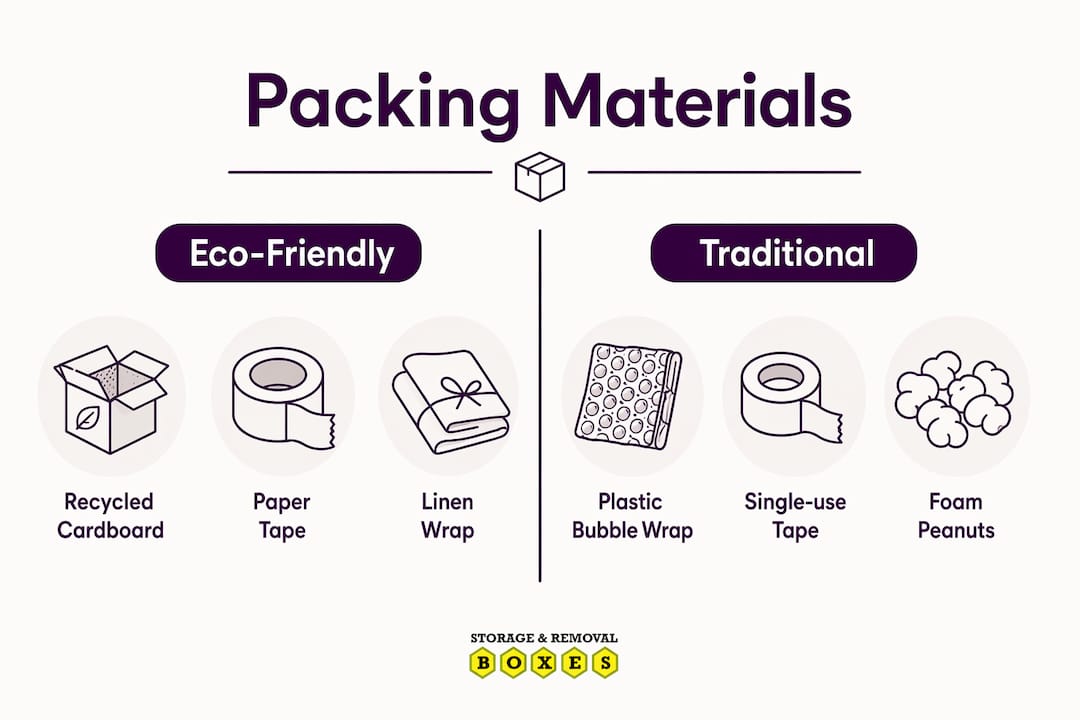
The most practical sustainable choices for a UK move are recycled cardboard boxes, reusable moving blankets, paper-based tape, and biodegradable void fill. Here is what each offers and when to reach for it.
- Recycled cardboard boxes: Good all-round choice for books, kitchenware, and general household items. Look for double-walled construction for heavier loads; single-wall suits lighter items. Double-walled removal boxes from Storageremovalboxes.co.uk are made from recyclable materials and built to handle repeated use.
- Reusable moving blankets: The single best swap for furniture protection. Professional pad-wrap uses laundered quilted blankets that eliminate single-use plastic film entirely and protect items far better than shrink-wrap. Storageremovalboxes.co.uk carries a range of moving blankets suited to repeated handling.
- Paper-based tape: Keeps cardboard boxes recyclable. Plastic tape bonds to cardboard and makes it harder to process in recycling streams; paper tape peels cleanly and goes into the same council bin as the box.
- Biodegradable packing peanuts: A direct swap for polystyrene. The best versions dissolve in water, leaving no residue. Use for void fill in boxes with fragile items.
- Compostable bubble alternatives: Bio-based cushioning materials made from plant sources rather than petrochemicals. Check labelling carefully: “compostable” means it breaks down in a composting environment; “biodegradable” alone is a looser claim with no fixed standard.
- Kraft paper and recycled paper wrap: Wraps fragile items without the recycling complications of bubble wrap. Widely available and council-recyclable.
For certification, look for FSC labelling on paper and cardboard products. Eco moving kits with all-paper sealing systems are commercially available in the UK and eliminate plastic tape from the process entirely.
How do you choose sustainable packing for your move?
The one-line rule: prefer reuse and durability over one-off recyclability, then weigh cost and local disposal options. A box used ten times beats ten single-use boxes, even recyclable ones.
Checklist before you buy:
- Durability and reuse count: Will this item survive multiple moves? Double-walled boxes and moving blankets are designed for it; thin single-wall boxes are not.
- Recycled content: Does the cardboard carry recycled content? Suppliers should be able to confirm this.
- Certification: FSC for paper and cardboard; clear compostable labelling (not just “biodegradable”) for void fill.
- Supplier take-back or rental: Can you return crates or blankets after the move? Some removals companies and specialist suppliers offer this.
- Council recycling compatibility: Check your local council’s guidance. Clean cardboard and paper tape are accepted by most UK councils; polystyrene and plastic film generally are not.
- Cost per use: A moving blanket bought once and used across three moves costs less per move than disposable alternatives.
Questions worth asking your supplier or removal company:
- Do you offer reusable crates or laundered pad-wrap blankets?
- What recycled content is in your cardboard boxes?
- Can I return or exchange boxes after the move?
Pro Tip: Don’t take “eco-friendly” or “biodegradable” at face value on packaging labels. Ask for FSC certification on paper products and look for EN 13432 compliance on anything described as compostable. A supplier who can answer these questions clearly is one worth trusting. Understanding lifecycle impacts helps you ask the right ones.
Pack like a pro: a reuse-first timeline for move day
Declutter early and repurpose what you already own. That single habit cuts box count, reduces single-use padding, and lowers the number of trips your removal van needs to make.
- Six weeks before: Sort everything using the four-pile method: keep, donate, sell, dispose. Less to move means less to pack. This is where the biggest environmental saving happens.
- Two weeks before: Gather reusable containers from around the house: suitcases, laundry baskets, storage boxes, and sturdy bags. These replace cardboard boxes for clothes, linen, and soft items.
- Move week: Pack fragile items using towels, bedding, and clothing as padding. Nest glasses inside socks; wrap plates in tea towels. Use paper-based packing tape on all cardboard boxes to keep them recyclable.
- Move day: Use laundered moving blankets for furniture rather than shrink-wrap. Fill drawer units with their contents still inside to save boxes. Label boxes with a marker pen rather than adhesive labels where possible, so the cardboard can be reused.
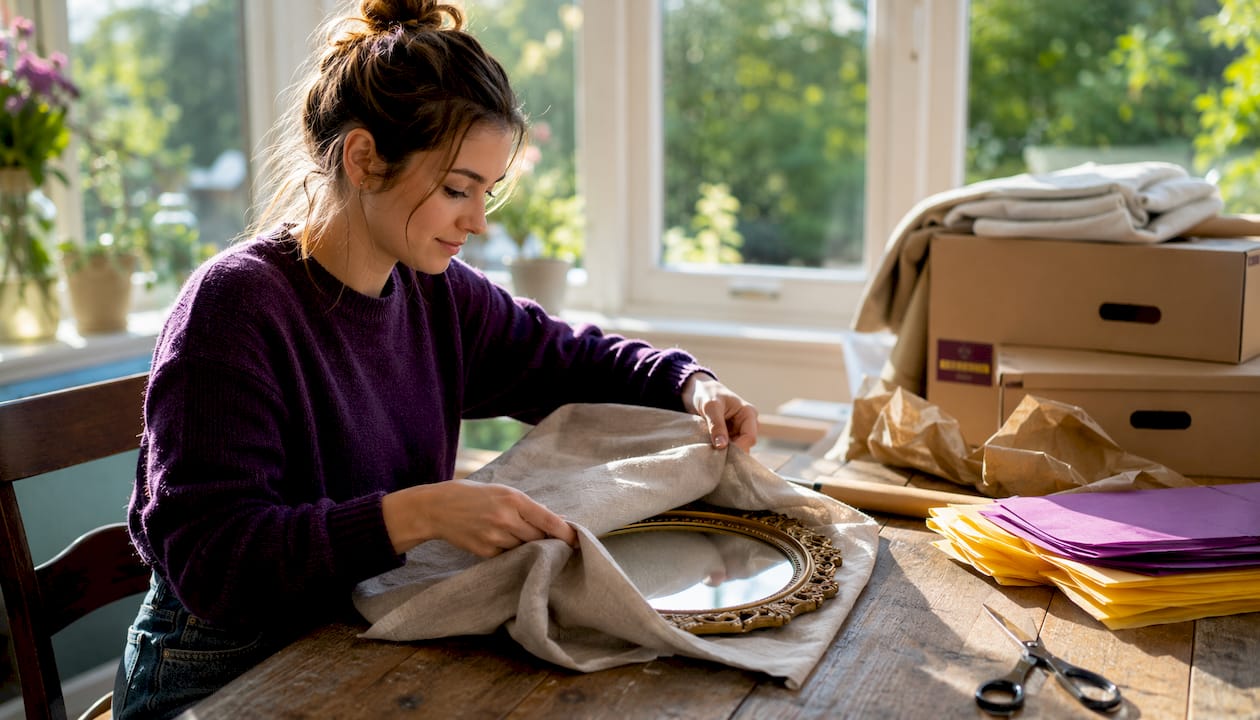
Pro Tip: For genuinely fragile items like mirrors or artwork, nested packing in linen works well for light protection, but for anything valuable or irreplaceable, a professional pad-wrap blanket gives far more reliable cushioning than improvised household padding.
Where can you source sustainable packing materials in the UK?
Most sustainable packing options are available from specialist removals suppliers, self-storage providers, local reuse networks, and online eco-pack sellers.
- Specialist removals suppliers (online): Stock removals-grade double-walled boxes, moving blankets, paper tape, and recycled carton options. Storageremovalboxes.co.uk carries all of these, with packaging for moving available for nationwide delivery and bulk pricing for larger moves.
- Self-storage providers: Often sell or rent reusable crates alongside standard boxes. Good for short-term rental if you only need crates for one move.
- Local reuse networks and community groups: Freecycle, local Facebook groups, and charity shops are reliable sources of second-hand boxes, particularly after other people’s recent moves.
- Eco-pack online sellers: Specialise in compostable void fill, biodegradable packing peanuts, and paper-based sealing systems. Useful when you need specific certified materials.
Check lead times before ordering, particularly for rental crates or laundered blankets. These sometimes require booking in advance, especially during busy moving periods in spring and summer.
What are the real cost and environmental trade-offs?
Reusable or rental options often cost slightly more per move upfront, but the per-use environmental impact falls each time they are used again. A moving blanket purchased once and used across several moves is cheaper and lower-impact than buying disposable alternatives each time.
- Upfront cost vs lifetime uses: Reusable crates and blankets cost more initially but amortise well across multiple moves or storage jobs.
- Return logistics: Rental crates require a collection or drop-off, which adds a step. Factor this into your move-day plan.
- Weight and fuel: Heavier reusable crates can marginally increase transport weight, though the offset from fewer boxes and trips usually outweighs this.
- Savings from decluttering: Fewer items to move means fewer boxes, less tape, less void fill, and potentially a smaller van. The environmental and financial saving from decluttering often exceeds the saving from switching materials alone.
The practical approach for most moves: reuse what you already own, rent crates for bulky furniture runs if your removal company offers them, and buy recycled cardboard boxes where crates are not available. Mixing approaches is sensible and often the most cost-effective route.
Key takeaways
Sustainable packaging for a UK house move means reducing volume first, reusing durable materials second, and choosing recyclable or compostable options only when buying new is unavoidable.
| Point | Details |
|---|---|
| Reduce volume first | Declutter six weeks before moving; fewer items means fewer boxes, trips, and materials. |
| Reuse beats recycle | A reusable crate or moving blanket used many times has a lower per-move impact than single-use recyclable boxes. |
| Paper tape matters | Plastic tape on cardboard contaminates recycling streams; paper-based tape keeps boxes council-recyclable. |
| Check certifications | Look for FSC on cardboard and EN 13432 compliance on anything labelled compostable. |
| Storageremovalboxes stocks removals-grade options | Double-walled recycled boxes, moving blankets, and paper tape are available with bulk pricing and UK-wide delivery. |
A supplier’s perspective on sustainable packing
Sustainable packing is not a niche concern for UK movers. It is the practical default once you understand that the most wasteful part of any move is usually not the materials but the volume: too many boxes, too much padding, too many trips. The reduce-first approach saves money and cuts environmental impact simultaneously, which is why it should be the starting point for anyone planning a move.
Storageremovalboxes.co.uk stocks double-walled boxes built for repeated handling, laundered moving blankets that replace single-use film, and pre-packed removal kits that give buyers a complete, removals-grade solution without overbuying. The product range is designed around durability because a box that survives three moves is genuinely more sustainable than three boxes that each survive one.
Ready to buy sustainable moving supplies?
Storageremovalboxes.co.uk gives you removals-grade materials built to last, not single-use packaging dressed up in green language. The difference is in the construction: double-walled removal boxes that handle heavy loads and survive multiple moves, moving blankets that replace single-use plastic film, and paper-based tape that keeps your cardboard recyclable at the end of the job.
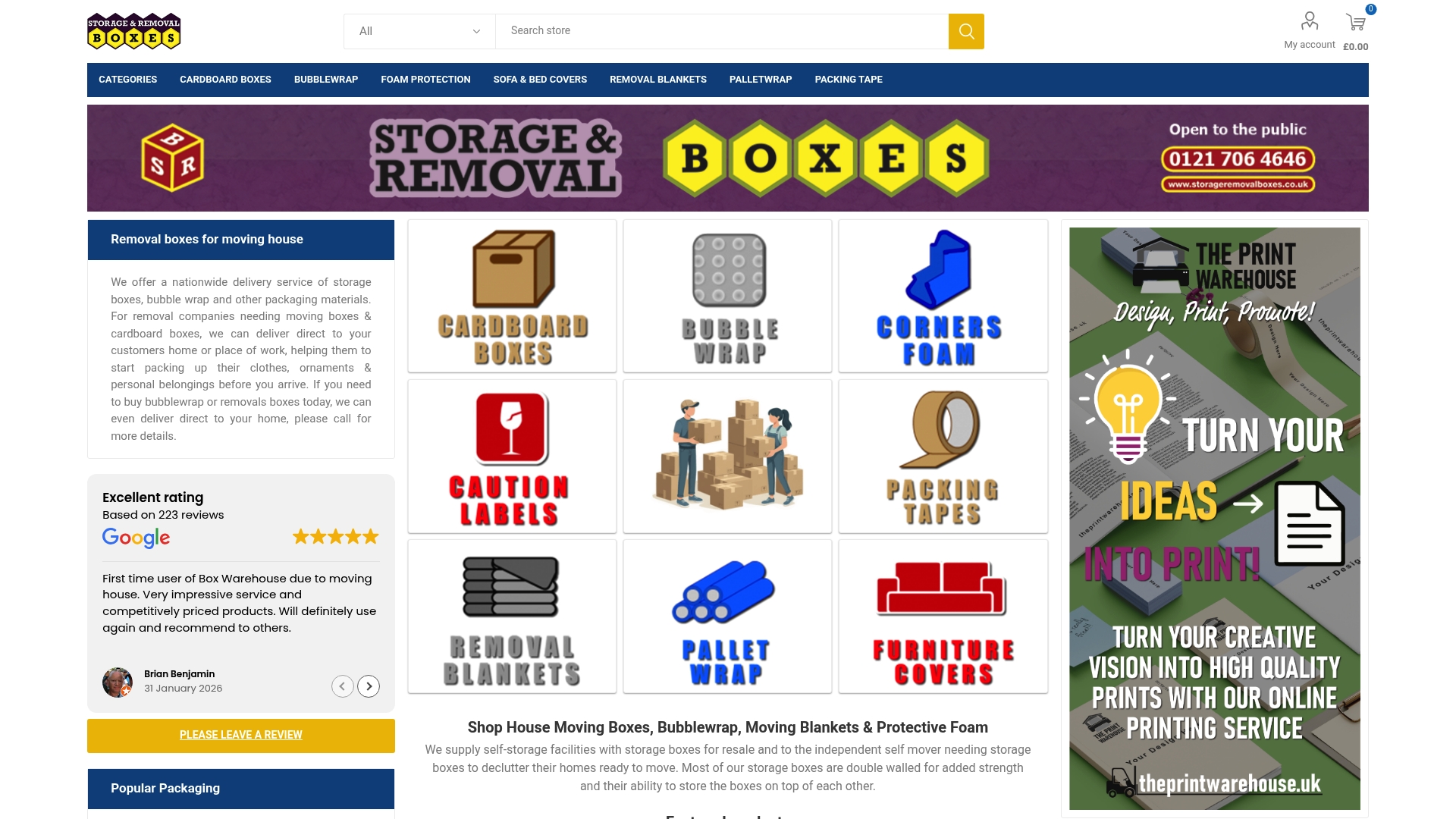
Browse the full range of moving kits and individual products, with bulk pricing available for larger moves and removal companies. Customer support is on hand to help you choose the right combination for your property size and move type. Visit Storageremovalboxes.co.uk to check stock, compare box sizes, and order with UK-wide delivery.
Useful UK sources for further reading
Primary UK sources for regulation, practical guidance, and recycling information:
- The Packaging (Essential Requirements) Regulations 2015: The statutory basis for packaging volume, weight, and recoverability requirements in the UK. Use this to understand what suppliers are legally required to meet.
- The Producer Responsibility Obligations (Packaging and Packaging Waste) Regulations 2024: Updated producer responsibility framework covering packaging categories and obligations. Relevant if you are a business placing packaging on the UK market.
- Your local council’s recycling guidance: Search your council name and “recycling” to find which materials are accepted kerbside. Rules differ between councils, particularly for cardboard with tape, polystyrene, and plastic film.
- Smurfit Kappa UK sustainable packaging guide: A practical industry-facing guide to lifecycle thinking, certifications, and material choices. Useful for understanding how suppliers assess sustainability claims.
- DHL UK sustainable packaging guide: Covers material types, lifecycle framing, and logistics-specific considerations for reducing packaging impact.
- Gather Packaging sustainability page: Explains the distinction between compostable, recycled, and biodegradable materials with practical labelling guidance.
- Storageremovalboxes.co.uk packaging for moving: Product categories and removals-grade options for UK movers, including double-walled boxes, moving blankets, and pre-packed kits.