What removal companies really do: services, pros & pitfalls

- Modern removal companies offer comprehensive services including packing, transportation, and storage.
- Costs vary based on move size, distance, and specialized items, with professional firms preferred for high-value belongings.
- Choosing BAR-accredited firms ensures accountability, proper insurance, and quality standards.
Most people picture a removal company as a couple of blokes with a big white van. The reality is far more involved. Modern removal firms in the UK offer comprehensive moving services that span everything from pre-move surveys and professional packing to furniture reassembly and secure storage. Whether you are a first-time buyer, a seasoned homeowner, or a renter juggling a tight schedule, understanding what removal companies actually offer, what they cost, and where the pitfalls lie can save you considerable stress and money. This guide breaks it all down clearly.
Key Takeaways
| Point | Details |
|---|---|
| Comprehensive services | Removal firms manage everything from packing and furniture assembly to specialist items and storage. |
| Pricing factors | Costs depend on your home size, distance, date, and extra services like packing or specialist care. |
| DIY vs professional | DIY is cheaper initially but can carry risks and extra costs not obvious at first. |
| Bar accreditation | Choosing a BAR-accredited company offers greater protection and reassurance during your move. |
| Tailored solutions | Hybrid options and extras help you balance cost, safety, and convenience for every move. |
What removal companies actually do
The “just a van” myth is one of the most persistent misconceptions in the moving world. In truth, a professional removal company operates more like a project manager for your entire relocation. According to the detailed service list available from industry sources, the scope is genuinely broad.
At the core, most firms offer:
- Pre-move survey: A surveyor visits your home to assess volume, access, and any complications before quoting.
- Professional packing: Trained staff wrap and box your belongings using specialist materials, reducing breakage risk significantly.
- Furniture disassembly and reassembly: Beds, wardrobes, and flat-pack furniture are taken apart and rebuilt at the new address.
- Loading and secure transportation: Items are loaded methodically, secured with straps and blankets, and transported in a suitable vehicle.
- Unloading and placement: Everything is brought into the correct room, not just dumped in the hallway.
- Junk clearance and storage: Many firms will remove unwanted items or place belongings into secure storage if there is a gap between move-out and move-in dates.
- Labour-only options: If you have your own van or lorry, some companies supply just the crew.
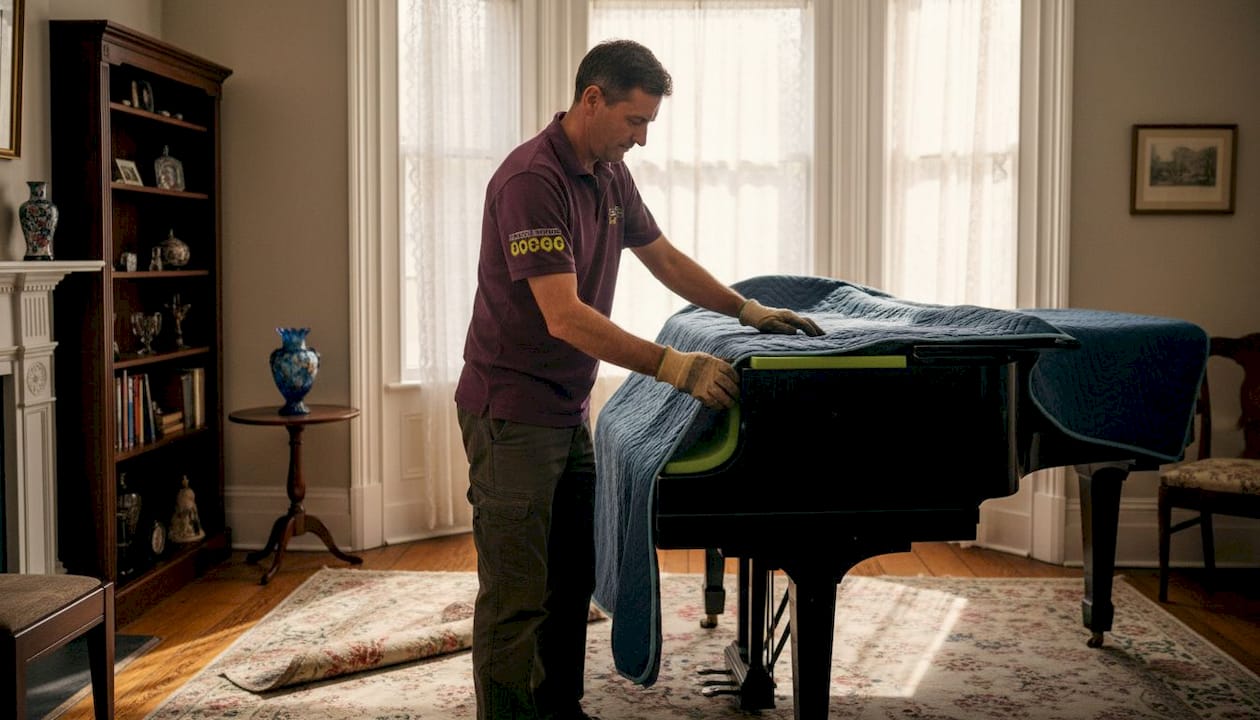
Specialist services extend the list further. Pianos, antiques, fine art, and high-value items often require dedicated crating, specialist wrapping, and declared insurance. Narrow stairwells, restricted parking, and upper-floor flats are pre-surveyed so nothing is left to chance on the day. As the complete guide to moving home from the British Association of Removers confirms, professional packing and full logistics are now standard offerings rather than premium extras.
If you prefer to pack yourself but want guidance on doing it properly, a full packing guide can help you prepare boxes that are safe enough to hand over to any removal crew without worry.
Inside the moving day: How removal companies make your move easier
Knowing the service list is one thing. Seeing how it plays out on moving day is another. A well-run removal team follows a clear sequence that keeps the whole process efficient and low-stress.
- Arrival and briefing: The crew arrives at the agreed time, usually early morning. A team leader walks through the property with you to confirm priorities, fragile items, and any rooms to leave until last.
- Systematic loading: Rooms are cleared in a planned order, typically starting with the heaviest furniture. Items are wrapped, padded, and loaded so weight is distributed evenly in the vehicle.
- Transit: The driver takes the most practical route. For long-distance moves, this stage can take several hours, so having a packed essentials bag is important.
- Unloading and placement: At the new property, the team places items in the correct rooms as directed by you. Furniture is reassembled where agreed.
- Final check: A walkthrough confirms nothing is missing or damaged before the crew leaves.
Timings vary by property size. A three-bedroom move averages 7 to 9 hours and costs between £800 and £1,200 for a local relocation. Larger homes or long-distance moves naturally take longer and cost more. Knowing this helps you plan your day realistically, including when to expect keys, when to have the kettle ready, and when the children or pets need to be elsewhere.
Pro Tip: Always ask whether your removal company holds BAR membership. The British Association of Removers sets quality and conduct standards, so membership is a reliable indicator of professionalism. You can also find practical packing and moving day tips to prepare yourself before the crew arrives.
Costs, value, and pricing: What to budget for a UK move
Pricing is where many people get caught off guard. Removal costs are not one-size-fits-all, and the final bill depends on several interacting factors.
| Move type | Approximate cost |
|---|---|
| Local 1-bedroom | £400 to £600 |
| Local 3-bedroom | £800 to £1,200 |
| Long-distance 3-bedroom | £1,200 to £2,000+ |
| Packing service add-on | £200 to £800 |
These average moving costs reflect the current UK market and give you a useful baseline. The main factors that push costs up include:
- Volume of belongings: More items mean a larger vehicle or multiple trips.
- Distance: Longer routes increase fuel, time, and crew costs.
- Specialist items: Pianos, large antiques, or gym equipment require extra equipment and care.
- Timing: Moves on Fridays, at month-end, or during summer school holidays attract premium rates.
- Access difficulties: Narrow roads, no parking, or high-rise flats add time and complexity.
Statistic to note: The average 3-bedroom move costs £1,120 and takes 7 to 9 hours, according to current UK industry data.
BAR-accredited firms offer an added layer of financial protection. Their code of practice requires clear written quotes, defined insurance, and a formal dispute resolution process. This matters when something goes wrong, which it occasionally does even with good companies.
Pro Tip: Book your removal for a mid-week slot in January or February if your timeline allows. Demand is at its lowest then, and you can often negotiate a better rate. Always compare at least three quotes from BAR members before committing. For those packing themselves, browsing quality removal supplies in advance keeps your costs predictable.
DIY, professional, or hybrid? Comparing your removal options
Not every move suits the same approach. Your budget, property size, and tolerance for stress all play a role in choosing the right method.
| Approach | Best for | Key risk |
|---|---|---|
| Full professional | Large homes, high-value items, long distance | Higher upfront cost |
| DIY | Studio or 1-bed, short distance, tight budget | Injury, damage, hidden costs |
| Hybrid | Medium homes, some fragile items, partial budget | Coordination complexity |
The true cost comparison between these options often surprises people. DIY looks cheaper until you factor in van hire, fuel, packing materials, extra insurance, and the time taken off work. A botched move can also mean replacing damaged furniture, which quickly erases any savings.
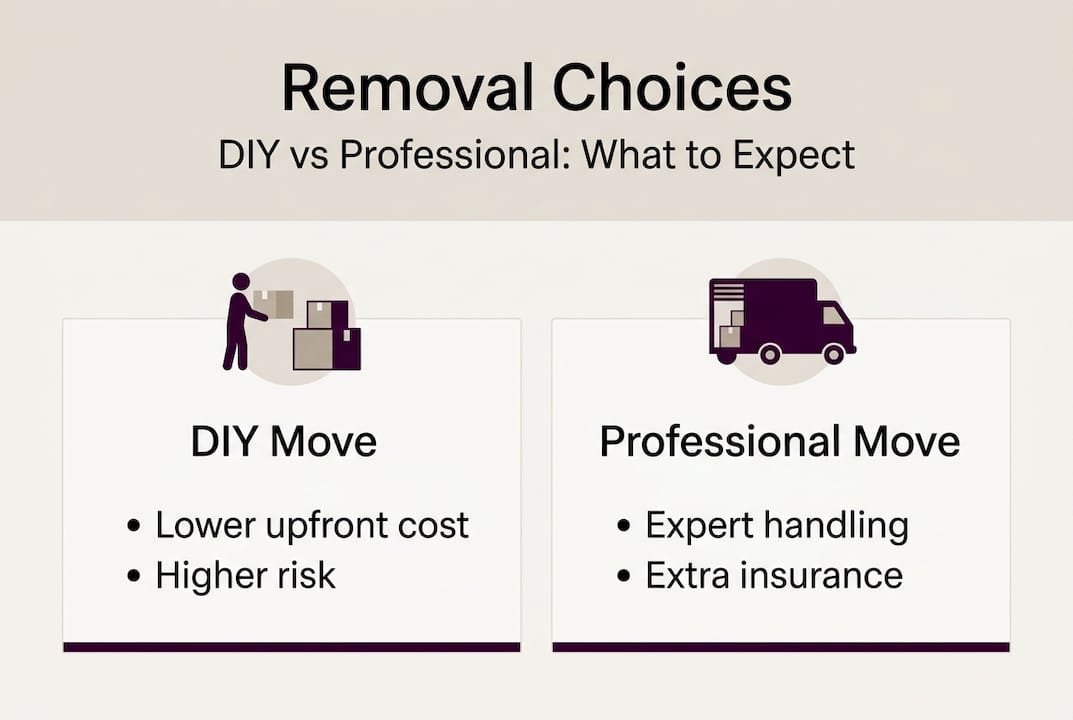
The hybrid approach is increasingly popular. You pack and move standard items yourself, while professionals handle fragile, bulky, or high-value pieces. This keeps costs manageable without exposing your most important belongings to amateur handling.
Here is a quick guide to which approach fits which situation:
- Full professional: Four-bedroom or larger home, antiques or artwork, long-distance relocation, or anyone who simply cannot afford the time or physical strain.
- DIY: A studio flat, moving within the same town, minimal furniture, and a flexible timeline.
- Hybrid: A two or three-bedroom home with some fragile items, a moderate budget, and a willingness to do some of the work yourself.
Whatever route you choose, having the right materials matters. Explore safe move strategies to understand how proper boxes and protection reduce risk regardless of who is doing the lifting.
What most people get wrong about removal companies
Here is the uncomfortable truth: the biggest mistakes people make with removal companies are not about choosing the wrong firm. They are about misunderstanding what they are actually buying.
Bargain removals are the most common trap. A low quote often means uninsured crews, no pre-move survey, and no accountability if something breaks. We have seen customers pay twice because a cheap firm damaged furniture that then needed replacing. The saving evaporated immediately.
Insurance is the other blind spot. Most removal companies offer basic liability cover, but that rarely reflects the replacement value of your belongings. Always ask specifically what is covered, up to what amount, and what the claims process looks like. Non-standard items such as jewellery, electronics, or artwork may not be covered at all without a specific declaration.
The one step experienced movers never skip is verifying BAR membership. The British Association of Removers enforces a Code of Practice that includes consumer guarantees, proper insurance standards, and independent dispute resolution. That last point matters more than people realise. If something goes wrong with a non-member firm, your options are limited.
Our honest advice: treat the removal company as a professional service, not a commodity. The cheapest quote is rarely the best value. Use a thorough packing checklist to prepare your end properly, and invest in a firm that can be held accountable.
Get everything you need for a smooth move
A removal company can only do so much if your belongings are not packed properly before they arrive. Poorly packed boxes slow the crew down, increase breakage risk, and can even void your insurance claim if damage is attributed to inadequate packing.

At Storage and Removal Boxes , we supply everything you need to pack with confidence. Our tall double wall removal boxes are built to handle heavy loads without collapsing, making them ideal for books, kitchenware, and clothing. Browse our full range of moving boxes to find the right sizes for every room in your home. From bubble wrap and foam protectors to complete removal kits, we make sure you are fully equipped before the van arrives.
Frequently asked questions
What does a removal company actually do?
A removal company offers complete moving services including packing, transportation, and unloading, often handling delicate or specialist items such as pianos and antiques with dedicated equipment and insurance.
How much does a UK removal service cost?
The average 3-bedroom move costs between £800 and £1,200 for a local relocation, with packing services adding £200 to £800 on top depending on the volume of belongings.
Is a DIY move always cheaper than using professionals?
DIY appears cheaper upfront, but hidden costs including van hire, fuel, materials, and the risk of injury or property damage can make it more expensive overall.
What specialist items require professional removal?
Pianos, antiques, and high-value or fragile items typically need professionals with specialist wrapping and crates, along with declared insurance to cover their full replacement value.
Should I use a BAR-accredited removal company?
Yes. BAR-accredited members follow a strict Code of Practice that includes consumer guarantees, proper insurance standards, and independent dispute resolution if something goes wrong.