Why use professional packing supplies for your move
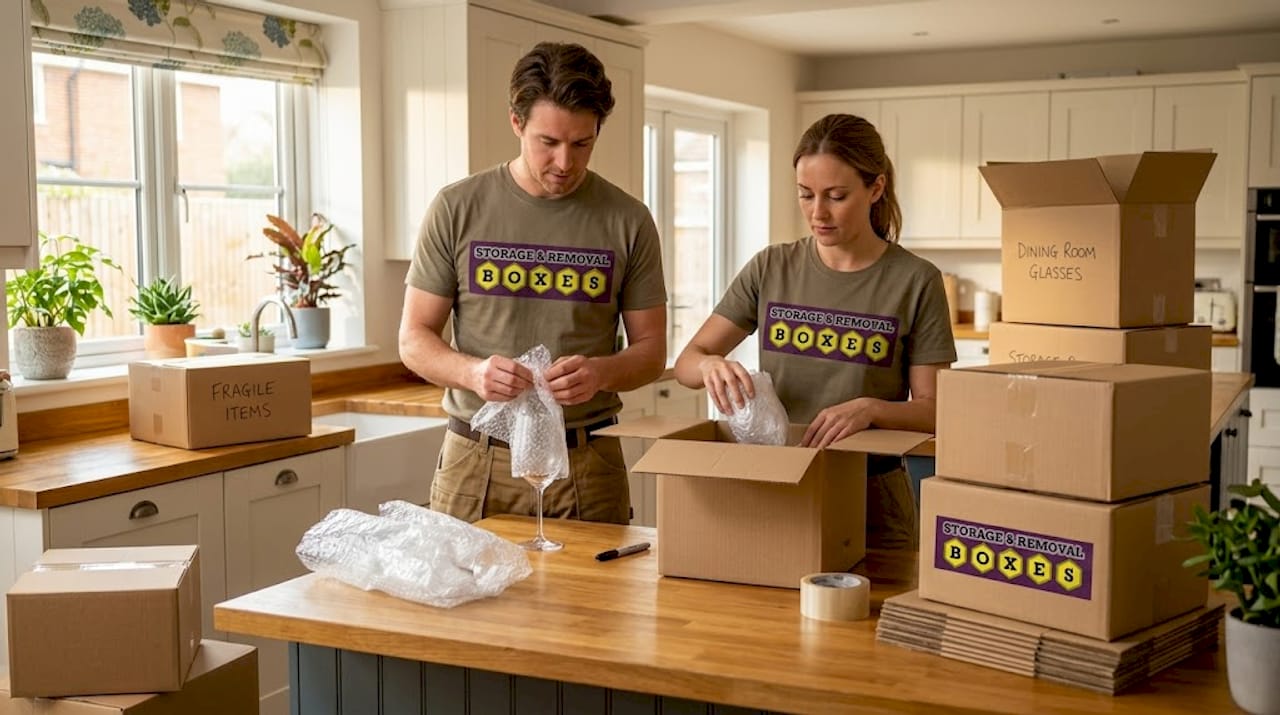
TL;DR:
- Using professional-grade packing supplies is essential to protect valuables, reduce damage, and ensure an efficient move. Poor packing often causes transit damage, mostly from items shifting inside boxes, which quality materials can prevent. Investing in proper boxes, void fill, and protective techniques minimizes risks and saves time and costs in the long run.
Most people assume that a stack of old supermarket boxes and some newspaper will do the job just fine. It is one of the most expensive misconceptions in moving. Understanding why use professional packing supplies is not about spending more money for its own sake. It is about protecting the things you value, reducing the stress of moving day, and avoiding the hidden costs that come with cutting corners. This guide covers the real risks of DIY packing, the specific advantages of quality materials, and practical advice on choosing the right supplies for your move or storage needs.
Table of Contents
- Key takeaways
- The hidden risks of skipping professional packing supplies
- How quality supplies make moves safer and more efficient
- Expert techniques that DIY packing usually misses
- Choosing and using professional packing supplies well
- My view on why this matters more than people think
- Get the right supplies from Storageremovalboxes
- FAQ
Key takeaways
| Point | Details |
|---|---|
| Poor packing costs more | Inadequate materials lead to damaged items, complaints, and costly replacements that far exceed the price of good supplies. |
| Internal movement causes breakage | The primary cause of transit damage is items shifting inside boxes, which professional void fill prevents. |
| Right-sized boxes matter | Matching box size to contents reduces damage, makes stacking safer, and cuts transport costs. |
| Specialist materials protect valuables | Electronics, artwork, and fine china each need specific cushioning that generic DIY materials cannot replicate. |
| Good labelling saves time | Clear, systematic labelling with proper marker pens speeds up unpacking and reduces the risk of misplaced items. |
The hidden risks of skipping professional packing supplies
There is a reason professional removal companies do not show up with bin bags and random cardboard. Poor packing is genuinely costly, and the numbers back that up.
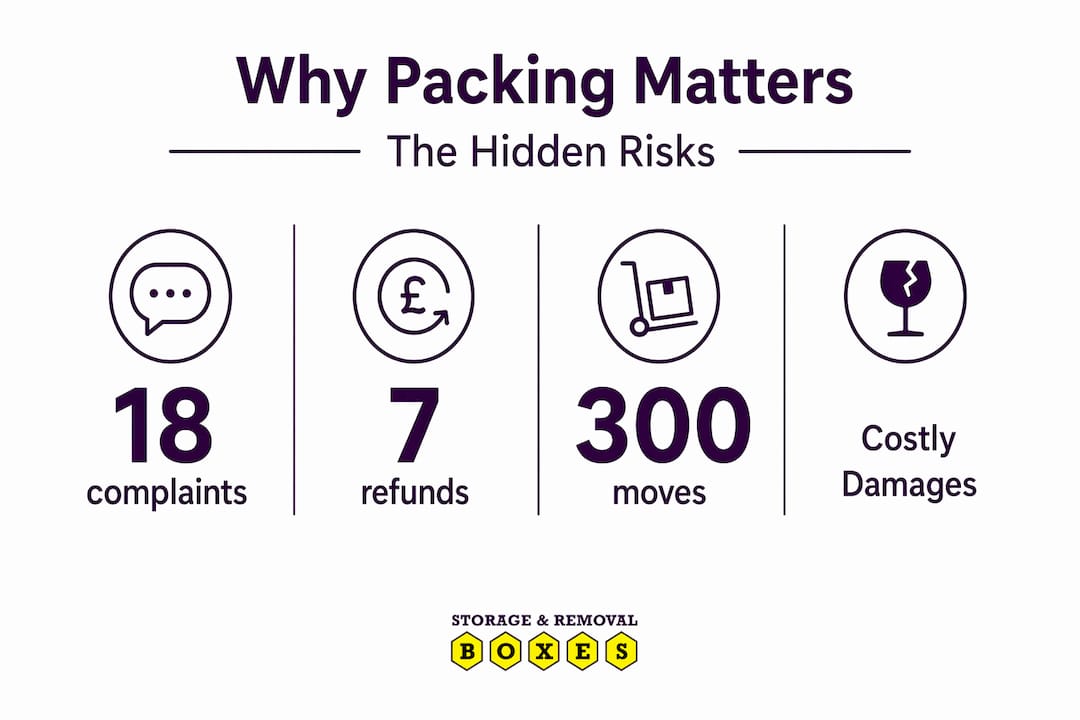
Poor packaging generates 18 complaints and 7 refunds per 300 orders in commercial settings. Scale that to a house move and the financial logic becomes clear. Replacing a cracked television, a chipped set of crockery, or a damaged piece of furniture will almost always cost more than the professional packing materials you chose not to buy.
The mechanism behind most damage is not what people expect. It is not rough handling or a bump in the road that breaks things. Transit damage is primarily caused by items moving inside boxes. Every time the van brakes or turns, loose contents generate kinetic energy that causes collisions between items. A half-filled box with a few sheets of newspaper is not protection. It is a container for controlled chaos.
Common packing mistakes that lead to damage include:
- Using boxes that are too large, leaving excessive void space for items to shift
- Mixing heavy and light items in the same box without layering
- Sealing boxes with insufficient tape, causing base failure under load
- Stacking irregularly shaped boxes that topple during transit
- Using damp or previously wet cardboard that has lost structural integrity
Beyond physical damage, there is the time cost. A typical move requires between 30 and 60 cardboard boxes. If those boxes are sourced ad hoc from supermarkets and off-licences, you spend hours collecting mismatched sizes before you have even started packing. That time adds up.
“Professional packing is an investment in risk mitigation, preventing high costs of damaged items and mental exhaustion through expert methods.” — All Reasons Moving
How quality supplies make moves safer and more efficient
The benefits of professional packing go well beyond having a sturdy box. The right materials, used correctly, change the entire character of a move.
Here is how professional-grade supplies improve safety and efficiency at each stage:
- Right-sized boxes reduce damage. Using right-sized packaging is one of the most effective ways to reduce carrier damage. A box that fits its contents snugly does not give items room to travel.
- Double-wall construction handles stacking. Professional removal boxes are engineered to bear weight from above. Supermarket boxes are not. When you stack six boxes on a removal van, the bottom box needs to hold the load without buckling.
- Void fill prevents internal movement. Bubble wrap, foam sheets, and packing paper fill the gaps that cause breakage. Without them, even a well-chosen box fails at its job.
- Standardised sizes maximise space. Professional packing maximises cubic capacity, meaning fewer boxes and lower transport costs. Irregular shapes and random sizes waste space and increase the number of van trips needed.
- Reinforced tape holds under pressure. Standard parcel tape loses adhesion under temperature changes and weight. Professional packing tape maintains its bond throughout a move.
Pro Tip: When packing a removal van, place the heaviest, most structurally sound boxes at the base. Double-wall boxes are rated for this. Supermarket boxes are not, and the difference becomes obvious when the stack shifts on a motorway.
Choosing the right box types for moving before you start packing saves significant time and prevents the frustrating mid-move discovery that your boxes are failing.
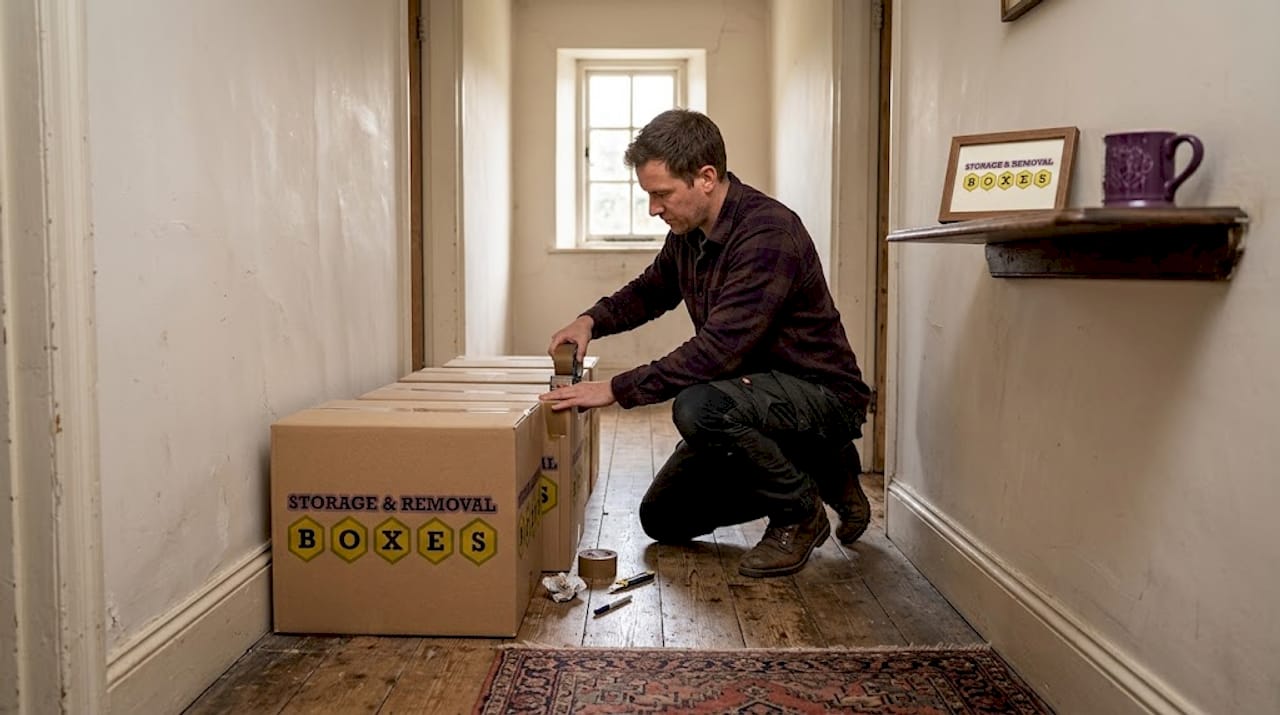
Expert techniques that DIY packing usually misses
Packing is a learned skill that combines spatial reasoning with practical knowledge of how different materials behave under load. Most people underestimate this until something breaks.
Take books as an example. They seem easy to pack because they are solid and uniform. But books are dense, and a large box filled with them can exceed 30 kilograms, making it dangerous to lift and likely to fail at the base. Small reinforced boxes for heavy items like books prevent box buckling and allow safer lifting. This is standard professional knowledge that most DIY packers learn the hard way.
Electronics, artwork, and fine china each require specific materials that generic packing simply cannot replicate. Specialist cushioning materials such as anti-static peanuts for electronics and acid-free paper for artwork are not interchangeable with newspaper and bubble wrap. Using the wrong material can cause static discharge damage to circuit boards or acid migration that ruins prints and canvases over time.
Popular online moving hacks are often worse than useless. Garbage bags and excess shrink wrap are frequently cited as clever shortcuts, but they offer no structural support and can trap moisture, which damages furniture finishes and encourages mould. Standardised boxes with proper securing tools are always the more reliable choice.
The points that separate professional packing from DIY approaches include:
- Packing plates vertically rather than flat, which distributes impact force more evenly
- Wrapping each item individually before placing it in a box, rather than wrapping groups
- Using corner protectors on picture frames and mirrors rather than relying on bubble wrap alone
- Labelling boxes on the side rather than the top, so the label is visible when boxes are stacked
For guidance on packing fragile items specifically, the principle is always the same: more layers, correct materials, and no movement inside the box.
“Spatial reasoning and experience enable professional packers to secure goods better than DIY approaches in ways that are difficult to replicate without practice.” — Michaels Removals
Choosing and using professional packing supplies well
Knowing why professional packing supplies matter is only half the picture. Knowing how to choose and use them is where the real value lies.
The table below gives a practical guide to matching materials to contents:
| Item type | Recommended box size | Key materials |
|---|---|---|
| Books and files | Small double-wall box | Packing paper, base padding |
| Kitchenware and crockery | Medium double-wall box | Bubble wrap, cell dividers, foam sheets |
| Clothes and bedding | Large wardrobe box | Tissue paper for delicate fabrics |
| Electronics | Original box or medium double-wall | Anti-static foam, bubble wrap |
| Artwork and mirrors | Picture box or custom flat box | Corner protectors, acid-free paper |
| Bulky items and furniture parts | Extra-large double-wall box | Moving blankets, foam padding |
When you are working through a house, pack room by room and label every box with its destination room and a brief description of contents. Do not just write “kitchen.” Write “kitchen: mugs and glasses, fragile.” This matters when you are directing a removal team and when you are unpacking weeks later.
Pro Tip: Use a box marker pen with a wide nib for labelling. Fine-tipped pens are hard to read at a distance and fade quickly. Clear, bold labelling on the side of each box saves real time during unpacking.
The question of whether to use a full professional packing service or to buy professional supplies and pack yourself comes down to time and complexity. Professionals can pack a three-bedroom house in six to eight hours. If that time saving is worth the cost, it is a straightforward decision. If you prefer to pack yourself, using professional-grade supplies and following structured techniques gives you most of the same protection at a fraction of the price.
You can explore the full range of professional packing materials to find the right combination for your specific move. Having everything in one place before you start is far more efficient than sourcing materials piecemeal.
My view on why this matters more than people think
I have seen the aftermath of moves where people genuinely believed their packing was fine. A cracked mirror wrapped in a single sheet of newspaper. A television packed in a bin bag surrounded by cushions. A set of wine glasses nested together without any individual wrapping. In every case, the person was surprised by the damage. They should not have been.
What strikes me most is that the cost difference between adequate and inadequate packing is genuinely small. A set of double-wall removal boxes, a roll of bubble wrap, and some foam sheets costs a fraction of what you would spend replacing even one significant item. The maths is not close.
I also think people underestimate the psychological cost of a badly packed move. Arriving at a new home and discovering that things you care about have been damaged is a genuinely miserable experience. It colours the whole move. Good packing does not just protect your belongings. It protects the experience of moving itself.
My honest view is that the importance of packing supplies is consistently underestimated because the consequences are not visible until it is too late. By the time you open a box and find broken crockery, the decision to use supermarket boxes is long behind you. Invest in the right materials before you start, not after you have learned why it mattered.
— Adrian
Get the right supplies from Storageremovalboxes
Storageremovalboxes stocks everything you need for a well-protected move or storage project, all in one place. The range includes large double-wall removal boxes built for heavy or bulky items, bubble wrap rolls, foam protection products for delicate items, marker pens, and complete removal kits sized for different homes. Every product is made from durable, recyclable materials and designed to meet the demands of real house moves. Whether you are packing a studio flat or a five-bedroom family home, Storageremovalboxes offers bulk purchasing options and nationwide delivery to make sure you have what you need before moving day arrives. Browse the full range at storageremovalboxes.co.uk and take the guesswork out of choosing your packing supplies.
FAQ
Why use professional packing supplies instead of free boxes?
Free supermarket boxes are not designed for stacking, heavy loads, or repeated handling. Professional removal boxes use double-wall construction that maintains structural integrity throughout a move, reducing the risk of base failure and item damage.
What is the most common cause of damage during a move?
Items moving inside boxes during transit is the primary cause of breakage, not rough handling. Filling void space with bubble wrap, foam, or packing paper eliminates this movement and protects your belongings.
How many boxes do I need for a house move?
A typical move requires between 30 and 60 boxes depending on the size of the property. Buying a pre-packed removal kit matched to your home size is the most efficient way to get the right quantity without over or under ordering.
Are professional packing services worth the cost?
If time is a priority, yes. Professionals pack large homes in six to eight hours and often provide insurance coverage for packed items. If you prefer to pack yourself, using professional-grade supplies gives you most of the same protection at significantly lower cost.
What materials do I need to pack fragile items properly?
Fragile items need individual wrapping with bubble wrap or foam sheets, cell dividers for glasses and crockery, corner protectors for frames and mirrors, and a snug-fitting double-wall box with no void space. The right box standards for transit matter as much as the cushioning materials inside.