Why use robust boxes for fragile items
TL;DR:
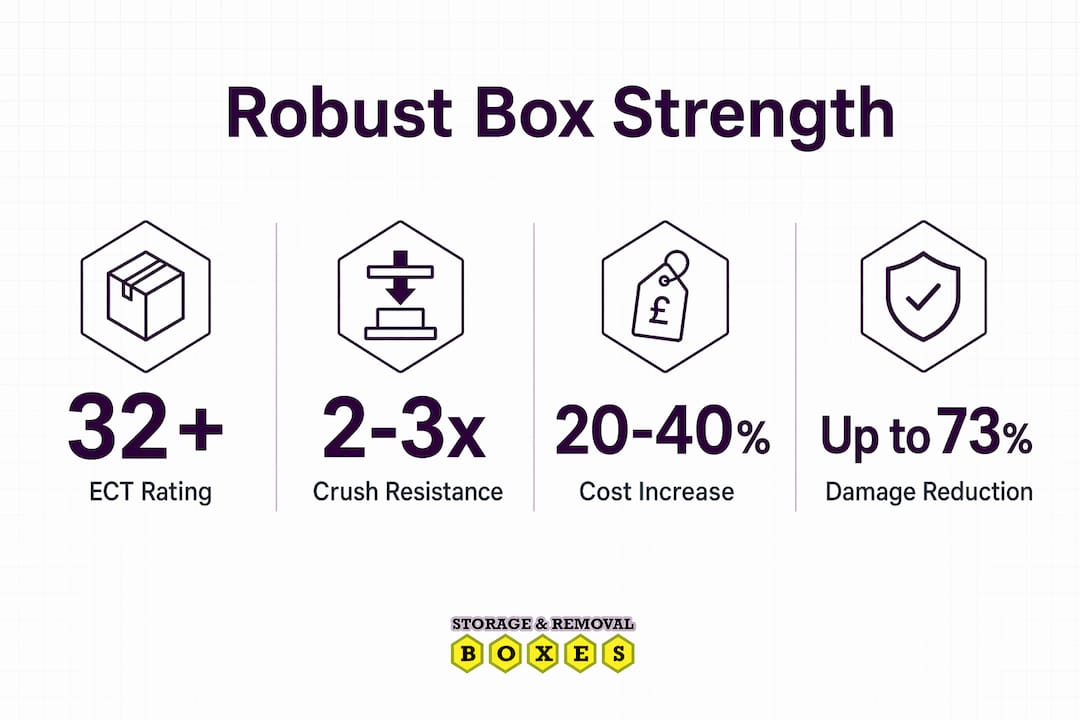
- Robust boxes are specially designed with double-wall construction to protect fragile items during moving, storage, and transport. They offer 2 to 3 times the crush resistance of single-wall boxes, with an ECT rating of 32 or higher to ensure strength. Investing in heavy-duty boxes reduces damage, replacement costs, and liability issues, especially for high-value or fragile items.
Robust boxes are specially engineered packaging with increased structural strength, designed to protect fragile items during moving, storage, and transport. The case for choosing them over standard packaging is clear: up to 73% of fragile items arrive damaged when packed in standard boxes, primarily because those boxes resist only vertical compression rather than the multi-directional stresses of real transit. In the packaging industry, the recognised term for this category is “heavy-duty corrugated packaging,” though “robust boxes” describes the same principle accurately. Whether you are moving house, shipping goods, or managing warehouse storage, the choice of box construction directly determines whether your items arrive intact.
Why use robust boxes: the structural case
The defining feature of a durable, heavy-duty box is its wall construction. Double-wall corrugated boxes contain approximately 6mm of fluting compared to 3mm in single-wall alternatives. That extra fluting layer is not cosmetic. It translates directly into 2 to 3 times the crush resistance and the ability to support loads of 20–30kg, against a 5kg limit typical of single-wall boxes.
The fluting layers serve two distinct purposes. First, they absorb vibration during transit, which is the primary cause of micro-fractures in ceramics and glassware. Second, they distribute lateral pressure across the box face rather than concentrating it at a single point, which prevents punctures from sharp corners or warehouse equipment.
The Edge Crush Test (ECT) rating is the industry standard metric for measuring this strength. ECT scores measure the force required to crush the fluted edges of corrugated cardboard. An ECT rating of 32 or higher is recommended for heavy or stacked loads, and this figure is a more reliable guide to structural integrity than a simple weight limit printed on the box.
Double-wall construction also prevents what packaging engineers call the “domino effect.” When boxes are stacked in a lorry or warehouse, collapsing stacks cause cascading failures. A box that maintains its shape under pressure protects not just its own contents but every box beneath it.
| Feature | Single-wall box | Double-wall box |
|---|---|---|
| Fluting thickness | ~3mm | ~6mm |
| Typical weight capacity | Up to 5kg | 20–30kg |
| Crush resistance | Standard | 2–3 times higher |
| ECT rating (typical) | Below 32 | 32 or above |
| Best use | Light, non-fragile items | Heavy, fragile, or stacked loads |
Pro Tip: Always check the ECT rating printed on the box base before purchasing. A rating of 32 or above is the minimum for anything fragile or heavy.
How do robust boxes reduce damage and costs?
The financial argument for strong boxes is straightforward. Double-wall boxes cost 20–40% more than single-wall alternatives. That premium feels significant at the point of purchase. It rarely feels significant after a shipment of glassware arrives in pieces.
The total cost of ownership calculation changes the picture entirely. Damaged goods generate replacement costs, return shipping fees, customer service time, and reputational damage. A single broken item can cost far more than the price difference between a standard and a heavy-duty box. Professionals in logistics and transport routinely factor this into procurement decisions, choosing double-wall construction for any consignment where damage would trigger a claim.
The damage reduction benefits are most visible in these scenarios:
- Fragile goods in multi-stop deliveries. Transport vibrations cause repeated stress on items at every stop. Standard boxes fail to absorb this cumulative shock. Double-wall construction absorbs it efficiently.
- Returns and replacements. Fewer damaged arrivals mean fewer returns to process. For businesses shipping regularly, this reduction in reverse logistics is a measurable saving.
- Insurance and liability. Carriers and insurers increasingly require evidence of appropriate packaging. Using boxes with a verified ECT rating of 32 or above satisfies most carrier packaging requirements.
- Warehouse stacking. Palletised shipments place enormous downward pressure on lower boxes. Heavy-duty corrugated boxes maintain their shape under this load, protecting contents throughout storage.
The cost argument is not about spending more. It is about spending correctly. A box that costs £1.50 more per unit but prevents a £40 replacement is a straightforward saving.
Best practices for packing fragile items in strong boxes
Choosing the right box is only half the task. How you pack it determines the final level of protection.
- Match the box size to the item. Oversized boxes cause damage by allowing items to shift during transit. The gap between item and box wall should be no more than 5cm on any side, filled with cushioning material.
- Place heavy items at the base. Dense objects belong at the bottom of the box, directly over the strongest structural point. Lighter, fragile items go on top, separated by foam sheets or bubble wrap.
- Use cushioning throughout, not just at the top. Line the base with at least 5cm of cushioning before placing any item. Fill all voids with bubble wrap, foam, or crumpled packing paper. Tight packing minimises risk by eliminating the movement that causes breakage.
- Seal every seam. Apply packing tape along the full length of the base seam and both side seams. A single strip down the centre is not sufficient for heavy or fragile loads.
- Label clearly and accurately. Mark boxes containing fragile items on all four sides and the top. This is not a formality. Handlers who can see the label from any angle are more likely to orient the box correctly.
Pro Tip: For particularly fragile items such as mirrors or framed artwork, double-box them. Place the item in a snug inner box, then pack that box inside a larger double-wall outer box with cushioning between the two.
The protective packaging guide from Storageremovalboxes covers additional techniques for specialist items, including electronics and antiques.
When are durable boxes most worth the investment?
Heavy-duty corrugated boxes deliver the clearest advantage in specific situations. Knowing when to upgrade from standard packaging prevents both over-spending and under-protecting.
- High-value or irreplaceable items. Antiques, artwork, electronics, and collectibles carry replacement costs that dwarf the price of better packaging. The investment is obvious.
- Long-distance or international moves. The longer the journey, the more handling events occur. Each handling event is an opportunity for damage. Stronger boxes absorb more of these events without failing.
- Multi-stop distribution networks. Parcels that pass through multiple depots experience more vibration, more stacking, and more lateral pressure than direct deliveries. Standard boxes are not designed for this stress profile.
- Warehouse and self-storage stacking. Items stored for weeks or months under stacked weight need boxes that hold their shape over time. Single-wall boxes compress and deform. Double-wall boxes do not.
- Humid or variable environments. Moisture weakens cardboard. Double-wall construction degrades more slowly in humid conditions because the inner fluting layer remains partially protected even when the outer face absorbs moisture.
The decision is not always about fragility alone. Weight, journey length, storage duration, and environmental conditions all affect which box construction is appropriate.
Key takeaways
Double-wall corrugated boxes with an ECT rating of 32 or above are the most reliable packaging choice for fragile, heavy, or high-value items in transit and storage.
| Point | Details |
|---|---|
| Structural superiority | Double-wall boxes offer 2–3 times the crush resistance of single-wall alternatives. |
| ECT rating matters | Choose boxes rated ECT 32 or above for heavy loads, stacked storage, or fragile goods. |
| Cost-benefit is clear | A 20–40% higher unit cost is offset by fewer damaged goods and lower replacement costs. |
| Correct sizing is critical | Oversized boxes cause damage through internal movement; match box size to item dimensions. |
| Packing technique amplifies protection | Cushioning, tight packing, and full seam sealing maximise the protection a strong box provides. |
The thing most people get wrong about box strength
People consistently focus on box size when they should be focusing on box construction. I have seen house moves where every item was packed in large, single-wall boxes because someone assumed more space meant more protection. The opposite is true. A smaller, double-wall box that fits the item snugly will outperform a large, flimsy one every time.
The second mistake is treating the ECT rating as optional information. Most buyers never look at it. Professionals who ship fragile goods regularly treat it as the first thing they check. An ECT rating is not marketing language. It is a measurable, standardised figure that tells you exactly how much force the box edges can withstand before collapsing.
There is also a persistent belief that robust packaging is only for businesses shipping at volume. That is wrong. A single house move involves dozens of fragile items, stacked in a removal lorry, travelling over roads for hours. The physics are identical to a commercial shipment. The packing advice for fragile items applies equally to a family moving home and a retailer dispatching stock.
My honest view is that the cost argument against heavy-duty boxes collapses the moment you experience one damaged shipment. The price difference between a standard and a double-wall box is trivial compared to the cost of replacing a broken item, managing a return, or explaining to a customer why their order arrived in pieces.
— Adrian
Storageremovalboxes: strong boxes for every move
Choosing the right box should not require guesswork. Storageremovalboxes stocks a full range of double-wall packing boxes built to handle fragile, heavy, and high-value items for house removals, self-storage, and commercial shipping across the UK.
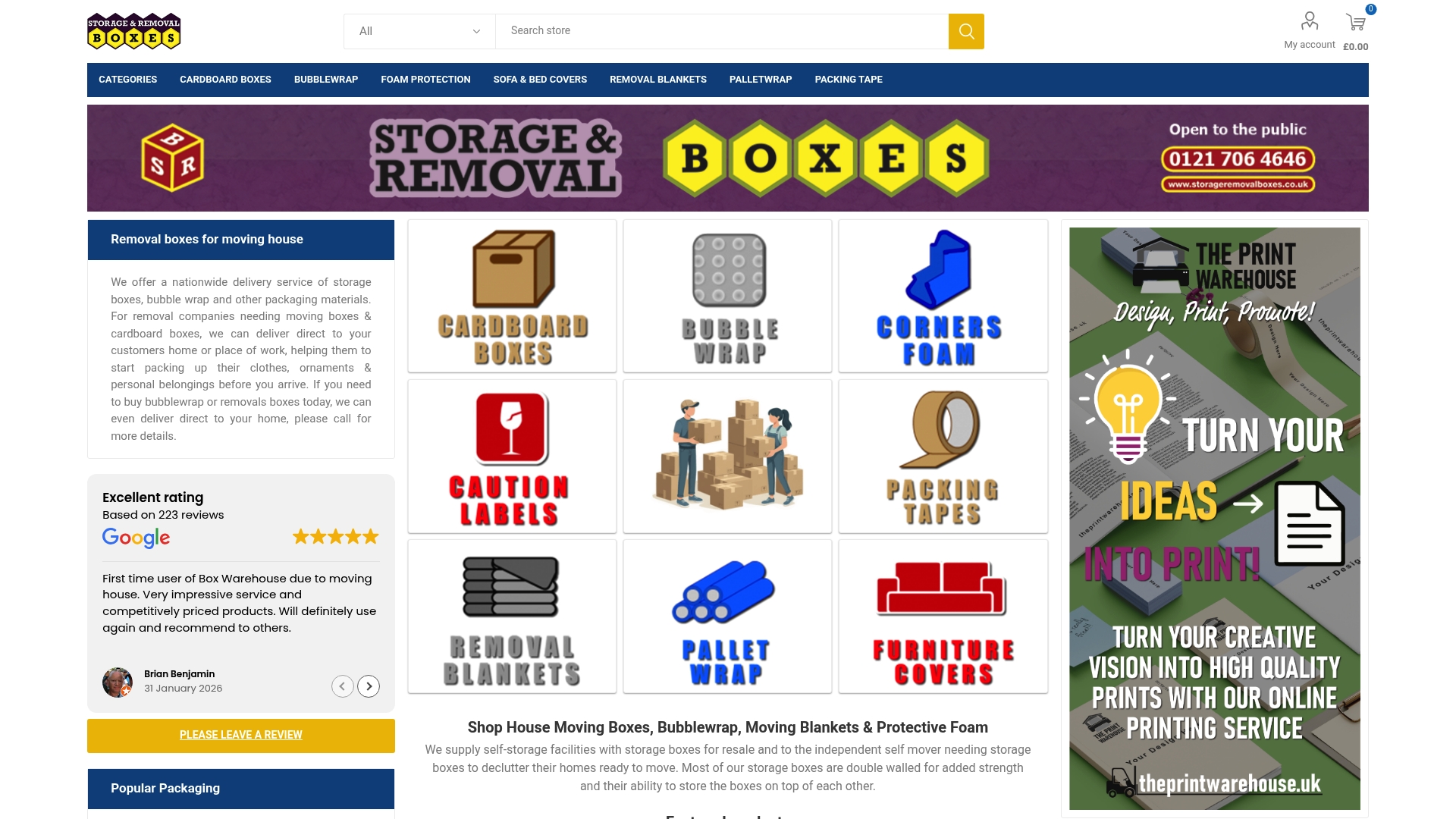
Every box in the range is made from recyclable corrugated cardboard and sized to cover the most common packing needs, from small fragile items to large household goods. The site also stocks bubble wrap, foam protectors, moving blankets, and complete removal kits, so you can source everything in one order. Nationwide delivery is available, with bulk pricing for businesses and removal companies. Browse the full selection and find the right box for your load.
FAQ
What makes a box “robust” compared to standard packaging?
A robust box uses double-wall corrugated construction, typically with 6mm of fluting, giving it 2–3 times the crush resistance of a standard single-wall box. It also carries a higher ECT rating, which measures resistance to edge crushing under load.
What ECT rating should I look for in a strong box?
An ECT rating of 32 or above is recommended for heavy or stacked loads. This rating confirms the box can withstand the compressive forces typical of transit and warehouse storage without deforming.
Why do fragile items break even when packed in boxes?
Up to 73% of fragile items arrive damaged when packed in standard boxes, because those boxes resist vertical compression but not the lateral movement and vibration of real transit. Double-wall construction addresses both failure modes.
Is it worth paying more for double-wall boxes?
Double-wall boxes cost 20–40% more than single-wall alternatives, but they reduce damage-related returns and replacements. For fragile or high-value items, the saving from avoided damage consistently outweighs the higher unit cost.
Does box size affect how well items are protected?
Oversized boxes cause damage by allowing items to shift during transit. The correct approach is to choose a box that fits the item snugly, with no more than 5cm of space on each side, filled with cushioning material.